Ebike Oracle
Buyer guide

Best Class 2 E-Bikes With a Throttle (2026)

Seven e-bikes whose own listings show all three things that make a bike Class 2: a throttle, a 20 mph assisted cap and a motor at or under the 750 W federal ceiling. They run from $183.99 to $1,099 at our last check. The Hoverfly OUREA ($449.98) is the best overall pick. Its listing gives one motor figure, 750 W,...

Ranked from our scored reviews

As an Amazon Associate I earn from qualifying purchases. Ebike Oracle may also earn a commission on purchases made through links to other retailers, at no extra cost to you. Full disclosure.

Best overall

7.4/10
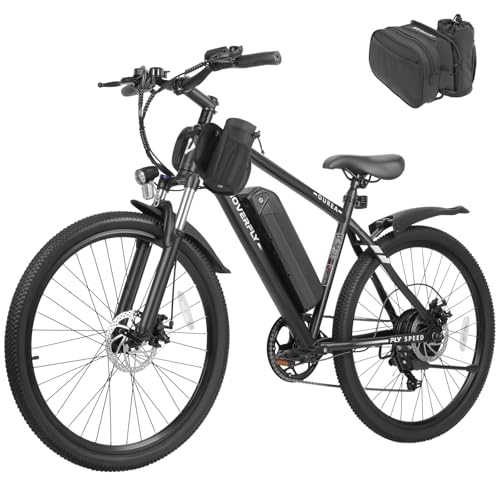
Hoverfly OUREA

Hoverfly OUREA

$449.98Save $50

Best overall, and the cleanest Class 2 listing on the page. It gives one motor figure,...

Check price at Amazon

Free 30-day returns via Amazon

  • Runner-up:Funhang Fat 26Best for range and paperwork. A 500 W rated motor (the 1000 W in the title...
  • Budget pick:Funhang City Cruiser 26Best budget pick, and the most honestly specified bike on our Amazon budget shelf: 500 W...

Compare the picks

Best Class 2 E-Bikes With a Throttle (2026): US e-bike class and key specs for each pick, with where to buy
PickPriceClassTop speedMotor (listed)BatteryMax loadWeightFrame
#1Hoverfly OUREAClass 220 mph750 W374 WhNot statedNot statedStandard
#2Funhang Fat 26Class 220 mph500 W624 Wh330 lbNot statedStandard
#3Funhang City Cruiser 26Class 220 mph500 W374 WhNot statedNot statedStandard
#4Vivi C26UL 500W Step-Through CruiserClass 220 mph500 W374 Wh330 lb56 lbStep-through
#5Jasion EB6 20" Folding Fat-Tire E-BikeClass 220 mph500 W624 Wh330 lb62 lbFolding
#6Askmy Mini 14Class 220 mph740 W480 WhNot statedNot statedFolding, step-through
#7NARRAK Trike 750Class 220 mph750 W624 Wh290 lbNot statedFolding, step-through

Prices are subject to change, and the buy links always fetch the live price. Motor is the figure the listing quotes, which is often a peak rather than a rated number; US e-bike classes are set on rated output. “Not stated” means neither the listing nor our review gives a figure.

Detailed picks

Hoverfly OUREA
AmazonSave $50
Pick #17.4/10

Hoverfly OUREA

Hoverfly
Check price at Amazon

Free 30-day returns via Amazon

Best overall, and the cleanest Class 2 listing on the page. It gives one motor figure, 750 W, which sits at the federal ceiling whether you read it as rated or peak (the title says peak), a stated 20 mph cap and a throttle, with no faster mode advertised alongside. UL 2849, a 365-day warranty and 90% pre-assembly round it out, and its 40-mile pedal-assist / 20-mile throttle split survives the arithmetic. The trade is a 374.4 Wh battery: a sub-10-mile commuter rather than a long-haul bike, with no published weight.

Funhang Fat 26
Amazon
Pick #27.4/10

Funhang Fat 26

Funhang
Check price at Amazon

Free 30-day returns via Amazon

Best for range and paperwork. A 500 W rated motor (the 1000 W in the title is the peak) and a stated 20 mph throttle cap put it 250 W under the federal ceiling, and it documents UL 2271 via SGS and UL 2849 via TÜV with both labs named. Its 30-35 mile throttle claim closes against a 624 Wh pack at about 20 Wh per mile. Integrated turn signals, dual 180 mm discs, a 60 lb rack and a 330 lb payload. No published weight, and 500 W is modest for a heavy rider on long hills.

Funhang City Cruiser 26
Amazon
Pick #38.6/10

Funhang City Cruiser 26

Funhang
Check price at Amazon

Free 30-day returns via Amazon

Best budget pick, and the most honestly specified bike on our Amazon budget shelf: 500 W rated (1000 W peak), a 20 mph cap with pedal-assist and a throttle, and UL 2271 plus UL 2849 both certified by SGS. Nothing in the display needs setting and nothing about its class needs a caveat. Its 25-30 mile pure-electric claim works out at about 13 Wh per mile from 374 Wh, optimistic but credible. A 26-inch cruiser with mechanical discs and no published weight or payload.

Vivi C26UL 500W Step-Through Cruiser
AmazonSave $49
Check price at Amazon

Free 30-day returns via Amazon

Best step-through. A very low top tube for riders with knee, hip or balance limits, a 500 W rated motor (Vivi markets a 1000 W peak), a throttle that works to 20 mph without pedaling and a title-stated 19.8 mph cap, plus SGS-issued UL 2849. Lights, rack, fenders and front suspension come standard. The 374.4 Wh pack means about 18-24 real miles, the brakes are mechanical, the pedal-assist is cadence-sensed, and it weighs 56 lb.

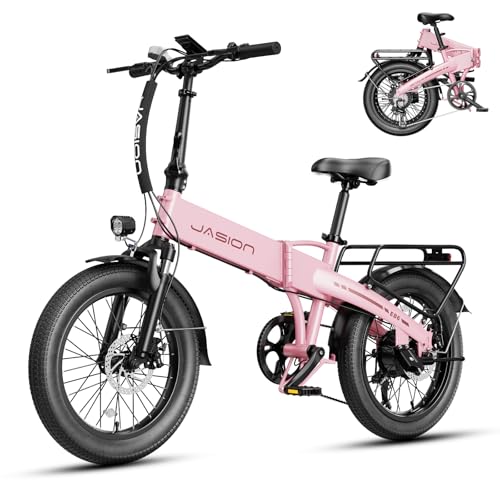
Jasion EB6 20" Folding Fat-Tire E-Bike
Amazon
Check price at Amazon

Free 30-day returns via Amazon

Best folder. A single-hinge fold with 20-inch fat tires, a 500 W rated motor (1000 W peak), a throttle and a 20 mph Class 2 cap, a 624 Wh battery, a published 62 lb weight and a 330 lb payload, folding to roughly 36 x 18 x 28 inches. Plan on 25-32 miles mixed and about 18 on the throttle alone. Cadence-sensor assist, mechanical brakes, a one-year motor and battery warranty, and 62 lb that no fold makes light.

Askmy Mini 14
AmazonSave $18
Pick #68.1/10

Askmy Mini 14

Askmy
Check price at Amazon

Free 30-day returns via Amazon

Best mini folder, and the cheapest pick at our last check. A stated 20 mph cap with a throttle, a single 740 W peak figure that stays under the ceiling on any reading, and SGS validation to both UL 2271 and UL 2849. Its 480 Wh pack is nearly double what most 14-inch minis carry, and the 20-25 mile claim is credible. 14-inch wheels, no gearing, and no published rated wattage, weight or payload make it a last-mile bike.

NARRAK Trike 750
AmazonSave $81
Pick #77.9/10

NARRAK Trike 750

NARRAK
Check price at Amazon

Free 30-day returns via Amazon

Best three-wheeler, and as much motor as Class 2 allows: 750 W rated with a 1,350 W peak and a 20 mph cap, both stated in the title, plus a throttle. Three hydraulic disc brakes and a hydraulic parking brake are the reason to pay for it, because a loaded trike on a slope cannot be held with a foot. Folding aluminum step-through frame, 20 x 4.0-inch tires, 624 Wh. The battery is "UL Certified" with no standard named, and plan on about 26 assisted miles, not the claimed 50.

TL;DR: seven Class 2 picks

  1. Hoverfly OUREA, $449.98 at our last check. Best overall. One motor figure (750 W, at the federal ceiling either way you read it), a stated 20 mph cap, UL 2849 and a 365-day warranty. The trade is a 374 Wh battery.
  2. Funhang Fat 26, $459.99 at our last check. Best for range and paperwork. 500 W rated, 20 mph, 624 Wh, and UL 2271 via SGS plus UL 2849 via TÜV.
  3. Funhang City Cruiser 26, $329.99 at our last check. Best budget pick. 500 W rated, 20 mph, both UL standards with SGS named, and a range claim its 374 Wh pack can meet.
  4. Vivi C26UL, $440.99 at our last check. Best step-through. 500 W rated, a 19.8 mph cap and SGS-issued UL 2849.
  5. Jasion EB6, $579 at our last check. Best folder. 20-inch fat tires, 500 W rated, 624 Wh and a published 62 lb.
  6. Askmy Mini 14, $183.99 at our last check. Best mini folder, and the cheapest pick. 480 Wh on 14-inch wheels, both UL standards via SGS.
  7. NARRAK Trike 750, $1,099 at our last check. Best three-wheeler. 750 W rated, 20 mph, hydraulic brakes and a parking brake.

The seven, side by side

Bike Motor, as the listing states it Assisted cap Throttle-only range Price (last check)
Hoverfly OUREA 750 W (listed as peak) 20 mph 20 mi (seller claim) $449.98
Funhang Fat 26 500 W rated, 1000 W peak 20 mph about 31 mi (our arithmetic) $459.99
Funhang City Cruiser 26 500 W rated, 1000 W peak 20 mph 25-30 mi (seller claim) $329.99
Vivi C26UL 500 W rated, 1000 W peak 19.8 mph about 12-15 mi (our estimate) $440.99
Jasion EB6 500 W rated, 1000 W peak 20 mph about 18 mi (our estimate) $579
Askmy Mini 14 740 W (listed as peak) 20 mph 20-25 mi (seller claim) $183.99
NARRAK Trike 750 750 W rated, 1,350 W peak 20 mph about 18 mi loaded (our estimate) $1,099

The full guide, section by section. Tap any section to read it.

Our method in brief

A pick must show all three Class 2 conditions on its own Amazon US listing, as recorded in its full review on this site: a throttle, a stated 20 mph assisted cap, and a motor rated at 750 W or less. A listing that gives only a peak figure passes if that peak is 750 W or less, because no reading of it can go over the ceiling. We did not rely on a seller's "Class 2" label or on our own catalogue's class field, because either can be wrong. Bikes that advertise a faster configuration in the same listing, state a speed over 20 mph, or state no top speed at all were left out, and the best known of them are named below with the reason. Every pick was in stock on Amazon US at our last check. We have not ridden these bikes: every figure is the seller's claim or our arithmetic on it. Amazon prices move constantly, so the buy buttons always fetch the live number.

How we built this list

The class label is the least reliable line on an e-bike listing, so we checked the three facts it is meant to summarize, against our full review of each bike:

  1. A throttle that moves the bike without pedaling.
  2. A stated 20 mph assisted cap, with no faster mode advertised in the same listing.
  3. A motor at or under 750 W rated. A listing that states only a peak figure passes if the peak is 750 W or less, since no reading of it can exceed the ceiling. A peak over 750 W with no rated figure beside it fails.

Seven bikes passed, each in stock on Amazon US at our last check. We ranked them on how little the listing leaves you to check (one wattage and one speed, a named certification lab, a range claim that survives division), then spread the picks across the jobs people buy a Class 2 for. We have not ridden any of them; every figure is the seller's claim or our arithmetic on it.

What makes an e-bike Class 2?

Class What the motor does Assistance stops at
Class 1 Pedal-assist only 20 mph
Class 2 Throttle, usually with pedal-assist too 20 mph
Class 3 Pedal-assist; a throttle, where fitted, is usually held to 20 mph 28 mph

All three classes share one motor ceiling, 750 W rated under the federal definition (15 U.S.C. §2085); Oregon alone allows 1,000 W. Class 2 is the class built around the throttle, with the same 20 mph ceiling as Class 1. More in Class 1 vs 2 vs 3 e-bikes explained.

Peak is not rated. Almost every bike on the Amazon budget shelf quotes a peak figure. Peak is what the motor draws for a few seconds on a hill; rated is what it sustains, and rated is what the statutes measure. The Funhang Fat 26 shows both on one page: "1000W Peak" in the title, 500 W in the first bullet. Only the second decides the class.

"Class 2" next to 1,000 W or more is honest only if that figure is the peak and a rated figure of 750 W or less appears somewhere on the listing. If it does not, the class is the seller's word, so ask for the rated wattage in writing before you buy. A bike actually rated above 750 W falls outside the e-bike definition in every state but Oregon, whatever the listing calls it.

Which Class 2 e-bike should you buy?

1. Hoverfly OUREA: best overall

The OUREA's listing reads like the Class 2 checklist: one motor figure, 750 W, a stated 20 mph cap and a throttle. The title calls the 750 W a peak, which changes nothing, because 750 W is the federal ceiling on either reading and no faster mode is advertised. Add UL 2849, a 365-day warranty (about four times the norm at this price), 90% pre-assembly, and a range claim split honestly by mode, 40 miles on pedal-assist and 20 on the throttle, both of which survive the arithmetic. At $449.98 it is the lowest-friction legal purchase here.

The trade is the battery. 374.4 Wh is about half the pack of similarly priced rivals, so plan on round trips up to about 10 miles. Ordinary-width 26-inch tires and front suspension make it efficient rather than plush, and no weight is published. Amazon shelves it with mountain bikes; with lights, a bell and fenders it is a street commuter. Read the full Hoverfly OUREA review.

2. Funhang Fat 26: best for range and paperwork

This is the Class 2 you can hand to a building manager. It documents UL 2271 for the battery via SGS and UL 2849 for the whole bike via TÜV, naming the lab behind each. The motor is 500 W rated (the "1000W Peak" in the title is the peak) with a 20 mph throttle cap, 250 W under the federal ceiling. Its range claim closes too: 30-35 throttle miles from 624 Wh works out at about 31 miles at the roughly 20 Wh per mile a 26x4 fat tire draws.

An integrated headlight, taillight and turn signals, dual 180 mm discs, 7-speed gearing, a 60 lb rear rack and a 330 lb payload come in at $459.99. The trades: 500 W is modest for a heavy rider on long hills, no weight is published, charging takes about 6.5 hours, and it ships 85% assembled. Read the full Funhang Fat 26 review.

3. Funhang City Cruiser 26: best budget pick

Of thirty Amazon best sellers we reviewed in one batch, this was the only one whose legal position needed no caveat: 500 W rated (1000 W peak), a 20 mph cap on pedal-assist and throttle, and UL 2271 plus UL 2849, both certified by SGS. Nothing in the display needs setting. Its 25-30 mile pure-electric claim from 374 Wh works out at about 13 Wh per mile, optimistic but achievable.

You also get 7-speed gearing, five riding modes, an adjustable stem and seat for sharing between riders, and an IPX5 removable battery, at $329.99. It is a 26-inch cruiser rather than a fat bike, so rough pavement is harsher than on the Fat 26, the brakes are mechanical, and no weight or payload is published. Read the full Funhang City Cruiser 26 review.

4. Vivi C26UL: best step-through

The C26UL is a true step-through with a very low top tube, the right shape for riders with knee, hip or balance limits. It is 500 W rated (Vivi markets a 1000 W peak), its throttle works to 20 mph without pedaling, and the listing title gives a 19.8 mph cap. It carries SGS-issued UL 2849 and ships with front suspension, lights, a rack, fenders and a kickstand, at $440.99.

The 374.4 Wh battery is small for a 26-inch cruiser: about 18-24 real miles, fewer on the throttle. The brakes are mechanical, the cadence-sensed assist switches on and off rather than ramping, there is no published IP rating, and it weighs 56 lb. Buy it for flat-to-rolling trips under 10 miles each way. Read the full Vivi C26UL review.

5. Jasion EB6: best folder

The EB6 is the pick when the bike has to fold and you still want fat tires: a single-hinge fold on 20 x 4-inch tires, a 500 W rated motor (1000 W peak, 70 N·m), a throttle, a 20 mph Class 2 cap and a 624 Wh battery. It folds to roughly 36 x 18 x 28 inches, enough for an SUV cargo area upright, and comes with lights, fenders, a rack and a 7-speed Shimano drivetrain at $579.

The published 62 lb is the constraint the fold does not solve: one flight of stairs, not three. Assist is cadence-sensed, the brakes are mechanical, and the warranty is one year on motor and battery. Plan on 25-32 miles mixed and about 18 on the throttle. Jasion's parent listing has at times shown "EB5 MAX" as the default title, so confirm the listing image shows the EB6 folder. Read the full Jasion EB6 review.

6. Askmy Mini 14: best mini folder

Mini folders are where budget e-bikes usually cut the most corners, and the Askmy mostly does not. It caps at 20 mph with a throttle, its only motor figure is a 740 W peak (under the ceiling on any reading), and it states SGS validation to UL 2271 and UL 2849. The battery is 480 Wh, nearly double what most 14-inch minis carry, and the 20-25 mile claim works out at a normal 20-24 Wh per mile. At $183.99 it was the cheapest pick at our last check.

14-inch wheels fold small and drop into potholes that larger wheels roll over; the spring fork and tubeless tires help without fixing it. There is no gearing, and no rated wattage, weight or payload is published. Buy it for the last two miles of a trip by train, bus or car. Read the full Askmy Mini 14 review.

7. NARRAK Trike 750: best three-wheeler

Most e-bike statutes cover two or three wheels, so a trike can be Class 2 too, and this one carries as much motor as the class allows: 750 W rated with a 1,350 W peak and a 20 mph maximum, both in the title, plus a throttle. The reason to pay for it is braking: three hydraulic discs and a hydraulic parking brake, where most trikes run mechanical discs and no park function. A loaded trike on a slope cannot be held with a foot.

It folds, rides on 20 x 4.0-inch tires with a rear differential, carries 624 Wh and a 290 lb frame rating, and comes with a 12-month warranty and US support, at $1,099. The battery is "UL Certified" with no standard named, so ask NARRAK to confirm it in writing if you charge indoors. Plan on about 26 assisted miles, not the claimed 50, and no weight is published. Read the full NARRAK Trike 750 review.
The best seller we left out

The TST City Commuter at $569.99 has thousands of units in the field and a lot of hardware: a 750 W rated motor, 720 Wh, dual suspension and 7 speeds. But its listing title now advertises 28 mph and a 2000 W peak. Limited to 20 mph with its throttle it rides as a Class 2, and the rated figure is inside the ceiling, but 28 mph is Class 3 territory and this page only ranks listings that stop at 20. If you buy it, set the limiter on arrival. It also names no UL certification, which rules it out for indoor charging in New York City.

Thumb throttle or twist throttle?

A throttle is either a thumb lever beside the grip or a twist grip you roll with your wrist. Either makes a bike Class 2. The practical differences:

  • A thumb lever is harder to open by accident, a point our Macfox M16 review makes for younger riders.
  • A thumb tires on long flat stretches. Cruise control fixes that: the Vivi MT26GUL holds a set speed after you hold its minus button for three seconds.
  • Go easy on wet pavement. Our Bodywel 14" Mini review warns that a thumb throttle can dump torque instantly on slick ground, where feathering pedal-assist is safer.

None of our seven pick reviews records the throttle type, so check the handlebar photos if you have a preference. Either way, the throttle costs range: our throttle vs pedal-assist guide puts throttle-only riding at roughly 25-30+ Wh per mile against 10-20 when you pedal, which can cut range by a third or more. That is why the throttle-only column above matters.

Where throttles are restricted

A Class 2 fits the e-bike definition in all 50 states. The throttle matters at the edges: one state's paperwork, some path and age rules, and a lot of trails. All of this comes from the state data behind our /laws pages.

Where What changes for a throttle bike Law
New Jersey Since 19 July 2026 every e-bike needs a driver's license (a motorized-bicycle license at 15-16) and MVC registration. Throttle-capable bikes also need liability insurance and a DOT helmet at any age; pedal-assist bikes capped at 20 mph do not. S4834/A6235
Hawaii Under-16s may not ride a Class 2 or Class 3 without a parent or guardian supervising, and every e-bike needs a one-time registration. Act 259 (HB2021), from 15 July 2026
Oregon Class 2 and Class 3 riders must be 16 or older. Class 1 riders may be 14. HB 4103 (2024), HB 4007 (2026)
New Mexico Class 1 is allowed on bike and pedestrian paths by default. Class 2 and Class 3 are not, unless the city or county opts in. NMSA §66-3-709
Rhode Island Only Class 1 is allowed on state-owned bike paths, including the East Bay Bicycle Path. §31-19.7-2
South Dakota Only Class 1 is allowed on the 109-mile George S. Mickelson Trail. SB 79 (2025)
Colorado Boulder OSMP, Aspen/Pitkin County, Summit County/Breckenridge and Vail have banned Class 2 and Class 3 from major multi-use trails. Local rules
Kansas The Johnson County park district allows Class 1 and Class 3 on its shared-use paved trails, but not Class 2. County rule

Parks are stricter than streets. Arkansas State Parks limit bike trails to Class 1, Wyoming State Parks keep Class 2 and Class 3 to motorized routes and park roads, and Lake Mead, Grand Teton and Glacier require the motor to work only while you pedal on bike trails. Most mountain-bike trail systems are Class 1 only, so if singletrack is the plan, a Class 2 is the wrong purchase.

The flip side favors Class 2. Seven jurisdictions do not recognize Class 3: the District of Columbia, Kentucky, Massachusetts, Montana, North Carolina, Pennsylvania and South Carolina. There, 20 mph is the ceiling for anything ridden as a bicycle, and every pick here qualifies. North Carolina adopts the three-class system on 1 December 2026 under Session Law 2026-46. Class 2 is also path-legal almost everywhere, while many states keep Class 3 off multi-use paths by default. The full split is on our Class 3 laws by state page, and Ride Check gives a verdict for one bike in one state across five riding surfaces.

What to skip

Four patterns make a listing look Class 2 when the listing does not back it up. Our e-bikes to avoid guide covers the wider list.

  • A faster version in the same title. The DTTZH A12 states 750 W rated, but its Amazon title also sells an A12S at 2000 W, which is outside the three-class framework in every US state, and the A12 listing states no top speed. Check the configuration selector before checkout: only the cheaper build is legal.
  • A top speed over 20 mph. The Qlife Racer listing gives 22 mph stock and 25 mph unlocked, so as sold it sits outside Class 2, whatever it is called.
  • A marketed 28 mph mode, as with the TST above. At 28 mph on pedal-assist a bike is Class 3, and a throttle that works above 20 mph takes it out of the class system altogether, after which it is regulated as a moped.
  • A peak over 750 W with no rated figure. Ask the seller for the rated wattage in writing, and if they will not state it, buy a bike that does.

And skip anything sold as an e-bike without working pedals. Pedals are part of the federal definition, which is why a Sur-Ron is not street legal.

Related guides

Also considered

Near misses, and the reason each one missed. Where a mention is the better buy for a specific rider, it says so.

  • TST City Commuter product photo

    A high-volume Amazon seller that states a 750 W rated motor, a 720 Wh removable battery, suspension front and rear and 7-speed gearing, at $569.99 checked. It is not ranked because its listing title now advertises 28 mph and a 2000 W peak. Limited to 20 mph with its throttle it rides as a Class 2, but this page only ranks listings that stop at 20, so set the limiter on arrival. No UL certification is named; it weighs a stated 66 lb.

  • URLIFE Mini 14 product photo

    Passes every Class 2 test: a 20 mph cap with a throttle, a 500 W peak motor, and UL 2849 stated in the title, at $259.99 checked. It is a mention rather than a pick because the listing never states its battery capacity, so its 20-40 mile claim cannot be checked; plan on 20-25. URLIFE warns that only URLIFE-US and URLIFE-EBIKE are authorized sellers, so check the seller name at checkout.

  • Vivi MT26GUL 26" Step-Through Electric Commuter Bike product photo

    A step-through commuter with cruise control and SGS-issued UL 2849 at $399.99 checked, with a 500 W rated (750 W peak) motor, a 374 Wh battery and a 50 lb weight. It is not ranked because our review records its throttle and pedal-assist limit as 20-21.7 mph, which is not a clean 20, so check the limiter is set to 20 before riding where Class 2 rules apply.

  • Gotrax Dolphin 26" Step-Through Commuter product photo

    The brand-name step-through: a 26-inch commuter from an established US company with phone support and big-box distribution, 350 W rated (500 W peak), throttle and pedal-assist both capped at 20 mph, and about 50 lb, at $494.98 checked. The ceiling is a 280.8 Wh battery, so plan on 10-15 real miles. UL 2849 comes from GoEBikeLife's review rather than our own listing check, so verify the mark on the listing photos.

  • Macfox X1S Commuter Electric Bike product photo

    The moped-style Class 2: a 500 W motor (750 W peak), a thumb throttle, a 20 mph cap, UL 2849 and hydraulic disc brakes on 20 x 4.0-inch tires, at $1,399 checked. It looks like the high-powered bikes that are not street legal and is legally a bicycle. The trades are a 65 lb single-speed frame, a 33-inch seat height, a 28-mile claim our review plans at about 20, and after-sales support that is the consistent theme of negative owner reports.

Frequently asked questions

What ebikes are class 2?

Any e-bike whose throttle and pedal-assist both stop at 20 mph, with a motor rated at 750 W or less. Seven bikes on this page meet all three tests on their own listings: the Hoverfly OUREA, Funhang Fat 26, Funhang City Cruiser 26, Vivi C26UL, Jasion EB6, Askmy Mini 14 and NARRAK Trike 750. The Hoverfly is our best overall pick. Do not trust a "Class 2" label on its own: check that the listing states a 20 mph cap and a motor figure at or under 750 W, and that the same title is not also selling a faster version.

How fast will a class 2 e-bike go?

The motor stops helping at 20 mph, on the throttle and on pedal-assist alike. You can go faster downhill or under your own power, but the motor will not push you past 20. That is the same cap as Class 1; the difference is that a Class 2 has a throttle that moves the bike without pedaling. If you want the motor to keep helping to 28 mph, that is Class 3, which assists only while you pedal above 20 and is not recognized everywhere. See Class 3 laws by state.

Can a class 2 ebike go 28 mph?

Not under motor power, if it is a true Class 2: the class is defined by assistance stopping at 20 mph. Many bikes are switchable, though. A display setting moves them between classes, and a bike set to assist to 28 mph on pedal-assist is a Class 3 in that mode. A throttle that works above 20 mph takes a bike out of the class system altogether, and it is then regulated as a moped. Read the listing title as well as the bullets: the TST City Commuter states a 750 W rated motor, but its title now advertises 28 mph, which is why it is not ranked here.

How do I know if my ebike is class 1 or 2?

Test the throttle. If the bike moves on the throttle without pedaling, it is a Class 2 (or a Class 3 with a throttle); if there is no throttle, it is Class 1 or Class 3. Then check where assistance stops: 20 mph means Class 1 or 2. Look for a class label on the frame too. California and a few other states require one, Hawaii's Act 259 now requires manufacturers to label the class, top assisted speed and motor wattage, and South Dakota requires a permanent label showing all three. The spec sheet should state the class, but check it against the stated speed and wattage rather than taking the label on trust. More in Class 1 vs 2 vs 3 explained.

Should I buy a class 2 or class 3 ebike?

Buy for where you ride. A Class 3 earns its 28 mph on roads where you need to keep up with traffic. A Class 2 is path-legal almost everywhere, while many states keep Class 3 off multi-use paths by default, and Class 3 carries helmet and 16+ age rules in far more states. Class 3 is also not recognized in seven jurisdictions today: DC, Kentucky, Massachusetts, Montana, North Carolina, Pennsylvania and South Carolina (North Carolina changes on 1 December 2026). For a path-heavy commute, or if you want a throttle, buy a Class 2. The state-by-state split is on our Class 3 laws by state page.

Are throttle e-bikes legal in the US?

Yes. A throttle e-bike that stops assisting at 20 mph with a motor rated at 750 W or less is a Class 2, and Class 2 fits the e-bike definition in all 50 states. The exceptions are about paperwork and places. New Jersey now requires a license and MVC registration for every e-bike, plus liability insurance and a DOT helmet for throttle-capable bikes. Hawaii requires a one-time registration and bars under-16s from riding a Class 2 unsupervised. Some paths and trails allow Class 1 only. A throttle that works above 20 mph, or a motor rated over 750 W (1,000 W in Oregon), takes a bike out of the e-bike rules. Check your state on our state law pages.

What is the best ebike for throttle only?

On the throttle alone, battery decides range, so the Funhang Fat 26 is our pick: Funhang quotes 30-35 miles on the throttle from a 624 Wh pack, and at the roughly 20 Wh per mile a fat tire draws that works out at about 31 miles. The Funhang City Cruiser 26 claims 25-30 miles in pure electric mode, and the Askmy Mini 14 claims 20-25 from 480 Wh. Two cautions: throttle-only riding can cut range by a third or more compared with pedal-assist, and some national parks require you to pedal on bike trails. A bike sold with a throttle and no pedals is not an e-bike at all.

Is there a class 4 ebike?

No. The US framework stops at Class 3, which assists to 28 mph on pedal-assist, and there is no legal e-bike class above it. A bike with a motor rated over 750 W (1,000 W in Oregon), assistance past 28 mph, or a throttle that works above 20 mph falls outside the e-bike definition and is regulated as a moped or motorcycle, with the registration, license and insurance that brings. New Jersey classes a bike that exceeds both 750 W and 28 mph as a motorcycle outright. If a listing calls something "Class 4", treat that as a warning.

Reviewed by

John Weeks
Founder and editor