Buyer guide

Best Street-Legal Electric Bikes (2026): Legal Picks for Every US State

Five e-bikes that are street-legal under the US three-class framework, ranked from our scored reviews and verified in stock. The Heybike Cityscape 2.0 is the best overall street-legal pick: switchable Class 1/2/3 modes let it match whatever your state allows, it carries the UL certification strict cities ask for, and its 600+ Amazon owner reviews back our highest catalog score...

By John WeeksHow we scoreRanked from our scored reviews
As an Amazon Associate, Ebike Oracle earns from qualifying purchases. We may also earn a commission on purchases made through links to other retailers — at no extra cost to you. Full disclosure.

The short answer

  1. Best overall:Heybike Cityscape 2.0Street-legal in every state — because it adapts. The Cityscape 2.0's Class 1/2/3 switching is the...
  2. Runner-up:Gotrax Dolphin 26" Step-Through CommuterThe no-questions pick: a clean Class 2 that fits inside every state's e-bike definition — 350...
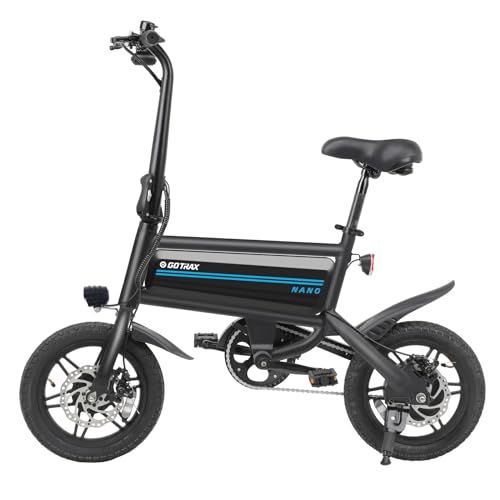
  3. Budget pick:Bodywel 14" Mini Foldable Electric BikeThe cheapest street-legal e-bike we recommend — $249.99 at our last check. The Bodywel 14" Mini...
Quick answer

Detailed picks

Heybike Cityscape 2.0
US

Street-legal in every state — because it adapts. The Cityscape 2.0's Class 1/2/3 switching is the legality cheat code: cap it at 20 mph pedal-assist where rules are strict, unlock 28 mph Class 3 commuting where they aren't. It pairs that with UL 2849 + UL 2271 certification (the battery-safety combination strict cities like NYC ask for), a step-through frame fitting 5'2"–6'2", and the deepest validation in our catalog: 600+ Amazon owner reviews at 4.2★ behind our highest editorial score (8.3/10). At $589 at our last check — less than half its $1,299 launch list — the usual budget-tier trade-offs (62 lb, mechanical brakes) stop mattering. Read the full Heybike Cityscape 2.0 review.

Gotrax Dolphin 26" Step-Through Commuter
US

The no-questions pick: a clean Class 2 that fits inside every state's e-bike definition — 350 W motor, 20 mph, nothing for an officer or an HOA to argue with. The Dolphin is the brand-name answer at the budget line: an established US company with real phone support and Target/Walmart/Best Buy distribution, a 26" step-through commuter frame, and a 4.4★ average across 430+ Amazon reviews. $494.99 at our last check. If the Cityscape's class-switching feels like more bike than you need, this is the simplest legal answer on the list. Read the full Gotrax Dolphin review.

Bodywel 14" Mini Foldable Electric Bike
US

The cheapest street-legal e-bike we recommend — $249.99 at our last check. The Bodywel 14" Mini is a Class 2 last-mile folder (500 W peak motor, 20 mph) that folds to roughly 28×22×14 inches — under a desk, in a car trunk, beside an apartment door — with a removable 36V battery. It fits the same 50-state e-bike definition as bikes four times its price. This is the pick when the question is "what's the least I can spend and still be riding something legal?" Read the full Bodywel 14" Mini review.

Jasion EB5 MAX 1500W Fat-Tire Performance E-Bike
US

The fast pick — as fast as street-legal gets. Class 3 tops out at 28 mph on pedal-assist, and the EB5 MAX hits that ceiling with a 750 W rated motor (the federal cap), a 720 Wh battery — the biggest on this list — and 26×4" fat tires, at $799 at our last check. The honest caveat we put on every Class 3 bike: most states recognize Class 3, some restrict it from bike paths, and a few don't recognize it at all — check yours on the state-by-state table before buying for speed. Read the full Jasion EB5 MAX review.

Gotrax R1 20" Folding Commuter E-Bike
US

The most-validated folder we cover — 652 Amazon reviews at a 4-star average — and a clean Class 2 (350 W, 20 mph) that's legal in all 50 states. Gotrax built its US brand on scooters and the R1 inherits that distribution-and-support model: big-box availability, US phone support, and a 48 lb single-hinge fold that actually fits a car trunk. $593.99 at our last check. At the budget tier, the brand behind the bike is a spec — and this is the strongest one in the folder class. Read the full Gotrax R1 review.

What counts as street-legal here: the pick must fit the US three-class e-bike framework — motor 750 W or under, pedal-assist to 20 mph (Class 1), throttle to 20 mph (Class 2), or pedal-assist to 28 mph (Class 3) — as defined in the class system explainer. Class 1 and 2 picks fit the e-bike definition in all 50 states; Class 3 picks are legal in most states but not all, so we say so on the pick and link the state-by-state table. Every pick has a full standalone review on this site and was verified in stock at its linked US listing when this guide was published. Prices move constantly on Amazon — figures below are what we verified at our last check, and the price buttons always fetch the live number. One more honesty note: street-legal describes the bike; a few states add paperwork for the rider (New Jersey now requires a license and registration for every e-bike — full NJ rules).

What "street-legal" actually means for an e-bike

In most of the US, an electric bicycle is legally a bicycle — no license, no registration, no insurance — as long as it fits the three-class framework: a motor of 750 W or less, pedals that work, and assistance that cuts off at 20 mph (Class 1 pedal-assist, Class 2 throttle) or 28 mph (Class 3 pedal-assist). The moment a bike exceeds those numbers, it stops being an e-bike in the eyes of the law and becomes a moped or motorcycle — which means registration, a motorcycle endorsement, insurance, and equipment requirements that no e-bike meets.

Two nuances trip people up:

  • Class 3 is not universal. Most states allow 28 mph pedal-assist bikes on roads, but several restrict them from bike paths, set minimum rider ages, or don't recognize the class at all. Our street-legal by state table shows exactly where each class stands, and the legality checker answers for your specific state and bike in ten seconds.
  • A few states add rider paperwork. New Jersey is the big one: since 2026, every e-bike there needs a license and MVC registration, and throttle-capable bikes additionally need insurance. The bike itself is still legal to buy and ride — you just have paperwork to do. Oregon is the only state with a 1,000 W motor allowance; everywhere else, 750 W is the ceiling.

The bikes in our catalog that are NOT street-legal

Here's the part most affiliate sites won't print: some of the most exciting bikes we've reviewed are not street-legal, and we say so on their review pages. The GAMVIRE 7000W Dual Motor — dual 2,000 W hubs, 45 mph — is one of the most powerful consumer e-bikes on Amazon and it is a motorcycle-class machine with no path to street legality as an e-bike in any state. It's a genuinely fun private-land toy. It is not a commuter, and any seller implying otherwise is setting you up for an impound. If you're unsure which side of the line a bike falls on, run it through the legality checker before you buy.

How to choose — the 30-second decision tree

Just want the best street-legal bike?Cityscape 2.0. Highest score we've given, deepest owner validation, and its class-switching adapts to whatever your state allows.

Want zero legal gray area anywhere you might move or travel?Gotrax Dolphin. A textbook Class 2 from a US brand with real support.

Tightest possible budget?Bodywel 14" Mini. $249.99 at our last check, and just as legal as anything else here.

Speed is the point?Jasion EB5 MAX — but check your state's Class 3 rules first.

Needs to fold?Gotrax R1. 652 reviews of anti-lemon insurance.

Not sure what your state allows? → Two free tools: the e-bike legality checker and the street-legal by state table. Both take under a minute, and both link straight to your state's full rules page.

Frequently asked questions

Are electric bikes street legal in the US?

Yes — in every state, an e-bike that fits the three-class framework (motor ≤750 W, assistance capped at 20 mph for Class 1/2 or 28 mph for Class 3) is street-legal. Most states treat it exactly like a bicycle. The exceptions are about paperwork, not legality: New Jersey requires a license and registration for every e-bike (plus insurance for throttle-capable bikes), and Class 3 recognition varies by state — see the state-by-state table.

Can you ride an electric bike on the road without a license?

In 49 states, yes — a compliant Class 1, 2, or 3 e-bike needs no driver's license. The exception is New Jersey, which since 2026 requires every e-bike rider to hold a driver's license (17+) or a motorized-bicycle license (15–16) and register the bike with the MVC. Some states also set minimum ages for Class 3 bikes — check your state.

What makes an e-bike NOT street legal?

Exceeding the class limits: a motor over 750 W (Oregon alone allows 1,000 W), a top assisted speed over 28 mph, or a throttle that works above 20 mph. Bikes like the GAMVIRE 7000W (45 mph) are motorcycle-class vehicles — legal to own and ride on private land, but not street-legal as e-bikes in any state. "Off-road mode" switches don't change the legal analysis if the bike is capable of exceeding the limits on the road.

Are Class 3 e-bikes legal in every state?

No. Most states allow Class 3 (28 mph pedal-assist) on roads, but a number restrict them from multi-use paths, impose minimum rider ages or helmet rules, and a few don't recognize the class at all — where a 28 mph bike may default to moped rules. Before buying for speed, check your state on the street-legal by state table or run the legality checker.

Do I need insurance for a street-legal e-bike?

In every state except New Jersey: no. New Jersey's 2026 law requires insurance only for throttle-capable e-bikes (its "motorized bicycle" tiers) — pedal-assist bikes capped at 20 mph need a license and registration there but not insurance. Standalone e-bike insurance exists and can be worth it for theft coverage on a $1,500+ bike, but it is legally optional everywhere else.

Is a 1000W e-bike street legal?

Only in Oregon, which is the single state with a 1,000 W allowance — everywhere else the e-bike motor ceiling is 750 W. A 1,000 W-rated bike ridden in the other 49 states falls outside the e-bike definition and technically defaults to moped/motorcycle rules. Watch marketing labels carefully: many listings advertise peak wattage (which can be double the rated figure) — the rated number is what the law cares about. Details in your state's rules.

Reviewed by

John Weeks
Founder and editor