New Mexico E-Bike Laws 2026: SB 73 Idaho Stop
Are e-bikes legal in New Mexico?
New Mexico adopted the federal three-class e-bike framework in 2021 through SB 369 (55th Legislature, Regular Session), NOT "SB 69 2023" as some retailer blogs claim. The definitional statute is NMSA §66-1-4.5 (NOT §66-1-4.11 — that's the "motor vehicle does not include an electric bicycle" exclusion clause). The operating rules live at §66-3-708 (labeling/standards) and §66-3-709 (operation). Motor cap: 750 watts or less. Class 1 (20 mph pedal-assist), Class 2 (20 mph throttle), and Class 3 (28 mph pedal-assist) are all street-legal — no driver license, no DMV registration, no insurance (because §66-1-4.11(H) explicitly excludes e-bikes from "motor vehicle"). Class 3 minimum operator age is 16 under §66-3-709(C) (under-16 may ride as a passenger). The statewide under-18 helmet rule comes from the Child Helmet Safety Act at §32A-24-3 and applies to ALL bicyclists (not Class-3-specific).
Path access under §66-3-709: Class 1 is presumptively allowed; Class 2 and Class 3 are PROHIBITED on bike/pedestrian paths unless the political subdivision opts in — and many have (e.g., Albuquerque Ordinance O-24-14 opens all paved City trails to Class 1/2/3 at a 20 mph cap, effective September 2024). THE BIG ONE — New Mexico is the most recent state to adopt the Idaho Stop: SB 73, signed by Governor Michelle Lujan Grisham on 21 March 2025 as Chapter 22, Laws of 2025, effective 1 July 2025. Cyclists may treat stop signs as yields (slow + yield as necessary, proceed without full stop if safe) AND red lights with a different rule (MUST come to a complete stop first, then proceed if clear). Applies to e-bikes (Class 1, 2, and 3) per the codification in Chapter 66, Article 7. Paseo del Bosque (16 mi paved trail along the Rio Grande through Albuquerque) is now open to Class 1, 2, AND 3 e-bikes with a 20 mph speed cap — the Middle Rio Grande Conservancy District amended its e-bike resolution on 14 October 2024, delegating regulatory authority to the City of Albuquerque and Bernalillo County, which lifted the prior e-bike prohibition.
Legal to ride in New Mexico: our top class-legal pick
As an Amazon Associate I earn from qualifying purchases. Ebike Oracle may also earn a commission on links to other retailers. Full disclosure.

Vivi
Save $49Vivi C26UL 500W Step-Through Cruiser
Class 2 — pedal-assist + throttle to 20 mph
Class 2 · 20 mph · Score 7.2
Free 30-day returns via Amazon
Other legal picks for New Mexico

Street-legal e-bikes you can buy in New Mexico (2026)
Each fits a class New Mexico treats as a bicycle, so it needs no registration or licence to ride.
| E-bike | Buy | Class | Speed |
|---|---|---|---|
| Vivi C26UL 500W Step-Through Cruiser | Check price at Amazon | Class 2 | 20 mph |
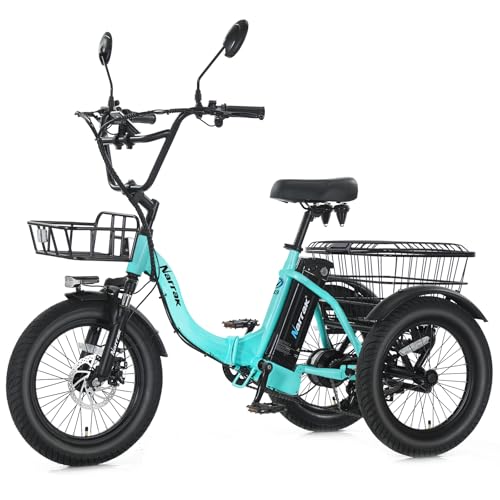
| NARRAK Folding Trike 350 | Check price at Amazon | Class 2 | 16 mph |
| TST City Commuter | Check price at Amazon | Class 2 | 20 mph |
What are the e-bike rules in New Mexico?
Sourced from the New Mexico statute and verified against the PeopleForBikes State Law Tracker.
Check your setup
Is your e-bike legal in New Mexico?
Your match
Vivi
Vivi C26UL 500W Step-Through Cruiser
Permitted on roads, bike lanes, and bike paths in New Mexico.
Our score 7.2/10
Our top class-legal pick for New Mexico, street-legal to ride today.
Read our full review firstThe 30-second answer
E-bikes are legal across New Mexico under the federal Class 1/2/3 framework adopted by SB 369 (2021). The definition is at NMSA §66-1-4.5 (NOT §66-1-4.11). The operating rules are at §66-3-708 (labeling) and §66-3-709 (operation). Motor cap is 750 watts or less.
THE BIG 2025 CHANGE: New Mexico became the most recent state to adopt the Idaho Stop — SB 73 (2025), signed by Gov. Michelle Lujan Grisham on 21 March 2025 as Chapter 22, Laws of 2025, effective 1 July 2025. Cyclists (including Class 1, 2, and 3 e-bike riders) may treat stop signs as yield signs (slow, yield if needed, proceed without a full stop) AND must STOP at red lights first, then proceed if the way is clear. Passed both chambers and was signed by the governor. The Idaho Stop joined NM's body of bicycle traffic rules in Chapter 66, Article 7.
Key facts: no driver license, no DMV registration, no insurance — because §66-1-4.11(H) explicitly excludes electric bicycles from "motor vehicle." Class 3 minimum operator age is 16 (§66-3-709(C); under-16 may ride as a passenger). The statewide under-18 helmet rule for ALL bicyclists lives at §32A-24-3 (Child Helmet Safety Act) — it's NOT a Class-3-specific rule.
Path access has the unusual NM structure: Class 1 is presumptively allowed on bike/pedestrian paths (§66-3-709(A); political subdivision may prohibit). Class 2 AND Class 3 are PROHIBITED on bike/pedestrian paths unless the political subdivision opts in (§66-3-709(B)) — and many have. Albuquerque Ordinance O-24-14 (effective September 2024) opens all paved City trails to Class 1, 2, and 3 with a 20 mph speed cap.
The full New Mexico rules, section by section. Tap any section to read it.
Quick reference
Quick reference
| Spec | New Mexico rule |
|---|---|
| Framework | Federal Class 1/2/3 (adopted 2021, SB 369 — NOT "SB 69 2023") |
| Definition statute | NMSA §66-1-4.5 (NOT §66-1-4.11 — that's the motor-vehicle exclusion clause) |
| Labeling / standards | §66-3-708 |
| Operating rules | §66-3-709 |
| Motor-vehicle exclusion (DMV exemption hook) | §66-1-4.11(H) — "motor vehicle does not include an electric bicycle" |
| Motor power cap | <750 W (§66-1-4.5; §66-1-4.5 Class 3 also caps "not exceeding 750 W") |
| Class 1 (pedal-assist, ≤20 mph) | ✅ Legal · paths ✅ default |
| Class 2 (throttle, ≤20 mph) | ✅ Legal · paths ❌ default (local opt-in required) |
| Class 3 (pedal-assist, ≤28 mph) | ✅ Legal · operator 16+ · paths ❌ default (local opt-in required) |
| Driver license | Not required (§66-1-4.11(H) motor-vehicle exclusion) |
| Registration | Not required |
| Insurance | Not required (liability still exists at common law) |
| Statewide helmet (under 18, ALL bicycles) | Required under §32A-24-3 (Child Helmet Safety Act) — applies to e-bikes via the general bicycle rule, NOT Class-3-specific |
| Minimum age (Class 1 + 2) | None |
| Minimum age (Class 3, operator) | 16 (§66-3-709(C)) — under-16 may ride as passenger |
| The Idaho Stop | Adopted via SB 73 (2025) — Chapter 22, Laws of 2025, signed by Gov. Lujan Grisham 21 March 2025, effective 1 July 2025; applies to Class 1/2/3 e-bikes |
| Idaho Stop — stop signs | Slow, yield as needed, proceed without full stop if safe |
| Idaho Stop — red lights | MUST come to complete stop first, then proceed if clear |
| Path access — Class 1 | Presumptively allowed on bike/pedestrian paths (§66-3-709(A); local may prohibit) |
| Path access — Class 2 + Class 3 | PROHIBITED on bike/pedestrian paths unless political subdivision opts in (§66-3-709(B)) |
| Natural-surface paths | Excluded from statutory permission entirely; land-manager call (§66-3-709(D)) |
| Albuquerque (Ordinance O-24-14, eff. Sept 2024) | All paved City trails open to Class 1, 2, AND 3 with a 20 mph speed cap |
| Paseo del Bosque (16 mi, ABQ) | OPEN to Class 1, 2, AND 3 e-bikes with 20 mph cap (since 14 Oct 2024). MRGCD owns the trail with shared City jurisdiction; the MRGCD Board amended its e-bike resolution to delegate regulatory authority to the City + Bernalillo County, lifting the prior ban. |
| Carlsbad Caverns NP | Bikes on park roads only; no developed bike trails |
| White Sands NP | Bikes on Dunes Drive + parking areas only (36 CFR 4.30(a)); off-road prohibited |
| Bandelier National Monument | ~⅔ designated Wilderness, no bikes; bicycles permitted on entrance road only |
| Gila NF + Santa Fe NF (USFS) | E-bikes treated as motor vehicles by default (36 CFR §212); allowed only on MVUM-designated motorized routes |
Two practical reads. First, the SB 73 Idaho Stop is genuinely big news: as of 1 July 2025, NM cyclists (e-bike riders included) may treat stop signs as yields and red lights as stops. NM joins Idaho (1982), Delaware (2017), Arkansas (2019), Oregon (2020), Washington (2020), Utah (2021), Oklahoma (2021), Minnesota (2023), Colorado (2022, municipal-opt-in), North Dakota, and DC (2022). Second, NM's path access is more restrictive than most three-tier states — both Class 2 AND Class 3 are prohibited from paths by default, with local opt-in required. Albuquerque has opted all classes in for paved City trails (O-24-14, Sept 2024); MRGCD followed in October 2024 by delegating regulatory authority to the City, so the Paseo del Bosque is now open to all three classes at the 20 mph cap. Santa Fe has not opted in.
The three-class system in New Mexico
The three-class system in New Mexico
New Mexico defines an "electric bicycle" at NMSA §66-1-4.5:
"'electric bicycle' means a bicycle or tricycle equipped with pedals for human propulsion, a seat or saddle for use by the rider and an electric motor of not exceeding seven hundred fifty watts that meets the requirements of one of three classifications…"
The three classes are defined verbatim:
- Class 1 — "equipped with a motor that provides assistance only when the rider is pedaling and that ceases to provide assistance when the bicycle reaches the speed of twenty miles per hour."
- Class 2 — "equipped with a motor that may be used exclusively to propel the bicycle and that is not capable of providing assistance when the bicycle reaches the speed of twenty miles per hour."
- Class 3 — "equipped with a motor not exceeding seven hundred fifty watts of power that provides assistance only when the rider is pedaling and that ceases to provide assistance when the bicycle reaches a speed of twenty-eight miles per hour."
The framework was enacted by SB 369 (2021 Regular Session) during the 55th Legislature. The law created §66-1-4.5 (definitions), §66-3-708 (labeling/standards), and §66-3-709 (operating rules).
Why some sources cite the wrong bill or statute
Two common citation errors in retailer SEO content:
- "SB 69 2023" is NOT the three-class adoption bill. The actual enacting bill is SB 369 (2021). SB 69 (2023) was a follow-on amendment that did not create the three-class framework.
- §66-1-4.11 is NOT the e-bike definitional statute. §66-1-4.11(H) is the "motor vehicle does not include an electric bicycle" exclusion clause — important, but not the definition. The actual e-bike definition is at §66-1-4.5.
The Idaho Stop — SB 73 (2025)
The Idaho Stop — SB 73 (2025)
New Mexico is the most recent state to adopt the Idaho Stop (stop-as-yield for cyclists), joining Idaho (1982 — the namesake), Delaware (2017, the limited "Delaware Yield"), Arkansas (2019, Act 650), Oregon (2020), Washington (2020), Utah (2021), Oklahoma (2021, HB 1770), Colorado (2022, municipal-opt-in framework), Washington DC (2022), Minnesota (2023), and North Dakota.
SB 73 (2025) — sponsored by Senator Antoinette Sedillo Lopez (D–Albuquerque) — was signed by Governor Michelle Lujan Grisham on 21 March 2025 as Chapter 22, Laws of 2025, after passing both chambers. Effective 1 July 2025.
The rules (per the NMDOT Idaho Stop announcement and BikeLegal Firm analysis):
- Stop signs and yield signs: a cyclist may slow, yield to other traffic as necessary, and proceed without coming to a complete stop if it is safe to do so.
- Red lights: a cyclist must come to a complete stop first, then may proceed if the way is clear. (This is different from the stop-sign rule — many summaries flatten the two; do not assume they're identical.)
Applies to e-bikes (Class 1, 2, and 3). The amended sections fall within Chapter 66, Article 7 (Traffic Laws), and the NM Motor Vehicle Code treats "electric-assisted bicycle" as a bicycle for the purposes of the bicycle-operation rules in 66-3-7xx and 66-7-3xx. BikeLegal's legal analysis confirms: "applies to all bicycles, including Class 1, 2, and 3 electric bicycles."
Where can you ride an e-bike in New Mexico?
Where can you ride an e-bike in New Mexico?
Can you ride on roads and bike lanes?
Same rights and duties as a regular bicycle. All three classes may use roads and bike lanes. The Idaho Stop (SB 73) applies as of 1 July 2025.
Multi-use paths — Class 2 + 3 need local opt-in
NM's path-access rule is more restrictive than most three-tier states. Per NMSA §66-3-709:
- §66-3-709(A) — Class 1: "A person may ride a class 1 electric-assisted bicycle on a bicycle or pedestrian path where bicycles are authorized to travel; provided that a political subdivision of the state may prohibit…" — presumptively allowed, locals may prohibit.
- §66-3-709(B) — Class 2 and Class 3: "A person shall not ride a class 2 or class 3 electric-assisted bicycle on a bicycle or pedestrian path unless… a political subdivision of the state permits…" — default-prohibited, locals may opt in.
- §66-3-709(D): natural-surface non-motorized trails excluded from the statutory permission entirely — managing agency may regulate.
This dual-default (Class 1 default-allowed, Class 2/3 default-prohibited) is unusual nationally. Most three-tier states either permit all 3 by default or ban Class 3 only.
Can you ride an e-bike on the sidewalk?
No statewide rule — local ordinance controls. Verify in Albuquerque, Santa Fe, Las Cruces, and Taos before riding sidewalks.
Albuquerque — opted all classes in (Ordinance O-24-14)
Albuquerque — opted all classes in (Ordinance O-24-14)
Per City of Albuquerque: Ordinance O-24-14 (effective September 2024) opens all paved City trails to Class 1, Class 2, AND Class 3 e-bikes with a 20 mph speed cap. Open Space trails are subject to posted signage; areas under USFS or MRGCD shared management require their separate permission.
Paseo del Bosque — the 16-mile paved trail running through Albuquerque along the Rio Grande — is the most-cycled urban path in the state. It is owned by the Middle Rio Grande Conservancy District (MRGCD) with shared City jurisdiction. After ABQ's O-24-14 took effect, MRGCD initially kept its own e-bike prohibition in place — but on 14 October 2024, the MRGCD Board amended its e-bike resolution to delegate regulatory authority on shared-jurisdiction trails (including the Paseo del Bosque) to the City of Albuquerque and Bernalillo County. The result: Class 1, Class 2, AND Class 3 e-bikes are now allowed on the Paseo del Bosque under City rules — 20 mph cap. Earlier guides that say "closed to e-bikes pending MRGCD approval" are stale.
Santa Fe
Santa Fe
Santa Fe County has not opted Class 2 or Class 3 in to the Santa Fe Rail Trail or other county paths under §66-3-709(B). Class 1 is presumptively allowed; Class 2 and Class 3 should stay on roads or check directly with Santa Fe County Open Space. The Santa Fe Rail Trail (paved Railyard → Rabbit Rd, plus unpaved extension to Lamy) is the city's marquee multi-use path.
Can you ride an e-bike on federal land in New Mexico?
Can you ride an e-bike on federal land in New Mexico?
- NPS national e-bike policy (36 CFR §§1.4 + 4.30, effective 2 December 2020): e-bikes allowed where traditional bicycles are; motor must assist pedaling (throttle-only prohibited except on roads open to public motor vehicles); not allowed in designated wilderness.
- Carlsbad Caverns NP: bikes (and e-bikes) on park roads only; no developed bike trails. Very limited cycling.
- White Sands NP: bikes permitted on Dunes Drive and parking areas only (36 CFR 4.30(a)); off-road prohibited.
- Bandelier National Monument: 23,267 acres (~⅔ of the park) is designated Wilderness — no bikes/e-bikes. Bicycles permitted only on the entrance road. No singletrack inside park.
- Gila National Forest + Santa Fe National Forest (USFS): per USFS national rule (36 CFR §212), e-bikes are motor vehicles by default — restricted to MVUM-designated motorized routes unless the forest supervisor specifically opens non-motorized trails. Neither forest has broadly opened trails to e-bikes; verify current MVUM before riding singletrack.
Do you need a helmet, license, or registration in New Mexico?
Do you need a helmet, license, or registration in New Mexico?
| Topic | New Mexico rule |
|---|---|
| Driver license | Not required — §66-1-4.11(H) excludes e-bikes from "motor vehicle" |
| Registration | Not required |
| Insurance | Not required (liability still exists at common law) |
| Statewide helmet (under 18, ALL bicycles) | Required under §32A-24-3 — the Child Helmet Safety Act applies to ALL bicyclists (including e-bike riders), not just Class 3 |
| Class-3-specific helmet | No — §66-3-709 contains no Class-3-specific helmet mandate (some retailer sources call the under-18 rule a "Class 3 helmet rule" — that's misleading; it's the general all-bike youth rule) |
| Minimum age (Class 1 + 2) | None |
| Minimum age (Class 3, operator) | 16 (§66-3-709(C)) — under-16 may ride as a passenger on a Class 3 designed for it |
Is New Mexico changing its e-bike laws?
Is New Mexico changing its e-bike laws?
- SB 73 (2025) — Idaho Stop, signed 21 March 2025, effective 1 July 2025. Covered in detail above.
- SB 369 (2021) — original three-class framework, still operative law.
- 2024 + 2026 sessions — no e-bike-specific bills surfaced. Track nmlegis.gov for any new legislation.
Current law remains: §66-1-4.5 + §66-3-708 + §66-3-709 + the SB 73 Idaho Stop additions to Chapter 66, Article 7.
Check your setup against New Mexico law
Check your setup against New Mexico law
The rules above are the statewide baseline. Two things decide whether a specific bike is legal for a specific rider: which class it actually is, and how old the rider is.
- E-bike legality checker — enter motor wattage, top assisted speed, throttle and rider age, and get the New Mexico verdict with the statute reference.
- Class 1, 2, 3 e-bikes explained — what the three classes mean and why the label on the frame is the thing states regulate. Most compliance problems are a bike that was never in-class to begin with.
- All 50 states + DC compared — one sortable table: classification tier, Class 3 legality, path access, helmet rule, minimum age, licence and registration.
Sources
Sources
- NMSA §66-1-4.5 — Electric Bicycle (Justia)
- NMSA §66-3-708 — Labeling + standards (Justia)
- NMSA §66-3-709 — Operating rules (FindLaw)
- NMSA §66-1-4.11 — Motor-vehicle definition (FindLaw)
- NMSA §32A-24-3 — Child Helmet Safety Act (Justia)
- SB 369 (2021 Regular Session) — three-class enacting bill PDF
- SB 73 (2025) — Idaho Stop bill page
- NMDOT — Idaho Stop announcement (2 July 2025)
- BikeLegal Firm — SB 73 analysis
- City of Albuquerque — e-bike rules + Ordinance O-24-14
- City of Albuquerque — e-bike law takes effect (Paseo del Bosque status)
- NPS national e-bike policy
- NPS White Sands — bicycling
- NPS Carlsbad Caverns — laws + policies
- NM MVD Chapter 1 — Vehicle definitions
E-bikes that fit New Mexico's rules
Filtered from our review catalog by class eligibility under New Mexico statute. Spec-matched, not popularity-ranked.
- Class 2
 AmazonSave $49
Vivi
Vivi C26UL 500W Step-Through Cruiser
Class 2 — pedal-assist + throttle to 20 mph
Permitted on roads, bike lanes, and bike paths in New Mexico.500 W · 20 mph · Score 7.2
Read the review - Class 2Amazon
NARRAK
NARRAK Folding Trike 350
Class 2 — pedal-assist + throttle to 20 mph
Permitted on roads, bike lanes, and bike paths in New Mexico.350 W · 16 mph · Score 7.1
Read the review - Class 2AmazonSave $30
TST
TST City Commuter
Class 2 — pedal-assist + throttle to 20 mph
Permitted on roads, bike lanes, and bike paths in New Mexico.750 W · 20 mph · Score 8.0
Read the review
Eligibility is class-based: picks shown here are legal to own and operate on roads in New Mexico. Local jurisdictions (state parks, beach paths, individual cities) may add further restrictions; see the body above for the specifics.
Recent New Mexico e-bike law coverage
News-form posts that reference New Mexico's statutes or covered a change affecting New Mexico riders.
Frequently asked questions
Are e-bikes legal in New Mexico?
Yes. New Mexico adopted the federal Class 1/2/3 framework via SB 369 (2021) — NOT "SB 69 2023" as some retailer blogs claim. The definition is at NMSA §66-1-4.5 (NOT §66-1-4.11 — that's the motor-vehicle exclusion clause). Operating rules at §66-3-708 (labeling) and §66-3-709 (operation). All three classes are street-legal; no driver license, no registration, no insurance — because §66-1-4.11(H) explicitly excludes electric bicycles from "motor vehicle."
Does the Idaho Stop apply to e-bikes in New Mexico?
Yes — since 1 July 2025. SB 73 (2025), signed by Gov. Michelle Lujan Grisham on 21 March 2025 as Chapter 22, Laws of 2025, made NM the most recent state to adopt the Idaho Stop. The bill passed both chambers and was signed into law. The amended rules sit in Chapter 66, Article 7 (NM's bicycle traffic statutes) and apply to Class 1, 2, and 3 e-bikes (the NM Motor Vehicle Code treats electric-assisted bicycles as bicycles for these operating rules). The rules are: stop signs — slow, yield as needed, proceed without a full stop if safe; red lights — MUST come to a complete stop first, then proceed if clear. The two rules are NOT identical — many summaries flatten them.
Do you need a license or registration for an e-bike in New Mexico?
No. NMSA §66-1-4.11(H) verbatim states "motor vehicle ... does not include an electric bicycle." That's the statutory hook keeping e-bikes out of the DMV regime — no driver license, no registration, no plate, no insurance for any compliant e-bike under §66-1-4.5.
Does New Mexico require a helmet on an e-bike?
Yes — for riders under 18. But this is NOT a Class 3-specific rule. The under-18 helmet mandate comes from NMSA §32A-24-3 (the Child Helmet Safety Act) and applies to ALL bicyclists, including all three classes of e-bike riders. §66-3-709 itself contains no Class-3-specific helmet provision. Some retailer sources call NM's under-18 helmet rule a "Class 3 helmet rule" — that framing is misleading; it's the general all-bike youth rule.
Are Class 3 e-bikes allowed on New Mexico bike paths?
Not by default — local opt-in required. NMSA §66-3-709(B) bans BOTH Class 2 and Class 3 from bike/pedestrian paths "unless… a political subdivision of the state permits." Class 1 is presumptively allowed (§66-3-709(A); local may prohibit). NM's dual-default — Class 1 in, Class 2/3 out — is unusual nationally. Albuquerque has opted Class 1, 2, and 3 in for all paved City trails (Ordinance O-24-14, effective September 2024) with a 20 mph speed cap. Santa Fe County has not opted in. Paseo del Bosque (16 mi paved, owned by MRGCD) is currently closed to e-bikes pending MRGCD approval — verify before riding. Natural-surface trails are excluded entirely from §66-3-709 permission.
Can I ride an e-bike on the Paseo del Bosque in Albuquerque?
Currently no — pending MRGCD approval. The 16-mile Paseo del Bosque Trail running through Albuquerque along the Rio Grande is owned by the Middle Rio Grande Conservancy District (MRGCD), not the City. Despite Albuquerque's blanket Ordinance O-24-14 opening all paved City trails to Class 1, 2, and 3, the Bosque is closed to e-bikes pending MRGCD approval (City announcement). This is a moving target — confirm the current MRGCD policy before planning a ride.
Is there a minimum age to ride an e-bike in New Mexico?
Only for operating Class 3. §66-3-709(C) verbatim: "A person under sixteen years of age shall not operate a class 3 electric-assisted bicycle upon any street, highway or bicycle or pedestrian path, except that a person under sixteen years of age may ride as a passenger on a class 3 electric-assisted bicycle that is designed to accommodate passengers." No minimum age for Class 1 or Class 2.
What is the motor power limit for e-bikes in New Mexico?
750 watts or less under NMSA §66-1-4.5 — the codified language is "not exceeding 750 watts" (≤750), so a motor rated exactly 750 W qualifies. (The SB 369 enacted text used "less than" which would be strict inequality; the codified statute reads "not exceeding".) A bike whose motor exceeds 750 W or whose throttle alone exceeds the class speed cap falls outside §66-1-4.5 and is regulated as a moped or motor vehicle, with full license/registration/insurance obligations.
How do other states compare?
Compare New Mexico's rules with states that share a similar framework.
Common e-bike law questions
The national answer to the questions New Mexico riders ask most, covering every US state, side by side.
Cite or link this page
Found this useful? Link to it.
This guide is free to reference. If it helped you, a link helps more riders find accurate, up-to-date law info, and we keep it current (last reviewed May 31, 2026). Licensed CC BY 4.0. Reuse the data with attribution.
<a href="https://ebikeoracle.com/laws/new-mexico">New Mexico E-Bike Laws 2026: SB 73 Idaho Stop — Ebike Oracle</a>
Ebike Oracle. "New Mexico E-Bike Laws 2026: SB 73 Idaho Stop." Ebike Oracle, 2026, https://ebikeoracle.com/laws/new-mexico.