Review · Macfox
commuter7.4/10Macfox M16 Youth Electric Bike
Spec-verified against the manufacturer listing
Our verdict
The M16 is a Class 2, 20 mph, UL 2849-certified mini moped that Macfox sells for $1,099 and recommends for riders 3'11" and up — a child of roughly seven to nine. The hardware is honest and the certification is real, which puts it ahead of most bikes aimed at this rider. But two numbers on Macfox's own spec sheet decide whether you should buy it, and neither is the motor: a 28.7-inch fixed seat height against the ~21-inch inseam of a 47-inch-tall child, and mechanical disc brakes on a 65.7 lb bike. Check the seat height against your child before you check anything else.
- Best for
- Parents of a taller child or young teenager whose inseam clears 28.7 inches with room to spare
As an Amazon Associate I earn from qualifying purchases. Ebike Oracle may also earn a commission on links to other retailers. Full disclosure.
Free 30-day returns via Amazon
Not sold on this one? See every ranked pick in our guide to the best e-bikes under $1,500 on Amazon.
Ranked #2 in Best E-Bikes for Teens and 14-Year-Olds (2026) and #5 in Which Electric Dirt Bikes Are Street Legal? (2026).

At a glance
Run this in our range calculator →The numbers
Macfox M16 Youth Electric Bike is a Class 2 commuter e-bike that scores 7.4/10 on our editorial rubric, last verified on August 18, 2026. Amazon lists it at $1,099 right now. On Amazon it currently ranks #16070 Best Seller in Cycling. It pairs a 500 W hub motor and a 499 Wh battery, good for a claimed range of up to 25 miles and assisted speeds up to 20 mph. As a Class 2 e-bike it adds a throttle while keeping assistance capped at 20 mph, which keeps it street-legal in nearly every US state without a licence or registration. The bike weighs 66 lb and is rated to carry 220 lb of rider and cargo. It best suits parents of a taller child or young teenager whose inseam clears 28.7 inches with room to spare.
Pros
- + UL 2849 certified for the complete electrical system — increasingly a requirement, not a bonus (NYC, Colorado HB 25-1197)
- + Genuinely Class 2 at 500W and 20 mph, so it is legal in every state without a wattage or speed argument
- + The 25-mile range claim survives its own arithmetic: 499 Wh ÷ 25 mi = 20 Wh per mile, which is achievable
- + Thumb throttle rather than a twist grip — harder for a young rider to open accidentally
- + 2-year warranty, and a removable battery that can be carried indoors to charge
- + 16 x 4.0 fat tyres and a front suspension fork give a forgiving ride on broken pavement
Cons
- - 28.7" fixed seat height against the ~21" inseam of a 47"-tall child — the smallest rider Macfox recommends cannot put a foot down
- - Mechanical (cable) disc brakes on a 65.7 lb bike ridden by a child, where hand strength is the limiting factor
- - 65.7 lb and non-folding: an adult lifts this bike, not the rider
- - Single speed, so every hill is the motor's problem alone and there is no drivetrain to fall back on
- - Illegal for under-8s in Utah and supervision-gated under 14 there, and under 16 in Hawaii from 15 July 2026
- - After-sales support is the consistent theme of negative owner reports; there is no dealer network
- - $1,099 is a lot for mechanical brakes and a single speed, even with the certification
Who is this for?
- Parents of a taller child or young teenager whose inseam clears 28.7 inches with room to spare
- Families in a state with no minimum-age or supervision rule who want a UL 2849 certified battery charging in the house
- A first e-bike where a 20 mph Class 2 ceiling is a feature rather than a limitation
The 30-second verdict
The Macfox M16 is a Class 2 electric bike at $1,099, built in the mini-moped shape — 16 x 4.0 inch fat tyres, a bench saddle, a thumb throttle and no gears. Macfox states a 500W rear hub motor peaking at 750W, a 499 Wh battery (48V x 10.4Ah), a 20 mph top speed, up to 25 miles of range, a 65.7 lb kerb weight and a 220 lb rider limit. It is UL 2849 certified, which is the single most important specification on the page and the one most competitors at this price cannot claim. Macfox recommends it for riders 3 feet 11 inches and up, which is a child of roughly seven to nine years old, and that recommendation is what makes this bike difficult to assess on hardware alone. Two things decide the purchase and neither is performance. The first is fit: Macfox lists a 28.7-inch seat height, and a 47-inch-tall child has an inseam of roughly 21 inches, so the smallest rider Macfox recommends cannot put a foot down while seated. The second is law: a Class 2 bike is the least restricted category in the United States, but the rider is a minor, and minimum-age rules vary from "none at all" to an outright ban.
The full review, section by section. Tap any section to read it.
The seat-height problem, in numbers
The seat-height problem, in numbers
This is the check to run before any other, and it takes ten seconds. Macfox's published specification lists a seat height of 28.7 inches. The company recommends the bike for riders from 3'11", which is 47 inches tall. Inseam on a child of that height is typically about 45% of standing height, so roughly 21 inches.
28.7 inches of seat height against a ~21-inch inseam leaves a gap of nearly 8 inches. A rider at Macfox's stated minimum height cannot touch the ground while sitting on the saddle. On a 65.7 lb bike that matters more than it would on a 30 lb bicycle, because a child who cannot dab a foot down also cannot catch the bike when it leans — and cannot pick it up once it is over.
We could not find a published seat-adjustment range anywhere in Macfox's specification, the product page or the online manual; the spec sheet gives a single fixed figure. Moped-style frames of this type generally use a fixed bench saddle rather than an adjustable seatpost. Measure your child's inseam and compare it to 28.7 inches before ordering. If the gap is more than three or four inches, the bike is too tall regardless of what the height guidance says.
Range: 499 Wh, and whether 25 miles is real
Range: 499 Wh, and whether 25 miles is real
The battery is 48V x 10.4Ah = 499 Wh, and Macfox advertises "up to 25 miles" on a single charge. Run the division: 499 Wh ÷ 25 miles = 20.0 Wh per mile.
That is a plausible figure rather than a fantasy one, which is worth saying because it is unusual in this segment. A fat-tyred bike at 20 mph typically consumes somewhere between 15 and 30 Wh per mile depending on rider weight, tyre pressure, terrain and how much of the work the throttle is doing. At 20 Wh/mi the claim assumes a light rider doing some pedalling on flat ground — exactly the conditions this bike will mostly see, given who rides it.
The honest band is therefore 17 to 33 miles: 499 ÷ 30 ≈ 17 miles for a heavier rider using the thumb throttle exclusively, and 499 ÷ 15 ≈ 33 miles for a light rider pedalling on the flat. Plan school runs around 17 miles and you will not be caught out. Charge time is stated at 5-6 hours, so this is an overnight-charge bike, not a top-up-at-lunch bike.
Brakes, gearing and the weight
Brakes, gearing and the weight
The M16 ships mechanical (cable-actuated) disc brakes, not hydraulic. On a bike weighing 65.7 lb, carrying a rider up to 220 lb, capable of 20 mph on throttle alone, that is the specification we would most like to see changed. Mechanical discs need noticeably more hand force at the lever, they fade under repeated hard stops on a descent, and they lose bite in the wet. Hand strength is the relevant variable here and the intended rider is a child. If you buy this bike, budget for pad and cable adjustment as routine maintenance rather than an occasional job, and check lever reach is set as close to the bar as it will go.
There are no gears — the M16 is single speed. All hill-climbing is done by the motor. On a moderate gradient with a light rider that is fine; on a sustained steep climb the motor is working without any mechanical advantage to help it, and speed will fall away. The 500W rating (750W peak) is adequate for the job but there is no drivetrain to fall back on if the battery is low.
The frame is high-strength carbon steel with a front suspension fork, and the bike measures 56 x 27 x 38.6 inches. 65.7 lb is heavy. It is heavier than most adult commuter e-bikes and it is not folding. If it needs to come up a flight of steps, into a car boot, or out of a ditch, an adult is doing that, not the rider.
🔴 Legality: Class 2 is the easy part. The rider's age is not.
🔴 Legality: Class 2 is the easy part. The rider's age is not.
On classification the M16 is about as uncomplicated as an electric bike gets. It is Class 2 — a 500W motor, under the 750W federal ceiling in 16 CFR § 1512.2, with a throttle and a 20 mph assisted top speed. Class 2 is the least restricted category in every state that has adopted the three-class framework. There is no licence, no registration and no insurance anywhere on the mainland, and unlike a Class 3 bike it is not shut out of bike paths by default.
The complication is that the intended rider is a child, and minimum-age law is the least consistent part of US e-bike regulation. Most states set no minimum age for Class 1 or Class 2 at all. A handful set one, and two set rules that directly contradict Macfox's own 3'11" height guidance:
- Utah — the M16's stated minimum rider is too young to ride it legally. Utah bars anyone under 8 from operating any e-bike, and riders under 14 require adult supervision. A 3'11" child is typically seven to nine years old, so the youngest rider Macfox recommends is either prohibited outright or must be supervised. Utah also passed HB 381, effective 6 May 2026, requiring a helmet for all riders under 21 on roads.
- Hawaii — supervision plus registration. Under Act 259 (HB 2021), effective 15 July 2026, under-16s may not operate a Class 2 without direct parent or guardian supervision, and the helmet requirement rises to under-18. Hawaii also charges a one-time $30 e-bike registration under HRS § 249-14.
- Rhode Island — a helmet until 21. § 31-19.7-3 requires a helmet under 21 on any e-bike class. Rhode Island is the only state applying an under-21 helmet rule to all three classes.
- Connecticut — a helmet for everyone. CGS § 14-289k requires headgear for every operator and every passenger on an electric bicycle, regardless of age and regardless of class.
- Maine and West Virginia — all-class child helmet rules. Maine's under-16 helmet rule (§ 2063(14)(H)(3)) applies to all classes, not just Class 3. West Virginia's threshold is under 15, not 16, and also covers every class.
- New Mexico — under-18, all bicyclists. The Child Helmet Safety Act (NMSA § 32A-24-3) covers e-bikes.
- Wyoming and Nebraska — no age floor at all. Neither imported the model-law age restrictions. Many retailer blogs wrongly cite a "Class 3 = 16" rule for Wyoming; the statute has no age floor for any class.
Florida sets no statewide minimum but explicitly permits local governments to, and Sanibel has set 16. Check your state before ordering, because on this bike the rider's age is a bigger legal variable than anything on the spec sheet.
UL 2849, and why it is the best thing about this bike
UL 2849, and why it is the best thing about this bike
Macfox states the M16 is fully UL 2849 certified — the safety standard covering the complete electrical system, not just the cells. This matters more than it sounds.
New York City requires UL 2849 certification for any e-bike sold, leased or rented in the city under Local Law 39 of 2023, effective 16 September 2023 — and a growing number of apartment buildings, universities and workplaces will not permit an uncertified battery to be charged indoors (NYC e-bike rules). Colorado has gone further: HB 25-1197, signed 28 May 2025 and effective 6 August 2025, requires UL 2849, UL 2271 or EN 15194 certification, with labelling provisions from 1 January 2027 and penalties up to $20,000 per violation for mislabelling. A bike without certification is progressively becoming a bike you cannot charge where you live.
For a bike bought for a child and charged in a family home, this is the specification worth paying for, and at $1,099 it is a meaningful part of what the money buys. Macfox also states a 2-year warranty and cites 400 after-sales service locations.
The service complaints, addressed directly
The service complaints, addressed directly
Search "macfox review" and a Reddit thread titled "DO NOT BUY AN EBIKE FROM MACFOX" ranks near the top, alongside forum threads and Trustpilot. Pretending that is not there would be useless to you.
What we can verify: the complaints cluster on after-sales support and parts availability, not on the bikes catching fire or falling apart. Macfox is a direct-to-consumer brand founded in 2021 with no dealer network in the traditional sense, and the failure mode people describe is slow or unhelpful responses when something needs replacing. Macfox's own product page is unusually candid about the adjacent risk, listing "Low brand recognition may hurt resale value and demand" as a stated weakness — a company writing its own con into its sales copy.
Weigh that against the fact that this is a purchase at $1,099 for a child, ships only within the continental United States, takes 3-5 business days to process, and comes with a 2-year warranty that you may at some point need to use. If you would not be comfortable dealing with an email-only support channel, that is a legitimate reason to buy elsewhere, and it is a more realistic risk than anything in the specification.
Who should actually buy it
Who should actually buy it
The M16 makes sense for a parent buying a first electric bike for a taller child or a young teenager — someone whose inseam clears 28.7 inches comfortably, in a state without a supervision requirement, who will wear a helmet regardless of what the local statute demands. UL 2849 certification, a 20 mph Class 2 ceiling and a thumb throttle rather than a twist grip are all sensible choices for that rider.
It makes much less sense at the bottom of the stated height range. A seven-year-old at exactly 3'11" is buying a 65.7 lb bike they cannot touch the ground on, with mechanical brakes they may not have the hand strength to use hard, and in Utah they cannot legally ride it at all.
Ready to buy?
See current pricing at Amazon
We update prices as the listing changes, and the final price is set by the retailer at checkout.
Frequently asked questions
What age is the Macfox M16 for?
Macfox recommends the M16 for riders 3'11" and up, which is roughly a seven- to nine-year-old, and sets a 220 lb rider weight limit. But the recommendation is about height, not law. Utah bars anyone under 8 from operating any e-bike and requires adult supervision under 14. Hawaii, from 15 July 2026, bars under-16s from operating a Class 2 without direct parent or guardian supervision. Most other states set no minimum age for Class 2 at all, and Wyoming and Nebraska set none for any class. Check your state first.
Is the Macfox M16 street legal?
Yes. The M16 is a Class 2 electric bike — a 500W motor (under the 750W federal ceiling in 16 CFR § 1512.2), a throttle, and a 20 mph assisted top speed. Class 2 is the least restricted category in every state using the three-class framework: no licence, no registration, no insurance, and no default ban from bike paths. The only state-level catch is Hawaii, which charges a one-time $30 registration for any e-bike under HRS § 249-14. Restrictions that do apply are about the rider, not the bike — minimum age and helmet rules.
How tall do you have to be to ride the Macfox M16?
Macfox states 3'11" and up, but check the seat height against your child rather than trusting that number. The published seat height is 28.7 inches and appears to be fixed — we could not find an adjustment range in the specification, product page or manual. A 47-inch-tall child has an inseam of roughly 21 inches, nearly 8 inches short of the saddle, so they could not put a foot down while seated. Measure the inseam and compare it to 28.7 inches before ordering.
What is the real range of the Macfox M16?
The battery is 48V x 10.4Ah = 499 Wh and Macfox claims up to 25 miles. 499 ÷ 25 = 20 Wh per mile, which is achievable for a light rider doing some pedalling on flat ground — an unusually honest claim for this segment. The realistic band is 17 to 33 miles: 499 ÷ 30 ≈ 17 miles on throttle alone with a heavier rider, 499 ÷ 15 ≈ 33 miles pedalling on the flat. Plan around 17 miles. Charge time is 5-6 hours.
Does the Macfox M16 have hydraulic brakes?
No. It ships mechanical (cable-actuated) disc brakes. On a 65.7 lb bike that reaches 20 mph on throttle alone and is aimed at a child, that is the specification we would most like changed — mechanical discs need more hand force, fade under repeated hard stops and lose bite in the wet. Set the lever reach as close to the bar as it goes, and treat cable and pad adjustment as routine maintenance.
Is Macfox a good brand?
On hardware and certification, yes — the M16 is UL 2849 certified for the complete electrical system, genuinely Class 2, and carries a 2-year warranty. The consistent criticism in owner reports and Reddit threads is after-sales support and parts availability, not safety or build failure. Macfox is a direct-to-consumer brand founded in 2021 with no traditional dealer network, and its own product page lists "low brand recognition may hurt resale value" as a stated weakness. If email-only support on a purchase at $1,099 would bother you, that is a fair reason to look elsewhere.
Bottom line
Is the Macfox M16 Youth Electric Bike for you?
Check the live price + availability before deciding.
If this isn't the one

commuter
Funhang City Cruiser 26
The most honestly specified bike on our Amazon budget shelf: 500 W rated rather than peak-only, 20 mph,...
Read the review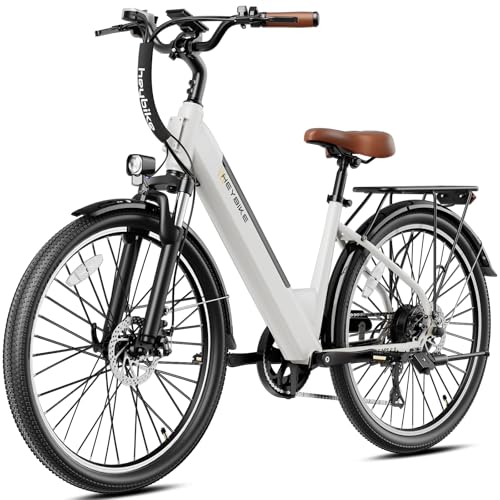
commuter
Heybike Cityscape 2.0
The Heybike Cityscape 2.0 is a value-tier Class 3 commuter on Amazon US: 1200 W peak (750 W...
Read the review
commuter
Funhang EB-C2
The Funhang EB-C2 is a Class 2 step-through commuter on paper, with a 500 W rated motor, a...
Read the review