E-bike ownership guides
Maintenance, ownership scenarios, buying context, and model-specific deep dives.
Class 1 vs 2 vs 3 E-Bikes Explained (2026)
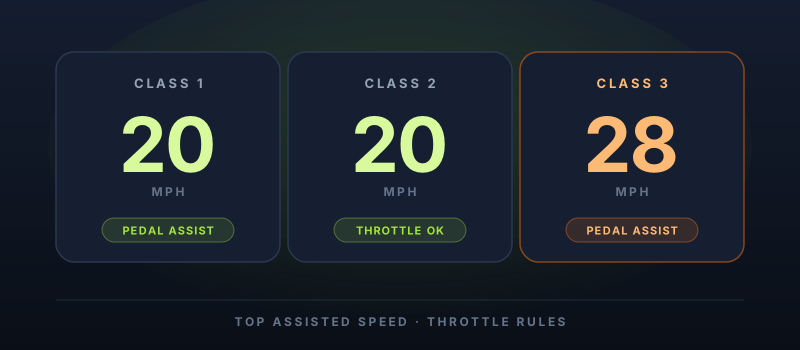
The US e-bike class system is actually simple: Class 1 is pedal-assist only at 20 mph, Class 2 adds a throttle at 20 mph, Class 3 raises the pedal-assist cap to 28 mph. The complication is that bike-path rules, state laws, and helmet requirements vary by class — and getting it wrong can mean a ticket, a deactivated trail pass,...
Read the guide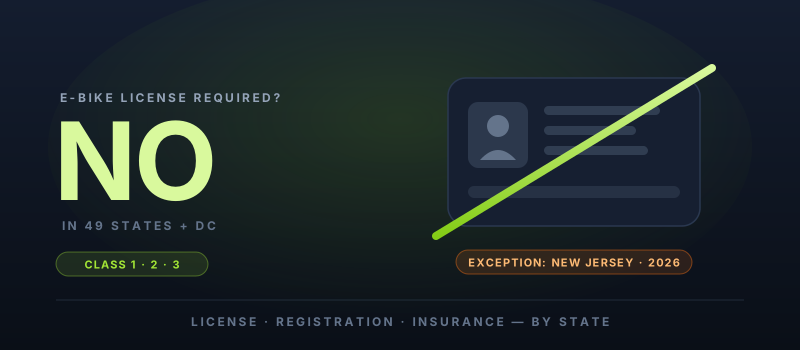
Do You Need a License for an E-Bike? 49 States: No (2026)
In 49 states and Washington, DC you do not need a license, registration, or insurance to ride a Class 1, 2, or 3 electric bike. New Jersey is the single exception — since July 19, 2026 every e-bike there requires a license and MVC registration — and Hawaii requires a one-time $30 registration but no license.
Read the guide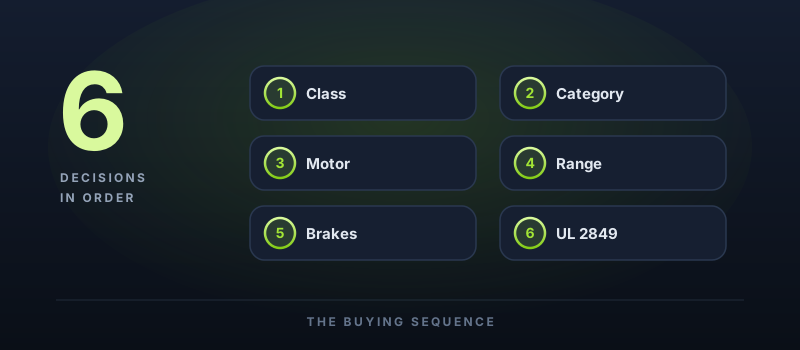
How to Choose an E-Bike in 2026: A Beginner's Buying Guide
Choosing an e-bike comes down to six decisions, in order: (1) the class (1, 2, or 3 — decides where you can legally ride), (2) the category (folding, commuter, cargo, family, or mountain — decides the frame), (3) the motor (250–750 W and hub vs mid-drive), (4) the battery (watt-hours, which decides range), (5) fit and components (brakes, sensor, frame...
Read the guide
Are E-Bike Batteries a Fire Risk? UL 2849 & Safe Charging
A quality, UL 2849-certified e-bike from a reputable brand is a very low fire risk. Nearly every documented e-bike fire traces to an uncertified battery, a damaged pack, or the wrong charger — not to e-bikes as a category. The fix is simple: buy a bike whose whole electrical system is certified to UL 2849 (battery to UL 2271), use...
Read the guide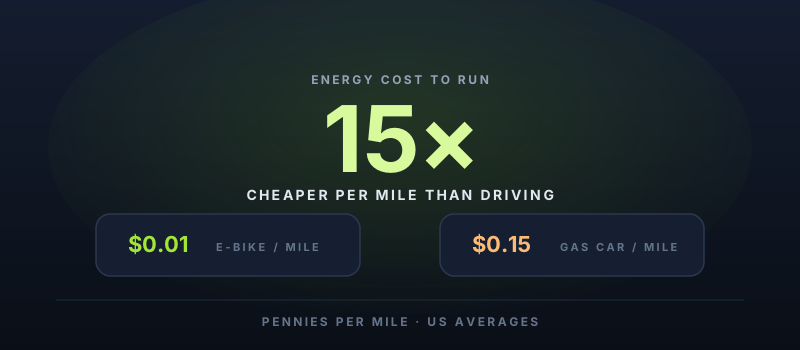
Are E-Bikes Worth It in 2026? The Real Cost to Own
For most commuters, yes — an e-bike is one of the cheapest vehicles you can own. A full charge costs about $0.10–$0.20 (under 1¢ per mile of electricity), annual running costs land around $85–$530, and a battery lasts 3–5 years before a $300–$800 replacement. Against a car — which AAA puts at roughly $11,577 a year to own and operate...
Read the guide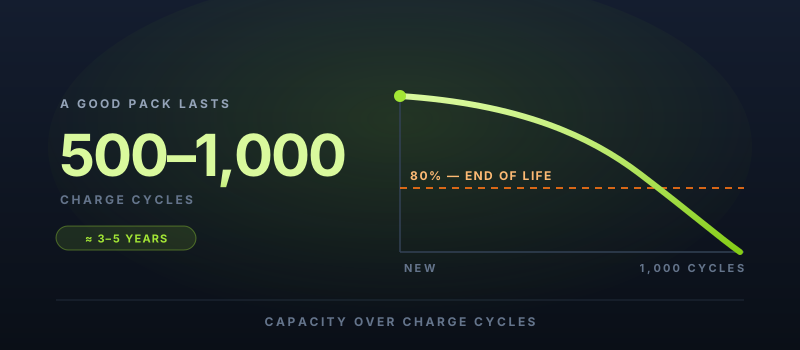
How Long Do E-Bike Batteries Last? Cycles & Years
Most e-bike batteries deliver 500–1,000 charge cycles before dropping below 80% of original capacity — roughly 3–5 years for a 2x/week commuter or 5–7 years for a casual rider. Premium 21700 cells (Samsung 50E, Panasonic NCR21700) reach 1,200–1,500 cycles. The single biggest lever for extending battery life: charge to 80%, not 100% unless you need the range. That alone roughly...
Read the guide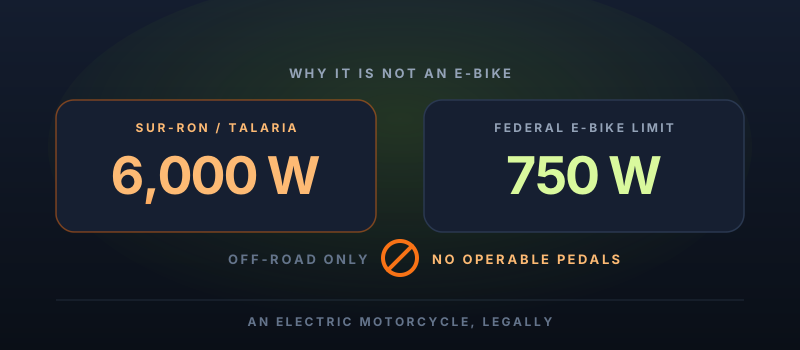
Are Sur-Rons Street Legal? What to Ride Instead
No — a stock Sur-Ron, Talaria, or Segway electric dirt bike is street legal in almost no US state, and lights and mirrors will not change that. It fails the federal e-bike test on all three counts (no pedals, far more than 750 W, far faster than 20 mph), so every state DMV treats it as an off-road motorcycle: legal...
Read the guide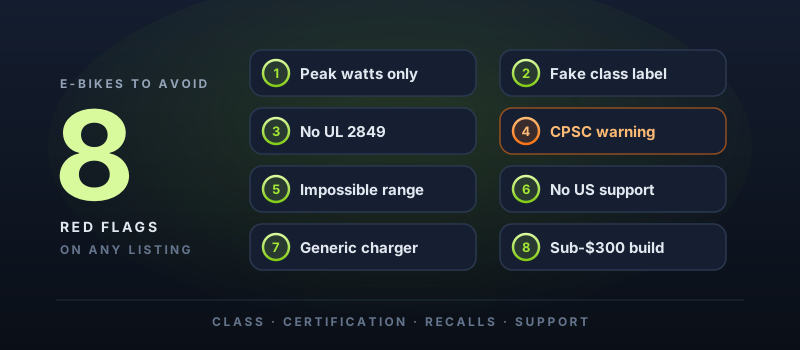
E-Bikes to Avoid (2026): Red Flags and Recalls
Stay away from e-bikes under a CPSC warning or an unfixed recall, bikes with no UL 2849 or UL 2271 certification, and listings hiding rated watts or top speed. The same listing should also survive basic range arithmetic, carry a class label that matches its motor and speed, and name who in the US handles a warranty claim. Price is...
Read the guide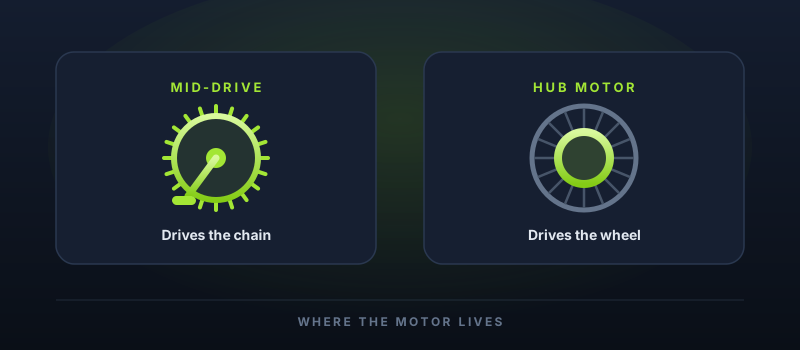
Mid-Drive vs Hub Motor: Which Wins for Hills & Range?
For most US riders in the $1,000–$2,500 price band, a hub motor is the right choice — simpler, cheaper, lower maintenance, and good enough for flat-to-rolling commutes up to ~30 miles a day. Switch to mid-drive if your commute has steep hills (>8% grade), you're hauling kids or 200+ lb cargo, you ride 50+ miles per day, or your budget...
Read the guide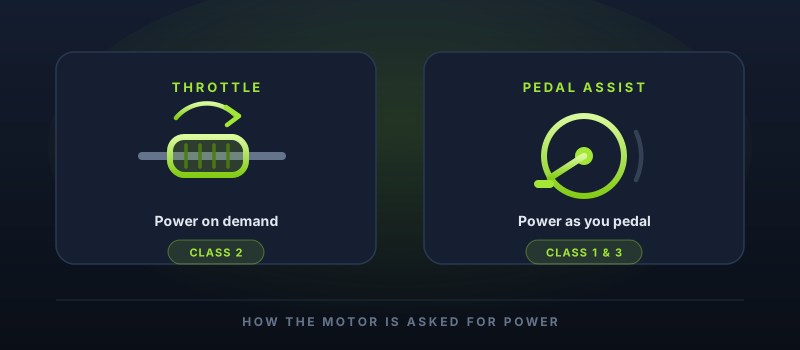
Throttle vs Pedal-Assist: Which E-Bike Should You Get?
Pedal-assist gives the motor power only while you pedal; a throttle delivers power on demand without pedaling. They are not either/or — a Class 2 e-bike has both, while Class 1 and Class 3 are pedal-assist only. Choose a throttle if you want effortless starts, help on hills from a standstill, or stop-and-go city riding. Choose pedal-assist (ideally with a...
Read the guide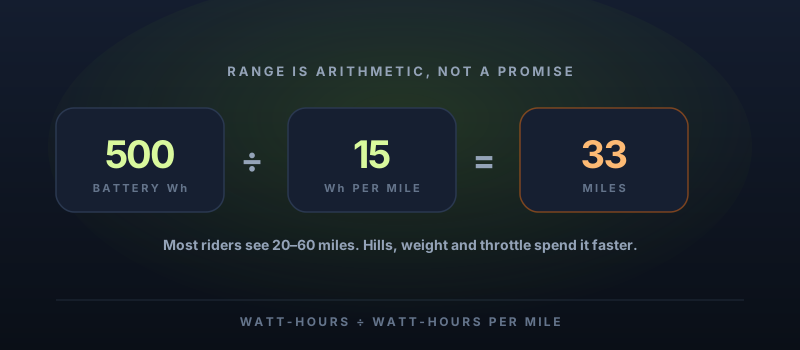
How Far Can an E-Bike Go on One Charge? Real Range
Most e-bikes travel 20–60 miles on a single charge, with long-range and dual-battery models reaching 80–100+ miles. The math is simple: range = battery watt-hours ÷ watt-hours used per mile, where real riding burns roughly 10 Wh/mi (efficient, flat) to 30 Wh/mi (throttle, hills, heavy load). So a 500 Wh battery does ~25 miles hard or ~50 miles easy. Always...
Read the guide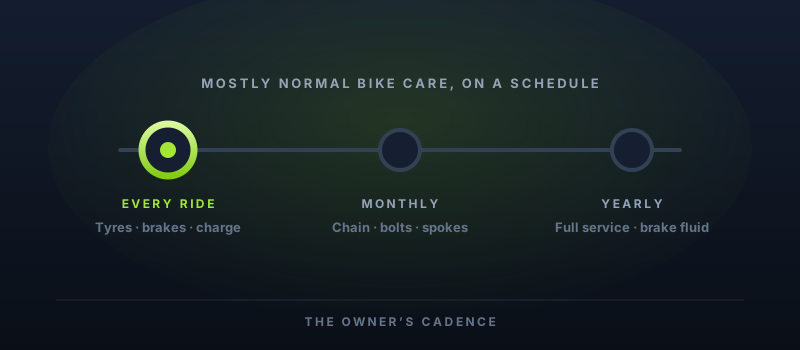
E-Bike Maintenance: The Complete Owner's Checklist
E-bike maintenance is mostly normal bike care plus a few electrical habits. Before every ride: check tire pressure, brakes, and battery charge. Every ~100–150 miles: clean and lube the chain. Monthly: check brake pads (replace near 1.5 mm, the thickness of a penny) and bolt torque. Twice a year: a tune-up (~$100). The electrical parts are low-maintenance — keep them...
Read the guide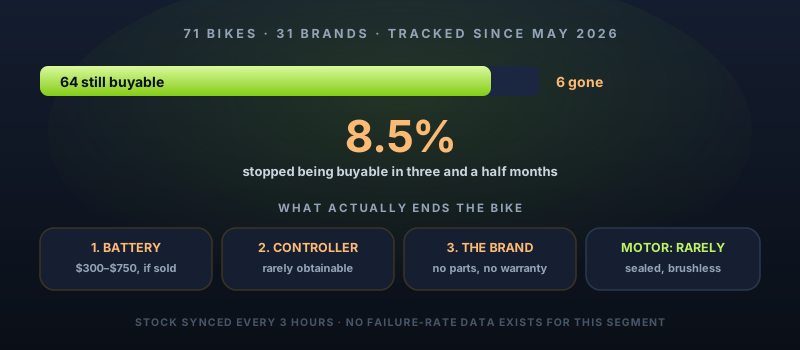
Are Electric Bikes Reliable? 71 Bikes Tracked
The mechanical parts of an electric bike are ordinary bicycle parts and fail in ordinary bicycle ways. The parts that actually strand owners are the battery, the controller and the brand itself — and the last one is the one nobody measures. We have tracked 71 bikes across 31 brands since May 2026 with a stock sync running every three...
Read the guide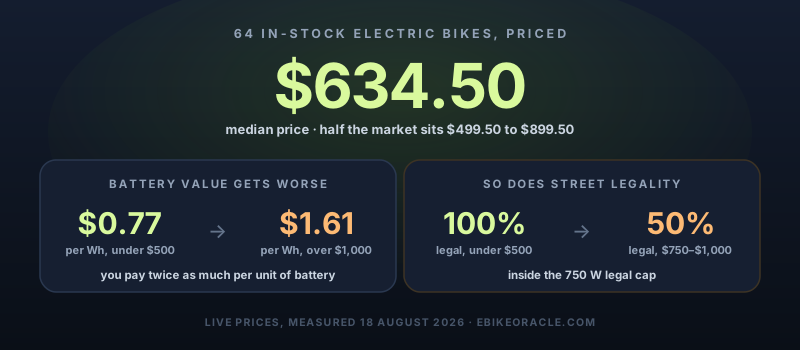
How Much Does an E-Bike Cost? 2026 Prices, 64 Live Bikes
The median in-stock electric bike we track costs $634.50, and half the market sits between $499.50 and $899.50. You can buy a working, street-legal e-bike for $199. Two things surprise people once you look at real prices rather than a range someone invented: cost per watt-hour of battery roughly doubles as you spend more ($0.77/Wh under $500 against $1.61/Wh over...
Read the guide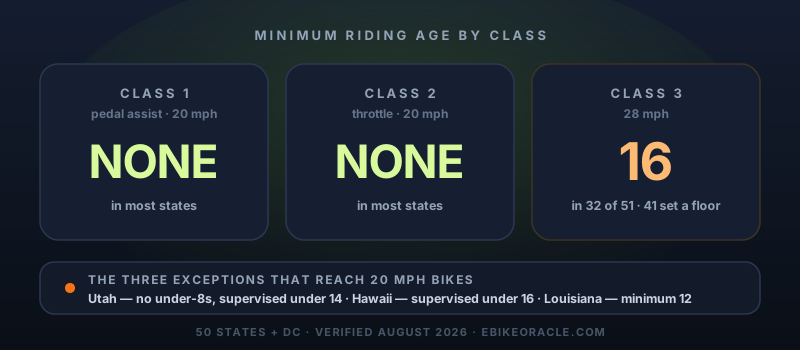
Electric Bike Age Limits by State (2026)
In most US states there is no minimum age at all to ride a Class 1 or Class 2 electric bike — the 20 mph kind almost every family buys. The age rules people expect apply to Class 3 (28 mph), where 41 of 51 jurisdictions set a floor, almost always 16. Three states break that pattern and are the...
Read the guide