Oregon E-Bike Laws 2026: 1,000 W Cap
Are e-bikes legal in Oregon?
Oregon adopted the federal three-class framework on 1 January 2025 via HB 4103 (2024 Or. Laws Ch. 12), signed by Governor Tina Kotek after unanimous House and Senate passage. The defining statute is ORS 801.258 and the status-as-bicycle rule is ORS 814.405. Oregon's framework keeps the state's pre-2024 1,000 W motor cap instead of the federal 750 W standard most states use — Oregon is the only US state with a 1,000 W cap — every other state uses the federal 750 W standard (see the PeopleForBikes state tracker for the authoritative current list). Class 1 e-bikes may be operated at any age, but Class 2 and Class 3 require operators 16 or older (or a driver's license / learner's permit). When a parent or legal guardian lets a child under 16 ride a Class 2 or Class 3 on a highway, the parent commits a Class E traffic violation carrying a maximum $100 fine — the new offence created by HB 4103.
Helmets are required under 16 under ORS 814.485. Sidewalk operation is heavily restricted under ORS 814.410 (unsafe operation of bicycle on sidewalk) and most cities post additional prohibitions. The political backstory: HB 4103 was originally titled "Trenton's Law" after Trenton Burger, a 15-year-old killed in Bend on 17 June 2023 when a van turned right into him while he was riding an e-bike on a sidewalk along Highway 20. The 2026 rebate landscape is the most generous in the US — Portland Rides E-Bike Rebate Program launched 6 April 2026 with $20 million over five years (up to $1,600 standard / $2,350 cargo / $8,500 adaptive at ≤60% AMI), and the statewide rebate proposal under HB 2963 (2025) would offer a $1,200 voucher to Oregon Health Plan recipients — currently being implemented via the 2025 HB 2025 transportation-package amendment.
Buying one? The Qlife Cityone Plus Step-Through (Class 3, 28 mph) and the Gotrax Dolphin 26-inch Step-Through (Class 2, 20 mph) are class-legal in Oregon and in stock at Amazon. For more choice, see our best e-bikes under $700.
Legal to ride in Oregon: our top class-legal pick
As an Amazon Associate I earn from qualifying purchases. Ebike Oracle may also earn a commission on links to other retailers. Full disclosure.

Qlife
Qlife Cityone Plus Step-Through Commuter
Class 3 — pedal-assist to 28 mph
Class 3 · 28 mph · Score 7.4
Free 30-day returns via Amazon
Other legal picks for Oregon

Class 2 — pedal-assist + throttle to 20 mph
Street-legal e-bikes you can buy in Oregon (2026)
Each fits a class Oregon treats as a bicycle, so it needs no registration or licence to ride.
| E-bike | Buy | Class | Speed |
|---|---|---|---|
| Qlife Cityone Plus Step-Through Commuter | Check price at Amazon | Class 3 | 28 mph |
| Gotrax Dolphin 26" Step-Through Commuter | Check price at Amazon | Class 2 | 20 mph |
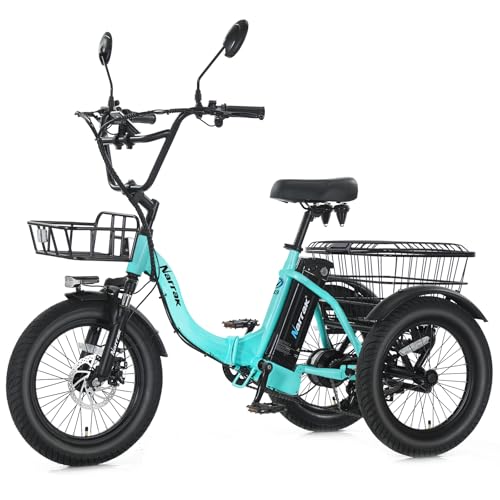
| NARRAK Folding Trike 350 | Check price at Amazon | Class 2 | 16 mph |
What are the e-bike rules in Oregon?
Sourced from the Oregon statute and verified against the PeopleForBikes State Law Tracker.
Check your setup
Is your e-bike legal in Oregon?
Your match
Qlife
Qlife Cityone Plus Step-Through Commuter
Oregon is one of the few states that allow Class 3 on bike paths. Riders must be 16+ per Oregon law.
Our score 7.4/10
Our top class-legal pick for Oregon, street-legal to ride today.
Free 30-day returns via Amazon
The 30-second answer
Oregon recognises three classes of e-bike under ORS 801.258 — the same Class 1/2/3 framework most US states use, but with the 1,000 W motor cap Oregon has used since 1997 (federal standard is 750 W). Class 1 is fully legal at any age; Class 2 and Class 3 require operators 16+ (or a driver's license / learner's permit). When a parent lets a child under 16 ride a Class 2 or 3 on a highway, the parent commits a Class E traffic violation (max $100) — the new offence created by HB 4103. No driver license. No registration. No insurance. Sidewalk operation is restricted under ORS 814.410 (unsafe operation of bicycle on sidewalk) — most cities post additional sidewalk-riding prohibitions. Helmets required under 16 (ORS 814.485). The framework was enacted via HB 4103 (2024), signed by Governor Kotek, effective 1 January 2025. The bill followed the 17 June 2023 death of 15-year-old Trenton Burger in Bend — struck by a van turning right while he was riding an e-bike on a Highway 20 sidewalk.
The full Oregon rules, section by section. Tap any section to read it.
Quick reference
Quick reference
| Spec | Oregon rule |
|---|---|
| Framework | Federal Class 1/2/3 (adopted 1 Jan 2025) |
| Definition statute | ORS 801.258 |
| Status statute | ORS 814.405 — bicycle, not motor vehicle |
| Motor power cap | <1,000 W (Oregon only; federal standard elsewhere is 750 W) |
| Class 1 (pedal-assist, ≤20 mph) | ✅ Legal at any age |
| Class 2 (throttle, ≤20 mph) | ✅ Legal — operator 16+ |
| Class 3 (pedal-assist, ≤28 mph) | ✅ Legal — operator 16+, speedometer required |
| Driver license | Not required for compliant e-bikes |
| Registration | Not required |
| Insurance | Not required |
| Minimum operating age (Class 1) | None |
| Minimum operating age (Class 2 + 3) | 16 (or under-16 with driver's license / learner's permit) |
| Helmet | Required under 16 (ORS 814.485) |
| Sidewalk operation | Restricted (ORS 814.410); most cities ban outright |
| New offence (HB 4103) | Parent of <16 riding Class 2/3 on highway — Class E violation, max $100 |
| State parks | E-bikes allowed where bicycles are (effective 1 July 2025) unless posted |
How Oregon landed on the three-class system
How Oregon landed on the three-class system
Oregon's original e-bike statute dated to 1997 — long pre-dating Class 1/2/3 — and treated all e-bikes as a single category capped at 1,000 W and 20 mph. The state was a 1,000 W outlier from the start (most states use the federal 750 W standard), and HB 4103 kept that 1,000 W cap when overlaying the three-class framework.
The bill's political trigger was the death of Trenton Burger in Bend on 17 June 2023 — one month shy of his 16th birthday. The 15-year-old was riding an e-bike on a sidewalk along Highway 20 when a van turned right into him; he was struck and killed. Trenton's mother became an outspoken advocate for tighter e-bike rules, and Rep. Emerson Levy (D-Bend) introduced HB 4103 in the 2024 short session under the working title "Trenton's Law". Sources: Bend Bulletin coverage · OPB · KTVZ.
The bill was substantially amended during committee. The introduced version proposed banning all under-16 from Class 2 and Class 3; the enacted version kept that age boundary for Class 2 and 3 but retained Class 1 access for under-16 riders without a license. HB 4103 also created the new parental-liability offence (Class E traffic violation, max $100) targeting parents who let children under 16 operate Class 2 or 3 on a highway. The bill passed the Oregon House unanimously on 28 February 2024, cleared the Senate by a similar margin, was signed by Governor Tina Kotek as 2024 Or. Laws Ch. 12, and took effect 1 January 2025.
ORS 801.258 — the verbatim definition
ORS 801.258 — the verbatim definition
The defining statute reads (in pertinent part):
"Electric assisted bicycle" means a vehicle that: (a) Is designed to be operated on the ground on wheels; (b) Has a seat or saddle for use of the rider; (c) Is designed to travel with not more than three wheels in contact with the ground; (d) Is equipped with operative pedals and an electric motor; and (e) Has a motor that: (A) Has a power output of not more than 1,000 watts; and (B) Is incapable of propelling the vehicle at a speed of greater than 20 miles per hour on level ground.
HB 4103 added the three-class structure on top of this base definition:
Class 1. Provides assistance only when the rider is pedaling; ceases to provide assistance at 20 mph.
Class 2. May be propelled exclusively by motor; ceases to provide assistance at 20 mph.
Class 3. Provides assistance only when the rider is pedaling; ceases to provide assistance at 28 mph; equipped with a speedometer.
Two practical takeaways:
- Oregon is the only 1,000 W state. A bike rated 800 W or 900 W (rare, but you see them on some Bafang mid-drive builds and some cargo bikes) is legal in Oregon but illegal in nearly every other state. The federal CPSC standard is 750 W, which nearly every state uses as its cap. Oregon is the only state that allows up to 1,000 W — the PeopleForBikes state tracker is the authoritative source for the current list.
- The 20 mph motor-only test still applies to all classes. Even on a Class 3, the motor itself cannot push the bike past 20 mph without rider pedaling — the 28 mph cap is a pedal-assist combined cap, not a motor-only cap.
Operating rules — what HB 4103 actually changed
Operating rules — what HB 4103 actually changed
- Class 1 — any age. Under-16 riders may lawfully operate Class 1 e-bikes without a driver's license.
- Class 2 + Class 3 — operator 16+. Under-16 may operate Class 2 or Class 3 only if they hold a valid driver's license or learner's permit.
- Parental-liability offence. Under HB 4103, a parent, legal guardian, or person with legal responsibility for a child under 16 commits the offence of "unsafe electric assisted bicycle riding" if the child operates a Class 2 or Class 3 e-bike on a highway. Class E traffic violation, maximum $100 fine. This is the offence created by HB 4103 — it targets the parent's decision to allow the operation, not the child themselves.
- Helmets required under 16 under ORS 814.485. Adults are not required to wear helmets, but children are. The bicycle helmet law applies the same way to e-bikes.
- Sidewalk operation restricted under ORS 814.410. The statute requires audible warning before passing pedestrians, prohibits sudden departures from curbs, and bans careless operation. Many Oregon cities (Portland, Eugene, Bend, Salem) post outright sidewalk-riding bans in their downtown cores.
- Status as bicycle preserved. ORS 814.405 maintains that a compliant e-bike is a bicycle, not a motor vehicle, for all traffic-law purposes. Stop signs, traffic lights, right-of-way, lane positioning — standard bicycle rules apply.
- Bike paths and lanes — full access. E-bikes are allowed wherever bicycles are allowed under state law. Local jurisdictions (cities, parks, federal land) may post additional restrictions.
Portland — the most generous US city e-bike rebate
Portland — the most generous US city e-bike rebate
The Portland Rides E-Bike Rebate Program launched 6 April 2026 with applications open at portlandebikerebate.com. Adaptive-bike applications opened 20 April 2026. The program is administered by the Portland Bureau of Planning & Sustainability and funded by the Portland Clean Energy Community Benefits Fund (PCEF) — a fund created by Portland voters in 2018 to charge large retailers a 1% gross-receipts tax for climate-action investments.
Program scale: $20 million over 5 years through December 2029. Target: 6,000+ e-bikes (standard, cargo, adaptive). Portland's rebate is one of the three largest US municipal e-bike programs (alongside Denver's $9M/year and Vancouver WA's $2M pilot).
Rebate amounts:
- Standard Class 1 or Class 2 e-bike: up to $1,600
- Cargo Class 1 or Class 2 e-bike: up to $2,350
- Adaptive e-bike (riders with disabilities): up to $8,500
- Accessories (helmet, lock, lights, fenders): up to $300
Eligibility (Standard / Cargo):
- Portland resident
- Age 18 or older
- Household income at or below 60% Area Median Income (AMI) — for 2026 the threshold is $74,460 for a 4-person household (Portland-area AMI scale; smaller households scale down proportionally)
- Income verified at point of application
Eligibility (Adaptive):
- Portland resident
- Household income at or below 80% AMI (more generous than Standard/Cargo)
- Medical documentation showing a chronic or permanent disability requiring an adaptive e-bike
How it works: instant point-of-sale discount at participating Portland retailers — no waiting for a check after purchase. The bike must be Class 1 or Class 2 (no Class 3 in the program — PCEF cited safety priorities).
The statewide DEQ rebate (HB 2963)
The statewide DEQ rebate (HB 2963)
On top of the Portland city program, Oregon has been working on a statewide rebate under HB 2963 (2025 session) (sponsored by Rep. Mark Gamba, D-Milwaukie). HB 2963 was folded into the HB 2025 transportation package during the 2025 session via amendment — final implementation is being administered by the Oregon Department of Environmental Quality (DEQ):
- Voucher: $1,200 per e-bike
- Funding: $6 million seed from the General Fund → roughly 5,000 vouchers
- Eligibility: Oregon Health Plan / "medical assistance" recipients (current or within prior 12 months)
- Administered by: Environmental Quality Commission via DEQ (policy arm)
- Status as of May 2026: DEQ rulemaking is underway under the 2026 EV Rebates rulemaking docket; the voucher program is in implementation phase, not yet fully open
- Stacking: likely permitted with utility rebates (EWEB $300); cannot stack with Portland Rides on the same bike
Track current status at evrebate.oregon.gov and goelectric.oregon.gov. The DEQ rulemaking docket is the authoritative source for "is the program open yet?" — check it before assuming you can apply.
Utility-level rebates
Utility-level rebates
- EWEB (Eugene Water & Electric Board) — up to $300 for residential customers; not to exceed the cost of the bike. Stacks with statewide DEQ voucher.
- City of Bend pilot — $2,000 for 75 income-qualifying transportation-disadvantaged households; rebate paid directly to retailers
- PGE / Pacific Power — periodic EV-incentive promotions; check current eligibility
For a stacked example: an Oregon Health Plan recipient in Eugene buying a Class 1 e-bike could combine HB 2963 ($1,200) + EWEB rebate ($300) = $1,500 off a bike that retails at, say, $1,800 — bringing the out-of-pocket cost to about $300.
Trails, paths, and federal land
Trails, paths, and federal land
Portland Metro
- Springwater Corridor Trail (21 mi) — e-bikes allowed wherever bicycles are; no class restrictions
- Eastbank Esplanade + Tom McCall Waterfront Park — e-bikes allowed; 10 mph posted in pedestrian-heavy sections
- Banks-Vernonia State Trail — Oregon Parks rule (see below)
- Forest Park (5,200 acres in NW Portland) — e-bikes allowed on the Leif Erikson and Saltzman roads (gravel fire roads); singletrack closed to e-bikes by Portland Parks
Statewide (Oregon Parks & Recreation Department)
Effective 1 July 2025, the Oregon Parks and Recreation Department updated its rules: e-bikes are allowed wherever bicycles are allowed within state parks unless posted otherwise. Most paved and gravel multi-use trails are now open to all three classes. Singletrack mountain-bike trails are still posted with class restrictions at the trailhead — typically Class 1 allowed, Class 2 and 3 prohibited.
Reference: Oregon State Parks — E-bikes in Oregon State Parks.
Federal land
- Crater Lake National Park — NPS rule: Class 1 e-bikes allowed on roads open to bicycles. Rim Drive is the marquee ride.
- Oregon Caves National Monument — NPS rule applies
- Mt. Hood National Forest (USFS) — e-bikes treated as motor vehicles; allowed only on roads and trails open to motor vehicles. Most singletrack is closed.
- Deschutes National Forest — same USFS rule; Bend's legendary Phil's Trail singletrack is closed to e-bikes
- Cycle Oregon, Sunriver, and most Bend e-MTB destinations post Class 1-only rules on the dedicated MTB trail network
What are the penalties for breaking e-bike laws in Oregon?
What are the penalties for breaking e-bike laws in Oregon?
- Parental liability for under-16 on Class 2/3 (HB 4103): Class E traffic violation, maximum $100 fine. The parent or guardian is cited, not the child.
- Unsafe operation of bicycle on sidewalk (ORS 814.410): Class B traffic violation, presumptive $165 fine (max ~$265). Applies to e-bikes via the bicycle-status rule in ORS 814.405.
- No helmet under 16 (ORS 814.485): $25 base fine; often waived on proof of helmet purchase. Parent can also be cited under ORS 814.486.
- Operating a >1,000 W or >20 mph motor-only device on public roads as an e-bike: treated as operating an unregistered moped under ORS 803.305; citation + potential vehicle impoundment
Enforcement is concentrated in Bend (Trenton's Law cradle), Portland (delivery-rider sidewalk sweeps), and Eugene (downtown bike-lane enforcement).
Class 3 in Oregon — fully legal, just age-gated
Class 3 in Oregon — fully legal, just age-gated
Unlike Hawaii (Class 3 illegal) or California (Class 3 banned on most Class 1 MTB trails), Oregon's Class 3 rule is straightforward: legal on streets, bike lanes, and bike paths where signed, 16+ operator required. No insurance, no registration, no DOT equipment. The marquee Class 3 ride routes:
- Banks-Vernonia State Trail (21 mi) — Class 3 allowed
- Springwater Corridor — Class 3 allowed (Portland Parks rule)
- Willamette Valley Scenic Bikeway — Class 3 allowed on the road sections
- Cascade Bicycling Loop / Hood River Fruit Loop — public roads; Class 3 fully legal
Class 3 mountain biking on USFS/BLM land is generally not allowed — the motor-vehicle classification applies. Stick to fire roads or dedicated motorised-OHV trails.
What about other states?
What about other states?
Oregon's combination of generous power cap, strict age rules, and most-generous-in-US rebates makes it an outlier. Comparison points:
- California — three-class, 750 W cap, large state rebate ($1k-$2k), Class 3 banned on many MTB trails
- Washington — three-class, 750 W cap, Seattle helmet rule, Rad Power HQ alignment
- Colorado — three-class, 750 W cap, mandatory battery certification 1 Jan 2027
- Texas — three-class, 750 W cap, very permissive Class 3
- Illinois — three-class, 750 W cap, sidewalk ban + Class 3 trail bans
- Hawaii — single category + $30 mandatory registration
- New Jersey — three-class abolished Jan 2026; license + registration + insurance required
For a side-by-side compliance check, use the e-bike legality checker. For the federal three-class framework explainer, read Class 1, 2, 3 e-bikes explained.
Bottom line
Bottom line
Oregon residents: ride wherever bicycles are allowed except sidewalks (restricted under ORS 814.410; most cities ban outright). The 1,000 W power cap means almost any consumer e-bike sold in the US is Oregon-legal — including 900 W cargo bikes that are illegal in nearly every other state. Children under 16 may ride Class 1, but Class 2 and Class 3 require operators 16+ (or a driver's license / learner's permit). If a parent lets a child under 16 ride Class 2 or 3 on a highway, the parent is on the hook for a Class E traffic violation (max $100).
Income-qualifying buyers: the rebate stack is the best in the US. Portland residents at ≤60% AMI: apply at portlandebikerebate.com — up to $1,600 standard / $2,350 cargo / $8,500 adaptive, instant point-of-sale discount. Oregon Health Plan recipients statewide: apply at evrebate.oregon.gov for the $1,200 HB 2963 voucher. Eugene residents: stack the EWEB $300 utility rebate. Bend residents: check the 75-household city pilot.
Class 3 owners: legal on streets and most bike paths, but check the USFS/BLM land rule before MTB rides — Class 3 is treated as a motor vehicle on federal land.
HB 4103 is now Oregon law. Watch the 2027 legislative session for any follow-up bills tightening the >1,000 W enforcement framework (Sur-Ron / Talaria gap).
Sources: ORS 801.258 (definition) — Oregon Public Law; ORS 814.405 (status as bicycle); ORS 814.410 (sidewalk ban); ORS 814.485 (helmet under 16); HB 4103 (2024 Or. Laws Ch. 12) — OLIS; HB 2963 (2025 statewide rebate); Portland Rides E-Bike Rebate Program; Portland announcement (6 April 2026); DEQ EV Rebates 2026 rulemaking; EWEB e-bike rebate; Oregon State Parks e-bike rules; OPB — Oregon House passes e-bike bill after Bend teen's death; BikePortland — Oregon e-bike rebate bill. Verified 17 May 2026.
E-bikes that fit Oregon's rules
Filtered from our review catalog by class eligibility under Oregon statute. Spec-matched, not popularity-ranked.
- Class 3
 Amazon
Qlife
Qlife Cityone Plus Step-Through Commuter
Class 3 — pedal-assist to 28 mph
Oregon is one of the few states that allow Class 3 on bike paths. Riders must be 16+ per Oregon law.500 W · 28 mph · Score 7.4
Read the review - Class 2Amazon
Gotrax
Gotrax Dolphin 26" Step-Through Commuter
Class 2 — pedal-assist + throttle to 20 mph
Permitted on roads, bike lanes, and bike paths in Oregon.350 W · 20 mph · Score 7.1
Read the review - Class 2Amazon
NARRAK
NARRAK Folding Trike 350
Class 2 — pedal-assist + throttle to 20 mph
Permitted on roads, bike lanes, and bike paths in Oregon.350 W · 16 mph · Score 7.1
Read the review
Eligibility is class-based: picks shown here are legal to own and operate on roads in Oregon. Local jurisdictions (state parks, beach paths, individual cities) may add further restrictions; see the body above for the specifics.
Recent Oregon e-bike law coverage
News-form posts that reference Oregon's statutes or covered a change affecting Oregon riders.
Frequently asked questions
Are e-bikes legal in Oregon?
Yes — Oregon adopted the federal three-class framework on 1 January 2025 via HB 4103 (2024 Or. Laws Ch. 12), signed by Governor Tina Kotek. The defining statute is ORS 801.258. Oregon is the only state with a 1,000 W motor cap (vs. the 750 W federal standard). Class 1, 2, and 3 are all legal. No license, registration, or insurance required. Class 1 may be operated at any age; Class 2 and Class 3 require operators 16 or older (or a driver's license / learner's permit).
Why does Oregon allow 1,000 W when most states cap at 750 W?
Historical accident. Oregon's original e-bike statute dates to 1997, well before the 2002 federal Consumer Product Safety Act (15 U.S.C. §2085) established the 750 W standard most states adopted. When Oregon updated to three-class via HB 4103 (2024), the legislature kept the existing 1,000 W cap to avoid suddenly outlawing high-power cargo bikes already on Oregon roads. Practical effect: bikes rated up to 1,000 W are Oregon-legal but illegal in nearly every other state, which uses the federal 750 W cap. As of 2026, Oregon is the only US state with a 1,000 W e-bike cap.
Can my 14-year-old ride an e-bike in Oregon?
Class 1: yes. Class 2 or 3: no — not without a driver's license or learner's permit. HB 4103 (2024) retained Class 1 access for all ages but restricted Class 2 and Class 3 to operators 16+. If a parent or guardian lets a child under 16 ride a Class 2 or Class 3 on a highway, the parent commits a Class E traffic violation (maximum $100 fine). Children of any age can still ride a non-electric bicycle.
What is "Trenton's Law"?
"Trenton's Law" was the working title of HB 4103 (2024), named for Trenton Burger, a 15-year-old from Bend who was killed on 17 June 2023 — one month shy of his 16th birthday — when struck by a van turning right while he was riding an e-bike on a sidewalk along Highway 20. His mother became an advocate for tighter e-bike rules. The bill was sponsored by Rep. Emerson Levy (D-Bend), passed the Oregon House unanimously on 28 February 2024, cleared the Senate, was signed by Governor Tina Kotek, and took effect 1 January 2025 as 2024 Or. Laws Ch. 12. Coverage: Bend Bulletin · OPB · KTVZ.
How does the Portland Rides E-Bike Rebate work?
The Portland Rides E-Bike Rebate Program launched 6 April 2026 (adaptive applications opened 20 April) with $20 million over 5 years through December 2029, targeting 6,000+ e-bikes. Standard / Cargo eligibility: Portland resident, age 18+, household income ≤60% Area Median Income — the 4-person 60% AMI threshold is $74,460 in 2026. Adaptive eligibility: Portland resident, ≤80% AMI, plus medical documentation showing a chronic or permanent disability. Rebate amounts: up to $1,600 standard Class 1/2, $2,350 cargo Class 1/2, $8,500 adaptive, $300 accessories. Class 3 is not eligible. Apply online at portlandebikerebate.com — instant point-of-sale discount at participating retailers, no waiting for a check. Funded by the Portland Clean Energy Community Benefits Fund (PCEF).
Is there a statewide e-bike rebate in Oregon?
In implementation. HB 2963 (2025) (sponsored by Rep. Mark Gamba, D-Milwaukie) proposed a $1,200 voucher administered by the Oregon DEQ and funded at $6 million from the General Fund (~5,000 vouchers). The bill was rolled into the larger HB 2025 transportation package via amendment. DEQ rulemaking under the 2026 EV Rebates docket is underway as of May 2026 — check evrebate.oregon.gov for the latest status before assuming the program is open. Eligibility: current or recent (within 12 months) Oregon Health Plan / medical assistance recipients.
Can I ride on the sidewalk in Oregon?
Generally no, with restrictions. ORS 814.410 ("unsafe operation of bicycle on sidewalk") makes sidewalk operation a Class B traffic violation when the rider fails to give audible warning before overtaking pedestrians, leaves the curb suddenly into the path of a vehicle, or rides carelessly. Most Oregon cities (Portland, Eugene, Bend, Salem) post outright sidewalk-riding bans in their downtown cores. Presumptive fine for an §814.410 violation is $165 (max ~$265). Trenton Burger was killed in 2023 riding on a Bend sidewalk; HB 4103 left ORS 814.410 in place as the controlling statute.
Are e-bikes allowed in Oregon state parks?
Yes — effective 1 July 2025, the Oregon Parks and Recreation Department updated its rules: e-bikes are allowed wherever bicycles are allowed within state parks, unless posted otherwise. Most paved and gravel multi-use trails are now open to Class 1, 2, and 3. Singletrack mountain-bike trails are typically posted as Class 1 only, with Class 2 and 3 prohibited. Reference: Oregon State Parks e-bike rules.
Are Sur-Ron and Talaria e-bikes legal in Oregon?
Not as e-bikes. A Sur-Ron Light Bee or Talaria Sting exceeds Oregon's 1,000 W cap and the 20 mph motor-only test in ORS 801.258 — so it is not an electric assisted bicycle. It legally defaults to moped under ORS 801.345 or motorcycle under ORS 801.365, requiring DMV registration, an operator license, insurance, and DOT equipment. Most consumer Sur-Ron / Talaria units lack the DOT equipment needed to register, making them effectively unregistrable for public-road use. HB 4103 created the offence of "unsafe e-bike riding" partly to give police a clean charge for stopping these on shared bike paths.
Do I need a helmet to ride an e-bike in Oregon?
Under 16: yes, mandatory under ORS 814.485. The bicycle helmet law applies the same way to e-bikes. 16 and over: no, helmets are not legally required, though strongly recommended. Fine for under-16 violation is $25 base — often waived on proof of helmet purchase. Some cities (Portland, Eugene) run helmet giveaway programs for low-income families.
Can I ride Class 3 in Forest Park or on Mt. Hood?
Forest Park (Portland): yes on the gravel fire roads (Leif Erikson, Saltzman) where motor vehicles are allowed; no on singletrack (Portland Parks prohibits e-bikes on singletrack). Mt. Hood National Forest (USFS): no — federal land treats e-bikes as motor vehicles, allowed only on routes open to motor vehicles. Most Mt. Hood singletrack is closed to all e-bikes including Class 1. Deschutes National Forest near Bend: same USFS rule — the famous Phil's Trail singletrack network is closed to e-bikes.
What's the offence of "unsafe e-bike riding"?
HB 4103 created ORS 814.413 — a Class D traffic violation with a maximum $100 fine. The offence covers: (1) operating an e-bike that doesn't match the class on the manufacturer label, (2) operating beyond the class's rated top speed by motor alone, (3) operating in a manner that endangers the rider or others. It's the lightest of the new HB 4103 penalties and is generally used by police to address tampered bikes and Sur-Ron / Talaria-class devices being ridden as if they were e-bikes.
How do other states compare?
Compare Oregon's rules with states that share a similar framework.
Common e-bike law questions
The national answer to the questions Oregon riders ask most, covering every US state, side by side.
Cite or link this page
Found this useful? Link to it.
This guide is free to reference. If it helped you, a link helps more riders find accurate, up-to-date law info, and we keep it current (last reviewed May 17, 2026). Licensed CC BY 4.0. Reuse the data with attribution.
<a href="https://ebikeoracle.com/laws/oregon">Oregon E-Bike Laws 2026: 1,000 W Cap — Ebike Oracle</a>
Ebike Oracle. "Oregon E-Bike Laws 2026: 1,000 W Cap." Ebike Oracle, 2026, https://ebikeoracle.com/laws/oregon.