Hawaii E-Bike Laws 2026: $30 Registration, Act 259
Are e-bikes legal in Hawaii?
Hawaii is the only US state that requires e-bike registration — a permanent $30 fee under HRS §249-14, paid once to the county Director of Finance, with a metallic tag or decal issued. Hawaii defines a "low-speed electric bicycle" by direct reference to 15 U.S.C. §2085 (the federal Consumer Product Safety Act definition): ≤750 W motor, fully operable pedals, ≤20 mph on motor alone, two or three wheels. That changed on 15 July 2026. HB 2021 was signed by Governor Josh Green as Act 259, effective immediately on signature, and it is the biggest rewrite of Hawaii e-bike law to date. Act 259 adopts the federal Class 1/2/3 definitions — Hawaii previously had a single "low-speed electric bicycle" category with no class split — raises the helmet requirement from under-16 to under-18, and bars anyone under 16 from operating a Class 2 or Class 3 e-bike without the direct supervision of a parent or guardian. It also requires manufacturers to permanently label each bike with its classification number, top assisted speed, and motor wattage, requires sellers to hand buyers a state-law pamphlet, and reclassifies two- and three-wheelers capable of more than 28 mph on electric power as e-motorcycles needing a licence, registration, and insurance. The $30 registration survives untouched. Hawaii also runs a meaningful state rebate — up to $500 or 20% of retail price under HRS §196-7.8, administered by HIDOT for income-qualifying buyers.
Buying one? The Hoverfly OUREA (Class 2, 20 mph) and the Funhang Fat 26 (Class 2, 20 mph) are class-legal in Hawaii and in stock at Amazon. For more choice, see our best e-bikes under $600.
Legal to ride in Hawaii: our top class-legal pick
As an Amazon Associate I earn from qualifying purchases. Ebike Oracle may also earn a commission on links to other retailers. Full disclosure.

Class 2 — pedal-assist + throttle to 20 mph
Class 2 · 20 mph · Score 7.4
Free 30-day returns via Amazon
Other legal picks for Hawaii

Street-legal e-bikes you can buy in Hawaii (2026)
Each fits a class Hawaii treats as a bicycle.
| E-bike | Buy | Class | Speed |
|---|---|---|---|
| Hoverfly OUREA | Check price at Amazon | Class 2 | 20 mph |
| Funhang Fat 26 | Check price at Amazon | Class 2 | 20 mph |
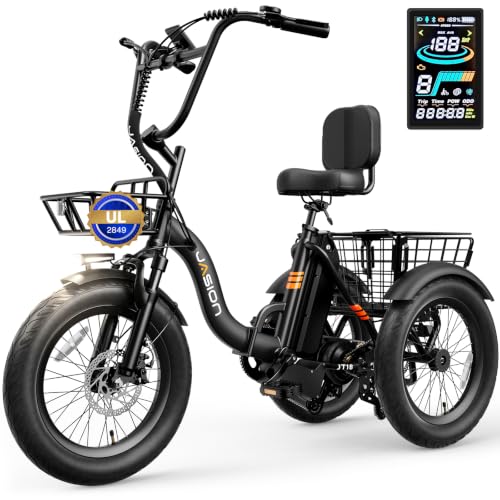
| Jasion Electric Trike | Check price at Amazon | Class 2 | 16 mph |
What are the e-bike rules in Hawaii?
Sourced from the Hawaii statute and verified against the PeopleForBikes State Law Tracker.
Check your setup
Is your e-bike legal in Hawaii?
The 30-second answer
Hawaii is the only US state that requires e-bike registration. The headline rule, HRS §249-14, reads in part:
A low-speed electric bicycle, as defined under title 15 United States Code section 2085, shall be required to be registered, and shall be subject to a permanent registration fee of $30, to be paid by the owners thereof to the director of finance.
Definition flows from federal law — 15 U.S.C. §2085 defines a low-speed electric bicycle as a two- or three-wheeled vehicle with fully operable pedals and an electric motor of less than 750 W (1 hp), whose maximum speed under motor power alone is less than 20 mph. To be a registrable HI e-bike, your bike must meet ALL of:
- Motor <750 W
- Two or three wheels
- Fully operable pedals
- Maximum speed <20 mph under motor power alone on a paved level surface
A registered low-speed electric bicycle is treated as a bicycle for traffic-law purposes — no driver license, no insurance — but the registration requirement is absolute. Minimum operating age is 15 (HRS §291C-143.5), and since Act 259 (15 July 2026) you must be 16 to operate a Class 2 or Class 3 unsupervised. Helmets are now required under age 18 statewide — Act 259 raised that from under-16. Act 259 also wrote the Class 1/2/3 definitions into Hawaii law for the first time, so a 28 mph Class 3 e-bike is now a recognised category rather than an automatic moped. Anything capable of more than 28 mph on electric power is an e-motorcycle under Act 259 and requires motorcycle licensure + DMV registration + insurance.
The full Hawaii rules, section by section. Tap any section to read it.
Quick reference
Quick reference
| Spec | Hawaii rule |
|---|---|
| Framework | Class 1/2/3 — adopted by Act 259 (HB2021), effective 15 July 2026 (previously a single "low-speed electric bicycle" category) |
| Registration | ✅ Required — $30 permanent fee via county Director of Finance (HRS §249-14) |
| Class 1 (pedal-assist, ≤20 mph) | ✅ Legal (registration still required) |
| Class 2 (throttle, ≤20 mph) | ✅ Legal — operator 16+, or under-16 with direct parent/guardian supervision |
| Class 3 (pedal-assist, ≤28 mph) | ✅ Recognised under Act 259 — operator 16+, or under-16 with direct parent/guardian supervision |
| Over 28 mph on electric power | ❌ E-motorcycle — licence, registration, and insurance required |
| Motor power cap | <750 W (federal CPSC standard) |
| Motor-only top speed | <20 mph on paved level surface |
| Operable pedals | Required |
| Driver license | Not required for compliant low-speed e-bikes |
| Insurance | Not required |
| Helmet | Required under age 18 statewide — raised from under-16 by Act 259 (15 July 2026) |
| Minimum operating age | 15 for any e-bike (HRS §291C-143.5); 16 to operate a Class 2 or Class 3 unsupervised (Act 259) |
| Manufacturer label | Required — classification number, top assisted speed, motor wattage (Act 259) |
| Seller disclosure | Required — buyers must receive a state-law pamphlet (Act 259) |
| State rebate | Up to $500 / 20% for income-qualifying buyers (HRS §196-7.8) |
How registration actually works
How registration actually works
Each Hawaii county runs its own counter through its Department of Finance / Customer Services:
- Honolulu County (Oahu) — Customer Services Department, vehicle registration division
- Hawaii County (Big Island) — Department of Finance, vehicle registration
- Maui County — Department of Finance, Motor Vehicle and Licensing
- Kauai County — Department of Finance, Motor Vehicle Registration
What you bring:
- Proof of ownership — original sales receipt, bill of sale, or manufacturer's certificate of origin (MCO)
- Government-issued photo ID
- $30 — cash always accepted; card varies by county
- The e-bike itself for any required inspection
You receive a metallic registration tag or decal that must be affixed to the bike. The registration is permanent (one-time) — Hawaii does not renew or prorate the fee. The metallic tag also facilitates the recovery of stolen bikes (per HRS §249-14).
Heads-up — non-electric bicycles over 20" tandem wheel diameter are subject to a similar one-time registration too ($15 under §249-14(a)). E-bikes' $30 fee is the §249-14(b) line item.
The state rebate program (often overlooked)
The state rebate program (often overlooked)
HRS §196-7.8 authorises a state-administered rebate of up to $500 or 20% of retail price (whichever is lower) for new e-bike or e-moped purchases. Administered by HIDOT.
Eligibility (you must qualify on at least one):
- Active participant in a low-income assistance program (SNAP, Section 8, WIC, similar)
- Household does not own a motor vehicle with four or more wheels
- Currently enrolled in a Hawaii school, college, or university
Bike requirements:
- New (not used) e-bike or e-moped
- Top speed ≤28 mph (note: this is the rebate program's cap — but on-road operation still has to fit the §291C "low-speed electric bicycle" 20 mph cap)
- Purchase on or after 2 July 2022 from a Hawaii retail store
Limits:
- Maximum $500 per individual per fiscal year
- Application + supporting documentation must be submitted within 1 year of purchase
- Apply via the HIDOT online form or by calling (808) 831-7931
The Hawai'i Bicycling League maintains the most accessible plain-language summary and tracks program funding.
What happens if you skip registration
What happens if you skip registration
Operating an unregistered low-speed electric bicycle on public roads is a violation under HRS §249-14. Enforcement varies by county — Honolulu Police Department has been most active, with periodic checkpoints in Waikiki and along the Pali Highway (HPD's March 2025 e-bike information bulletin flags this as an ongoing priority). Typical first-offense fine: $25-$100, plus a citation requiring you to register before clearing.
Act 259 (HB 2021) — the 2026 rewrite, in force since 15 July 2026
Act 259 (HB 2021) — the 2026 rewrite, in force since 15 July 2026
Hawaii's 2025 e-bike reform attempt, HB 958, passed the Legislature but was vetoed by Governor Josh Green on 9 July 2025. The governor's veto message identified an unintended consequence: the bill's ban on "high-speed electric devices" exempted mopeds and motorcycles but didn't exempt electric cars — meaning the literal reading would have restricted EV operation on certain roadways.
HB 2021 — introduced January 2026 by Rep. Daniel Holt and 20+ co-sponsors — was the revised version that fixed the EV-exemption defect. It passed both chambers and was signed by Governor Josh Green on 15 July 2026 as Act 259, taking effect immediately on signature. What it changed:
- The three-class framework is now Hawaii law. Act 259 writes the federal Class 1 (pedal-assist, 20 mph), Class 2 (throttle, 20 mph), and Class 3 (pedal-assist, 28 mph) definitions into statute. Hawaii previously had a single "low-speed electric bicycle" category with no class split — this is the substantive change most guides have not caught up with.
- Helmet age raised to under 18. The requirement moves "from under 16 years of age to under 18" for bicycles, e-bikes, electric foot scooters, and micro-mobility devices. What was a Honolulu-only rule is now the statewide floor.
- Under-16 supervision rule. No person under 16 may operate a Class 2 or Class 3 e-bike unless under the direct supervision of a parent or guardian.
- Stunt-riding ban. Riders must keep all wheels on the ground, facing forward and seated normally — the law explicitly bans "exhibition riding, such as wheelies or stunts, on any public street".
- Manufacturer labelling — a permanently affixed label showing classification number, top assisted speed, and motor wattage.
- Seller disclosure — distributors must give buyers a booklet or pamphlet detailing Hawaii's e-bike laws.
- E-motorcycle reclassification — two- and three-wheelers capable of exceeding 28 mph on electric power are e-motorcycles, subject to licensing, registration, and insurance like a motorcycle. Operating one over 750 W or 28 mph is a traffic infraction.
- Registration unchanged — the $30 permanent fee under HRS §249-14 survives, with penalties for non-compliance.
For riders under 18, Act 259 allows enforcement against the parent or legal guardian, or resolution through non-monetary corrective action. The Hawai'i Bicycling League maintains a plain-English summary; HIDOT's announcement is the official one.
Honolulu — additional city-level rules
Honolulu — additional city-level rules
Honolulu City Council has been ahead of the state legislature on e-bike regulation. Current Honolulu-specific rules on top of HRS:
- Helmet under age 18 on any bicycle or e-bike — formerly a Honolulu-only ordinance, now matched by the statewide under-18 rule Act 259 introduced on 15 July 2026
- No sidewalk cycling in business districts (Waikiki, downtown, Ala Moana, Kaka'ako) per Honolulu Revised Ordinance §15-18.11
- Speed limit 10 mph on shared-use paths posted at the Pearl Harbor Bike Path, Ala Wai Boulevard, and Magic Island
The Honolulu Police Department's March 2025 e-bike bulletin is the canonical operational reference for officers.
Class 3 in Hawaii — legal since 15 July 2026
Class 3 in Hawaii — legal since 15 July 2026
This is the rule that changed. Until Act 259 took effect on 15 July 2026, Hawaii had no Class 3 category at all: a 28 mph pedal-assist bike exceeded the 20 mph motor-only cap in the 15 U.S.C. §2085 definition Hawaii incorporated by reference, so it defaulted to moped or motorcycle status under HRS §291C-1 — motorcycle licence, DMV registration, insurance, and DOT equipment. In practice that made most consumer Class 3 bikes unregisterable and effectively unridable on Hawaii roads.
Act 259 wrote the Class 1/2/3 definitions into Hawaii statute, so a Class 3 e-bike is now a recognised, street-legal category. What still applies to it:
- $30 permanent registration under HRS §249-14, the same as any other e-bike
- Operator 16 or older, or under-16 only with direct parent/guardian supervision
- Helmet under 18
- Manufacturer class label — classification number, top assisted speed, motor wattage
- County path rules still govern trail access — Act 259 defines the classes but grants no statewide path entitlement, so check the county land manager before riding a Class 3 on a shared-use path
Anything capable of exceeding 28 mph on electric power, or over 750 W, is not an e-bike at all under Act 259 — it is an e-motorcycle requiring a licence, registration, and insurance, and operating one as if it were an e-bike is a traffic infraction. That is the line Sur-Ron and Talaria-class machines fall on the wrong side of.
Buying for a Hawaii address? Class 3 is now a real option where it wasn't before — but budget for the $30 registration and confirm the bike ships with a compliant class label.
Trails, paths, and county overlays
Trails, paths, and county overlays
Oahu
- Pearl Harbor Bike Path — registered low-speed e-bikes allowed; 10 mph posted limit on the shared-use sections
- Waikiki — bicycle (and e-bike) sidewalk riding prohibited in the business district under Honolulu Rev. Ord. §15-18.11
- Kaiwi Coast Trail (Makapuu) — registered e-bikes allowed on the paved coastal section
- Ka Iwi State Scenic Shoreline — bicycles permitted on gravel; e-bike-specific guidance pending
Big Island (Hawaii County)
- Pana'ewa Forest Reserve trails — registered e-bikes allowed where bicycles are; verify trail-by-trail
- Kona coastline routes — public roads, registered low-speed e-bikes legal
- Hawai'i Volcanoes National Park — federal NPS rule: Class 1 e-bikes only, on paved roads and routes specifically opened by the superintendent
Maui
- Haleakalā National Park — NPS rule; Class 1 e-bikes allowed on the road from the summit visitor center down to the park boundary
- Kahekili Highway + Hana Highway — public roads, registered low-speed e-bikes allowed; popular tourist e-bike rentals in Lahaina (verify your rental carries the state decal)
Kauai
- Kapa'a Bike Path / Ke Ala Hele Makalae — registered e-bikes allowed; Kauai's primary east-coast multi-use path
- Waimea Canyon + Koke'e State Parks — bicycles allowed on paved roads; e-bike-specific guidance pending
Tourist + rental considerations
Tourist + rental considerations
If you're renting an e-bike in Hawaii, the rental shop is responsible for registration — the bike must carry the state decal when you take possession. Reputable rentals (Hawaiian Style Rentals on Oahu, Bike Maui on Maui/Big Island, Pedal n Paddle on Kauai) handle this as a business cost. Avoid off-market rentals (Craigslist, peer-to-peer) — operating an unregistered e-bike is on you, the rider.
Bringing your own bike on a flight? You'll need to register it at the destination county Director of Finance within the first 30 days. Most counties offer a courtesy grace period for new arrivals; verify with your destination county.
What are the penalties for breaking e-bike laws in Hawaii?
What are the penalties for breaking e-bike laws in Hawaii?
- Operating an unregistered e-bike: $25-$100 first offense (HRS §249-14)
- Operating without the registration tag displayed: same fine schedule
- Operating a non-compliant device (>750 W or >20 mph) on public roads: treated as operating an unregistered moped/motorcycle — $200+ + court costs + potential impoundment
- Operating under age 15: violation of HRS §291C-143.5; fine + parental responsibility
- No helmet under age 18 (statewide since Act 259, 15 July 2026): $25 fine; often waived on proof of helmet purchase. For under-18 riders, Act 259 allows enforcement against the parent or guardian, or non-monetary corrective action instead.
Enforcement is most active in Waikiki and along major tourist corridors on Oahu and Maui per HPD's March 2025 bulletin.
What about other states?
What about other states?
Hawaii's mandatory registration makes it a true outlier — no other US state requires e-bike registration as of May 2026:
- California — three-tier, no registration, large state rebate program ($1k-$2k)
- Texas — three-tier, no registration, very permissive Class 3 rules
- New York — three-tier with NYC operational caps, no registration
- New Jersey — abolished three-class January 2026; license + registration + insurance for ALL e-bikes (the only state stricter than HI)
- Florida — three-tier, no registration, recently amended (SB 382, March 2026)
- Alaska — no statewide e-bike law; rules vary by city
For a side-by-side check, use the e-bike legality checker. For the federal three-class framework most states use, read Class 1, 2, 3 e-bikes explained.
Bottom line
Bottom line
Hawaii residents: budget $30 for one-time registration before riding on public roads. Stick to a Class 1 or Class 2 e-bike — Class 3 has no legal status. The registration is permanent, so it's a single hurdle. If you qualify (low-income program, no four-wheel vehicle, or student status), apply for the state rebate — up to $500 off the purchase. Honolulu residents: helmet under 18 (not 16).
Tourists and visitors: use a registered rental from a reputable shop. If you ship your own e-bike to a vacation home or relocate, register before riding — most counties allow a 30-day courtesy window.
Act 259 is now law. HB 2021 was signed on 15 July 2026 and took effect immediately. Three things changed for riders: the Class 1/2/3 framework is now Hawaii law (Class 3 is street-legal for the first time), the helmet requirement rose to under 18 statewide, and under-16s need direct parent or guardian supervision to operate a Class 2 or Class 3. Retailers now owe buyers a written state-law pamphlet, and every bike needs a permanent class label. Anything over 28 mph or 750 W is an e-motorcycle, not an e-bike.
Sources: HRS §249-14 (registration) — official; HRS §291C-143.5 (operator age); HRS §291C-150 (helmets); HRS §196-7.8 (rebate program); 15 U.S.C. §2085 (federal LSEB definition); HB 2021 / Act 259 (2026 session); HIDOT — new law enacted to improve electric bicycle safety (16 July 2026); Hawai'i Bicycling League — HB2021 summary; Honolulu Star-Advertiser — state e-bike law enacted (16 July 2026); HB 958 veto coverage — Civil Beat, Hawaii Tribune-Herald; HIDOT rebate program; HPD e-bike bulletin (March 2025); Hawai'i Bicycling League. Verified 27 July 2026.
E-bikes that fit Hawaii's rules
Filtered from our review catalog by class eligibility under Hawaii statute. Spec-matched, not popularity-ranked.
- Class 2
 Amazon
Hoverfly
Hoverfly OUREA
Class 2 — pedal-assist + throttle to 20 mph
Permitted on roads, bike lanes, and bike paths in Hawaii.750 W · 20 mph · Score 7.4
Read the review - Class 2Amazon
Funhang
Funhang Fat 26
Class 2 — pedal-assist + throttle to 20 mph
Permitted on roads, bike lanes, and bike paths in Hawaii.500 W · 20 mph · Score 7.4
Read the review - Class 2Amazon
Jasion
Jasion Electric Trike
Class 2 — pedal-assist + throttle to 20 mph
Permitted on roads, bike lanes, and bike paths in Hawaii.500 W · 16 mph · Score 7.6
Read the review
Eligibility is class-based: picks shown here are legal to own and operate on roads in Hawaii. Local jurisdictions (state parks, beach paths, individual cities) may add further restrictions; see the body above for the specifics.
Recent Hawaii e-bike law coverage
News-form posts that reference Hawaii's statutes or covered a change affecting Hawaii riders.
- New E-Bike Laws 2026: Every State Change So Far
Five states changed their e-bike law in 2026, and only one of them affects what a rider must carry. New Jersey now requires registration and a licence. Hawaii adopted the three-class framework, raised its helmet age to 18 and banned stunt riding. Tennessee raised the Class 3 minimum age to 16. Florida's 10 mph sidewalk bill was vetoed. Illinois passed...
Read the post - What States Are Banning E-Bikes? 2026 Check
No US state has banned e-bikes. Class 1 and Class 2 are street-legal in every state under federal law. A minority restrict Class 3; only New Jersey requires a license and registration as of 19 July 2026.
Read the post
Frequently asked questions
Are e-bikes legal in Hawaii?
Yes — but they must be registered with the county Director of Finance under HRS §249-14. The fee is $30 one-time (permanent registration, not annual). Hawaii is one of only two US states that require e-bike registration (New Jersey is the other). Since Act 259 took effect on 15 July 2026, Hawaii recognises the federal Class 1, 2, and 3 definitions — all three are street-legal with registration. Helmets are required under 18, and under-16s need direct parent or guardian supervision to operate a Class 2 or Class 3. Anything over 28 mph or 750 W is an e-motorcycle, not an e-bike.
How much does it cost to register an e-bike in Hawaii?
$30, one-time (permanent registration). You pay it once to the county Director of Finance — Honolulu, Hawaii County (Big Island), Maui, or Kauai. The statute, HRS §249-14, reads: "a permanent registration fee of $30, to be paid by the owners thereof to the director of finance." You receive a metallic tag/decal that must be displayed on the bike. The fee is non-refundable and not prorated.
Is a 28 mph (Class 3) e-bike legal in Hawaii?
Yes — since 15 July 2026. This is the rule that changed. Act 259 (HB2021) wrote the federal Class 1/2/3 definitions into Hawaii statute, so a 28 mph pedal-assist Class 3 e-bike is now a recognised, street-legal category. Before Act 259 it was not: Hawaii incorporated the 15 U.S.C. §2085 20 mph motor cap by reference, so a Class 3 defaulted to moped or motorcycle status and was effectively unridable. A Class 3 still needs the $30 registration, an operator aged 16+ (or under-16 with direct parent/guardian supervision), a helmet under 18, and a manufacturer class label. County land managers still control path access. Anything over 28 mph or 750 W is an e-motorcycle — licence, registration, and insurance required.
Do I need a driver license to ride an e-bike in Hawaii?
No for any compliant Class 1, 2, or 3 e-bike (≤750 W). You still need the $30 registration. Yes (motorcycle licence, plus registration and insurance) for anything capable of exceeding 28 mph on electric power or 750 W — Act 259 classifies those as e-motorcycles.
What's the minimum age to ride an e-bike in Hawaii?
15 to operate any e-bike, per HRS §291C-143.5 — but since Act 259 took effect on 15 July 2026 you must be 16 to operate a Class 2 or Class 3 e-bike unless you are under the direct supervision of a parent or guardian. Helmets are now required under age 18 statewide — Act 259 raised that from under-16, bringing the whole state in line with what had been a Honolulu-only ordinance. For under-18 riders, enforcement may fall on the parent or guardian, or be resolved through non-monetary corrective action.
Is there an e-bike rebate in Hawaii?
Yes — up to $500 or 20% of retail price under HRS §196-7.8, administered by HIDOT. Eligibility is income- or status-qualifying: active in a low-income assistance program (SNAP/Section 8/etc.), no four-wheel motor vehicle in the household, OR enrolled as a student. Limit $500 per individual per fiscal year; application within 1 year of purchase.
What is Act 259 (HB 2021) and what did it change?
HB 2021 was the 2026 revised version of HB 958 (vetoed by Governor Green on 9 July 2025 over an unintended electric-car restriction). It passed both chambers and Governor Josh Green signed it as Act 259 on 15 July 2026, effective immediately. Five changes matter to riders: (1) the federal Class 1/2/3 definitions are now Hawaii law, making Class 3 street-legal for the first time; (2) the helmet requirement rose from under-16 to under-18 statewide; (3) no one under 16 may operate a Class 2 or Class 3 without direct parent or guardian supervision; (4) stunt riding is banned — all wheels on the ground, facing forward, seated; (5) manufacturers must permanently label class, top assisted speed, and wattage, and sellers must give buyers a state-law pamphlet. Two- and three-wheelers capable of more than 28 mph on electric power are e-motorcycles needing a licence, registration, and insurance. The $30 registration is unchanged. Sources: HIDOT, Hawai'i Bicycling League.
Why was the 2025 e-bike bill vetoed?
Governor Josh Green vetoed HB 958 on 9 July 2025. The veto message identified that the bill's ban on "high-speed electric devices" carved out mopeds and motorcycles, but not electric cars — meaning the literal text would have restricted EVs from certain roadways. HB 2021 (2026 session) was the revised version that explicitly carved EVs out alongside mopeds and motorcycles — and it became law as Act 259 on 15 July 2026. Source: Honolulu Civil Beat.
Can I rent an e-bike in Hawaii without registering it myself?
Yes — the rental shop handles registration. The bike must be registered to the shop and display the state decal. Verify the decal is on the bike before you ride; reputable rentals (Hawaiian Style Rentals, Bike Maui, Pedal n Paddle) handle this as a business cost. Avoid off-market rentals — operating an unregistered e-bike is on you, the rider.
Can I ride an e-bike on Hawaii bike paths and state parks?
Generally yes, where bicycles are allowed and the bike is registered. Specific notes: the Pearl Harbor Bike Path (Oahu) and Ke Ala Hele Makalae (Kauai) both allow registered low-speed e-bikes (10 mph speed limit posted on Pearl Harbor). Haleakalā and Hawai'i Volcanoes National Parks follow the federal NPS rule — Class 1 e-bikes only, on paved roads and routes specifically opened by the superintendent.
What happens if I get caught with an unregistered e-bike?
Typical first-offense fine is $25-$100, plus a citation requiring you to register and provide proof to clear. Honolulu Police Department is the most active enforcer per their March 2025 bulletin — periodic checkpoints in Waikiki and along the Pali Highway. Operating a non-compliant device (>750 W or >20 mph) as an unregistered moped is more serious — $200+ plus court costs and potential impoundment.
I'm moving to Hawaii with my e-bike from the mainland. What do I do?
Register it with your destination county Director of Finance within the first 30 days. Bring your original sales receipt or proof of ownership, a photo ID, and $30. Most counties offer a courtesy grace period for new arrivals. If your bike is Class 3 (28 mph pedal-assist), leave it on the mainland — it can't be registered as a low-speed e-bike in Hawaii, and registering it as a moped requires aftermarket DOT equipment most Class 3 bikes can't accept.
How do other states compare?
Compare Hawaii's rules with states that share a similar framework.
Common e-bike law questions
The national answer to the questions Hawaii riders ask most, covering every US state, side by side.
Cite or link this page
Found this useful? Link to it.
This guide is free to reference. If it helped you, a link helps more riders find accurate, up-to-date law info, and we keep it current (last reviewed July 27, 2026). Licensed CC BY 4.0. Reuse the data with attribution.
<a href="https://ebikeoracle.com/laws/hawaii">Hawaii E-Bike Laws 2026: $30 Registration, Act 259 — Ebike Oracle</a>
Ebike Oracle. "Hawaii E-Bike Laws 2026: $30 Registration, Act 259." Ebike Oracle, 2026, https://ebikeoracle.com/laws/hawaii.