Review · NARRAK
cargo7.9/10NARRAK Trike 750
Spec-verified against the manufacturer listing
Our verdict
The trike to buy if the route has hills, and the one to buy if you carry a load down them. 750W rated (1,350W peak) is the maximum wattage that stays legal in 49 states, and NARRAK is one of very few brands in this category to pair it with three hydraulic disc brakes and a hydraulic parking brake — the feature that matters most on a loaded three-wheeler stopped on a slope. At $1,099 it is roughly double the folding NARRAK, and the money goes into braking, an aluminium frame and a 20 mph cap rather than into range.
- Best for
- Trike riders on hills who need hydraulic braking and a park function
As an Amazon Associate I earn from qualifying purchases. Ebike Oracle may also earn a commission on links to other retailers. Full disclosure.
Free 30-day returns via Amazon
Not sold on this one? See every ranked pick in our guide to the best e-bikes under $1,500 on Amazon.
Ranked #2 in Best Electric Trikes for Adults (2026) and #6 in Best Class 2 E-Bikes With a Throttle (2026).

At a glance
Run this in our range calculator →The numbers
NARRAK Trike 750 is a Class 2 folding, step-through cargo e-bike that scores 7.9/10 on our editorial rubric, last verified on August 27, 2026. Amazon listed it at $1,099 as of October 12, 2026. Prices change often, so treat that as a snapshot. On Amazon it currently ranks #5 Best Seller in Electric Tricycles. It pairs a 750 W hub motor and a 624 Wh battery, good for a claimed range of up to 26 miles and assisted speeds up to 20 mph. As a Class 2 e-bike it adds a throttle while keeping assistance capped at 20 mph, which keeps it street-legal in nearly every US state without a licence or registration. The bike is rated to carry 290 lb of rider and cargo. It best suits trike riders on hills who need hydraulic braking and a park function.
Pros
- + Three hydraulic disc brakes plus a hydraulic parking brake — rare in this category
- + 750W rated is the maximum that stays a legal e-bike in 49 states
- + Rated and peak wattage both stated plainly in the title, not peak alone
- + 20" x 4.0" fat tyres, the largest on our trike shelf
- + Rear differential and a folding aluminium step-through frame
- + 12-month warranty with a US-based support line
Cons
- - The 50-mile range claim needs 12.5 Wh/mi, which this trike cannot do
- - Battery described as "UL Certified" without naming the standard number
- - Same 624Wh pack as trikes at less than half the price
- - 290 lbs is a frame rating, not a rider-plus-cargo total
- - No published weight on a machine that folds
- - At $1,099 (as of Oct 11, 8:10 PM EDT, subject to change) it is roughly double the cheapest credible trike
Who is this for?
- Trike riders on hills who need hydraulic braking and a park function
- Buyers who want maximum legal wattage without leaving the e-bike classes
- Riders carrying real loads who want the largest fat tyres available
The 30-second verdict
This is the top of NARRAK's trike range and the most capable three-wheeler on our shelf. The headline is 750W rated with a 1,350W peak, which is the highest rated figure that remains a legal e-bike in 49 states — but the specification that actually justifies the price is braking. NARRAK fits three disc rotors with hydraulic calipers plus a hydraulic parking brake, where the rest of this category runs mechanical discs and no park function at all. On a trike, which cannot be balanced with a foot down and which is routinely left standing on a slope with a loaded basket, a parking brake is not a luxury item. Around that sits a folding aluminium step-through frame, 20" x 4.0" fat tyres, a rear differential, a 48V 13Ah (624Wh) pack the listing calls UL Certified, an LCD display with pedal-assist, walk and full-electric modes, and a 290 lb frame rating. Assembly is 85% done in the box, with a 12-month warranty and a US support line.
The full review, section by section. Tap any section to read it.
Hydraulic brakes are the reason to spend the money
Hydraulic brakes are the reason to spend the money
Two-wheeled riders underrate this. A bicycle stopped on a hill is held by the rider's foot; a trike is held by nothing, because there is no way to put a foot down that does anything. Load the baskets, stop on a driveway incline, and a trike with mechanical discs and no park function will creep. NARRAK's answer is a hydraulic parking brake alongside three hydraulically actuated rotors, and the listing claims roughly double the stopping power of the mechanical discs fitted to the rest of this shelf. Hydraulic systems also hold their adjustment far better as pads wear, which matters on a machine that is heavier than a bike and carries cargo. Against the Jasion trike at $499.99 (as of Oct 11, 8:10 PM EDT, subject to change), whose brake type is not even specified, this is the clearest justification for the price gap in the category.
750W is the legal ceiling, and that is the point
750W is the legal ceiling, and that is the point
750W rated is not an arbitrary marketing number. It is the threshold in the federal definition at 15 U.S.C. § 2085, and it is the cap that 49 of the 50 states have copied into their own statutes — Oregon alone allows up to 1,000W. So a 750W rated trike is simultaneously the most powerful machine you can buy and still ride as a bicycle, and the one that leaves no legal margin: anything above it is a motor vehicle nearly everywhere. The 1,350W peak figure is a brief boost and is not what statutes regulate, which is worth knowing because most listings in this category quote peak only and let the reader assume it is rated. NARRAK quotes both, plainly, in the title. With the 20 mph cap and a throttle, this is a Class 2 machine, so the seven jurisdictions that restrict Class 3 do not affect it. Check your state.
Range: the claim versus the arithmetic
Range: the claim versus the arithmetic
NARRAK claims up to 50 miles in pedal-assist. The pack is 48V x 13Ah = 624Wh. That claim requires 624 ÷ 50 = 12.5 Wh per mile, and a 20-inch fat-tyre trike with an upright rider does not achieve 12.5 Wh per mile — the honest band is 18-25 Wh per mile once you account for three tyres of rolling resistance, the upright riding position and the weight of an aluminium trike. The realistic figure is 624 ÷ 24 ≈ 26 assisted miles, dropping toward 18 on throttle alone with the baskets full and the 750W motor doing the work it was bought for. Note that this is the same battery as the Jasion trike at less than half the price: the money here buys brakes, wattage and frame, not endurance.
The certification wording is worth reading carefully
The certification wording is worth reading carefully
The bullets describe a "UL Certified 48V 13Ah battery" without naming which UL standard. That is a weaker statement than the NARRAK Trike 500, whose listing states UL 2849 — the whole-system standard covering battery, charger and controller together, and the one fire ordinances actually cite. New York City's Local Law 39 bans the sale, lease or rental of uncertified e-bikes and batteries in the city, and California SB 1271 ties certification to what may be sold in the state from 2026. If the machine will be charged indoors, ask NARRAK to confirm the standard number in writing before buying — at $1,099 that is a fair question, and the answer is likely to be satisfactory. We simply cannot state it from the listing.
Fit, folding and load
Fit, folding and load
The frame is aluminium rather than the high-carbon steel used lower down the range, folds at the step-through, and is rated to 290 lbs — a frame rating rather than the total-load figure Jasion publishes, so read it as the rider plus a modest basket rather than rider-plus-full-shop. Both baskets are described as upgraded and extra large. The 20" x 4.0" fat tyres are the largest on our trike shelf and do most of the suspension work. No weight is published, which on a folding trike is a genuine omission: aluminium helps, but a 20-inch fat-tyre trike with hydraulics is not a machine one person lifts into a car.
Who should buy it
Who should buy it
Riders on hilly ground who need real braking and a parking brake, anyone who wants the maximum legal wattage without stepping outside the e-bike classes, and buyers who would rather pay once for hydraulics than retrofit them. Skip it if your streets are flat — the folding NARRAK does that job for half the money — or if you need a published total load capacity rather than a frame rating.
Ready to buy?
See current pricing at Amazon
We update prices as the listing changes, and the final price is set by the retailer at checkout.
Frequently asked questions
Is a 750W electric trike street legal?
Yes in 49 states, and in Oregon too. 750W rated is exactly the threshold in the federal definition at 15 U.S.C. § 2085, which 49 states copied into their own statutes; Oregon alone allows up to 1,000W. With a 20 mph cap and a throttle this is a Class 2 e-bike, so the seven jurisdictions that restrict Class 3 do not affect it. Most statutes define an e-bike as having "two or three wheels", so the trike format is covered. Check your state.
Why does a trike need a parking brake?
Because there is no other way to hold one still. A two-wheeler stopped on a slope is held by the rider's foot; a trike cannot be, so a loaded one on an incline will creep. NARRAK fits a hydraulic parking brake alongside three hydraulic rotors. It is the single most useful feature on this machine and most of the category does not offer it.
Will it do the claimed 50 miles?
No. The pack is 48V x 13Ah = 624Wh, so 50 miles requires 12.5 Wh per mile, and a 20-inch fat-tyre trike draws 18-25. Expect 624 ÷ 24 ≈ 26 assisted miles, or about 18 on throttle with the baskets loaded.
NARRAK Trike 750 or the cheaper NARRAK trikes?
Terrain decides it. The folding 350W NARRAK at $579 and the Trike 500 both run mechanical brakes and smaller motors, which is fine on flat streets. This one buys hydraulics, a parking brake, 750W and 20" x 4.0" tyres. Hills or heavy loads: pay the difference. Flat neighbourhood errands: do not.
Is the battery UL 2849 certified?
The listing says "UL Certified" without naming the standard, which is weaker than the NARRAK Trike 500 listing that states UL 2849 explicitly. Since UL 2849 is the standard fire codes cite — and the one California SB 1271 ties to sales from 2026 — ask NARRAK to confirm the number in writing before buying if you will charge indoors.
Bottom line
Is the NARRAK Trike 750 for you?
Check the live price + availability before deciding.
If this isn't the one
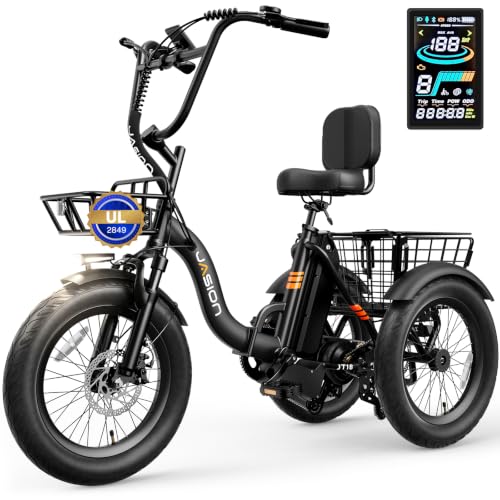
cargo
Jasion Electric Trike
this is the cheapest UL 2849-certified electric trike we have found, and certification is the spec that should...
Read the review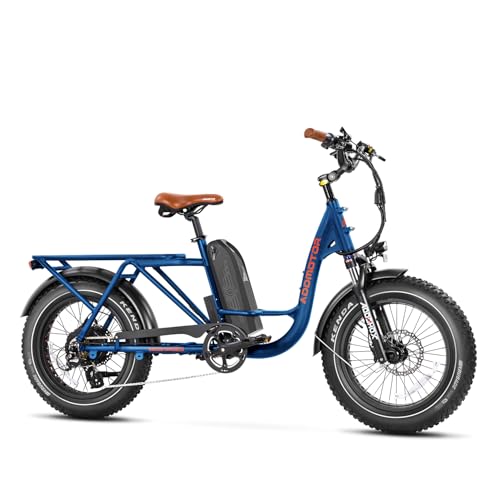
cargo
AddMotor GAROOTAN M-81
Save $100
The AddMotor GAROOTAN M-81 is a long-tail cargo e-bike from a US-based brand (Glendora, California, founded 2003). AddMotor...
Read the review
cargo
NARRAK Trike 500
The NARRAK Trike 500, #2 in Amazon's Electric Tricycles (September 2026), is the paperwork pick of that chart:...
Read the review