North Carolina E-Bike Laws 2026: No License
Are e-bikes legal in North Carolina?
North Carolina does not use the federal Class 1/2/3 e-bike framework. Under N.C. Gen. Stat. §20-4.01(7a) — added by HB 959 (2015-16 Session) as Session Law 2016-90, effective 11 July 2016 — an e-bike is a single statutory category called an "electric assisted bicycle". To qualify, a bike must have two or three wheels, a seat or saddle, fully operable pedals, an electric motor of no more than 750 watts, and a maximum motor-only speed of 20 mph on a level surface. Compliant e-bikes are bicycles for NC vehicle-code purposes — no driver license, no registration, no insurance. Helmets are required only for riders or passengers under 16 under §20-171.9 (max $10 fine to the parent/guardian; first-offense waivable on proof of helmet purchase). Class 3 (28 mph pedal-assist) is not recognised in NC law — a bike that exceeds the 20 mph motor-only cap falls into the moped or motorcycle category, requiring registration, license, and insurance. That changes on 1 December 2026. House Bill 1094, a Department of Transportation omnibus signed by Gov. Josh Stein on 7 July 2026 and chaptered the next day as Session Law 2026-46, rewrites §20-4.01(7a) into the federal Class 1/2/3 framework and adds a new §20-171.3 permitting e-bikes on all roadways, bicycle lanes and multiuse paths. Class 3 becomes street-legal in NC for the first time, riders under 18 must wear a helmet on a Class 3, and cities and counties get explicit authority to restrict classes on multiuse paths and sidewalks. The dedicated e-bike bill everyone was tracking, S576, never got a floor vote — the reform arrived as §19 of the DOT omnibus instead.
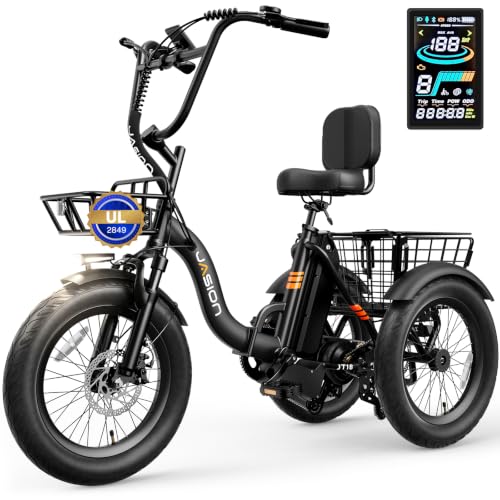
Buying one? The Hoverfly OUREA (Class 2, 20 mph) and the Jasion Electric Trike (Class 2, 16 mph) are class-legal in North Carolina and in stock at Amazon. For more choice, see our best e-bikes under $600.
Legal to ride in North Carolina: our top class-legal pick
As an Amazon Associate I earn from qualifying purchases. Ebike Oracle may also earn a commission on links to other retailers. Full disclosure.

Class 2 — pedal-assist + throttle to 20 mph
Class 2 · 20 mph · Score 7.4
Free 30-day returns via Amazon
Other legal picks for North Carolina
Street-legal e-bikes you can buy in North Carolina (2026)
Each fits a class North Carolina treats as a bicycle, so it needs no registration or licence to ride.
| E-bike | Buy | Class | Speed |
|---|---|---|---|
| Hoverfly OUREA | Check price at Amazon | Class 2 | 20 mph |
| Jasion Electric Trike | Check price at Amazon | Class 2 | 16 mph |
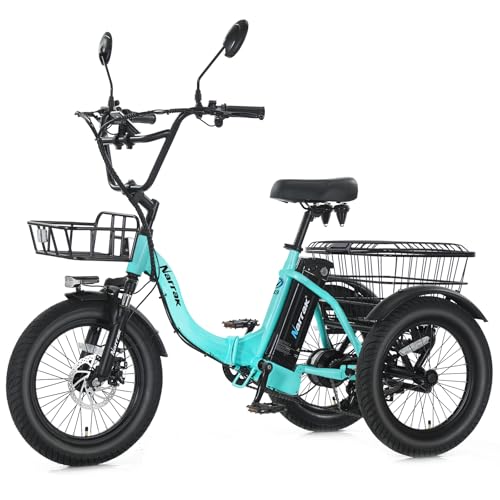
| NARRAK Folding Trike 350 | Check price at Amazon | Class 2 | 16 mph |
What are the e-bike rules in North Carolina?
Sourced from the North Carolina statute and verified against the PeopleForBikes State Law Tracker.
Check your setup
Is your e-bike legal in North Carolina?
Your match
Hoverfly
Hoverfly OUREA
Permitted on roads, bike lanes, and bike paths in North Carolina.
Our score 7.4/10
Our top class-legal pick for North Carolina, street-legal to ride today.
Free 30-day returns via Amazon
The 30-second answer
North Carolina is one of the larger US states (10.7 million pop) that has not adopted the federal three-class e-bike framework. Instead, under N.C. Gen. Stat. §20-4.01(7a) — added by HB 959 (2015-16 Session) as Session Law 2016-90, effective 11 July 2016 — e-bikes are a single statutory category called an "electric assisted bicycle":
"A bicycle with two or three wheels that is equipped with a seat or saddle for use by the rider, fully operable pedals for human propulsion, and an electric motor of no more than 750 watts, whose maximum speed on a level surface when powered solely by such a motor is no greater than 20 miles per hour."
To be a legal e-bike in NC, a bike must satisfy ALL of:
- Two or three wheels with a seat or saddle
- Fully operable pedals for human propulsion
- Electric motor ≤750 W
- Motor-only top speed ≤20 mph on a level surface
Compliant e-bikes are treated as bicycles under the NC Vehicle Code:
- No driver license required
- No registration required
- No insurance required
- No statewide minimum age to operate — the under-16 rule is a helmet rule, not an age-to-ride rule
- Helmet required only for riders/passengers under 16 (§20-171.9)
The biggest practical consequence: a Class 3 e-bike (28 mph pedal-assist, federal model) is NOT a legal NC electric assisted bicycle if its motor can drive the bike above 20 mph on its own. The §20-4.01(7a) test is "powered solely by such a motor" — bikes whose 28 mph is pedaled-input only may still fit, but anything throttle-rated or motor-assisted above 20 mph falls into the moped (§20-4.01(27)d1) or motorcycle category, which requires registration, an operator license, insurance, and equipment to spec.
The full North Carolina rules, section by section. Tap any section to read it.
Quick reference
Quick reference
| Spec | Requirement under NC law |
|---|---|
| Framework | Single category — "electric assisted bicycle" (§20-4.01(7a)) |
| Federal Class 1 equivalent (pedal-assist, ≤20 mph) | ✅ Legal as a NC electric assisted bicycle |
| Federal Class 2 equivalent (throttle, ≤20 mph) | ✅ Legal as a NC electric assisted bicycle |
| Federal Class 3 equivalent (28 mph pedal-assist) | ❌ Not recognised — per the UNC School of Government criminal-law analysis (Nov 2025), Class 3 e-bikes currently fall under the moped classification, requiring registration, license, and equipment to spec — most Class 3 bikes can't actually be registered for lack of moped-spec equipment, creating a practical no-ride zone until 1 December 2026, when Session Law 2026-46 makes Class 3 street-legal |
| Motor power cap | 750 W |
| Wheels | 2 or 3 |
| Operable pedals | Required |
| Motor-only top speed | ≤20 mph on a level surface |
| Driver license | Not required |
| Registration | Not required |
| Insurance | Not required |
| Minimum rider age | None statewide (under-16 helmet rule applies) |
| Helmet | Required for riders/passengers under 16 (§20-171.9) |
| Lights at night | Front lamp visible 300 ft + red rear lamp (or reflective clothing visible 300 ft) + a rear reflex mirror per post-2016 amendments (§20-129(e)) |
Why North Carolina didn't adopt the three-class system
Why North Carolina didn't adopt the three-class system
Before 2016, NC treated anything with a motor as a motor vehicle requiring registration. HB 959 (2015-16 Session) — "Various Changes to the Motor Vehicle Laws," recommended by the Joint Legislative Transportation Oversight Committee — carved e-bikes out into the single "electric assisted bicycle" definition. Section 13 of HB 959 also expressly excluded electric assisted bicycles from the moped definition (§20-4.01(27)d1) and from the "motor vehicle" definition (§20-4.01(23)).
By the time NC enacted its definition, the People for Bikes three-class model law was already gaining traction in other states — but NC chose the simpler single-tier path. NC stayed single-tier for a decade, and as of August 2026 is one of only seven jurisdictions that still do not recognise Class 3. That ends on 1 December 2026, when Session Law 2026-46 takes effect and NC joins the three-class states.
How the three-class framework actually passed — HB 1094 / Session Law 2026-46
The reform did not arrive on the bill everyone was tracking. Senate Bill 576 — "E-Bike Definition and Local Regulation", introduced 25 March 2025 by Sen. Michael V. Lee (R-New Hanover) and Sen. Michael Lazzara (R-Onslow), was re-referred to Senate Transportation on 6 May 2025 and never received a floor vote. Instead the three-class framework passed as §19 of House Bill 1094 — "Ferry Div. Audit / DOT Omnibus" — signed by Gov. Josh Stein on 7 July 2026 and chaptered as Session Law 2026-46.
What Session Law 2026-46 does, effective 1 December 2026:
- Rewrites §20-4.01(7a) into the three classes: Class 1 (pedal-assist, assist ceases at 20 mph), Class 2 (throttle-capable, assist ceases at 20 mph), Class 3 (pedal-assist, assist ceases at 28 mph). The ≤750 W motor cap carries over.
- Adds §20-171.3(a) — operation is permitted on all roadways, bicycle lanes, and multiuse paths, except as regulated by cities (§160A-300.2), counties (§153A-245.1), and the Department of Natural and Cultural Resources in state parks and historic sites.
- Adds §20-171.3(b) — a rider or passenger under 18 on a Class 3 must wear a helmet meeting federal safety standards.
- Adds §160A-300.2 — cities may restrict classes and set speed limits on any multiuse path or sidewalk within municipal limits, and may require helmets for under-18 riders on Class 1 or Class 2.
- Adds §153A-245.1 — counties get the same authority.
- Directs NCDOT to develop e-bike safety education materials.
Two things the law does not do: it sets no minimum rider age for any class, and it adds no license, registration, or insurance requirement. Aggregator sites reporting a 15- or 16-year-old Class 3 minimum for NC are wrong — the enrolled text contains no age floor. The section "becomes effective December 1, 2026, and applies to offenses committed on or after that date."
Political context: BikeWalk NC — the state's leading bicycle advocacy organisation — opposes class-based capability restrictions, arguing that regulation should target rider behaviour rather than motor specifications. PeopleForBikes (the industry trade group) supports the three-class adoption. Wilmington Urban Area MPO worked with Sen. Lee on the language to address pedestrian-conflict concerns on shared paths.
The 20 mph motor-only cap — what it actually means
The 20 mph motor-only cap — what it actually means
A compliant NC electric assisted bicycle must have a motor that cannot drive the bike above 20 mph by itself. The §20-4.01(7a) test is "maximum speed... when powered solely by such a motor."
Practical implications:
- A Class 1 or Class 2 e-bike (pedal-assist or throttle that cuts at 20 mph) IS a compliant NC electric assisted bicycle
- A federal Class 3 e-bike (28 mph pedal-assist) is currently classified as a moped under the UNC School of Government criminal-law analysis (5 November 2025). A narrow reading would let a Class 3 bike whose motor cuts at 20 mph and reaches 28 mph only via pedal input arguably satisfy §20-4.01(7a), but the UNC SOG analysis is the most authoritative current NC commentary and treats Class 3 as moped-tier by default. If your motor itself drives the bike above 20 mph, you are squarely outside the e-bike definition.
- A throttle bike rated above 20 mph is not compliant
- Pedaling above 20 mph is fine — the statute caps the motor, not the rider's legs
NCDOT's bike/ped law page treats compliant e-bikes as bicycles for road-use purposes and has not issued Class 1/2/3 guidance because state law does not yet recognise the classes.
The moped catch-22 (out-of-spec e-bikes in NC)
The moped catch-22 (out-of-spec e-bikes in NC)
If your e-bike exceeds the 20 mph motor-only cap or the 750 W limit, it stops being an electric assisted bicycle. NC law would then default to:
- Moped under §20-4.01(27)d1 — engine ≤50 cc / motor ≤30 mph, must be registered with NC DMV, requires a license plate; 16+ rider age
- Motorcycle — anything above moped specs, requires Class M motorcycle endorsement + registration + insurance + DOT-spec equipment (VIN, lights, mirrors, signals)
Most Class 3 e-bikes and Sur-Ron / Talaria-style e-motos lack the equipment to actually complete moped or motorcycle registration. The practical effect: non-compliant e-bikes occupy a no-ride zone on NC public roads unless aftermarket conversion brings them to spec.
State park, state forest, and federal park rules
State park, state forest, and federal park rules
NC e-bike trail access is governed by multiple agencies, each with different rules. This is the most-confused area of NC e-bike law — even PeopleForBikes commentary regularly confuses them.
NC State Parks (NC Department of Natural and Cultural Resources)
E-bikes meeting the §20-4.01(7a) definition are permitted on park trails where bicycles are permitted, subject to posted signage. The state-parks system treats compliant e-bikes as bicycles. Multi-use trails at William B. Umstead State Park (the popular bridle/bike trails near Raleigh) allow compliant e-bikes; hiking-only trails do not allow any bicycles.
NC Forest Service — DuPont State Recreational Forest bans all e-bikes
This is a separate agency (NC Department of Agriculture, not NC State Parks) — and the rule is the harshest in NC. Per NC Forest Service's DuPont biking page, all e-bikes — including Class 1 pedal-assist — are PROHIBITED on roads and trails at DuPont State Recreational Forest. Violations are a Class 3 misdemeanor under N.C.G.S. §106-877 (NC Forest Service trespass). Base citation is $25 or $35 plus $183 court costs, for a total of $208 or $218 per reporting of NCFS data in 2024 (the original article is no longer online; the ban itself is stated by the NC Forest Service, which tells visitors to leave e-bikes, drones and alcohol at home). Disabled riders using an e-bike as an accessibility device under state disability law are the only exception. Signs are posted at every trailhead.
NC Wildlife Resources Commission — game lands
Under 15A NCAC 10D .0103, bicycle use on game lands is restricted to designated trails during most of the year, with seasonal exceptions (typically Sept 1 – last day of Feb, and March 31 – May 14, when broader use opens up). E-bikes are not separately classified and follow the same designated-trail-only rule. Disabled Access Permit holders may use electric mobility devices on Commission roads and trails.
Great Smoky Mountains National Park (NPS)
GSMNP has completed its NEPA review and authorised e-bikes on park paths where traditional bicycles are allowed. GSMNP's traditional bicycle access is itself limited (Cades Cove Loop Road and a handful of paved paths); designated wilderness areas remain closed to all bicycles.
Blue Ridge Parkway (NPS)
Per the Blue Ridge Parkway Superintendent's Compendium: "Bicycles and electric bicycles are allowed on park roads and in parking areas that are open to motor vehicle use by the public." E-bikes are prohibited on all trails and walkways. State law (NC + VA) is adopted into the Compendium, so NC's under-16 helmet rule applies on the NC side.
Cape Hatteras National Seashore (NPS) — new 2024 rule
Per the Final Rule of 4 June 2024 (89 Fed. Reg. 47866, codified at 36 CFR §7.58(d)), effective 5 July 2024: bicycles AND e-bikes are now permitted on the new ~1.6-mile multi-use pathway in the Hatteras Island District along Lighthouse Road, connecting to the Cape Hatteras Lighthouse area. Elsewhere in CAHA, bicycles and e-bikes are limited to roads and parking areas open to public motor vehicle traffic. They remain prohibited on the beach strand and on all other trails/pathways.
Cape Lookout National Seashore (NPS)
Reachable only by passenger ferry. E-bikes are prohibited at CALO — the park's rules permit e-bikes only where traditional bicycles are allowed, and CALO's beach environment treats them as motorised for access purposes.
Pisgah + Nantahala National Forests (USFS Region 8)
The harshest federal rule in NC. Per USFS e-bike policy, the Forest Service classifies e-bikes as motor vehicles and permits them ONLY where motor vehicles are allowed — i.e., on gravel roads open to public vehicle traffic. E-bikes of any class are PROHIBITED on the non-motorized singletrack of Pisgah and Nantahala. This is actively enforced. For a state with one of the largest MTB scenes in the southeast (Brevard / Asheville / Mills River), this is the single largest constraint on e-MTB riding.
Mountains-to-Sea State Trail (MST)
Managed jointly by Friends of MST and NC State Parks. The 1,175-mile trail crosses many jurisdictions (NPS, USFS, state parks, municipal greenways) and there is no single MST-wide e-bike policy — each segment follows the rules of the managing agency. Segments through USFS land = no e-bikes on singletrack; segments through state parks = compliant e-bikes OK on bike-permitted trails; segments along municipal greenways = local rules.
Major cities + local ordinances
Major cities + local ordinances
NC's near-total local control over sidewalks means the operative rules vary by city. The most consequential examples:
Charlotte
- Compliant e-bikes treated as bicycles under the Charlotte general bicycle ordinances
- Little Sugar Creek Greenway + Cross Charlotte Trail + connecting Carolina Thread Trail segments — compliant e-bikes allowed where bicycles are allowed
- Uptown business district — sidewalk riding prohibited per Charlotte City Code Ch. 14
Raleigh
- Capital Area Greenway system (100+ miles) treats e-bikes as bicycles up to 20 mph
- Raleigh Police use Class 1 e-bikes for greenway patrol (2024)
- E-bikes prohibited on downtown sidewalks (Raleigh City Code Sec. 11-2002)
- Raleigh runs a municipal e-bike incentive/rebate program — see raleighnc.gov/climate-action-and-sustainability/services/e-bike-program
Asheville
On 26 August 2025, Asheville City Council approved updates to the city's Micromobility Ordinance, formally defining "micromobility" and clarifying permitted use in bike lanes, sidewalks, and greenways. The French Broad River Greenway permits compliant e-bikes. No e-bikes on Pisgah National Forest singletrack — even though the trailheads are minutes from downtown Asheville.
Wilmington / Wrightsville Beach / Carolina Beach
- Wrightsville Beach Town Code prohibits bicycles, including e-bikes, on the beach strand during the daytime hours 9 AM – 6 PM, April 1 through October 1 (the 1989 vehicle-on-beach ordinance, as amended). Outside those hours and outside the season, bicycles are permitted with pedestrian-yield duty. The town reviewed the seasonal rule in 2021 after fat-tire e-bike complaints; the time-limited approach stands.
- Wilmington Riverwalk is technically a sidewalk/boardwalk — bicycles are generally permitted but yield to pedestrians; e-bikes are treated identically.
- Carolina Beach + Kure Beach — beach-strand bicycle bans during the daytime summer season, generally May–September.
Greensboro / High Point
The 14.5-mile Atlantic & Yadkin Greenway / Bicentennial Greenway permits compliant e-bikes under general bicycle rules. Greensboro City Code Ch. 16, Art. V governs operation; sidewalk riding is restricted in the Center City district.
Chapel Hill
Sidewalk riding allowed but capped at 7 mph with right-of-way to pedestrians (Chapel Hill Code §21-43).
Waxhaw (Union County)
Per Town of Waxhaw bike/e-bike rules, Ordinance 2026001 adopted 10 February 2026 bans electric bicycles (and e-scooters) from sidewalks, caps speeds in parks and on greenways at 15 mph, requires under-16 helmets on town property, and carries a maximum $50 civil penalty. Non-motorized bicycles are permitted unless posted otherwise.
Outer Banks towns (Nags Head, Kill Devil Hills, Duck, Kitty Hawk, Southern Shores)
Each town has its own beach-riding ordinance, generally prohibiting bicycles and e-bikes on the beach strand during the daytime summer season (typically 15 May – 15 September) but allowing them on the multi-use paths along NC-12 and the Beach Road.
Do you need a helmet, license, or registration in North Carolina?
Do you need a helmet, license, or registration in North Carolina?
Helmet — §20-171.9
Required for riders and passengers under 16 on any bicycle, including e-bikes. §20-171.9(a):
"It shall be unlawful for any parent or legal guardian of a person below the age of 16 to knowingly permit that person to operate or be a passenger on a bicycle unless at all times when the person is so engaged he or she wears a protective bicycle helmet of good fit fastened securely upon the head with the straps of the helmet."
Key features of the NC helmet rule:
- Enforced via parent/guardian liability, not against the rider directly
- Maximum fine: $10
- First-offense waivable if the parent purchases a helmet before the hearing
- §20-171.9(c): failure to wear a helmet shall NOT establish liability or contributory negligence in any civil action — important plaintiff-friendly statutory protection for cyclist injury cases
- Helmet must meet ANSI or Snell Memorial Foundation standards (CPSC-certified helmets satisfy the standard)
No statewide helmet rule applies to adult riders. No Class 3-specific helmet rule exists in NC because Class 3 itself is not recognised in NC law.
How old do you have to be?
No statewide minimum age to operate an electric assisted bicycle. The under-16 rule is a helmet rule, not an age-to-ride rule. Local ordinances may impose stricter rules.
Driver license
Not required, at any rider age, for compliant electric assisted bicycles. Required if the bike exceeds 20 mph motor-only or 750 W (moped/motorcycle category).
Registration
Not required for compliant e-bikes. Required for mopeds (since the 2016 Strengthen NC Highway Patrol Act amendments) and motorcycles.
Insurance
Not required for compliant e-bikes (e-bikes are not motor vehicles under §20-4.01(23), so the §20-309 financial-responsibility chapter does not apply). Mopeds and motorcycles do require liability insurance.
Lights at night — §20-129(e)
Lights at night — §20-129(e)
When riding at night, NC requires:
- A front lamp visible from at least 300 feet ahead, AND
- Either a red rear lamp visible from at least 300 feet behind, OR bright reflective clothing visible to drivers from the same distance
- A rear reflex mirror per post-2016 amendments to §20-129(e)
This rule applies to bicycles and electric assisted bicycles identically.
Recent legislation (2016–2026)
Recent legislation (2016–2026)
NC's e-bike statute went untouched from 2016 until July 2026, when the three-class framework arrived on a DOT omnibus rather than the dedicated e-bike bill:
| Bill | Effective / status | What it did / would do |
|---|---|---|
| HB 959 (2015-16) / Session Law 2016-90 | 11 July 2016 | Created the single-tier "electric assisted bicycle" definition at §20-4.01(7a); carved e-bikes out of the moped + motor vehicle definitions |
| S576 (2025-26) "E-Bike Definition and Local Regulation" | Re-referred to Senate Transportation 6 May 2025; never received a floor vote | Would have adopted the three-class framework; superseded by HB 1094 |
| HB 1094 (2025-26) / Session Law 2026-46 — Ferry Div. Audit / DOT Omnibus | Signed by Gov. Josh Stein 7 July 2026; e-bike sections effective 1 December 2026 | §19 rewrites §20-4.01(7a) into Class 1/2/3; adds §20-171.3 (roadway, bike-lane and multiuse-path access; under-18 helmet on Class 3); adds §160A-300.2 and §153A-245.1 (city and county authority over paths and sidewalks) |
There is no NC state law mandating UL 2849 or UL 2271 battery certification as of August 2026 — NC has not followed New York City (Local Law 39 of 2023) or Colorado (HB 25-1197, 2025) in adopting a battery-safety mandate. Neither S576 nor Session Law 2026-46 includes battery certification.
What are the penalties for breaking e-bike laws in North Carolina?
What are the penalties for breaking e-bike laws in North Carolina?
Most NC bicycle and e-bike violations are infractions (civil penalty up to $100, no criminal record) under the riding-related sections of Chapter 20. §20-176 treats unspecified Chapter 20 violations as Class 2 misdemeanors (up to 60 days, up to $1,000 fine for repeat offenders) — but most specific bicycle provisions carry their own infraction designations that override this default.
- §20-171.9 helmet violation (parent/guardian of rider under 16): infraction, max $10 fine; first-offense waivable on proof of helmet purchase
- §20-129(e) lights at night: infraction
- DuPont State Recreational Forest e-bike violation: Class 3 misdemeanor under N.C.G.S. §106-877 (NC Forest Service trespass); base citation $25 or $35 + $183 court costs = $208 or $218 total per NCFS schedule
- Operating a non-compliant "e-bike" (>750 W or >20 mph motor-only) as if it were a bicycle: treated as operating an unregistered motor vehicle / unlicensed driver under Chapter 20 — Class 3 misdemeanor with potential vehicle impoundment
- Impaired bicycling / reckless operation: remains a misdemeanor under Chapter 20
What special e-bike rules apply in North Carolina?
What special e-bike rules apply in North Carolina?
Sur-Ron, Talaria, and other "e-moto" bikes
These are NOT electric assisted bicycles under NC law. Sur-Ron, Talaria, and similar high-powered electric two-wheelers exceed the 750 W cap and the 20 mph motor-only ceiling, and many lack the operable pedals required by §20-4.01(7a). NC classifies them as mopeds (under-50cc-or-≤30-mph equivalent under §20-4.01(27)d1) or motorcycles depending on power. Most lack the DOT-spec equipment (VIN, lights, mirrors) to actually complete moped or motorcycle registration. Practical result: ride on private property or designated motorized off-highway trails only.
Modifying a Class 2 to exceed 20 mph
De-restricting a Class 2 e-bike's throttle or pedal-assist above 20 mph takes it out of §20-4.01(7a) and into the moped or motorcycle category. The bike still lacks the registration, plate, and equipment to be legal in that category — so the practical effect is the bike becomes street-illegal under NC law.
The Class 3 gray area
A federal Class 3 e-bike (28 mph pedal-assist) sits in a NC legal gray area. The §20-4.01(7a) test is "powered solely by such a motor" — if the motor itself cuts at 20 mph and the 28 mph is only reachable via pedaling input, the bike arguably still satisfies the definition. If the motor drives the bike above 20 mph, it does not. NC courts have not addressed this question and NCDOT has not issued formal guidance. Safer reading: any bike marketed as "Class 3" is at risk of being classified as a moped or motorcycle in NC unless the manufacturer documents that the motor itself does not exceed the 20 mph cap.
Out-of-state e-bikes crossing into NC
A California, Texas, or Florida e-bike that fits the §20-4.01(7a) profile (≤750 W, ≤20 mph motor-only, operable pedals) is also a compliant NC electric assisted bicycle. A Class 3 e-bike ridden in from a three-class state is in a legal gray area on NC roads — proceed with caution and avoid USFS / DuPont land entirely.
Bike-share + e-bike incentive programs
Raleigh runs a municipal e-bike incentive program — one of the few city-level programs in NC. Charlotte and Asheville bike-share fleets use pedal-assist e-bikes that cut motor power at 20 mph, comfortably inside the §20-4.01(7a) definition.
What about other states?
What about other states?
North Carolina's single-tier framework puts it in a group of states that have not adopted the three-class system:
- Pennsylvania — single "pedalcycle with electric assist" category (Act 154 of 2014); same 20 mph cap; Class 3 effectively banned
- Massachusetts — Class 1 + Class 2 only (added 2022); Class 3 falls under §1B motorized bicycle
- New Jersey — abolished three-class framework January 2026 (S4834/A6235); license + registration + insurance required for ALL e-bikes
States with the full three-class system:
- California — three-class with all-ages helmet on Class 3; SB 1271 UL 2849/2271 cert mandate from 1 Jan 2026
- New York — Class 3 capped at 25 mph; NYC 15 mph operating cap; NYC Local Law 39 UL 2849 mandate
- Texas — three-class with §551.106 state preemption on roads/paved paths; no statewide helmet
- Florida — three-class with Class 3 allowed on bike paths at state level
- Colorado — three-class with HB 25-1197 UL 2849/2271/EN 15194 battery mandate from 6 Aug 2025
For state-by-state quick checks, use the e-bike legality checker. For the federal three-class framework, read Class 1, 2, 3 e-bikes explained.
Bottom line
Bottom line
NC riders: stick to a Class 1 or Class 2 e-bike — those are fully legal as electric assisted bicycles under §20-4.01(7a). You don't need a license, registration, insurance, or adult helmet. You can ride anywhere bicycles are allowed, including NC state park multi-use trails (where bikes are permitted) and most municipal greenways. The under-16 helmet rule is enforced against parents, not the rider.
The DuPont + USFS trap: DuPont State Recreational Forest bans ALL e-bikes, including Class 1 pedal-assist — Class 3 misdemeanor under N.C.G.S. §106-877 ($25 or $35 base citation + $183 court costs = $208 or $218 total); note this is the NC Forest Service, a different agency from NC State Parks. Pisgah and Nantahala National Forests ban e-bikes on all non-motorized singletrack. For an e-MTB rider in western NC, the legal singletrack universe is significantly smaller than it looks on the map.
Class 3 owners: your bike is in a legal gray area in NC. If the motor itself cuts at 20 mph and you only reach 28 mph by pedaling, you arguably fit §20-4.01(7a). If the motor drives the bike above 20 mph, you don't — and your bike falls into the moped or motorcycle category without the equipment to register there. Practical advice: confirm the motor-only cutoff with the manufacturer before relying on this.
1 December 2026 is the date that matters — Session Law 2026-46 (HB 1094, signed 7 July 2026) adopts the three-class framework and makes Class 3 street-legal in NC. S576, the dedicated e-bike bill, died in Senate Transportation without a floor vote.
Sources: N.C. Gen. Stat. §20-4.01 (definitions) + §20-171.9 (helmet) + §20-176 (general penalty); HB 959 (2015-16) / Session Law 2016-90; S576 (2025-26); NCDOT bike/ped laws; NC State Parks; NC Forest Service DuPont policy; NPS Order 3376; Cape Hatteras NS 2024 final rule; BLRI Compendium; HB 1094 / Session Law 2026-46; city codes for Charlotte, Raleigh, Asheville, Wilmington, Greensboro, Chapel Hill, Waxhaw. Verified 5 August 2026.
E-bikes that fit North Carolina's rules
Filtered from our review catalog by class eligibility under North Carolina statute. Spec-matched, not popularity-ranked.
- Class 2
 Amazon
Hoverfly
Hoverfly OUREA
Class 2 — pedal-assist + throttle to 20 mph
Permitted on roads, bike lanes, and bike paths in North Carolina.750 W · 20 mph · Score 7.4
Read the review - Class 2Amazon
Jasion
Jasion Electric Trike
Class 2 — pedal-assist + throttle to 20 mph
Permitted on roads, bike lanes, and bike paths in North Carolina.500 W · 16 mph · Score 7.6
Read the review - Class 2Amazon
NARRAK
NARRAK Folding Trike 350
Class 2 — pedal-assist + throttle to 20 mph
Permitted on roads, bike lanes, and bike paths in North Carolina.350 W · 16 mph · Score 7.1
Read the review
Eligibility is class-based: picks shown here are legal to own and operate on roads in North Carolina. Local jurisdictions (state parks, beach paths, individual cities) may add further restrictions; see the body above for the specifics.
Recent North Carolina e-bike law coverage
News-form posts that reference North Carolina's statutes or covered a change affecting North Carolina riders.
Frequently asked questions
Are e-bikes legal in North Carolina?
Yes, but NC does not use the federal Class 1/2/3 system. Under N.C.G.S. §20-4.01(7a) — added by HB 959 (2015-16), effective 11 July 2016 — an e-bike is a single category called an "electric assisted bicycle": must have 2 or 3 wheels, fully operable pedals, motor ≤750 W, and motor-only top speed ≤20 mph. Compliant e-bikes are bicycles for NC vehicle-code purposes — no license, no registration, no insurance. Helmet required under 16 (§20-171.9).
Is a Class 3 (28 mph) e-bike legal in North Carolina?
Legal gray area. NC does not recognise "Class 3." The §20-4.01(7a) test is "maximum speed... when powered solely by such a motor" — so a federal Class 3 e-bike whose motor cuts at 20 mph and only reaches 28 mph via pedaling input arguably still fits. A bike whose motor itself drives above 20 mph does not — it falls into the moped category (registration + license + plate required), but most Class 3 e-bikes lack the DOT-spec equipment to actually register. NC courts have not resolved this and NCDOT has not issued formal guidance.
Do I need a license to ride an e-bike in NC?
No at any age, for compliant electric assisted bicycles (≤750 W, ≤20 mph motor-only, operable pedals). Yes (typically a Class C driver license at minimum) for any e-bike that exceeds those specs and is operated as a moped or motorcycle.
Do I need insurance or registration for an e-bike in NC?
No for compliant electric assisted bicycles — they are statutorily excluded from "motor vehicle" status under §20-4.01(23) and from the §20-309 financial-responsibility chapter. Yes if your bike falls out of the §20-4.01(7a) definition into the moped or motorcycle category.
What's the helmet law for e-bikes in NC?
Required for riders and passengers under 16 on any bicycle, including e-bikes, under §20-171.9. Enforced against the parent/guardian, not the rider. Max $10 fine, first-offense waivable on proof of helmet purchase. No statewide adult helmet rule. §20-171.9(c) also says failure to wear a helmet shall not establish liability or contributory negligence in any civil action — important plaintiff-friendly statutory protection in injury suits.
How old do you have to be to ride an e-bike in NC?
No statewide minimum age to operate a compliant electric assisted bicycle. The under-16 rule is a helmet rule, not an age-to-ride rule. Local ordinances may set a stricter minimum.
Can I ride my e-bike on the sidewalk in NC?
No statewide rule — sidewalk use is determined entirely by local ordinance under §§160A-296 / 160A-300. Examples: Charlotte bans sidewalk riding in the Uptown business district; Raleigh bans downtown sidewalk riding (City Code Sec. 11-2002); Chapel Hill Code §21-43 caps sidewalk riding at 7 mph with pedestrian yield; Waxhaw outright bans e-bikes on sidewalks. Always check the local code.
Are e-bikes allowed on DuPont State Forest trails?
No — all e-bikes (including Class 1 pedal-assist) are PROHIBITED at DuPont State Recreational Forest. This is the NC Forest Service (NC Department of Agriculture), a separate agency from NC State Parks. Violations are a Class 3 misdemeanor under N.C.G.S. §106-877 (NC Forest Service trespass); base citation is $25 or $35 plus $183 court costs = $208 or $218 total per NCFS schedule. The only exception is disabled riders using an e-bike as an accessibility device under state disability law.
Are e-bikes allowed in Pisgah or Nantahala National Forest?
On gravel roads open to public motor vehicles, yes. On non-motorized singletrack, no. The US Forest Service classifies e-bikes as motor vehicles and permits them only where motor vehicles are allowed. All non-motorized singletrack in Pisgah and Nantahala National Forests is closed to e-bikes of any class. This rule is actively enforced and significantly limits e-MTB riding in the western NC mountain range.
Can I ride my e-bike on the Blue Ridge Parkway?
On the motor road and parking areas — yes. Per the Blue Ridge Parkway Superintendent's Compendium: "Bicycles and electric bicycles are allowed on park roads and in parking areas that are open to motor vehicle use by the public." All BRP trails and walkways are closed to e-bikes of any class. State law (NC + VA) is incorporated into the Compendium, so the NC under-16 helmet rule applies on the NC side.
Can I ride my e-bike on the Outer Banks beach?
Almost always no. Cape Hatteras National Seashore permits e-bikes on park roads, parking areas, and the new ~1.6-mile multi-use path near the Cape Hatteras Lighthouse (per Final Rule effective 5 July 2024, 36 CFR §7.58(d)) — but not on the beach strand. Cape Lookout National Seashore bans e-bikes entirely. Most Outer Banks towns (Nags Head, KDH, Duck, Kitty Hawk, Southern Shores) prohibit bicycles and e-bikes on the beach during the summer season (typically 15 May – 15 September).
What is NC Senate Bill 576?
The three-class framework is now law in North Carolina, effective 1 December 2026. It passed as §19 of House Bill 1094 (Ferry Div. Audit / DOT Omnibus), signed by Gov. Josh Stein on 7 July 2026 as Session Law 2026-46. It rewrites §20-4.01(7a) into Class 1/2/3, permits e-bikes on all roadways, bicycle lanes and multiuse paths (§20-171.3(a)), requires a federal-standard helmet for Class 3 riders and passengers under 18 (§20-171.3(b)), and grants cities and counties express authority over multiuse paths and sidewalks (§160A-300.2, §153A-245.1). The dedicated e-bike bill, S576 by Sen. Michael V. Lee (R-New Hanover), never received a floor vote. BikeWalk NC opposes class-based capability restrictions; PeopleForBikes supports three-class adoption.
Are Sur-Ron and Talaria e-motos legal in NC?
No, not as e-bikes. Sur-Ron, Talaria, and similar high-powered electric two-wheelers exceed the 750 W cap and the 20 mph motor-only ceiling in §20-4.01(7a), and many lack the operable pedals required. NC classifies them as mopeds (under §20-4.01(27)d1) or motorcycles depending on power. Both require registration, plate, and (motorcycles) Class M endorsement — but most e-motos lack the DOT-spec equipment (VIN, lights, mirrors, signals) to actually complete registration. Practical result: ride on private property or designated motorized off-highway trails only.
Will NC adopt the three-class system?
Yes — it already has. North Carolina adopted the three-class framework in Session Law 2026-46 (House Bill 1094), signed 7 July 2026, and it takes effect 1 December 2026. Class 3 becomes street-legal, all classes get statutory access to roadways, bicycle lanes and multiuse paths, and riders under 18 must wear a helmet on a Class 3. Notably it sets no minimum rider age and adds no license or registration requirement. It did not arrive via S576, the dedicated e-bike bill, which died in Senate Transportation without a floor vote — the reform rode in on a Department of Transportation omnibus instead.
How do other states compare?
Compare North Carolina's rules with states that share a similar framework.
Common e-bike law questions
The national answer to the questions North Carolina riders ask most, covering every US state, side by side.
Cite or link this page
Found this useful? Link to it.
This guide is free to reference. If it helped you, a link helps more riders find accurate, up-to-date law info, and we keep it current (last reviewed August 5, 2026). Licensed CC BY 4.0. Reuse the data with attribution.
<a href="https://ebikeoracle.com/laws/north-carolina">North Carolina E-Bike Laws 2026: No License — Ebike Oracle</a>
Ebike Oracle. "North Carolina E-Bike Laws 2026: No License." Ebike Oracle, 2026, https://ebikeoracle.com/laws/north-carolina.