1. Funhang Fat 26: best overall
The Funhang Fat 26 leads because it answers the two questions most fat-tire listings dodge: what class it is, and whether the battery is certified. The title says "1000W Peak"; the first bullet gives the rated figure, 500 W with 66.6 N·m, and a 20 mph top speed, a clean Class 2 with 250 W of headroom under the cap. It documents UL 2271 for the battery via SGS and UL 2849 for the complete bike via TÜV, naming the body behind each, which makes the claim checkable. Around that: 26×4 tires, a 48 V × 13 Ah (624 Wh) removable pack, dual 180 mm discs, a 330 lb payload and integrated turn signals. Our readers order it through our Amazon links.
Its range claim survives the arithmetic: Funhang quotes 30-35 miles on throttle, and 624 Wh at the 19-22 Wh per mile a 26×4 tire draws gives about 31 miles. The gaps are no published weight, a slow charge of about 6.5 hours, and a motor that is modest on hills with a heavy rider; the other six picks all state 750 W rated. Class verdict: Class 2 (500 W rated, 20 mph stated). Read the full Funhang Fat 26 review.
2. TST City Commuter: best fat-tire commuter
The TST City Commuter is a fat-tire bike our readers actually buy: Amazon reports orders for it through our links, and it sells in volume on Amazon. It states a 750 W rated motor alongside the peak figure, which many budget listings do not, and pairs it with a 48 V × 15 Ah (720 Wh) removable pack, suspension front and rear, 7-speed gearing and 4-inch fat tires.
The trade is what the listing leaves out, plus one recent change. It names no UL 2849 or UL 2271 certification and no torque figure, though it now lists 66 lb and a 450 lb maximum load. And TST has retitled the listing to advertise a 2000 W peak motor and 28 mph. The rated figure is still 750 W, so it is legal on power, while 28 mph is Class 3 territory, which some states restrict and seven jurisdictions do not recognize. Class verdict: Class 3 as listed, Class 2 when limited to 20 mph; set and confirm the limiter on arrival. Read the full TST City Commuter review.
3. TST Fat 20: best for heavy riders and loads
The TST Fat 20 publishes the two numbers a heavy rider needs and most listings skip: a 66 lb bike weight and a 450 lb maximum load, the highest load rating in this guide. It states 750 W rated alongside 1,500 W peak, so it is legal on power in every state, with a 48 V × 15 Ah (720 Wh) pack, suspension front and rear and 20×4 puncture-proof tires. It sells in volume on Amazon. If load is why you are here, the heavy-rider guide goes further.
Two things hold it back. The listing states no top speed, and TST's own storefront lists a visually matching 20-inch model at 32 mph, above the Class 3 ceiling; we have left that figure off this bike because the two listings differ on weight, so ask TST for the assist cut-off in writing. The warranty is 180 days, half the category norm. TST claims 60 miles, which needs 12 Wh per mile; plan on about 33. Class verdict: cannot be determined from the listing (750 W rated, no top speed). Read the full TST Fat 20 review.
4. Heybike Ranger: best folding fat tire e-bike
The Heybike Ranger is the folder to pick when stopping power matters. It pairs a step-through 20×4 folding frame with hydraulic disc brakes on 180 mm rotors, a 750 W rated motor (1,400 W peak, 80 N·m), a 48 V × 12.5 Ah (600 Wh) removable pack, a 400 lb total payload and UL 2849 and UL 2271 listed on the Amazon page. Class is a menu setting: it ships as Class 2, with Class 1 and Class 3 (28 mph pedal assist, throttle held to 20 mph) one tap away.
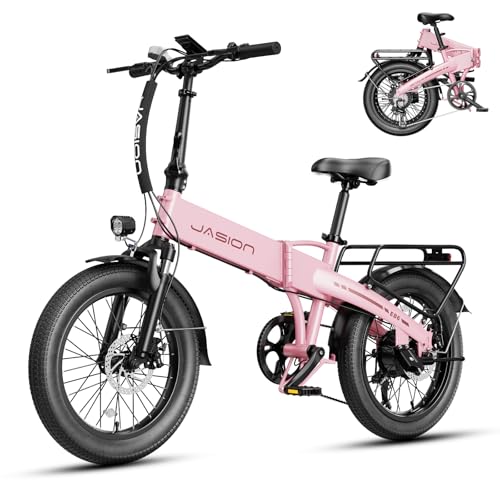
The fold is for storage. At 70 lb and 40 × 20 × 31 inches folded, lifting it onto a car rack single-handed is a stretch. The 600 Wh pack is the smallest of the seven picks: Heybike claims 45 miles, and our review plans on 25-35. Assist is cadence-based. For a lighter fold with a simpler legal story, see the Jasion EB6 below. Class verdict: Class 1, 2 or 3, your choice in the display (750 W rated). Read the full Heybike Ranger review.
5. Vivi ACE01: best ride quality
The ACE01 is the only pick that combines a torque sensor, hydraulic brakes and both UL standards. The torque sensor scales assist to how hard you press the pedals, where a cadence sensor switches the motor on whenever the cranks turn. Around it: hydraulic disc brakes on 180 mm rotors, a 100 mm lockout fork, a 750 W rated hub with 90 N·m, a 48 V × 15 Ah (720 Wh) removable pack, 26×4.0 tires, and SGS-tested UL 2849 and UL 2271 per Vivi's spec sheet.
The trades are weight and class. At 72 lb it is heavy, and it ships as Class 3: pedal assist to 25 mph, throttle capped at 20. Class 3 is not recognized in seven jurisdictions, and several states keep it off shared-use paths. Vivi claims 60 miles; 720 Wh at 25 Wh per mile is about 29. No payload rating is published, and the warranty is 1 year on motor and battery. The ACE01 Pro adds an app with GPS tracking and a movement alarm. Class verdict: Class 3 (750 W rated, 25 mph assist, 20 mph throttle). Read the full Vivi ACE01 review.
6. Kingbull Ranger: best for two riders and range
The Ranger is the moped-style pick, with the biggest battery of the seven: 48 V × 18 Ah, 864 Wh. A long bench seat, a 150 lb rear rack rating and footrest pegs in the box make a passenger a designed use, inside a 350 lb total payload, and it adds turn signals, a horn and IPX6 sealing on 20×4.0 tires and a 750 W rated motor. Kingbull's warranty runs 2 years on the motor, battery, controller, sensors, wiring and frame. The 80-mile claim needs 10.8 Wh per mile; our arithmetic gives 31 to 43 miles.
Read the spec table before the marketing. Kingbull calls it "full suspension", and the table lists a fork and no rear shock. The Brakes row names no caliper or rotor on an 88 lb bike rated to 28 mph, so ask Kingbull to confirm the brakes in writing. The certification line reads "UL Certificated by SGS", a different claim from UL 2849. The frame is high-carbon steel, the saddle does not adjust, and for a passenger the 150 lb rack limit is the one that binds. Class verdict: Class 3 as shipped (28 mph), Class 2 selectable, the setting to use in the seven no-Class-3 jurisdictions. Read the full Kingbull Ranger review.
7. Kingbull Hunter 2.0: best for trails
The Hunter 2.0 is the pick designed for off-road riding: CST 26×4.0 tires with aggressive tread, mountain-bike geometry, and hydraulic disc brakes with 180 mm rotors. The 750 W rated hub (1,200 W peak) makes 95 N·m, the highest torque figure among the picks, from a 48 V × 15 Ah (720 Wh) pack. Kingbull backs it with a 2-year warranty on motor, battery and frame and a California-based service team.
Know its limits. It weighs 76 lb and uses a basic spring fork, so fire roads, gravel and doubletrack suit it and technical singletrack does not. Knobby tires also cost range on pavement: Kingbull claims 55 miles, and our review plans on about 30 mixed and 22 at a sustained 28 mph. Kingbull does not advertise UL 2849 on the Amazon listing, so ask first if your building requires it. Class verdict: Class 3 (750 W rated, 28 mph). Read the full Kingbull Hunter 2.0 review.

 Amazon