1. TST City Commuter: best overall
The TST City Commuter carries a 720 Wh battery, stated exactly as 48 V x 15 Ah, for $559.99. That is more capacity than any other pick on this page and more than most bikes in the band, and capacity is the specification that decides whether a bike is useful on the third day without a charge. TST also states 750 W rated next to the 1500 W peak, the disclosure most of this tier skips entirely, and its title now markets a 28 mph setting, so cap it at 20 mph if you want Class 2 rules.
It also has the strongest Amazon sales rank of anything on this page, which is worth something concrete rather than as a vanity number: volume is what gets returns processed and replacement parts answered. The listing now states 66 lb and a 450 lb maximum load, and the title markets a 28 mph setting, so confirm the limiter in the display menu on arrival. Against the seller's 60-mile claim, plan on about 35 miles in mixed riding.
One thing decides whether this is the right pick for you rather than the Funhang below, and it is not a spec: the listing names no UL 2849 and no UL 2271. That is a hard stop if a building manager asks for certification before indoor charging, and New York City bans the sale of uncertified e-bikes under Local Law 39, and California SB 1271 has restricted sales of uncertified e-bikes since January 2026. If you have a garage, a shed or a ground-floor porch and no building manager to satisfy, it is the most bike per dollar on this page by a distance. If you have to carry it into a flat, buy the Funhang. Read the full City Commuter review.
2. Funhang Fat 26: both certifications, with the certifying body named
Most listings that claim UL certification claim it as a bare phrase. The Fat 26 names the body against each standard: UL 2271 for the battery via SGS, UL 2849 for the complete bike via TUV. That is the pairing NYC Local Law 39 references for e-bike and battery sales, and it is what California SB 1271 has required of new sales since January 2026. At this price it is rarer than anything on the spec sheet.
The rest holds up. The pack is 624 Wh, quoted as 48 V x 13 Ah, which divides out to about 31 real throttle miles against a 30-to-35 claim, and 55 to 60 on pedal-assist. Integrated headlight, taillight and turn signals come fitted, the payload rating is 330 lb, and the rear rack is rated to 60 lb. The one number to read carefully is the motor: the headline says 1000 W, and the rated figure is 500 W, stated in the first bullet. Rated wattage is what US state law regulates, so that is the number to take to your statute. Read the full Funhang Fat 26 review.
3. Hoverfly OUREA: budget pick, and the cleanest legal package here
The OUREA is the cheapest bike on this page and the one whose numbers need the least interpretation. 750 W at the federal cap. A 20 mph cap. UL 2849. That combination is a by-the-book Class 2 in every US jurisdiction we track, including the seven states that ban Class 3 outright, and it is certified for the indoor charging a flat or an office needs. Nothing on the listing is inflated to look bigger than it is, which on this page is a distinguishing feature rather than a baseline.
The seller even splits its range claim by mode rather than quoting the flattering half: 20 miles on throttle, 40 on pedal-assist. Both survive division against the 374 Wh pack. The warranty is 365 days, four times the norm in this band. The honest trade is that same pack: it is the smallest of the six picks, so this is the bike for a sub-10-mile commute that charges indoors, not for the 40-mile weekend you might be imagining. If range is the constraint, the VEBLUE at the bottom of this page carries nearly three times the capacity. Read the full Hoverfly OUREA review.
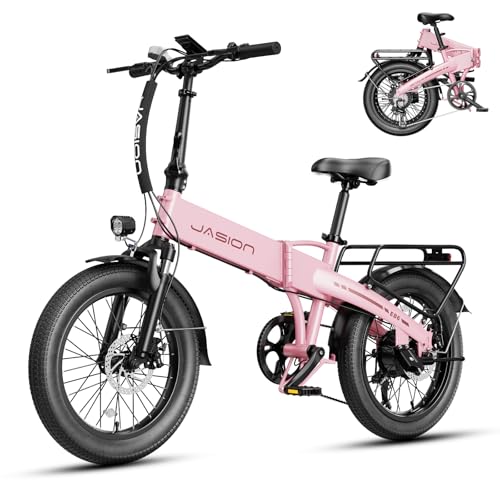
4. Jasion EB6: best folder
The EB6 is the most legally unambiguous bike on this page. It states 20 mph, which makes it a clean Class 2, road-legal in every US jurisdiction we track including the seven that ban Class 3 outright. Around that it puts a 500 W rated motor quoted at 1000 W peak, a 624 Wh battery, 20-inch fat tires, a published 62 lb weight and a 330 lb payload rating, and it folds.
Fat tires on a folder is a genuine combination rather than a spec-sheet flourish, because the format usually forces a choice between packing small and riding comfortably on bad surfaces. The brand claims 50 miles; plan on about 30 with pedal assist in real conditions. Read the full Jasion EB6 review.
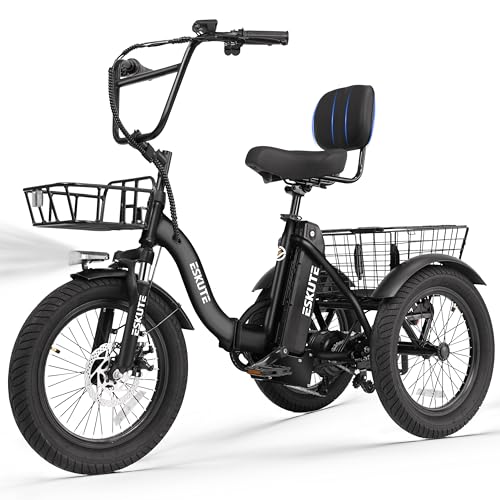
5. NARRAK Trike 500: best trike, and the only three-wheeler
At $519 this is the only trike in our catalogue inside the ceiling. Three wheels change who an e-bike is for: balance stops being a prerequisite, which makes this the entry here for riders returning after an injury, riders carrying shopping every day, or anyone for whom a two-wheeler is the reason they gave up cycling.
The specification is more forthcoming than the price suggests. The motor is 500 W rated, quoted at 1100 W peak, and the pack is 624 Wh described on the listing as UL 2849 certified, which is not something we expect to find at the bottom of this band. What is absent is a stated top speed, a weight and a payload figure, so treat the range as the loaded-trike estimate of roughly 27 miles rather than a headline. Read the full NARRAK Trike 500 review.
6. VEBLUE Folding 20: best battery
1,040 Wh, stated exactly as 52 V x 20 Ah. That is the single biggest number on this page and it is bigger than the packs on most bikes at twice the price, in a folding 20-inch frame at $769.99. If range anxiety is the thing stopping you from commuting by bike, this is the direct answer to it, and a realistic 45 miles of mixed riding is a different proposition from the 20-odd miles a 374 Wh budget folder delivers.
The disclosure is weaker than the battery deserves. Only a 1500 W peak figure appears, with no rated wattage printed anywhere, and the listing states no top speed and no weight. A 1 kWh pack on a folding frame will also not be light. Buy this one for the battery specifically, and check the limiter setting before the first ride. Read the full VEBLUE Folding 20 review.

 AmazonSave $40