Ebike Oracle
Buyer guide

Best Electric Bikes for Heavy Riders (2026)

Six e-bikes with a published payload of 350 lb or more, ranked on payload margin and brakes before anything else. Payload means you, dressed, plus everything you carry, so a 300 lb rider with a 30 lb bag needs 330 lb before any margin, and we add 50 lb on top. The SISIGAD Family E-Bike ($999.99 at our last check)...

Ranked from our scored reviews

As an Amazon Associate I earn from qualifying purchases. Ebike Oracle may also earn a commission on purchases made through links to other retailers, at no extra cost to you. Full disclosure.

Best overall

7.0/10

Most payload with hydraulic brakes. A 450 lb total payload, the joint highest of any bike...

Check price at Amazon

Free 30-day returns via Amazon

Compare the picks

Best Electric Bikes for Heavy Riders (2026): US e-bike class and key specs for each pick, with where to buy
PickPriceClassTop speedMotor (listed)BatteryMax loadWeightFrame
#1SISIGAD Family E-BikeClass 328 mph1500 W720 Wh450 lb83 lbStep-through
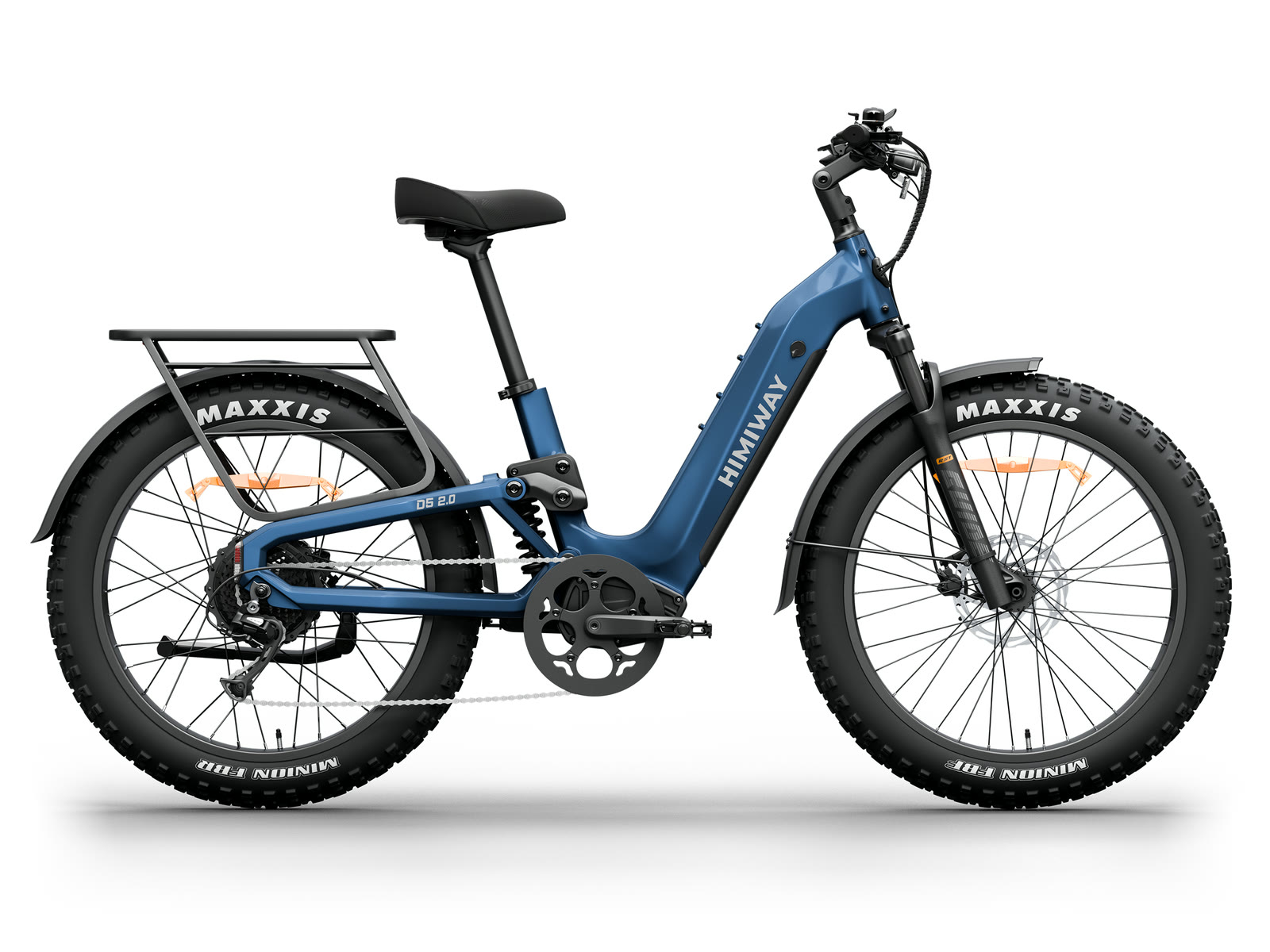
#2Himiway D5 2.0 Full-Suspension Fat Tire eBike
$1,999as of Sep 13, 5:40 AM EDTCheck price at Himiway
Class 328 mph750 W720 Wh400 lb92 lbStep-through
#3Heybike RangerClass 328 mph1400 W600 Wh400 lb70 lbFolding, step-through
#4TST Fat 20Not statedNot stated750 W720 Wh450 lb66 lbStandard
#6Misodo Mountain 26Not statedNot stated1500 W499 Wh350 lbNot statedStandard
#5ASKGO Mountain 26UnavailableNot stated25 mph750 W499 Wh365 lbNot statedStandard

Prices are subject to change, and the buy links always fetch the live price. Motor is the figure the listing quotes, which is often a peak rather than a rated number; US e-bike classes are set on rated output. “Not stated” means neither the listing nor our review gives a figure.

Detailed picks

SISIGAD Family E-Bike
Amazon
Pick #17.0/10

SISIGAD Family E-Bike

SISIGAD
Check price at Amazon

Free 30-day returns via Amazon

Most payload with hydraulic brakes. A 450 lb total payload, the joint highest of any bike we cover with a live offer, on dual hydraulic disc brakes, with a 750 W rated hub (1500 W peak), a removable 720 Wh battery, a UL 2849 certified system and 20×3 fat tires on a low step-through frame. A 300 lb rider with a 30 lb bag leaves 120 lb of rating spare. The trades: the rear child seat is built in, assist is cadence-based and no torque figure is published. Legal class: Class 3 at 28 mph, switchable to Class 2.

Himiway D5 2.0 Full-Suspension Fat Tire eBike
HimiwaySave $899

Best built for heavy and tall riders. A 400 lb payload on the 26-inch frame (fits 5 ft 1 in to 6 ft 5 in) or 440 lb on the 20-inch, Tektro hydraulic discs with a 203 mm front rotor, 90 Nm with a switchable torque sensor, full suspension and Maxxis Minion 26×4.0 tires. It weighs 92 lb and is sold direct from Himiway with a 15-day return window. Legal class: Himiway states 750 W with no separate peak figure, ships it at 20 mph and rates it for Class 1, 2 or 3.

Heybike Ranger
Amazon
Pick #37.5/10

Heybike Ranger

Heybike
Check price at Amazon

Free 30-day returns via Amazon

Best folder, for shorter trips. A 400 lb total payload and a 150 lb rear rack, hydraulic discs on 180 mm rotors, 750 W rated with 80 Nm, reinforced-sidewall 20×4 Kenda tires, and UL 2849 plus UL 2271 listed on the Amazon page. Our review names the battery as the limit: above about 230 lb loaded, the 600 Wh pack drains faster, so plan shorter rides. Legal class: ships as Class 2 at 20 mph, with Class 1 and Class 3 (28 mph) settings in the display.

TST Fat 20
AmazonSave $30
Pick #47.5/10

TST Fat 20

TST
Check price at Amazon

Free 30-day returns via Amazon

Best value at 450 lb, and the lightest 450 lb bike we cover at a published 66 lb. TST states 750 W rated alongside 1500 W peak, with a 720 Wh battery, front and rear suspension and 20×4 puncture-proof tires. Three gaps: no top speed is published (TST's own storefront lists a matching model at 32 mph), our review records no brake type, and the warranty is 180 days. Legal class: cannot be determined until TST confirms the assist cut-off.

Misodo Mountain 26
AmazonSave $60
Pick #67.7/10

Misodo Mountain 26

Misodo
Check price at Amazon

Free 30-day returns via Amazon

Best for tall riders on a budget: a documented 350 lb payload and a stated 5 ft 1 in to 6 ft 6 in fit range, the tallest here, on a reinforced high-carbon steel frame with 7 speeds, front suspension and walk assist. Our review records no brake type or bike weight, and it names no UL certification; plan on 20 to 25 miles against the 65 claimed. Legal class: cannot be determined, with only a 1500 W peak figure and no top speed. Set the limiter to 20 mph before riding.

ASKGO Mountain 26
Amazon
Pick #56.6/10

ASKGO Mountain 26

ASKGO

No longer sold at Amazon

Buy this instead

Vivi H7UL 27.5" Electric Mountain Bike

Check price at Amazon

Free 30-day returns via Amazon

Longest warranty on the list at 36 months, on a stated 365 lb maximum. 750 W rated (1500 W peak), dual disc brakes (our review does not name the type), 26-inch wheels, 7 speeds and a 400-lumen headlight. By our 50 lb margin it suits roughly a 285 lb rider carrying 30 lb. No UL certification, and 3.8 out of 5 from 159 ratings when checked. Legal class: fits no class as delivered (25 mph with a throttle); cap it at 20 mph in the display to ride as Class 2.

TL;DR: six picks

  1. SISIGAD Family E-Bike, $999.99 at our last check. Most payload with hydraulic brakes: 450 lb, dual hydraulic discs, 750 W rated and a UL 2849 certified system. Class 3, switchable to Class 2. The rear child seat is built in.
  2. Himiway D5 2.0, $1,999 (as of Sep 13, 5:40 AM EDT, subject to change). Best built for heavy and tall riders: 400 lb (440 lb on the 20-inch frame), Tektro hydraulics with a 203 mm front rotor, 90 Nm and full suspension. 92 lb, sold direct.
  3. Heybike Ranger, $799.99 at our last check. Best folder, for shorter trips: 400 lb, hydraulic discs on 180 mm rotors, 80 Nm, UL 2849 and UL 2271. Its 600 Wh pack limits range for a heavier rider.
  4. TST Fat 20, $569.99 at our last check. Best value at 450 lb: a stated 450 lb maximum load, 750 W rated, 720 Wh, 66 lb. No published top speed, and our review records no brake type.
  5. ASKGO Mountain 26, under $400. Longest warranty on the list: 365 lb, dual disc brakes, 750 W rated and 36 months of cover. Its 25 mph throttle setup fits no class until capped at 20.
  6. Misodo Mountain 26, $309.98 at our last check. Best for tall riders on a budget: 350 lb and a stated fit of 5 ft 1 in to 6 ft 6 in on a reinforced steel frame. No top speed or rated wattage, so its class cannot be determined.

The full guide, section by section. Tap any section to read it.

Our method in brief

Every pick publishes a payload rating of at least 350 lb, was in stock on publish day (on Amazon US, or from the maker's own store for Himiway), and has a full review on this site. We rank on fit first: how much payload margin the bike leaves a heavy rider, then whether our review documents hydraulic brakes. Sales evidence breaks ties after that, then our editorial score. We have not ridden these bikes, so every figure is the seller's claim as restated in our review, and where a review records nothing about a part, the page says so. A listing that publishes only a peak wattage or no top speed gets the verdict it deserves: legal class cannot be determined. Bikes with a big payload number and a disqualifying problem are named with the reason.

How we built this list

Every bike here publishes a payload rating of 350 lb or more, was in stock on publish day and has a full review on this site. Five sell through Amazon US and the Himiway sells direct. We have not ridden any of them: every figure is the seller's claim, restated from our review, and where a review says nothing about a part (usually the brakes), neither do we.

The ranking puts fit first: payload margin, then whether our review documents hydraulic brakes. Sales evidence breaks ties, then our editorial score. That is why a 450 lb bike whose brakes we cannot describe sits below a 400 lb bike with hydraulic discs on the record.

Each pick gets a one-line legal class verdict. US law is built on rated motor output (750 W, or 1,000 W in Oregon) and assisted speed: Class 1 and 2 stop at 20 mph, and Class 3 assists to 28 mph, pedal-assist only in most states. A listing with only a peak wattage, or no top speed, cannot be placed in a class.

Which electric bike is best for a heavy rider?

1. SISIGAD Family E-Bike: most payload with hydraulic brakes

The SISIGAD Family is rated to a 450 lb total payload, the joint highest of any bike we cover with a live offer, on dual hydraulic disc brakes, which our review calls the correct hardware for stopping a bike of about 83 lb with a passenger. A 300 lb rider with a 30 lb bag leaves 120 lb of rating spare. It adds a 750 W rated rear hub (1500 W peak), a removable 720 Wh battery, a UL 2849 certified system, a front suspension fork, 20×3 fat tires and a low step-through frame.

The trade is that it is a family bike first: the rear child seat and foot guards are part of the bike, so a solo rider carries a seat they may never use. Assist is cadence-based, SISIGAD publishes no torque figure, and our review plans on 30 to 45 miles with a passenger against the 60 advertised. Legal class: 750 W rated with a 28 mph cap makes it Class 3, with a Class 2 (20 mph) setting our review recommends whenever you carry a child. Read the full SISIGAD Family E-Bike review.

2. Himiway D5 2.0: best built for heavy and tall riders

Our D5 2.0 review names this reader outright: buy it if you are heavy, tall, older, or riding where the pavement runs out. The payload is 400 lb on the 26-inch frame (riders 5 ft 1 in to 6 ft 5 in) and 440 lb on the 20-inch (4 ft 11 in to 6 ft 3 in). The brakes are Tektro hydraulic discs, 203 mm front and 180 mm rear, and on a bike that can weigh 490 lb loaded, rotor size is a safety spec. It also has the highest published torque here at 90 Nm, a torque sensor you can switch to cadence, full suspension and Maxxis Minion 26×4.0 tubeless-ready tires.

Two things decide whether it suits you. It weighs 92 lb, heavier than most cargo bikes, so it wants ground-floor storage and a hitch rack rated for e-bikes. And it is bought direct from Himiway, with a 2-year warranty and a 15-day return window against Amazon's 30 days. Himiway holds a checkable UL file (E534537) at brand level, though the model's spec table does not itemize a UL mark. Legal class: Himiway states 750 W with no separate peak figure, ships it at 20 mph and rates it for Class 1, 2 or 3, so you can set it to suit your state. Read the full Himiway D5 2.0 review.

3. Heybike Ranger: best folder, for shorter trips

The Ranger is the folding option that keeps both specs this page ranks on: a 400 lb total payload with a 150 lb rear rack, and hydraulic discs front and rear on 180 mm rotors. The motor is 750 W rated (1400 W peak) with 80 Nm, the tires are 20×4 Kenda with reinforced sidewalls, the frame is 6061 aluminum, and Heybike quotes a fit of 4 ft 11 in to 6 ft 3 in. It lists UL 2849 for the system and UL 2271 for the battery on the Amazon page, and weighs 70 lb.

The limit is the battery. Our review names riders over about 230 lb fully loaded as the wrong buyer, because the 400 lb frame rating holds while the 600 Wh pack drains faster at that weight. Its realistic 25 to 35 miles assumes a 180 lb rider, so plan on less and treat it as a short-commute bike. Legal class: 750 W rated, shipping as Class 2 (20 mph) with one-tap Class 1 and Class 3 (28 mph) settings. Read the full Heybike Ranger review.

4. TST Fat 20: best value at 450 lb

TST lists a maximum load of 450 lbs, matching the SISIGAD at $569.99 against $999.99, and at a published 66 lb it is the lightest 450 lb bike we cover. TST states 750 W rated alongside the 1500 W peak, which settles the wattage half of the legal question, and fits a 720 Wh battery, front and rear suspension, 20×4 puncture-proof tires and a taillight with turn indication.

Three gaps keep it at number four. It publishes no top speed, and TST's own storefront lists a visually matching model at 32 mph, outside all three classes, so ask TST for the assist cut-off in writing. Our review records no brake type. And the warranty is 180 days, half the category norm. Legal class: cannot be determined; the motor is legal on power everywhere and the speed is unpublished. Read the full TST Fat 20 review.

5. ASKGO Mountain 26: longest warranty on the list

ASKGO lists a Maximum Weight Recommendation of 365 pounds on an alloy steel frame, and our review points larger riders to it for a documented rating at entry-level money. It states 750 W rated next to the 1500 W peak, specifies dual disc brakes, runs 26-inch wheels with 7 speeds, and carries a 36-month warranty, three times the twelve months most Amazon-native brands offer. By our 50 lb margin rule it suits a loaded weight up to about 315 lb, roughly a 285 lb rider carrying 30 lb.

Our review records dual disc brakes without saying hydraulic or mechanical, so ask. What ASKGO calls dual suspension is a front fork plus a sprung seatpost. It names no UL certification, the 499 Wh pack realistically gives 20 to 30 miles, and buyer feedback stood at 3.8 out of 5 from 159 ratings when we checked on July 30, 2026. Legal class: fits no class as delivered, because it advertises 25 mph with a throttle; setting the display's limit to 20 mph usually brings it inside Class 2. Read the full ASKGO Mountain 26 review.

6. Misodo Mountain 26: best for tall riders on a budget

Misodo gets right the two details most budget listings skip: a documented 350 lb payload and a stated fit range of 5 ft 1 in to 6 ft 6 in, the tallest on this page. The frame is reinforced high-carbon steel, with front suspension, 7 speeds and walk assist, which our review singles out as useful for pushing a heavy bike up a ramp. By our margin rule, 350 lb suits a loaded weight up to 300 lb.

Everything else needs checking on arrival. Misodo states no top speed and no rated wattage, only a 1500 W peak, so assume it can exceed 20 mph until you set the limiter. Our review records no brake type or bike weight, it names no UL certification, and the 65-mile claim is impossible from a 499 Wh pack: plan on 20 to 25 miles. Legal class: cannot be determined; capping it at 20 mph fixes the speed half only. Read the full Misodo Mountain 26 review.

Payload math: how much rating you actually need

Payload is everything the bike carries except itself: you, dressed, plus helmet, lock, bag, water, anything on a rack and anyone on a seat. Listings name it differently (maximum load on the TST, maximum weight recommendation on the ASKGO, total payload on the SISIGAD and Heybike, a system rating on the Hopepeak); if a listing gives one number without saying what it covers, treat it as the total.

Our rule of thumb adds 50 lb of margin to your loaded weight. The number is ours and deliberately conservative: every rating here is the seller's own figure, and a pothole puts more force through a frame than standing still.

Your weight, dressed Plus what you carry Loaded weight With our 50 lb margin Picks that clear it
250 lb 30 lb 280 lb 330 lb All six
275 lb 30 lb 305 lb 355 lb All but the Misodo (350 lb)
300 lb 30 lb 330 lb 380 lb SISIGAD, Himiway, Heybike Ranger, TST Fat 20
350 lb 30 lb 380 lb 430 lb SISIGAD, TST Fat 20, Himiway on the 20-inch frame (440 lb)
400 lb 30 lb 430 lb 480 lb None we stock

For a 400 lb rider, nothing we stock leaves our full margin. The two 450 lb bikes sit 20 lb above a 430 lb loaded weight, so keep what you carry light and ask the seller how the rating was set.

Racks have their own limit inside the total: 150 lb on the Heybike Ranger and 120 lb on the Himiway, and spare payload does not let you exceed either. For a passenger, see our family hauling guide.

Brakes: why hydraulic matters more as weight goes up

A brake turns motion into heat, and the energy to shed rises with total mass and with the square of speed. A 300 lb rider on an 83 lb bike is moving 383 lb; a 170 lb rider on a 60 lb bike, 230 lb. At the same speed the heavier pair carries about two-thirds more energy, and going from 20 mph to 28 mph nearly doubles it again: more than three times the work for the brakes in total.

Hydraulic discs press the pads with fluid, so they need less hand force for the same stopping power and modulate more smoothly than cable-pulled mechanical discs. A bigger rotor gives the caliper more mechanical advantage and more metal to absorb heat, which is why the Himiway's 203 mm front rotor matters.

Three picks document hydraulic brakes: the SISIGAD, the Himiway and the Heybike Ranger. Our ASKGO review records dual disc brakes without naming the type, and our TST Fat 20 and Misodo reviews record no brake type at all. If a listing is silent, ask in writing before you order, and check the pads after the first month, since more weight means more wear per stop. On a Class 3 bike, a heavy rider can also keep it set to Class 2.

Wheels, tires and frames

Tires take the load first. A 4-inch fat tire spreads your weight over a bigger contact patch at lower pressure, and four picks use fat rubber: Maxxis Minion 26×4.0 on the Himiway (tubeless ready, which our review notes ends pinch flats once converted), reinforced-sidewall 20×4 Kenda on the Heybike Ranger, 20×4 puncture-proof on the TST Fat 20 and 20×3 on the SISIGAD. Run toward the top of the pressure range printed on the sidewall, never above it. See our fat-tire guide under $1,000 for more.

Wheel size changes the ride. A 20-inch fat wheel gives a lower standover, and our SISIGAD review notes a hub motor launches with good mechanical advantage on one. The ASKGO and Misodo roll on 26-inch wheels, which ride over potholes more easily. None of our reviews publishes a spoke gauge, so ask a shop to check spoke tension after the first few weeks: new wheels settle, and a loose spoke caught early is a cheap fix.

Frames here are steel (the Misodo's high-carbon steel, the ASKGO's alloy steel) or 6061 aluminum (the Heybike Ranger). Material alone does not tell you what a frame will hold; the rated payload is the number the maker will publish, which is why this page ranks on it. A folding frame puts a hinge in the load path, and our Hopepeak Z10 review advises torque-checking the fold clamps monthly under heavy use, a habit that suits any folder.

Motor, torque and hills

Rated watts decide whether a bike is legally an e-bike; torque decides how it climbs with you on it. Only the Himiway (90 Nm) and Heybike Ranger (80 Nm) publish torque. The SISIGAD, TST Fat 20 and ASKGO give only a 750 W rated figure, and the Misodo only a peak wattage.

More weight slows every hub motor on a climb, and our SISIGAD and Heybike Ranger reviews both expect a fully loaded bike to drop into the teens on a sustained 6% grade. The Himiway's torque sensor adds power in proportion to your pedaling; the cadence sensors on the SISIGAD and Heybike switch assist on and off as the cranks turn, which is easy when you are tired and less smooth from a stop.

Range falls with weight as well. Headline figures are best cases (for the ASKGO and Misodo, our reviews show the claims are arithmetically impossible), so plan toward the low end of each review's realistic figure, listed in the FAQ below.

What to skip

Some bikes carry a big payload number with a problem attached. These are the ones we left out, and why.

  • A payload the brand does not publish. Our review puts the EUYBIKE 2-Seater in roughly the 400 lb class by its build, yet EUYBIKE does not headline a precise figure, and it advertises 35 mph, above the 28 mph Class 3 cap. Get the rating in writing or skip it.
  • A 350 lb bike whose own review says it gets tight. The Cyrusher Kommoda 3.0 has hydraulic brakes and full suspension, and our review calls it the wrong bike for anyone over 230 lb because its 350 lb payload eats into the margin fast.
  • A high payload on a bike that is not legally an e-bike. The GAMVIRE V7 PRO lists 400 lb, and claims 6000 W peak and 47 mph. That is outside Class 1, 2 and 3 in every US state and above the moped ceiling in most, which points toward motorcycle rules: registration, insurance and often an endorsement. Private land or trails that permit motorized use only.
  • Silence about the brakes. Kingbull's spec sheet for the Kingbull Ranger names no caliper, rotor or brake type on an 88 lb bike rated to 28 mph and 350 lb. Our review says to get it in writing before ordering, which is the right call for a heavy rider on any bike.
  • Range claims written for a light rider. Divide the battery watt-hours by the claimed miles. If the answer is under about 15 Wh per mile, the claim will not survive your weight.

Our guide to e-bikes to avoid covers the wider set of red flags.

Related guides

Carrying a child too? Start with our family hauling guide. If budget comes first, Best Electric Bikes Under $1,000 and Best Electric Bikes Under $1,500 rank by price band. Before you ride, check your state's class rules, path access and age limits on our state-by-state law pages.

Also considered

Near misses, and the reason each one missed. Where a mention is the better buy for a specific rider, it says so.

  • Hopepeak Z10 product photo

    A stated 400 lb total load rating with front and rear racks included, folding to 36 by 29 inches, on a 648 Wh pack, at $469. It is a mention for three reasons: the 400 lb is a system rating spread across the frame and both racks, the load runs through folding hinges our review says to torque-check monthly under heavy use, and our review records no brake type. The motor is quoted only as 1200 W peak, so its legal class cannot be determined. By our 50 lb margin it suits a loaded weight up to 350 lb, and the hinges are a reason to stay well inside that.

  • AddMotor GAROOTAN M-81 product photo

    Hydraulic discs on 180 mm rotors, UL 2849 and UL 2271 certification, a 960 Wh Samsung battery and a US-based company in Glendora, California behind the warranty, at $1,199. It is a mention because of the payload: 350 lb total, and our review says a rider over 200 lb in riding gear who often carries 50 lb or more will find it constrained. A good fit for a heavier rider who carries little and values US support; tight for anyone near 300 lb. Class 3 at 28 mph, shipping as Class 2.

Frequently asked questions

Can a 300 lb person ride an electric bike?

Yes, on a bike whose payload rating covers your loaded weight with room to spare. Payload counts everything the bike carries, so a 300 lb rider with 30 lb of bag, lock and water weighs 330 lb to the bike, and our rule of thumb adds 50 lb of margin, for 380 lb. Four of our picks clear that: the SISIGAD Family and TST Fat 20 (450 lb each), and the Himiway D5 2.0 and Heybike Ranger (400 lb each). Three of the four document hydraulic brakes; our TST Fat 20 review records no brake type.

What is the weight limit on an electric bike?

Whatever the maker publishes as the payload or maximum load, and it varies widely. Among the bikes we review that publish a figure, most sit between 220 and 330 lb, and 330 lb is the most common single number. The highest rating on any bike we cover with a live offer is 450 lb, on the SISIGAD Family and the TST Fat 20. The figure is the seller's own and covers the rider plus everything carried, not the bike itself. If a listing publishes no figure at all, ask the seller or skip the bike.

What e-bike can carry 400 lbs?

Five of the bikes recommended on this page are rated to 400 lb or more: the SISIGAD Family and TST Fat 20 at 450 lb, the Himiway D5 2.0 at 400 lb (440 lb on its 20-inch frame), the Heybike Ranger at 400 lb and the Hopepeak Z10 at a 400 lb system rating. If 400 lb is your total load, only the two 450 lb bikes and the 20-inch Himiway leave any headroom. If 400 lb is your own weight, nothing we stock leaves our 50 lb margin once 30 lb of clothes and gear are added, and the 450 lb bikes leave about 20 lb, so keep the load light and confirm the rating with the seller. The GAMVIRE V7 PRO also lists 400 lb and is not a legal e-bike anywhere in the US.

Are fat tire e-bikes better for heavy riders?

They help, and they are only part of the answer. A 4-inch tire spreads the load over a larger contact patch and runs at lower pressure, which adds comfort and traction under weight, and four of our six picks use fat tires. The payload rating and the brakes still matter more: a fat-tire bike rated to 330 lb leaves nothing spare for a 300 lb rider with a 30 lb bag. Run heavier loads toward the top of the pressure range printed on the sidewall. Our fat-tire guide under $1,000 covers the format in depth.

Do heavier riders need hydraulic brakes?

We would treat them as the default. Stopping energy rises with total mass and with the square of speed, so a 300 lb rider on an 83 lb bike carries about two-thirds more energy than a 170 lb rider on a 60 lb bike at the same speed, and nearly twice as much again at 28 mph as at 20. Hydraulic discs need less hand force for the same stopping power. Three picks document them: the SISIGAD Family, the Himiway D5 2.0 (with a 203 mm front rotor) and the Heybike Ranger. If a listing does not state the brake type, ask before you order.

Is a 750 W electric bike powerful enough for a heavy rider?

For most riding, yes, and 750 W rated is also the legal limit in every state except Oregon, which allows 1,000 W. Climbing under weight depends on torque and gearing more than on headline watts: the Himiway D5 2.0 publishes 90 Nm and the Heybike Ranger 80 Nm, both on 750 W rated motors, and our SISIGAD and Heybike reviews still expect a fully loaded bike to slow into the teens on a long 6% climb. A bike sold with far more power, like the 6000 W peak GAMVIRE V7 PRO, leaves the e-bike classes altogether.

How far will an electric bike go with a heavy rider?

Less than the listing says, and less than a lighter rider gets from the same battery. Headline figures are best cases, and for the ASKGO and Misodo our reviews show the claims are arithmetically impossible. Our realistic planning figures are about 40 to 50 miles for the Himiway D5 2.0, 30 to 45 for the SISIGAD Family, about 33 for the TST Fat 20, 25 to 35 for the Heybike Ranger with a 180 lb rider, 20 to 30 for the ASKGO and 20 to 25 for the Misodo. Plan toward the low end of each, and lower again if you lean on the throttle.

Are these electric bikes street legal?

It depends on the bike and your state. The SISIGAD Family is Class 3 (750 W rated, 28 mph) with a Class 2 setting. The Himiway D5 2.0 ships at 20 mph and is rated for Class 1, 2 or 3. The Heybike Ranger ships as Class 2 with Class 1 and Class 3 settings. The TST Fat 20 and Misodo Mountain 26 publish no top speed, so their class cannot be determined, and the Misodo publishes no rated wattage either. The ASKGO Mountain 26 fits no class as delivered (25 mph with a throttle) until you cap it at 20 mph. Class 3 is restricted in DC, Kentucky, Massachusetts, Montana, North Carolina, Pennsylvania and South Carolina, and North Carolina's rule changes on December 1, 2026. Check your state on our law pages.

Reviewed by

John Weeks
Founder and editor