Review · Kingbull
mountain7.7/10Kingbull Hunter 2.0 1200W Fat-Tire Mountain E-Bike
Spec-verified against the manufacturer listing
Our verdict
Kingbull's Hunter 2.0 has one of the fuller spec sheets under $1,000 in the catalog: 750W rated / 1200W peak motor, 720 Wh battery, hydraulic brakes, front suspension, Class 3 (28 MPH), 26x4" fat tires, and a US service team in California rather than an Amazon-only badge. It is $959 (as of Sep 29, 11:10 AM EDT, subject to change) on Amazon at our last check, and competes on spec with the Jasion EB5 MAX ($549 as of Sep 29, 11:10 AM EDT, subject to change) and the Vivi ACE07 ($781.79 as of Sep 29, 11:10 AM EDT, subject to change). The differentiators on paper are the highest stated torque of the three (95 Nm), knobby off-road tires and Kingbull's 2-year warranty.
- Best for
- Mixed off-road + road riders who need fat-tire flotation AND Class 3 speed
As an Amazon Associate I earn from qualifying purchases. Ebike Oracle may also earn a commission on links to other retailers. Full disclosure.
Free 30-day returns via Amazon
Not sold on this one? See every ranked pick in our guide to the best e-bikes under $1,000 on Amazon.
Ranked #2 in Which Electric Dirt Bikes Are Street Legal? (2026), #6 in Best Electric Bikes Under $1,500 in the US (2026) and #6 in Best Street-Legal E-Bikes (2026): 5 Ranked Picks.

At a glance
Run this in our range calculator →The numbers
Kingbull Hunter 2.0 1200W Fat-Tire Mountain E-Bike is a Class 3 electric mountain bike that scores 7.7/10 on our editorial rubric, last verified on May 17, 2026. Amazon listed it at $959 as of September 29, 2026. Prices change often, so treat that as a snapshot. On Amazon it currently ranks #111 Best Seller in Electric Fat Bikes. It pairs a 750 W hub motor with 95 Nm of torque and a 720 Wh battery, good for a claimed range of up to 36 miles and assisted speeds up to 28 mph. As a Class 3 e-bike it assists to 28 mph, and several states restrict where Class 3 can ride or set a minimum rider age, so it is worth checking your state law before buying. The bike weighs 76 lb and is rated to carry 330 lb of rider and cargo. It best suits mixed off-road + road riders who need fat-tire flotation AND Class 3 speed.
Pros
- + Full spec under $1,000: hydraulic brakes + front suspension + 720 Wh + Class 3 + fat tires
- + Knobby off-road tires + mountain geometry for mixed surfaces
- + 2-year warranty on motor / battery / frame, longer than the 1 year Jasion and Vivi list
- + California-based phone support, a better warranty path than Amazon-only brands
- + 95 Nm stated torque, the highest of the fat bikes it is usually compared with
Cons
- - 76 lb total weight, heavy enough that the carry-into-garage logistics matter
- - Cadence-sensor pedal assist rather than a torque sensor
- - Front fork is basic spring, not air-sprung or damping-adjustable
- - Knobby fat tires cost 25-30% range on smooth pavement vs equivalent street tire
- - Amazon "brand" field shows APEFOX (Kingbull is product brand, APEFOX is Amazon seller of record), which can be confusing at checkout
Who is this for?
- Mixed off-road + road riders who need fat-tire flotation AND Class 3 speed
- Buyers wanting a full spec sheet under $1,000
- Riders prioritizing 2-year warranty + US phone support over the cheapest possible price
- Buyers comparing the [Jasion EB5 MAX](/ebikes/jasion-eb5-max) who want a longer warranty and off-road tires
The 30-second verdict
Kingbull is one of a handful of brands building a fat-tire e-bike business on the back of DTC distribution (Kingbull's own webstore) plus Amazon (as APEFOX, the Amazon seller of record). The Hunter 2.0 is the company's flagship, a 26x4 fat-tire mountain e-bike with hydraulic brakes, front suspension fork (basic spring, not air), Class 3 (28 MPH) capability, and a 720 Wh battery, for $959 (as of Sep 29, 11:10 AM EDT, subject to change).
What stands out vs the Amazon-only competitors is support rather than anything we can measure: we have not ridden the Hunter 2.0, so we make no claim about its welds or finish. A California-based service team with US phone support is the warranty differentiator over Jasion's email-only model.
The full review, section by section. Tap any section to read it.
Power and battery
Power and battery
750W rated rear hub with 95 Nm torque (Kingbull markets 1200W peak, a brief boost) is a sensible spec for a 76-lb bike on fat tires. 95 Nm is a higher stated torque figure than the Vivi ACE07 (Vivi lists 80 Nm in one place and 90 Nm on its current listing, at the same 750W rated) and the Jasion EB5 MAX (85 Nm). We have not ridden it, so we cannot tell you how it climbs. Cadence-sensor pedal assist is the common limitation at this price tier, though not universal: the Vivi ACE01 lists a torque sensor.
The 720 Wh battery is in the right capacity class for a fat-tire bike: same as the EB5 MAX and ACE07, and well above the 468 Wh in the Heybike Cityscape 2.0. Kingbull claims 55 mi range; our planning estimate, not a measurement, for mixed fat-tire riding (PAS 3, a 180-lb rider, singletrack + fire road) is 28-36 mi per charge, closer to ~22 mi at a sustained 28 MPH on the road, with cold weather (below 50°F) typically costing another 15-20%. Plan around 30 mi for mixed off-road, 22 mi for sustained road speed.
Why the Hunter 2.0 is positioned as a mountain bike
Why the Hunter 2.0 is positioned as a mountain bike
Unlike the Vivi ACE07 (commuter step-through with fat tires) or Jasion EB5 MAX (high-top-tube commuter with fat tires), the Hunter 2.0 is genuinely designed for off-road riding:
- Knobby tread fat tires: the CST BFT 26x4.0 tires that ship on this bike have aggressive off-road tread, unlike the more street-oriented fat tires on the ACE07 / EB5 MAX
- Mountain-bike geometry: longer wheelbase, slacker head angle, lower bottom bracket clearance than the commuter-tire fat bikes
- Front suspension fork: basic spring (not air-sprung), but present
That said, this is still a 76-lb e-bike, not a 35-lb trail mountain bike. It rolls over rough terrain via mass and tire footprint rather than precision suspension travel. Genuine technical singletrack is still beyond its design envelope; fire roads, doubletrack, gravel, and rough urban pavement are its sweet spot.
Class 3 considerations
Class 3 considerations
28 MPH pedal-assist capability means the Hunter 2.0 is also a credible road bike when you're not on trails. The Class 3 trade-offs apply: banned from shared-use paths by default in Washington, Colorado, California (with mandatory all-ages helmet); restricted in New York (25 MPH cap + NYC-only); allowed at the state level in Texas and Florida. Check your state before assuming you can take this on the local trail network at full speed.
Build, brakes, drivetrain
Build, brakes, drivetrain
Hydraulic disc brakes front and rear (180mm rotors) with appropriately-sized calipers for the bike's mass and Class 3 speed. Front suspension fork is basic spring travel (60-80mm), adequate for the bike's intended use (fat tires absorb most of the small bumps anyway) though not adjustable for damping. Shimano's 7-speed drivetrain is standard. Integrated front + rear lights wired to the battery; rear rack and full fenders standard.
Kingbull warranty: 2 years on motor, battery, and frame; 1 year on components. This is meaningfully longer than Jasion (1 year motor/battery) and Vivi (1 year motor/battery, 6 months frame), and on par with Heybike and Velotric. California-based service team handles warranty claims via phone + email.
Who should buy it
Who should buy it
Buy this if you want a full spec sheet under $1,000 (hydraulic brakes + front suspension + 720 Wh + Class 3 + fat tires + 2-year warranty is uncommon at this price), if your riding mix includes genuine off-road (fire roads, gravel, light singletrack) where the Hunter 2.0's geometry + knobby tires actually earn their keep, or if you want a Class 3 fat-tire bike with US-based phone support (vs the Amazon-only Jasion). Skip this if your riding is 100% smooth pavement (fat tires hurt range without benefit; Heybike Cityscape 2.0 is the better paved-Class-3 pick), if you need a step-through frame (Vivi ACE07 or Jasion Roamer ST), or if you want genuine trail-MTB capability (this is an over-built road/light-trail bike, not a real MTB, so spend up to Specialized Turbo Tero / Trek Rail).
Ready to buy?
See current pricing at Amazon
We update prices as the listing changes, and the final price is set by the retailer at checkout.
Frequently asked questions
How does the Kingbull Hunter 2.0 compare to the Jasion EB5 MAX?
It is the closest direct competitor, and both are in stock on Amazon: both are 26x4 fat-tire Class 3 bikes, the Hunter at $959 (as of Sep 29, 11:10 AM EDT, subject to change) and the EB5 MAX at $549 (as of Sep 29, 11:10 AM EDT, subject to change). Jasion EB5 MAX: 750W rated / 1500W peak motor, 85 Nm, 720 Wh battery, hydraulic brakes, 1-year warranty, Amazon-only support, commuter-style high-top-tube geometry. Kingbull Hunter 2.0: 750W rated / 1200W peak motor, 95 Nm, 720 Wh battery, hydraulic brakes, 2-year warranty, US phone support, mountain-bike geometry with knobby tires. Pick the Kingbull if warranty length, support and off-road tires matter; pick the Jasion if you want the higher peak motor figure for less money.
Why does the Amazon listing show "APEFOX" as the brand?
APEFOX is the Amazon seller of record (the legal entity that ships the bike); Kingbull is the product brand. This is a common arrangement for direct-to-consumer e-bike brands that use Amazon as one of several distribution channels; the brand is registered with Amazon under a different LLC name for tax / customs reasons. The bike itself is a real Kingbull Hunter 2.0; the frame, drivetrain, and warranty are all Kingbull's. If you have a warranty claim, you contact Kingbull directly (not APEFOX) via their California service team.
Can I actually ride the Hunter 2.0 on real mountain trails?
On fire roads, gravel, doubletrack, and light singletrack, yes. The knobby tires + mountain-bike geometry are designed for it. On genuine technical singletrack with drops, rock gardens, or steep technical descents, no. This is a 76-lb bike with basic spring suspension. It rolls over rough terrain via mass and tire footprint rather than precision suspension travel. For real trail mountain biking, you want a 35-50 lb e-MTB with air suspension (Specialized Turbo Tero, Trek Rail, etc.), at three-to-five times the price.
How much real-world range will I get?
Kingbull claims 55 mi range from the 720 Wh battery. Our planning estimate, not a measurement, is 28-36 mi per charge for mixed fat-tire riding (PAS 3, a 180-lb rider, fire road + light singletrack + paved sections), about 22 mi at a sustained 28 MPH on the road and around 25 mi for pure trail riding. Cold weather typically costs another 15-20%. Plan around 30 mi for mixed-surface use.
Is the Hunter 2.0 UL 2849 certified?
Kingbull does not currently advertise UL 2849 certification on the Hunter 2.0's Amazon listing, unlike the Vivi ACE07, Vivi C26UL, and Jasion Roamer ST which explicitly carry the cert. If UL certification is mandatory for your apartment / workplace storage requirement, request the certification status from Kingbull's customer support before buying. For California e-bike sales from 1 January 2026, UL 2849 / UL 2271 certification is required under SB 1271; verify Kingbull's compliance status if you're in CA.
Where should I buy the Hunter 2.0?
Amazon, which is where our link goes, for $959 (as of Sep 29, 11:10 AM EDT, subject to change). Kingbull has also sold it on its own webstore; we no longer track that price. The practical difference is what happens when something goes wrong: an Amazon order follows the return policy shown on the listing, while a direct return has to be coordinated with Kingbull's California service center. Kingbull states a 2-year warranty on motor, battery and frame, and the warranty is Kingbull's regardless of who sold you the bike. Note the Amazon listing shows APEFOX as the seller of record; that is the entity that ships it, not a different product.
Bottom line
Is the Kingbull Hunter 2.0 1200W Fat-Tire Mountain E-Bike for you?
Check the live price + availability before deciding.
If this isn't the one

mountain
Likebike UM1
Save $50
A 20x4 fat-tyre e-bike with a 960 Wh battery, full suspension, IPX6 waterproofing and, unusually at this price,...
Read the review
mountain
ASKGO S9
The ASKGO S9 is a high-volume fat-tire e-bike that carries a 960 Wh battery for , which is...
Read the review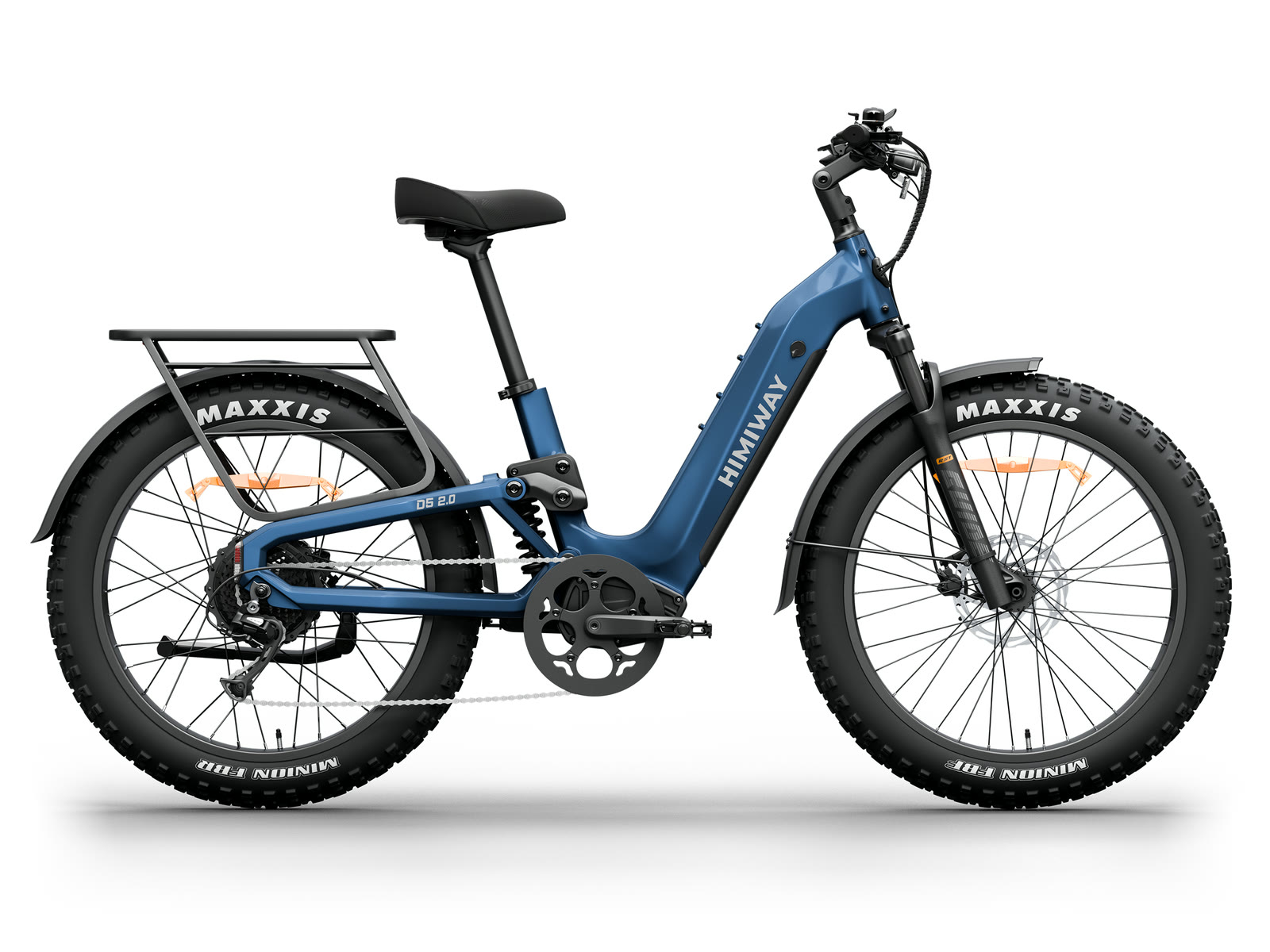
mountain
Himiway D5 2.0 Full-Suspension Fat Tire eBike
Save $899
The D5 2.0 is the rare budget-adjacent fat bike that is actually built to the class rules rather...
Read the review
