Review · Pescroa
commuter6.7/10Pescroa Fat 20
Spec-verified against the manufacturer listing

Our verdict
The Pescroa Fat 20 is a lot of bike for $439.99 (as of Oct 30, 8:10 AM EDT, subject to change): a moped-style 20-inch fat bike with front and rear suspension, a stated 750W rated motor (2000W peak, 90 Nm) and a removable 720Wh battery, and it was #9 in Amazon's Electric Fat Bikes on October 28, 2026. The catch is the 28 mph in the title. The listing never says whether that speed comes from pedaling or from a throttle, which is the difference between a Class 3 e-bike and a bike that fits no class at all, so plan to cap it at 20 mph. The 65-mile range claim needs 11 Wh per mile, so expect about 29, and Pescroa publishes no weight or load limit.
- Best for
- Riders on gravel, sand and trails who want full suspension and fat tires for under $500
As an Amazon Associate I earn from qualifying purchases. Ebike Oracle may also earn a commission on links to other retailers. Full disclosure.
Free 30-day returns via Amazon
Not sold on this one? See every ranked pick in our guide to the best e-bikes under $500 on Amazon.
At a glance
Run this in our range calculator →The numbers
Pescroa Fat 20 is a commuter e-bike that scores 6.7/10 on our editorial rubric, last verified on October 28, 2026. Amazon listed it at $439.99 as of October 30, 2026. Prices change often, so treat that as a snapshot. On Amazon it currently ranks #10 Best Seller in Electric Fat Bikes. It pairs a 750 W hub motor with 90 Nm of torque and a 720 Wh battery, good for a claimed range of up to 29 miles and assisted speeds up to 28 mph. It best suits riders on gravel, sand and trails who want full suspension and fat tires for under $500.
Pros
- + States 750W RATED next to the 2000W peak, so it is inside the wattage limit in every state
- + Publishes a 90 Nm torque figure, which most rivals in this chart leave out
- + Front and rear suspension plus 20 x 4 inch fat tires for under $500
- + Removable 720Wh battery, with a 30Ah (1,440Wh) option good for about 58 real miles
- + Headlight, brake light and an LCD showing speed, mileage, battery and assist level
- + 7-speed drivetrain and five assist levels, so it still pedals with the battery flat
Cons
- - Advertises 28 mph without saying whether a throttle works above 20 mph; with one, it fits no US class
- - The 65-mile claim needs 11 Wh/mile from a 720Wh pack; plan on about 29
- - UL 2849 claim is attached to the battery, names no lab and gives no certificate number
- - No published weight or maximum load
- - Brake type (mechanical or hydraulic) and suspension travel are not specified
- - No manufacturer website and no independent review of this model to check the listing against
Who is this for?
- Riders on gravel, sand and trails who want full suspension and fat tires for under $500
- Buyers willing to set the assist cap to 20 mph before the first ride
- Riders who want the option of a 30Ah battery on a budget moped-style frame
The 30-second verdict
The Pescroa Fat 20 is a moped-style fat-tire e-bike selling at $439.99 (as of Oct 30, 8:10 AM EDT, subject to change), and it sat #9 in Amazon's Electric Fat Bikes on October 28, 2026. For the money, the specification is strong. The listing states a 750W rated motor (2000W peak) with 90 Nm of torque, a removable 48V 15Ah (720Wh) battery, front and rear suspension, 20 x 4 inch tires, dual disc brakes, a 7-speed drivetrain with five assist levels, a headlight, a brake light and a 12-month warranty. It also claims UL 2849 certification, without naming a lab. Three things hold it back. It advertises 28 mph, and the listing never says whether that speed comes from pedaling or from a throttle, which decides whether it is a Class 3 e-bike or no class at all. The 65-mile range claim needs 11 Wh per mile from that battery, roughly half of what a heavy fat bike uses, so plan on about 29 miles. And Pescroa publishes no weight and no load limit, two numbers you should have before buying a full-suspension fat bike. Buy it as a cheap, well-equipped fat bike that you will set to 20 mph; do not buy it on the strength of the 28 mph or the 65 miles.
No independent outlet has reviewed this model, and we have not ridden it. Pescroa has no manufacturer website we could find: the brand exists as an Amazon and Walmart storefront. Every figure below is the listing's claim or our arithmetic on it.
The full review, section by section. Tap any section to read it.
Is the Pescroa Fat 20 street legal? 28 mph and the class question
Is the Pescroa Fat 20 street legal? 28 mph and the class question
This matters more than any other spec, so it comes first. The three-class framework that nearly every state has adopted works like this: Class 1 is pedal-assist only to 20 mph; Class 2 adds a throttle but is still capped at 20 mph; Class 3 assists to 28 mph, but only while you pedal, and most states allow no throttle on it. So 28 mph is a legal number for an e-bike in exactly one configuration: pedal-assist only above 20 mph.
The six listing bullets describe "5-level pedal assist" and never mention a throttle. That leaves two readings. If the bike is pedal-assist only, 28 mph at 750W rated would put it in Class 3, although Pescroa never claims a class, and states using the three-class model also expect a label showing the class, top assisted speed and wattage. If it has a throttle that keeps pushing past 20 mph, which is how most moped-style fat bikes at this price are sold, it fits no class: above the Class 2 ceiling and outside the Class 3 definition at once. We could not settle it from the listing photo, so we have not assigned a class, and you should not assume one.
In practice: seven jurisdictions do not recognize Class 3 today (the District of Columbia, Kentucky, Massachusetts, Montana, North Carolina, Pennsylvania and South Carolina; North Carolina changes on December 1, 2026), and there 20 mph is the ceiling for anything ridden as a bicycle. Elsewhere, a throttle bike assisting to 28 mph can be treated as a moped or motor vehicle, with registration, license and insurance questions attached. Most controllers on bikes like this expose a speed limit in the display settings; the listing does not say whether this one does, so ask the seller before you buy, and set it to 20 mph before the first ride. Check your state on street legal by state and the path rules on Class 3 laws by state. The class explainer covers the background, and our throttle versus pedal assist guide covers why the throttle is the deciding detail.
How powerful is the motor? 750W rated, 2000W peak, 90 Nm
How powerful is the motor? 750W rated, 2000W peak, 90 Nm
The title leads with 2000W peak, the number designed to sell the bike. The figure the law uses is in the first bullet: a 750W motor. Rated continuous wattage is what the federal definition at 15 U.S.C. § 2085 caps at 750W, and state e-bike definitions use the same ceiling, with Oregon allowing 1,000W. Peak is a momentary figure during a hard start that no statute mentions. On wattage, then, this bike is inside the line in every state, and the 2000W is a statement about current draw on a hill start rather than a legal problem. Pescroa deserves credit for printing the rated number at all: plenty of listings in this chart, including the HQYEX Fat 20, quote peak alone and leave you guessing.
The 90 Nm torque figure is the other disclosure most rivals skip. Treat it as a claim rather than a measurement, because makers rate hub-motor torque in different ways. Even so, 90 Nm is at the top of what 750W rear hubs are usually rated for, and it fits the bike's pitch as a hill and gravel machine. The TST Fat 20, the closest rival on paper, states 750W rated and no torque figure at all.
How far does the Pescroa Fat 20 go? The 65-mile claim, checked against the battery
How far does the Pescroa Fat 20 go? The 65-mile claim, checked against the battery
The pack is 48V x 15Ah = 720Wh. The listing claims up to 65 miles. Divide: 720 ÷ 65 = 11.1 Wh per mile. Real-world e-bike consumption runs 15 to 30 Wh per mile, and a full-suspension bike on 4-inch tires with an upright moped riding position sits in the upper half of that range. The claim is below the floor for any e-bike, let alone this one.
For a planning figure, use 25 Wh per mile: 720 ÷ 25 ≈ 29 miles with moderate assist on mixed ground. Ride gently around 15 mph on flat pavement in the lowest assist level and 35 to 40 miles is plausible; hold 25 mph or more and expect 20 or fewer, because air resistance climbs steeply with speed. The title also mentions a 30Ah option claiming 120 miles: 48V x 30Ah = 1,440Wh, and 1,440 ÷ 120 = 12 Wh per mile, the same overstatement. At 25 Wh per mile that pack is good for about 58 miles, a real gain if your commute needs it. The listing we link is the 15Ah version, so check which battery option is selected before you pay. Our range guide works through the arithmetic in more depth.
Is the Pescroa Fat 20 UL certified? What the listing says, and what it leaves out
Is the Pescroa Fat 20 UL certified? What the listing says, and what it leaves out
The title says UL2849 Certified, and the second bullet calls the pack a "removable UL 2849 certified 48V 15Ah battery". Two cautions. First, UL 2849 is the standard for an e-bike's complete electrical system: battery, charger, motor, controller and wiring assessed together. The battery-pack standard is UL 2271. Attaching UL 2849 to the battery alone is the wrong standard for the claim as worded, which leaves it unclear whether the whole bike or only the pack was assessed. Second, no testing laboratory, certificate or file number appears anywhere on the listing, so the claim cannot be checked against a certifier's directory. A Pescroa listing on Walmart for a 20-inch, 750W fat bike words its claim as "Tested to UL2849 Standard by SGS", which names a lab but describes a test rather than a certification. Those are different things.
This matters in more places every year. NYC Local Law 39 bans the sale, lease or rental of e-bikes and batteries in New York City that are not certified to these standards, and California SB 1271 restricts the sale of e-bikes and e-bike batteries not tested to them from January 2026. If your building, landlord or city asks for proof, ask Pescroa for the certificate before you buy. The battery fire safety guide explains what the standards test, and our UL-certified shortlist lists bikes whose certification is documented.
Suspension, brakes, lights and the numbers that are missing
Suspension, brakes, lights and the numbers that are missing
Full suspension on a fat bike at this price is a genuine feature. The listing photo shows a front fork and a rear shock under the bench seat, and the 20 x 4 inch tires do most of the comfort work on gravel, sand and broken pavement anyway. The listing does not name the fork or shock, give travel figures, or say whether the dual disc brakes are mechanical or hydraulic. On a bike that claims 28 mph, brakes are the spec we would most want to see, so ask. Lighting is better than average: a large round headlight and a taillight that the listing says lights up when you slow down, which makes it a brake light. The LCD shows speed, mileage, battery level and assist level.
What is missing matters more. Pescroa publishes no total weight and no maximum load. The TST Fat 20, a 20-inch full-suspension fat bike with the same 720Wh battery size, lists 66 lb, and a moped frame with a long bench is unlikely to be lighter. That is a lot to lift onto a car rack or carry up stairs, and without a load figure a heavier rider is guessing. The bench looks long enough for two, but the listing does not rate the bike for a passenger, so treat it as a one-seater. The 12-month warranty is the norm for Amazon-native brands, and the bike arrives 90% pre-assembled with a tool kit and manual. The main listing photo also shows a phone app, a cable lock and a phone mount; the bullets mention none of them, so do not count on any of the three being in the box.
Who should buy it, and who should not
Who should buy it, and who should not
Buy the Pescroa if you want a moped-style fat bike with full suspension, a 750W rated motor and a 720Wh battery for under $500, you ride mostly on gravel, sand, trails or private land, and you will cap the assist at 20 mph unless the seller confirms in writing that the bike is pedal-assist only above that speed.
Skip it if you need a bike whose class is stated on the listing, if your building or city asks for documented UL certification, if you need more than about 30 miles per charge on the base battery, or if you need the weight and load rating before you buy. For a similar 20-inch bike with both of those numbers published, look at the TST Fat 20. For the wider field, see our fat-tire shortlist under $1,000, and if staying inside the three classes matters to you, start from the street-legal shortlist.
Ready to buy?
See current pricing at Amazon
We update prices as the listing changes, and the final price is set by the retailer at checkout.
Frequently asked questions
Is the Pescroa Fat 20 street legal?
On power, yes: the listing states a 750W rated motor, which is the ceiling in the federal definition at 15 U.S.C. § 2085 and in state e-bike law (Oregon allows 1,000W). On speed, it depends on something the listing does not say. It advertises 28 mph. If that is pedal-assist only, the bike would fit Class 3, which seven jurisdictions do not recognize today. If a throttle works above 20 mph, it fits no class and can be treated as a moped. Set the cap to 20 mph and check your state.
How fast does the Pescroa Fat 20 go?
The listing title claims 28 mph. No independent outlet has measured it, and we have not ridden it. 28 mph is the Class 3 ceiling, which applies only to pedal assistance; Class 1 and Class 2 bikes stop assisting at 20 mph. The listing does not say whether the throttle, if there is one, is limited to 20 mph, so ask the seller before buying and plan to set the speed cap to 20 mph in the display settings for paths and Class-3-restricted states.
How far does the Pescroa Fat 20 go on one charge?
The pack is 48V x 15Ah = 720Wh. The listing claims up to 65 miles, which needs 720 ÷ 65 = 11.1 Wh per mile; a full-suspension fat bike draws 20 to 30. Plan on 720 ÷ 25 ≈ 29 miles with moderate assist, more on gentle flat rides, under 20 at sustained high speed. The optional 30Ah pack (1,440Wh) works out at about 58 real miles against its 120-mile claim.
Is the Pescroa Fat 20 UL certified?
The listing says "UL2849 Certified" and calls the battery a "UL 2849 certified 48V 15Ah battery". It names no testing lab, certificate or file number, so the claim cannot be checked in a certifier's directory. Note also that UL 2849 covers the whole e-bike electrical system; the battery-pack standard is UL 2271. If your building or city (New York City under Local Law 39, for example) requires certification, ask Pescroa for the certificate before you buy.
Is Pescroa a good e-bike brand?
There is not enough evidence to say. Pescroa sells through Amazon and Walmart storefronts (e-bikes, electric dirt bikes and kids' gas ATVs); we found no manufacturer website and no independent review of this model as of October 2026. The listing offers a 12-month warranty and seller support through Amazon. That makes the bike's own disclosures the only evidence, and they are mixed: a stated 750W rated figure and torque on one side, an unverifiable UL claim and no weight or load figures on the other.
Bottom line
Is the Pescroa Fat 20 for you?
Check the live price + availability before deciding.
If this isn't the one

commuter
Funhang City Cruiser 26
The most honestly specified bike on our Amazon budget shelf: 500 W rated rather than peak-only, 20 mph,...
Read the review
commuter
Heybike Cityscape 2.0
The Heybike Cityscape 2.0 is a value-tier Class 3 commuter on Amazon US: 1200 W peak (750 W...
Read the review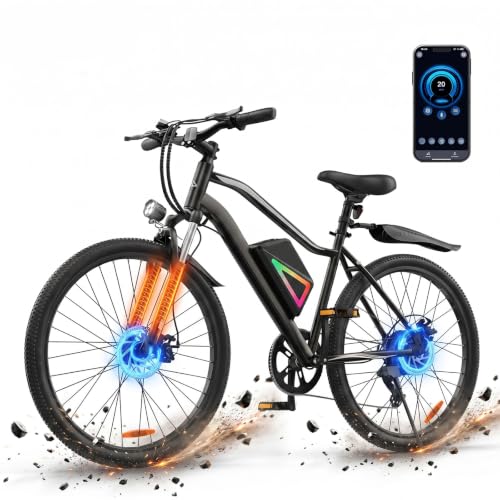
commuter
RNNSNN Commuter 26
The cheapest bike we have found that documents BOTH UL 2849 for the complete bike and UL 2271...
Read the review