Review · Razor
commuter7.0/10Razor Rambler 16
Spec-verified against the manufacturer listing
Our verdict
The Razor Rambler 16 is the lowest-friction way to put an adult on an electric bike: it's just under $600, comes from a household-name US brand, and ships fast on Prime. You give up speed (15.5 mph cap) and range (12 miles real-world) versus DTC competition twice the price, but the Razor name and the Amazon return policy buy a lot of confidence for first-time e-bike buyers.
- Best for
- First-time e-bike buyers who want a household-name brand rather than a research project
As an Amazon Associate I earn from qualifying purchases. Ebike Oracle may also earn a commission on links to other retailers. Full disclosure.
Free 30-day returns via Amazon
Not sold on this one? See every ranked pick in our guide to the best e-bikes under $600 on Amazon.
Ranked #1 in Best E-Bikes for Teens and 14-Year-Olds (2026), #3 in Best Electric Bikes for Beginners (2026) and #6 in Street-Legal Electric Dirt Bikes (2026): Which Ones Actually Are.

At a glance
Run this in our range calculator →The numbers
Razor Rambler 16 is a Class 2 step-through commuter e-bike that scores 7.0/10 on our editorial rubric, last verified on May 3, 2026. Amazon listed it at $589 as of September 16, 2026. Prices change often, so treat that as a snapshot. On Amazon it currently ranks #1098 Best Seller in Electric Bicycles. It pairs a 350 W hub motor and a 360 Wh battery, good for a claimed range of up to 12 miles and assisted speeds up to 16 mph. As a Class 2 e-bike it adds a throttle while keeping assistance capped at 20 mph, which keeps it street-legal in nearly every US state without a licence or registration. The bike weighs 56 lb and is rated to carry 220 lb of rider and cargo. It best suits first-time e-bike buyers who want a household-name brand rather than a research project.
Pros
- + Established US brand: Razor has decades of consumer-electronics scooter distribution behind it, which means a real US-based service team and warranty phone number rather than an email-only import support model. For a first-time e-bike buyer nervous about what happens if the bike arrives with a problem, this is the biggest single reason to spend $150 more than a Vivi or Bodywel at the same wattage.
- + Cheapest recognised-name adult e-bike on Amazon US at the $499-599 street price. Nothing else in the catalog under $500 comes from a brand you'd have heard of before shopping for an e-bike. The Rambler 16 lets buyers skip the research phase of vetting an unfamiliar Chinese OEM brand. The Razor name does that vetting for them, which has real value at the entry tier.
- + Step-through frame with no top tube handles a wide range of rider heights and lets riders mount and dismount without swinging a leg over the saddle. For older riders, riders with limited hip mobility, or anyone in work clothes, the step-through geometry is a meaningful accessibility upgrade over a diamond-frame bike at the same price point.
- + Class 2 configuration with a right-hand throttle plus cadence-sensor pedal-assist means riders can choose throttle-only mode when tired or in casual clothes, or pedal-assist mode when they want a longer range. That flexibility is what most first-time e-bike buyers actually want; the Rambler delivers it out of the box without a mode-select ceremony.
- + Amazon Prime distribution and 30-day return policy is a real safety net for buyers testing whether an e-bike fits their commute. Import brands like Vivi or Bodywel ship from a single US warehouse with email support; if the bike doesn't work for your commute, returning it is genuinely harder. With a Prime-fulfilled Razor, the return is a QR code at the door.
Cons
- - 15.5 mph top speed is the hard ceiling on both throttle and pedal-assist, which is fine on residential streets and paved paths but exhausting on any road shared with cars moving at 30+ mph. Cars will pass you constantly, and the Rambler doesn't have the acceleration reserves to briefly outrun a traffic gap. Buyers whose realistic route touches arterial roads need a Class 3 (28 mph) bike, not this one.
- - 16-inch wheels make the bike feel twitchy on lane markings and unforgiving on potholes. There is no front suspension. Every crack in the pavement is transmitted straight through the rigid fork to the rider's hands. On smooth suburban asphalt this is a non-issue; on typical urban chip-seal or broken bike-lane pavement, the ride quality is markedly worse than a comparable 20-inch or 26-inch wheeled e-bike.
- - 12-mile Razor-claimed range (10-14 miles real-world from Amazon reviews) is short by modern e-bike standards. A daily round-trip commute over about 8 miles will require mid-day charging or throttle discipline. There is no swappable-battery option and no dual-battery mount, so range planning is per-charge only. Plan accordingly, and don't buy this bike expecting to grow into longer commutes.
- - 220 lb payload rating excludes a meaningful slice of adult riders once you add clothing, a helmet, a backpack, and a lock. Riders at 200 lb bodyweight are effectively at capacity with any cargo. Over the rating, brake pad wear accelerates, spoke fatigue accelerates, and real-world range drops another 20% below the already-modest 12-mile figure, a compounding problem rather than a single one.
- - Single fixed gear plus cadence-sensor pedal-assist means the drivetrain has no way to help you on hills. On sustained grades above about 5% the motor bogs down, the PAS switches on and off in a way that feels lurchy, and you either contribute real leg effort or walk. If your commute has one long climb, this is not the bike. Look at [Vivi 26" Folding](/ebikes/vivi-folding-26) or [Heybike Mars 3](/ebikes/heybike-mars-3) at similar prices.
Who is this for?
- First-time e-bike buyers who want a household-name brand rather than a research project
- Short flat errands on paved paths or residential streets (under 5 mi each way)
- Riders 5'2"-6' and under 220 lb who want a low-step entry e-bike
- Buyers who value the Amazon Prime return window more than peak performance
- Older riders or riders with limited hip mobility who need step-through geometry
What this bike actually is
The Rambler 16 is Razor's adult e-bike entry, a 16-inch wheel mini-bike with a 350W rear hub motor and a 36V/10Ah (360 Wh) battery. It's pitched at riders 18+ and adults up to 220 lb, capped at 15.5 mph. Step-through frame, no folding, single fixed gear with a right-hand throttle plus cadence-sensor pedal-assist. That puts it in Class 2 territory in every US state that recognises the three-class system, and inside the federal 750W / 20 mph e-bike definition (15 USC §2085) by a comfortable margin.
John, who runs Ebike Oracle as a daily commuter and web developer rather than as a paid tester, has not personally ridden the Rambler 16. This review is built from Razor's published spec sheet, the Amazon listing history, aggregate Amazon review sentiment, and a spec-for-spec comparison against the sibling entry-tier bikes in the catalog. Where a number is a manufacturer claim, it's flagged as one. Where a number is an inference from geometry or physics, that's flagged too.
The full review, section by section. Tap any section to read it.
Why it sells on Amazon
Why it sells on Amazon
Razor is the brand that put electric scooters under millions of US Christmas trees. That trust transfers. First-time e-bike buyers who'd never click 'Buy' on a Heybike or Vivi from a logo they don't recognise will Prime-ship a Razor without a second thought. At $499-599 street it's also one of the cheapest name-brand US e-bikes on Amazon; the cheaper entries in this catalog are import brands with email-only support, led by the RPINT Mini 14 at $199 and the Bodywel 14" Mini at $319.99 (as of Sep 15, 8:10 PM EDT, subject to change).
Amazon reviews cluster around 4.3★, with the caveats you'd expect from a $500 e-bike: buyers complain about the 16-inch wheels feeling twitchy, the modest top speed, and the short range, but they generally acknowledge the bike does what the listing says it does. This is the crucial framing: the Rambler 16 is not underpriced for what it delivers, and it's not overpriced either. It's a fair spec-for-price package with distribution and brand recognition doing the heavy lifting.
Where the 350W motor and 360 Wh battery actually land
Where the 350W motor and 360 Wh battery actually land
350W rated is the low end of usable for an adult e-bike. On flat pavement at a 150-175 lb rider it accelerates fine from a stop, holds the 15.5 mph cap in still air, and doesn't complain. Where it will complain is any sustained grade above about 5%: the cadence-sensor PAS switches power on or off rather than ramping smoothly with pedal force, and the single fixed gear means you can't downshift to keep cadence up. Expect to contribute meaningful leg effort on real hills, or to walk the bike up the steepest bit.
The 360 Wh battery is standard for this price and wheel size. Razor claims about 12 miles per charge; that's realistic for a mixed-throttle ride on flat ground with a 150-175 lb rider. Amazon reviews cluster in the 10-14 mile range for the same use profile. Throttle-only riding will pull that down to around 8 miles. Cold weather below 40°F takes another 15-20% off. There is no swappable-battery option, so range planning is per-charge, not per-battery-pack.
For context, siblings at this price tier land at similar Wh: the Gotrax R1 ships with a 374 Wh pack, the Vivi PONY01 with 374 Wh, the Bodywel 14" Mini with 360 Wh. The Rambler 16 is not an outlier here; it's a normally-sized entry-tier pack.
Wheel size and ride feel
Wheel size and ride feel
The 16-inch wheels are the single biggest ride-quality trade-off on this bike, and they deserve their own paragraph. A smaller wheel accelerates more responsively at low speed and makes the bike compact enough to store in a hallway or car trunk. It also transmits every crack, seam, and pothole straight through the rigid fork into the rider's hands. There is no front suspension. Above about 12 mph, the shorter wheelbase feels twitchy on lane markings and manhole covers in a way a 20-inch or 26-inch wheel does not.
The practical translation: this bike is fine on smooth residential streets, driveways, paved bike paths, and beach boardwalks. It is not fun on chip-seal roads, bad asphalt, or gravel. If the majority of your intended route is broken pavement, look at a 20-inch fat-tire folder like the Jasion EB5 or Heybike Ranger instead.
Fit, geometry, and who it accommodates
Fit, geometry, and who it accommodates
The step-through frame is the Rambler 16's most forgiving trait. There is no top tube to swing a leg over, saddle height adjusts across a wide range, and Razor rates the bike for 18+ riders up to 220 lb payload. Practically, riders in the 5'2" to 6' range fit comfortably. Above 6'2" the saddle-to-bar reach starts feeling cramped and the small wheels amplify the perception of being folded onto the bike. Above 220 lb rider weight you exceed the payload rating, which means faster brake pad wear, faster spoke fatigue, and battery drain that runs about 20% worse than the manufacturer figure.
For riders outside the fit envelope, Razor sells the Rambler 20 (same platform, 20-inch wheels, higher payload rating), and the Gotrax R1 is the closest cross-brand alternative, though it now sits at $593.98 (as of Sep 15, 8:10 PM EDT, subject to change).
Price vs performance at $499
Price vs performance at $499
The honest framing: at $499 you are buying a spec sheet that reads exactly like a $499 spec sheet. 350W hub, 360 Wh battery, 15.5 mph cap, mechanical brakes, no suspension, cadence-sensor PAS, single fixed gear, 56 lb curb weight. Nothing here is premium and nothing here is broken. The value question is not "is this bike good?" but "do the Razor brand + Amazon return path justify paying $150-200 more than a Vivi or Bodywel at the same wattage?"
For a first-time e-bike buyer nervous about warranty and returns, the answer is usually yes. Razor operates a US-based service team, and Amazon's 30-day return window on a Prime-fulfilled item is a real safety net that email-only import brands can't match. For a second- or third-time e-bike buyer who already knows the drill and just wants specs per dollar, the Bodywel 14" Mini delivers a similar riding experience for less. There is no wrong answer; the two segments buy different things.
Climate and season considerations
Climate and season considerations
Lithium-ion battery capacity drops in cold weather. On a 360 Wh pack that already only claims 12 miles, that means below 40°F you should plan around a realistic 8-10 mile ceiling and store the battery indoors at room temperature between rides. Above 90°F, keep the bike out of direct sun when parked: the small battery pack sits inside the frame and heat-soaks faster than the larger enclosures on higher-priced bikes.
The Rambler 16 has front and rear lights but no integrated turn signals, and the 15.5 mph cap plus small wheels make it a bad match for sharing lanes with 35+ mph traffic in low visibility. It's a fair-weather commuter and a good-weather errand runner, not an all-season vehicle.
Legality and where you can ride it
Legality and where you can ride it
The Rambler 16 fits every US state e-bike class system as a Class 2 e-bike: it has a right-hand throttle, and the assisted top speed is capped below 20 mph. In the 40+ states that have adopted the three-class model (see the state legality hub for the full matrix), Class 2 e-bikes are allowed anywhere a regular bicycle is allowed, with a handful of local exceptions for natural-surface trails. The 15.5 mph cap is under both the 20 mph federal e-bike ceiling (15 USC §2085) and the 28 mph Class 3 threshold, so no unusual state carve-outs apply.
For riders in the small number of states that still use pre-class rules (Alaska, Hawaii, New Mexico, Rhode Island as of this writing; see the state legality hub for current status), the Rambler 16's 350W motor and 15.5 mph cap sit well inside every state's e-bike definition, so registration and licensing are not required. Helmet rules follow the same age-based schedule as regular bicycles in most states.
Comparing the Rambler 16 to sibling entry-tier bikes
Comparing the Rambler 16 to sibling entry-tier bikes
Three catalog neighbours are useful reference points. The Gotrax R1 at $593.98 (as of Sep 15, 8:10 PM EDT, subject to change) delivers a 20-inch wheel, a folding frame, a 20 mph Class 2 cap, and Amazon-plus-Target-plus-Walmart distribution. That is a higher-ceiling ride for a modest premium over the Rambler, but with a diamond frame that some step-through buyers won't want. The Vivi PONY01, now discontinued, was smaller (14-inch wheels, 34 lb curb weight) and cheaper, with a similar 374 Wh battery, but ships from an import-only brand with email-only support. The Bodywel 14" Mini at $319.99 (as of Sep 15, 8:10 PM EDT, subject to change) is the cheapest of the three, again import-only.
The Rambler 16 sits between those points: more accessible than a diamond-frame folder, more supported than a Vivi or Bodywel, more expensive than either. That price gap is the Razor tax, and buyers should decide up front whether the brand and return path are worth $150-200 to them.
Who should buy it
Who should buy it
Buy this if you want a known-brand toe-dip into e-bikes for short flat errands (under 5 mi each way, paved), if you weigh under 220 lb, and if you value the Amazon return window over outright performance. Skip it if you need to keep up with traffic (16-inch wheels + 15.5 mph cap makes 35+ mph shared lanes exhausting), if your daily round-trip is over 8 mi (battery dies), or if you're over 220 lb (you'll exceed the rated payload). For hills, look at the Vivi 26" Folding or Heybike Mars 3. For a similar step-through form factor with more battery and a longer top-speed ceiling, look at the Gotrax R1 at the same price.
Ready to buy?
See current pricing at Amazon
We update prices as the listing changes, and the final price is set by the retailer at checkout.
Frequently asked questions
Is the Razor Rambler 16 actually big enough for adults?
Razor rates it for ages 18+ and 220 lb max. Riders 5'4"-6' typically fit fine because the step-through frame handles a wide saddle-height range. Above 220 lb or above 6'2", the geometry starts feeling cramped and you'll exceed the payload. Look at the Razor Rambler 20 instead, or at the Gotrax R1 if you want a 20-inch wheeled alternative, now at $593.98 (as of Sep 15, 8:10 PM EDT, subject to change).
How fast does the Rambler 16 actually go?
15.5 mph capped, and both throttle and pedal-assist hit the same wall. That's Class 2 territory. Sustained speed depends on rider weight, terrain, and battery state of charge: expect 13-15 mph on flat ground at 175 lb rider, dropping toward 10-12 mph on grades above 5% or with battery below 30%. The cap is firm; there is no unlock mode.
How long does the battery last per charge?
Razor claims about 12 miles. Amazon reviews cluster around 10-14 mi for a 175 lb rider on flat ground, less in cold weather or with throttle-only riding. There's no spare-battery option, so plan trips around a single charge. Cold below 40°F drops that another 15-20%; plan for an 8-10 mi realistic ceiling in winter.
Is the Razor Rambler 16 sold outside the US?
Razor distributes globally but the Rambler 16 ASIN above is Amazon US-only. UK shoppers should look at Eleglide or ENGWE on Amazon.co.uk. Razor has no direct equivalent in its UK e-bike line as of mid-2026.
Does the Rambler 16 fold?
No. It's a step-through frame, not a folder. If folding is essential look at the Gotrax R1 (48 lb, single-hinge fold, $593.98 (as of Sep 15, 8:10 PM EDT, subject to change)) or the Bodywel 14" Mini (45 lb, 14-inch wheels, $319.99 (as of Sep 15, 8:10 PM EDT, subject to change)) instead. The Rambler's compact 16-inch wheels do make it easier to store than a full-size 26-inch e-bike, but it won't collapse into a trunk.
How does the Rambler 16 compare to the Gotrax R1 at the same price?
The Rambler is $588.99 (as of Sep 15, 8:10 PM EDT, subject to change) street, the R1 $593.98 (as of Sep 15, 8:10 PM EDT, subject to change). The Rambler has 16-inch wheels, a step-through frame, a 15.5 mph cap, and a 12-mile Razor-claimed range. The Gotrax R1 has 20-inch wheels, a diamond frame that folds, a 20 mph Class 2 cap, and a slightly larger 374 Wh battery. Pick the Rambler if step-through accessibility matters or if you specifically want the Razor brand. Pick the R1 if you want the higher top speed, better ride quality over rough pavement, or the ability to fold the bike for car trunks and closets.
What kind of assembly does the Rambler 16 need out of the box?
The bike ships mostly pre-assembled from Amazon: install the front wheel, straighten the handlebars, install the seatpost and saddle, install the pedals, and charge the battery. Razor packs the required 15mm wrench and 4/5mm hex keys in the box. Budget 20-30 minutes for a first-time assembler. Torque the stem bolts to the values printed on the stem, and double-check the front wheel quick-release is fully seated. Those are the two most common assembly mistakes on any e-bike.
What warranty does the Razor Rambler 16 come with?
Razor's standard consumer product warranty applies: 90 days on components and 180 days on the motor and controller from date of purchase. That is shorter than Heybike (2 years on frame + motor) and shorter than Lectric (1 year), but Razor's US-based service team is meaningfully more responsive than the import-only brands. For an entry-tier bike expected to last 2-3 years of light use, the warranty coverage is appropriate for the price. Register the bike on razor.com within the first 30 days of purchase to activate warranty tracking.
What are the common problems with the Razor Rambler 16?
Four recurring themes show up in owner reports and in Razor's own support material. We have not stripped a Rambler down ourselves; this is what the public record shows.
Sudden range collapse. The most-reported fault: a bike that held a normal charge starts dying within a mile or two of a full charge. Razor's support forum carries troubleshooting threads for exactly this. It is the classic signature of a failing cell group or a charger that reports full without actually completing the charge, not of normal degradation. Normal ageing fades range gradually over seasons. If a bike does this inside the 180-day motor/controller window, it is a warranty call, not a maintenance job.
Throttle failure. Razor publishes a step-by-step throttle-replacement procedure for this model and rates it a ~20-minute, easy-difficulty repair, which tells you both that throttles do fail and that the part is user-serviceable. "No acceleration" troubleshooting for the Rambler almost always starts at the throttle connector before the motor or controller.
Underpowered on hills. Not a defect, a spec consequence, but it is what disappointed buyers write about most. 350 W rated, one fixed gear, and a cadence sensor that switches assist on and off rather than ramping with pedal force means sustained grades above about 5% need real leg effort. No firmware update fixes this.
Accelerated wear over the payload rating. Above the 220 lb limit, brake pads and spokes wear noticeably faster and range drops around 20% below the already-modest 12-mile figure. These compound, so a bike ridden over its rating ages much faster than the same bike ridden under it.
The mitigating factor is that Razor is a US brand that publishes repair guides and stocks parts, a genuine advantage over import-only competitors where a failed throttle can mean a dead bike.
How durable is the Razor Rambler 16?
Treat it as a 2-3 year bike under light use, not a decade-long commuter platform, and it holds up reasonably for the money.
The build is deliberately simple: 56 lb, mechanical brakes, no suspension, a single fixed gear. Fewer systems means fewer things to fail, and mechanical brakes in particular are cheap and easy to service anywhere. The wear items in practice are brake pads and spokes, both accelerated if the bike is ridden over its 220 lb payload rating.
The real lifespan limiter is the battery. The 360 Wh pack is not swappable, so when the cells reach end of life the usable life of the bike ends with them unless you pay for a pack replacement. Charging habits matter more than anything else you control: avoid storing it at 0% or at 100% for long periods, and keep it indoors below 40°F, where cold alone costs 15-20% of range.
Where it beats its price class is support. Razor is a long-established US brand that publishes model-specific repair procedures and sells spare parts, so a worn throttle or brake pad is a cheap fix rather than a write-off. That is the durability argument for paying $150-200 more than an equivalent-wattage import.
Bottom line
Is the Razor Rambler 16 for you?
Check the live price + availability before deciding.
If this isn't the one

commuter
Funhang City Cruiser 26
The most honestly specified bike on our Amazon budget shelf: 500 W rated rather than peak-only, 20 mph,...
Read the review
commuter
Heybike Cityscape 2.0
The Heybike Cityscape 2.0 is the value-tier sweet spot on Amazon US right now: 1200 W peak motor,...
Read the review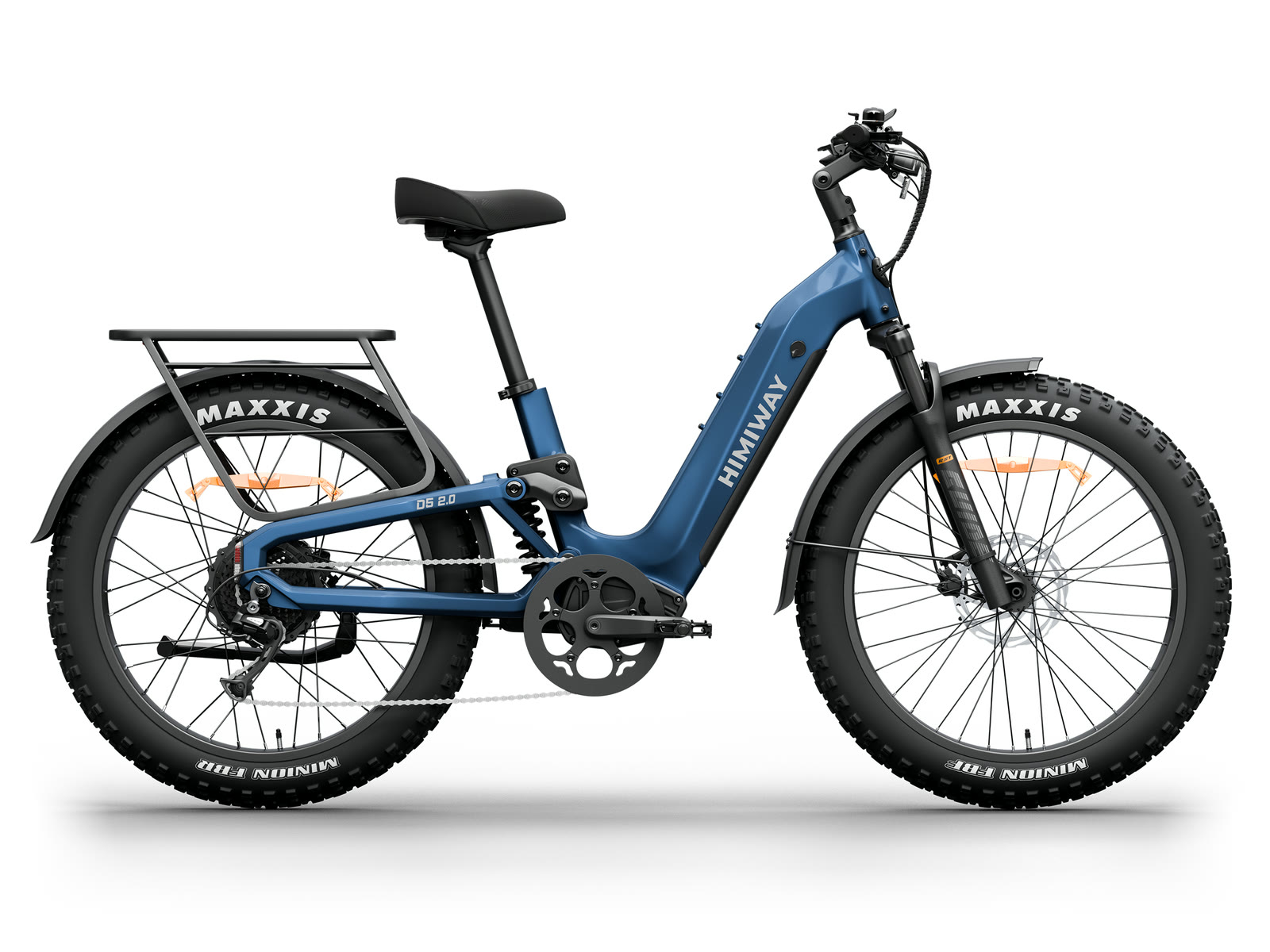
commuter
Himiway D5 2.0 Full-Suspension Fat Tire eBike
Save $899
The D5 2.0 is the rare budget-adjacent fat bike that is actually built to the class rules rather...
Read the review
