Review · Kingbull
mountain7.9/10Kingbull Rover 2.0 Full-Suspension Fat-Tire E-Bike
Spec-verified against the manufacturer listing
Our verdict
The Rover 2.0 is the one bike in this range whose suspension claim holds up, with a named DNM rear shock and a 100mm lockable fork at $1,199. Its spec sheet lists a DNM DV-22AR oil-spring unit with adjustable damping, where the Ranger markets "full suspension" and publishes no shock at all. Add UL 2849 certification, a torque sensor, hydraulic brakes and 26 x 4.0 puncture-resistant tyres and it is a properly equipped trail bike. Two things to weigh: 720 Wh on an 80 lb full-suspension bike gives roughly 23 to 33 real miles, and Kingbull states a 5'6" minimum rider height, which quietly excludes a lot of people.
- Best for
- Riders on fire roads, gravel and broken pavement who want genuine rear travel under $1,200
The listing we reviewed has been removed by the retailer. Here's the bike we'd buy instead: same class, verified in stock.

Kingbull Hunter 2.0 1200W Fat-Tire Mountain E-Bike
7.7/10 Amazon
Kingbull's Hunter 2.0 has one of the fuller spec sheets under $1,000 in the catalog: 750W rated / 1200W peak motor, 720...
As an Amazon Associate I earn from qualifying purchases. Ebike Oracle may also earn a commission on links to other retailers. Full disclosure.

At a glance
Run this in our range calculator →The numbers
Kingbull Rover 2.0 Full-Suspension Fat-Tire E-Bike is a Class 3 electric mountain bike that scores 7.9/10 on our editorial rubric, last verified on August 17, 2026. It carries a $1,899 list price. It pairs a 750 W hub motor with 80 Nm of torque and a 720 Wh battery, good for a claimed range of up to 27 miles and assisted speeds up to 28 mph. As a Class 3 e-bike it assists to 28 mph, and several states restrict where Class 3 can ride or set a minimum rider age, so it is worth checking your state law before buying. The bike weighs 80 lb and is rated to carry 400 lb of rider and cargo. It best suits riders on fire roads, gravel and broken pavement who want genuine rear travel under $1,200.
Pros
- + The only Kingbull with a real rear shock: a named DNM DV-22AR oil-spring unit with adjustable damping
- + 100mm lockable fork with preload adjustment, the longest travel in the range
- + UL 2849 system certification plus UL 2271 pack and UL 2580 Samsung cells
- + TROG-1B torque sensor and ZOOM hydraulic brakes on 180mm rotors front and rear
- + CST puncture-resistant 26 x 4.0 tyres and a 400 lb payload rating
- + 750W rated motor keeps it inside the federal definition, unlike the 2000W bikes it visually resembles
Cons
- - 720 Wh on an 80 lb full-suspension bike works out at 23 to 33 real miles, against an advertised 60
- - The Trekker costs $100 less and carries a third more battery, four-piston brakes and eight speeds
- - Kingbull states a 5'6" minimum rider height, the highest in the range, on a 33-inch stand-over
- - Seven-speed drivetrain is narrow for a bike meant to climb
- - The rear shock is not listed in the warranty table, and the fork sits in the 1-year tier
- - Brake system and tyres carry 3 months of warranty on a bike ridden off road
- - Returns run 15 days and cost a 10% fee plus $150 freight after shipping, about $270 here
Who is this for?
- Riders on fire roads, gravel and broken pavement who want genuine rear travel under $1,200
- Buyers 5'6" and taller who can clear a 33-inch stand-over
- Anyone who needs a stated UL 2849 certificate for indoor charging and wants an off-road bike
The 30-second verdict
Full suspension is the most abused phrase in budget e-bikes, so start with what Kingbull actually publishes. The Rover 2.0's specification table lists a KINGBULL OSD-R26 fork, coil spring, lockable, preload adjustable, 100mm travel and, separately, a Shock: DNM DV-22AR, oil spring, adjustable damping, 45mm. DNM is a real suspension manufacturer and the part is named. That is a genuine rear shock on a genuine full-suspension aluminium frame, and it is the reason this bike exists alongside the cheaper Trekker. Everything else is competent rather than exceptional: a custom Bafang 750W hub rated at 80 Nm with 1300W of peak output, a TROG-1B torque sensor, ZOOM HB-875-E hydraulic calipers on 180mm rotors, a Shimano seven-speed drivetrain, CST puncture-resistant 26 x 4.0 tyres, Samsung 21700 cells, IPX6 sealing and UL 2849 certification. At $1,199, down from $1,899, that is a well-equipped trail bike. The limits are capacity and fit. Its 720 Wh battery is the same as the Voyager 2.0 carries and a quarter smaller than the Trekker's, on a heavier bike with knobbier tyres, and Kingbull will not sell it to anyone under 5'6".
The full review, section by section. Tap any section to read it.
What the rear shock is actually worth
What the rear shock is actually worth
On a fat-tyre e-bike, a rear shock does less than it would on a lightweight mountain bike, because 4-inch tyres at low pressure already absorb most small chatter. Where it earns its place is on repeated square-edged hits, drops and rough descents, the things that transmit straight through a rigid rear triangle into your spine and, over time, into the frame welds. The DNM unit offers adjustable damping, so you can slow the rebound for rocky ground or speed it up for smoother trails, and the fork adds preload adjustment and a lockout so you can firm the front for road sections.
The honest framing is that 100mm of front and 45mm of rear travel makes this a capable rough-surface bike, not a trail mountain bike. At 80 lb it descends through mass and tyre footprint rather than through suspension geometry. Fire roads, gravel, doubletrack and broken pavement are where it is genuinely better than the alternatives at this price. Technical singletrack is not.
Range: 720 Wh and knobby 26 x 4.0 tyres
Range: 720 Wh and knobby 26 x 4.0 tyres
Kingbull advertises up to 60 miles. The battery is 48V x 15Ah, so 720 Wh. An 80 lb full-suspension bike on 26 x 4.0 knobby tyres is one of the least efficient shapes in e-biking, and consumes roughly 22 to 32 Wh per mile once you are off pavement.
720 ÷ 27 ≈ 27 miles. The band runs from 720 ÷ 32 ≈ 23 miles to 720 ÷ 22 ≈ 33 miles. So 23 to 33 miles of trail riding, and less if you spend the day climbing. The advertised 60 miles would require 12 Wh per mile, which this bike cannot approach at this weight and tread. The torque sensor helps a little at the efficient end because it stops the motor delivering full assist for a light pedal stroke, but it cannot change the physics of a knobby fat tyre.
This is the clearest trade in the Kingbull range. The Trekker costs $100 less and carries 960 Wh, a third more capacity. You are paying a price premium and a range penalty to get the rear shock. If you will not use the shock, that is a bad trade, and we would send you to the Trekker.
The rider-height requirement nobody mentions
The rider-height requirement nobody mentions
Kingbull states a rider height range of 5'6" to 6'7" for the Rover 2.0. Every other bike in the range starts lower: the Ranger at 5'0", the Trekker at 5'3", the Voyager 2.0 at 5'2". The stand-over height is 33 inches and the minimum seat height is 30.7 inches, which is what drives it. If you are under 5'6", this is the wrong bike in the range and no amount of seatpost adjustment fixes a stand-over you cannot clear. That is a real exclusion and it is buried in a table.
Legality: 750W rated, 1300W peak, Class 3
Legality: 750W rated, 1300W peak, Class 3
The motor is rated at 750 watts, which sits exactly at the ceiling in 16 CFR § 1512.2, the federal rule defining a low-speed electric bicycle as having a motor of less than 750 watts. The 1300W figure Kingbull markets is peak output and no statute regulates it, which is why we record 750W as the motor rating. This is a legal machine in a way that the 2000W and 4000W bikes sold by brands like Ridstar are not.
The bike ships Class 3 by default with Class 2 selectable, so pedal assist reaches 28 mph and the throttle is capped at 20 mph. Seven states do not recognise Class 3 at all: DC, Kentucky, Massachusetts, Montana, North Carolina, Pennsylvania and South Carolina, with North Carolina changing on 1 December 2026. Set the display to Class 2 in those places. Off-road riding brings a second layer: many state and federal land managers regulate e-bikes on trails separately from the road classes, and a Class 3 bike is frequently excluded from trails that admit Class 1. Check your state, then check the land manager for the trail you plan to ride.
Certification, warranty and returns
Certification, warranty and returns
Kingbull states UL 2849 for the complete system, UL 2271 for the battery pack, UL 2580 for the Samsung INR21700-50G cells, and a UL-certified 3.0A charger. That is the full stack, and it is what NYC Local Law 39 of 2023, California SB 1271 from 1 January 2026 and Colorado HB 25-1197 since 6 August 2025 turn on.
Warranty covers the motor, battery, controller, sensors, wiring and frame for 2 years, the display and fork for 1 year, the charger for 6 months, and the brake system and tyres for 3 months. Note the fork sits in the 1-year tier and the rear shock is not listed separately, so ask where the DNM unit falls before you rely on it. Returns are 15 days, and after shipping cost a 10% processing fee plus $150 of freight, roughly $270 on this bike.
Who should buy it
Who should buy it
Buy the Rover 2.0 if you ride rough ground often enough to want a real rear shock, if you are 5'6" or taller, and if 23 to 33 miles covers your rides. It is the only Kingbull that can honestly claim full suspension and the DNM unit is a real part, not a badge. Buy the Trekker instead if most of your riding is road or path, because it costs $100 less and gives you 960 Wh, four-piston brakes and an eight-speed drivetrain. Buy the Ranger at $799 if you want the moped shape and a passenger, and accept that its suspension is front only whatever the marketing says. And look at the Hunter 2.0 if you want a conventional hardtail mountain frame for less.
Frequently asked questions
Is the Kingbull Rover 2.0 really full suspension?
Yes, and it is the only Kingbull where that claim is backed by the specification table. The Rover 2.0 lists a DNM DV-22AR oil-spring rear shock with adjustable damping and 45mm of travel alongside a 100mm lockable fork. By contrast the Ranger is marketed as "full suspension" but publishes a fork and no rear shock at all. Treat 100mm front and 45mm rear as capable on fire roads and broken pavement, not as trail-mountain-bike travel.
What is the real range of the Kingbull Rover 2.0?
The battery is 48V x 15Ah = 720 Wh, and an 80 lb full-suspension bike on knobby 26 x 4.0 tyres uses roughly 22 to 32 Wh per mile off pavement. 720 ÷ 27 ≈ 27 miles, with a band of 23 to 33 miles. Kingbull advertises up to 60, which would need 12 Wh per mile. For comparison, the Trekker carries 960 Wh for $100 less.
How tall do you need to be to ride the Kingbull Rover 2.0?
Kingbull states 5'6" to 6'7", driven by a 33-inch stand-over height and a 30.7-inch minimum seat height. That is the highest minimum in the range: the Ranger starts at 5'0", the Trekker at 5'3" and the Voyager 2.0 at 5'2". If you are under 5'6", pick one of those instead, because a stand-over you cannot clear is not fixable with the seatpost.
Should I buy the Kingbull Rover 2.0 or the Trekker?
Buy the Rover 2.0 only if you will genuinely use the rear shock on rough ground. Otherwise buy the Trekker: it costs $100 less and gives you 960 Wh against 720, four-piston Tektro brakes against two-piston ZOOM, and an eight-speed drivetrain against seven. On road and path the Trekker is the better bike for less money. The Rover's single advantage is real suspension travel.
If this isn't the one

mountain
Likebike UM1
Save $50
A 20x4 fat-tyre e-bike with a 960 Wh battery, full suspension, IPX6 waterproofing and, unusually at this price,...
Read the review
mountain
ASKGO S9
The ASKGO S9 is a high-volume fat-tire e-bike that carries a 960 Wh battery for , which is...
Read the review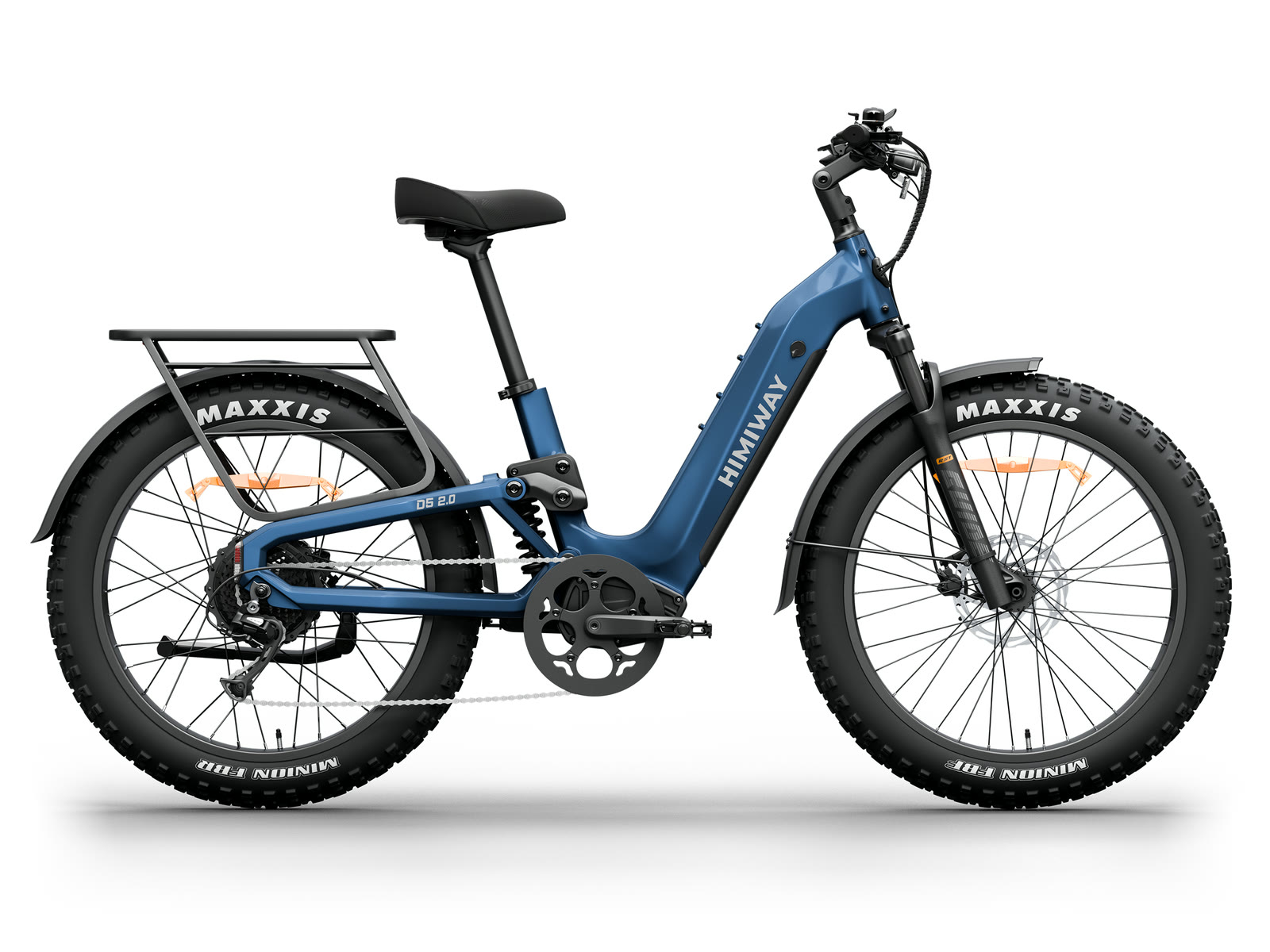
mountain
Himiway D5 2.0 Full-Suspension Fat Tire eBike
Save $400
The D5 2.0 is the rare budget-adjacent fat bike that is actually built to the class rules rather...
Read the review
