Review · Kingbull
cargo8.1/10Kingbull Voyager 2.0 Fat-Tire Electric Cargo Bike
Spec-verified against the manufacturer listing
Our verdict
Most cargo e-bikes carrying a UL 2849 certificate start near $2,000, and the Voyager 2.0 has one at $1,119, which makes it the cheapest certified cargo bike we have found. It is also the only certified cargo bike in our catalogue, which matters if you buy in New York City (Local Law 39 bans the sale of uncertified e-bikes there) or your building asks for the certificate. It backs that with a 450 lb payload, a one-piece welded aluminium rear rack rated to 180 lb, a torque sensor and hydraulic brakes. The compromise is the battery: 720 Wh is the smallest here, fitted to the bike that will consume the most energy, and Kingbull sells a dual-battery version for exactly that reason.
- Best for
- Parents and errand riders who need a UL 2849 certificate for a building manager, or to buy in NYC, California or Colorado
The listing we reviewed has been removed by the retailer. Here's the bike we'd buy instead: same class, verified in stock.
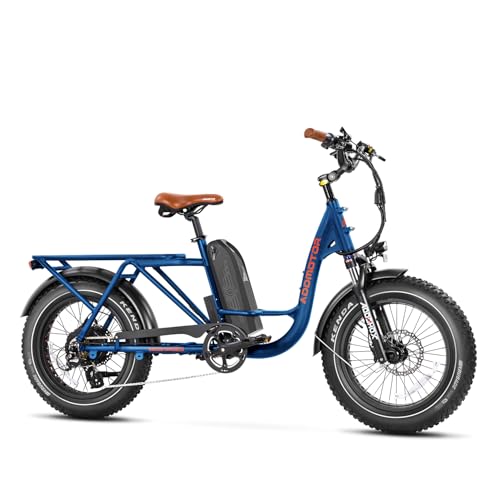
AddMotor GAROOTAN M-81
7.5/10 AmazonSave $100
The AddMotor GAROOTAN M-81 is a long-tail cargo e-bike from a US-based brand (Glendora, California, founded 2003), for at our last check....
As an Amazon Associate I earn from qualifying purchases. Ebike Oracle may also earn a commission on links to other retailers. Full disclosure.

At a glance
Run this in our range calculator →The numbers
Kingbull Voyager 2.0 Fat-Tire Electric Cargo Bike is a Class 3 step-through cargo e-bike that scores 8.1/10 on our editorial rubric, last verified on August 17, 2026. It carries a $1,899 list price. It pairs a 750 W hub motor and a 720 Wh battery, good for a claimed range of up to 30 miles and assisted speeds up to 28 mph. As a Class 3 e-bike it assists to 28 mph, and several states restrict where Class 3 can ride or set a minimum rider age, so it is worth checking your state law before buying. The bike weighs 76 lb and is rated to carry 450 lb of rider and cargo. It best suits parents and errand riders who need a UL 2849 certificate for a building manager, or to buy in NYC, California or Colorado.
Pros
- + UL 2849 certified as a system at $1,119, which is the cheapest certified cargo bike we have found
- + Rear rack is one-piece welded aluminium rated to 180 lb, not bolted tube, on a 450 lb total payload
- + TROG-1B torque sensor and ZOOM hydraulic brakes on 180mm rotors front and rear
- + Left-hand thumb throttle, the right control for a bike you steer one-handed with a passenger aboard
- + Magnesium alloy wheels on CST puncture-resistant 20 x 4.0 tyres, and IPX6 water resistance
- + Compact long-tail at 69 inches, so it still fits a standard rack and most lifts
- + Mirrors, bungee cord and rear footrest pegs are included rather than sold separately
Cons
- - 720 Wh is the smallest battery in the Kingbull range, fitted to the bike that consumes the most
- - Loaded range works out around 20 to 24 miles, against an advertised 60
- - The optional trailer is described by Kingbull as not for children or pets and not covered by warranty
- - Fork travel is only 60mm, the shortest in the range, on a bike that carries the heaviest loads
- - Seven-speed drivetrain where the Trekker gets eight, and two-piston calipers where the Trekker gets four
- - Brake system and tyres carry 3 months of warranty on a bike that works both hardest
- - Returns run 15 days and cost a 10% fee plus $150 freight after shipping
Who is this for?
- Parents and errand riders who need a UL 2849 certificate for a building manager, or to buy in NYC, California or Colorado
- School runs and shopping loops inside roughly 20 loaded miles
- Buyers who want a compact long-tail that still fits a car rack rather than a full-length cargo bike
The 30-second verdict
The Voyager 2.0 is a compact long-tail cargo bike at $1,119, reduced from $1,899, and its case rests on one specification the competition at this price does not have. It is certified to UL 2849, the system-level standard covering battery, charger and controller together. Cargo bikes are the category where that matters most, because they are the bikes people park in hallways and charge in apartments, where buildings ask for the certificate that NYC Local Law 39 of 2023 requires for e-bikes sold in the city. Around that sits a genuinely well-judged utility bike: a 450 lb maximum payload, a rear rack that is one-piece welded aluminium rated to 180 lb rather than bolted tube, a TROG-1B torque sensor, ZOOM hydraulic brakes on 180mm rotors, magnesium alloy wheels on CST puncture-resistant 20 x 4.0 tyres, and a thumb throttle mounted on the left, which is the right choice on a bike you will be steering one-handed while a child shifts their weight behind you. The problem is capacity. At 720 Wh this is the smallest battery in Kingbull's range, on the heaviest-working bike in it.
The full review, section by section. Tap any section to read it.
Range: 720 Wh on a loaded cargo bike
Range: 720 Wh on a loaded cargo bike
Kingbull advertises up to 60 miles. The battery is 48V x 15Ah, so 720 Wh. An unloaded 76 lb fat-tyre bike with a torque sensor uses roughly 20 to 28 Wh per mile.
720 ÷ 24 = 30 miles unloaded, with a band from 720 ÷ 28 ≈ 26 to 720 ÷ 20 = 36 miles. Now load it, because that is what you bought it for. Add 100 to 150 lb of children or shopping and consumption climbs to roughly 30 to 40 Wh per mile, so 720 ÷ 35 ≈ 21 miles. Plan on 20 to 24 miles when the bike is actually working, and 26 to 36 when it is empty. The advertised 60 miles would need 12 Wh per mile on an unloaded bike, which is not achievable at this weight and tyre width.
This is the bike's real weakness and Kingbull knows it, because they list a dual-battery configuration of the Voyager 2.0 separately. If your errand loop is over about 20 loaded miles, price that version before buying this one. If your loop is a school run and a supermarket, 720 Wh is fine and you are getting a certified cargo bike for $1,119.
The rack, the payload and what will actually fit
The rack, the payload and what will actually fit
The numbers that govern a cargo bike are the rack rating and the payload, and Kingbull publishes both. Maximum payload is 450 lb, which covers rider, cargo and accessories together. The rear rack is rated to 180 lb and is described as all-aluminium and one-piece welded, which is a meaningfully better construction than a bolted-tube rack because there are no fasteners to work loose under repeated load. Rack height is 29.5", and the bike is 69" long overall, so it is a compact long-tail rather than a full cargo bike, and it will fit a standard bike rack and most lifts.
The box includes a bungee cord, a pair of mirrors and rear footrest pegs, so passenger carrying is an intended use. Kingbull sells child seats, baskets and a trailer for it. Two cautions on the trailer, both from Kingbull's own page: it is rated to 160 lb, and it is described as "Not designed for carrying children or pets" and "Not covered by Kingbull warranty". That is unusual language for a first-party accessory. We link the bike-only configuration for that reason.
Certification is the argument
Certification is the argument
Kingbull states the Voyager 2.0 is certified to UL 2849, with Samsung INR21700-50G cells separately certified to UL 2580 and a UL-certified charger. The bike is also rated IPX6 for water resistance.
The reason this decides the purchase rather than decorating it: NYC Local Law 39 of 2023 bans the sale, lease or rental of uncertified e-bikes in the city, California SB 1271 is operative from 1 January 2026, and Colorado HB 25-1197 has applied since 6 August 2025. Landlords and insurers increasingly ask for the certificate by name. A cargo bike is the one you will most want to bring inside, so an uncertified cargo bike is the worst place to save money. Kingbull states UL 2849 here, on the Trekker and on the Rover 2.0, and does not state it on the Ranger.
Legality: 750W, Class 3 and a 20 mph throttle
Legality: 750W, Class 3 and a 20 mph throttle
The motor is rated at 750 watts, sitting exactly at the ceiling in 16 CFR § 1512.2, which defines a low-speed electric bicycle as having a motor of less than 750 watts. The bike ships Class 3 by default with Class 2 selectable, so pedal assist reaches 28 mph unless you change it, while throttle output is capped at 20 mph in either mode.
Seven states do not recognise Class 3 at all: DC, Kentucky, Massachusetts, Montana, North Carolina, Pennsylvania and South Carolina. North Carolina changes on 1 December 2026. Switch the bike to Class 2 in the display if you live in one of them. Several more states permit Class 3 on the road but keep it off shared-use paths, which on a cargo bike carrying children is often the route you wanted. Check your state before you build a school run around it.
Warranty and returns
Warranty and returns
Kingbull covers the motor, battery, controller, sensors, wiring and frame for 2 years, the display and fork for 1 year, the charger for 6 months, and the brake system and tyres for 3 months. On a bike that will spend its life heavily loaded, the 3-month brake term is the line to note, since brakes are the component a cargo bike works hardest.
Returns run 15 days, shorter than most direct sellers, and after the bike has shipped a return costs a 10% processing fee plus $150 of return freight, roughly $260 on this bike. Kingbull ships from a US warehouse.
Who should buy it
Who should buy it
Buy the Voyager 2.0 if you want a certified cargo bike and $2,000 is not available, if your loaded rides are inside about 20 miles, and if a 180 lb welded rack and a 450 lb payload cover what you carry. On certification per dollar nothing we have looked at beats it. Buy the dual-battery version Kingbull lists separately if your errands run longer than that, because 720 Wh is the one number here that does not match the bike's job. Buy the Trekker at $1,099 if you are commuting rather than hauling, since it brings 960 Wh, four-piston brakes and eight speeds for $20 less. And buy the Ranger at $799 if what you actually want is to carry one adult passenger rather than cargo.
Frequently asked questions
How much does an electric cargo bike cost?
Certified cargo e-bikes generally start around $1,800 to $2,500. The Voyager 2.0 is $1,119, reduced from $1,899, and still carries a UL 2849 system certificate, which is what makes it unusual rather than merely cheap. Below roughly $1,100 you are normally buying an uncertified bike, and a cargo bike is the worst one to leave uncertified because it is the one you will want to charge indoors.
Are electric cargo bikes worth it?
They replace short car journeys, which is where the money is. The figures that decide it are the rack rating and the loaded range, not the headline price. The Voyager 2.0 carries 450 lb total on a 180 lb welded rear rack, and its 720 Wh battery gives roughly 20 to 24 loaded miles by our arithmetic, against an advertised 60. If your errands fit inside that, it works. If they do not, buy a bigger battery rather than a cheaper bike.
What is the real range of the Kingbull Voyager 2.0?
The battery is 48V x 15Ah = 720 Wh. Unloaded, a 76 lb fat-tyre bike uses about 20 to 28 Wh per mile, so 720 ÷ 24 = 30 miles with a band of 26 to 36. Loaded with 100 to 150 lb it climbs to roughly 30 to 40 Wh per mile, so around 21 miles. Kingbull advertises up to 60, which would need 12 Wh per mile on an empty bike. Plan for 20 to 24 loaded miles, and consider the dual-battery version Kingbull lists separately if you need more.
Can the Kingbull Voyager 2.0 carry a child?
The bike is built for it: a 180 lb one-piece welded aluminium rear rack, rear footrest pegs in the box, and Kingbull sells child seats for it. Its optional trailer is a different matter. Kingbull's own product page states the trailer is "Not designed for carrying children or pets" and is "Not covered by Kingbull warranty", so do not buy that accessory for that job. Carrying passengers is also regulated separately by state, so check your state page.
Is the Kingbull Voyager 2.0 UL certified?
Yes. Kingbull states UL 2849 for the complete system, UL 2580 for the Samsung INR21700-50G cells, and a UL-certified charger. That is the standard named by NYC Local Law 39 of 2023 for e-bike sales, by California SB 1271 from 1 January 2026, and by Colorado HB 25-1197 since 6 August 2025.
If this isn't the one

cargo
NARRAK Trike 750
The trike to buy if the route has hills, and the one to buy if you carry a...
Read the review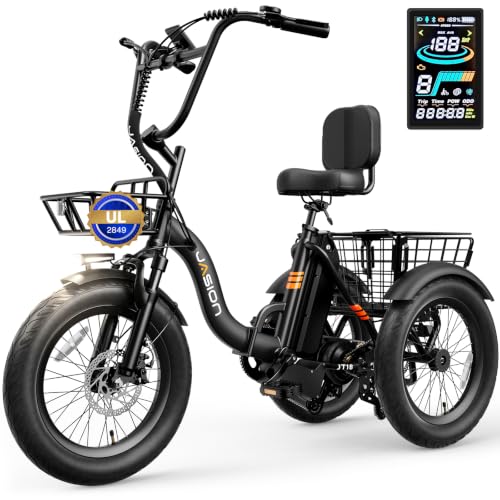
cargo
Jasion Electric Trike
At this is the cheapest UL 2849-certified electric trike we have found, and certification is the spec that...
Read the reviewcargo
AddMotor GAROOTAN M-81
Save $100
The AddMotor GAROOTAN M-81 is a long-tail cargo e-bike from a US-based brand (Glendora, California, founded 2003), for...
Read the review