Review · Ridstar
mountain7.9/10Ridstar Q50 2000W Fat Tire E-Bike
Spec-verified against the manufacturer listing
The US Consumer Product Safety Commission has told owners of Ridstar's Q20, Q20 Pro and Q20 Lite to stop riding them, over battery fires and a front wheel that can come off, and says the maker has not agreed to a recall. We no longer send readers to Ridstar's bikes. Here's the closest bike you can buy on Amazon: same class, verified in stock. Sources: CPSC fire warning, CPSC crash warning.
This bike isn't sold on Amazon, the only store we link to. Here's the closest bike you can buy there: same class, verified in stock.
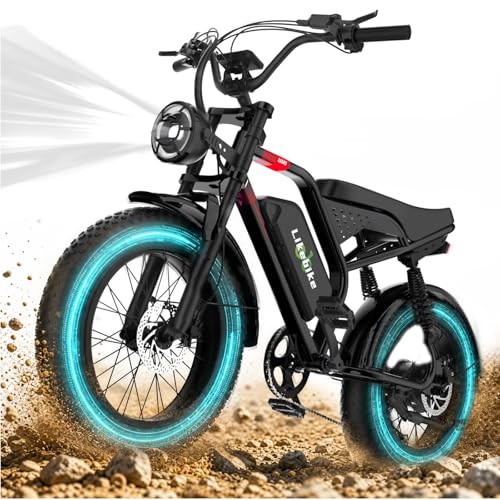
Likebike UM1 Plus
7.8/10 Amazon
The UM1 Plus is Likebike's upgrade of the UM1: the peak motor rating rises from 1500 W to 2000 W, NFC keyless...
As an Amazon Associate I earn from qualifying purchases. Ebike Oracle may also earn a commission on links to other retailers. Full disclosure.
Our verdict
Ridstar's maker is under two CPSC safety warnings and has not agreed to a recall, so we no longer recommend buying the Q50 or any Ridstar bike. The warnings cover the Q20, Q20 Pro and Q20 Lite (battery fires, and a front wheel that can come off), and they name the company that builds the Q50 too. On paper the Q50 pairs a 2000W rear hub with a 960 Wh (48V x 20Ah) removable battery and hydraulic disc brakes, listed at $649 on Ridstar's store in November 2026. At 2000W and a claimed 28+ mph it is not a Class 1, 2 or 3 e-bike in any US state, so it was only ever a private-land and motorised-trail machine, not a bike-lane commuter. In November 2026 the closest in-stock bike we linked to instead was the Likebike UM1 Plus, a 20-inch fat-tyre bike from another brand.
- Best for
- On paper, riders with private land, or trails that permit motorised use, who want maximum hardware per dollar

At a glance
Run this in our range calculator →The numbers
Ridstar Q50 2000W Fat Tire E-Bike is a electric mountain bike that scores 7.9/10 on our editorial rubric, last verified on August 17, 2026. It carries a $799 list price. It pairs a 2,000 W hub motor with 85 Nm of torque and a 960 Wh battery, good for a claimed range of up to 35 miles and assisted speeds up to 28 mph. The bike weighs 88 lb and is rated to carry 330 lb of rider and cargo. It best suits on paper, riders with private land, or trails that permit motorised use, who want maximum hardware per dollar.
Pros
- + Hydraulic dual disc brakes at a price where mechanical discs are the norm, and the single best-chosen part on the bike
- + 960 Wh (48V x 20Ah) removable battery, roughly double the capacity of a typical sub-$800 commuter
- + 2000W rear hub with 85 Nm claimed torque holds speed up gradients that stall a 750W motor
- + Full suspension (reinforced front fork + rear hydraulic shock) rather than a hardtail
- + LCD display, LED head and tail light, horn, phone holder and storage box all fitted as standard
Cons
- - 🔴 Made by a company under two CPSC safety warnings (battery fires and a detaching front wheel, on its Q20 models) that has not agreed to a recall
- - 🔴 2000W puts it outside the Class 1/2/3 system in every US state, so it is not a legal bike-lane commuter
- - No UL 2849 / UL 2271 certification stated, which rules it out for NYC buyers under Local Law 39 and for buildings that ask for certification
- - 88 lb and non-folding, so it is awkward to lift, store or put on a car rack
- - Advertised 50-mile electric range does not survive the arithmetic; expect 32-44 miles
- - One-year warranty on motor, battery and charger, against two years from better-known brands
- - Returns cost the buyer $150 in freight plus a 10% cancellation fee unless the fault is a defect
- - Sold only on Ridstar's own website, not on Amazon
Who is this for?
- On paper, riders with private land, or trails that permit motorised use, who want maximum hardware per dollar
- On paper, riders who have checked their own state rule and are content with how it classifies a 2000W machine
- On paper, anyone who values hydraulic brakes and a 960 Wh battery over brand name and certification paperwork
The 30-second verdict
We no longer recommend the Q50. The company that makes it is under two CPSC safety warnings, over battery fires and a detaching front wheel on its Q20 models, and has not agreed to a recall. The details, with links to the CPSC notices, are near the end of this review.
Ridstar listed the Q50 at $649 on its own store in November 2026. A 2000W rear hub with a claimed 85 Nm of torque, a 960 Wh removable battery, hydraulic dual disc brakes, front fork and rear shock, a Shimano 7-speed drivetrain and 20 x 4.0 fat tyres is a specification sheet that ordinarily belongs to a $1,500 bike. Nothing about the parts list is cynical: the hydraulic brakes in particular are a real upgrade over the mechanical calipers almost every sub-$800 bike ships with, and they are the single component most worth having when you are moving 88 lb of bike plus a rider at speed. The catch, leaving the maker aside, is classification rather than build quality. A 2000W motor is more than double the 750W ceiling that defines a low-speed electric bicycle under 16 CFR § 1512.2, so this is legally a motor vehicle in most of the US, not an e-bike. That is a real constraint, not a technicality, and it is the deciding factor for most buyers.
The full review, section by section. Tap any section to read it.
Power, and what 2000W actually feels like
Power, and what 2000W actually feels like
Ridstar rates the rear hub at 2000W with 85 Nm of torque and claims a 30° climbing gradient. For context, a mainstream Class 3 commuter runs 500-750W and 60-80 Nm. The practical difference is not top speed. It is that the Q50 does not bog down. Loaded hills that make a 750W hub motor overheat and slow to a crawl are dispatched at a steady pace, and the bike accelerates away from a standstill hard enough that you want the throttle progressively rather than all at once.
The listing's "28+++ mph" phrasing is doing a lot of work and we will not repeat it as a number. What is safe to say: a 48V 2000W hub on 20-inch wheels will exceed 28 mph on the flat with a light rider, and the drivetrain is geared for it. Treat 28 mph as the number to plan around and assume the extra depends on your weight, the tyre pressure and the road.
Range: the marketing number and the arithmetic
Range: the marketing number and the arithmetic
Ridstar advertises up to 50 miles in pure-electric mode and up to 80 miles in pedal-assist. The battery is 48V x 20Ah, which is 960 Wh. A 2000W motor pushing 20 x 4.0 fat tyres is not an efficient machine: 22-30 Wh per mile is the realistic band once you account for the rolling resistance of four-inch tyres and the way a big hub motor draws current.
960 Wh ÷ 25 Wh/mi ≈ 38 miles. At the pessimistic end, 960 ÷ 30 ≈ 32 miles; at the optimistic end, 960 ÷ 22 ≈ 44 miles. So a realistic figure is 32-44 miles of mixed riding, and throttle-only riding at speed will land nearer 25. The 50-mile claim is reachable only by pedalling steadily on low assist; the 80-mile figure requires pedalling hard enough that the motor is barely working, which is not why anyone buys a 2000W bike. Plan for 35 miles and you will not be caught out. Cold weather removes a further 15-20%.
🔴 Legality: the part that decides where it can be ridden
🔴 Legality: the part that decides where it can be ridden
This is the section most reviews of bikes like the Q50 leave out, so read it carefully. Federal law defines a low-speed electric bicycle as having a motor of less than 750 watts (16 CFR § 1512.2), and the three-class system that 40-plus states have adopted caps assisted speed at 20 mph (Class 1 and 2) or 28 mph (Class 3), with the same 750W motor ceiling in nearly every state. Oregon is the only state that permits 1,000W.
A 2000W motor clears every one of those ceilings. That means the Q50, as sold, is not a Class 1, 2 or 3 e-bike in any US state. Depending on where you live it may be treated as a moped, a motor-driven cycle or an unregistered motor vehicle. Those categories can carry requirements for registration, insurance, a licence, and a helmet, and that generally exclude you from bike lanes and multi-use paths. Our state-by-state e-bike law pages set out how each state defines the categories; check yours.
Legally that makes the Q50 a specific machine: suited to private land, to trails and tracks that permit motorised use, and to a rider who has read their own state's rule and is content with it. For a painted bike lane on the way to work, the answer is a 750W Class 2 or Class 3 machine. Ridstar's own Q50 Lite is closer to the line, still above it at 1000W, and from the same maker.
Brakes, suspension and the parts that are quietly good
Brakes, suspension and the parts that are quietly good
The hydraulic dual disc brakes are the standout. Most bikes at this price ship mechanical (cable-actuated) discs, which fade under repeated hard stops and lose bite in the wet. Hydraulic calipers give more stopping power for less lever effort and are far more consistent when wet. On a bike this heavy and this fast, braking is the component you should be least willing to compromise on. Ridstar claims a 50% reduction in average braking distance against mechanical discs; treat the exact figure as marketing, but the direction is right and it is the correct part to have fitted.
Suspension is a reinforced front fork plus a rear hydraulic shock, a full-suspension layout rather than a hardtail, which matters on 20-inch wheels because the shorter wheelbase transmits more of every bump. The Shimano 7-speed drivetrain is entry-level but it is a real derailleur from a real manufacturer, and the LCD display, LED headlight, taillight, horn, phone holder and storage box are all fitted as standard rather than sold as extras.
What you are giving up at $649
What you are giving up at $649
No UL 2849 or UL 2271 certification is stated anywhere in Ridstar's listing for this model. That matters more than it used to: NYC Local Law 39 of 2023 requires UL certification for powered mobility devices sold, leased or rented in New York City, California SB 1271 brings a UL mandate operative from 1 January 2026, and Colorado HB 25-1197 has applied the same standard since 6 August 2025. Many apartment buildings now ask for the paperwork before they will let you charge indoors. If your building does, this is not the bike.
The bike is also 88 lb and does not fold, so getting it up a flight of stairs is a two-person job. Assembly is 90% pre-done, which in practice means fitting the front wheel, handlebars, pedals and mudguards. And Ridstar's warranty is one year on motor, battery and charger: standard for the segment, and shorter than the two years the better-known brands offer.
Should you buy one?
Should you buy one?
On paper the Q50 suits a rider who wants maximum capability per dollar, has somewhere legal to use it, and values hydraulic brakes and a big battery over brand name and certification paperwork. The specification is not padded. It was never a road-legal commuter, a bike for a building that requires UL certification, or one for anyone who cannot lift 88 lb.
We no longer recommend it, or any Ridstar bike. The US Consumer Product Safety Commission has issued two warnings naming Ridstar's manufacturer, Huizhou Xingqishi Sporting Goods Co., Ltd. The March 2026 fire warning tells owners of the Q20 and Q20 Pro to stop using them because the batteries and wires can ignite, and says the company refused to agree to an acceptable recall. The June 2026 crash warning covers the Q20 and Q20 Lite, whose front wheel can come off; CPSC cites 32 reports and 31 injuries and says the company has not responded. Neither warning names the Q50. Both name the company that builds it, and we do not send readers to a maker that has not agreed to a recall after a fire warning.
When we updated this review in November 2026, the closest in-stock bike we linked to was the Likebike UM1 Plus, from another brand: a 20-inch fat-tyre bike with a 2000W peak motor, hydraulic disc brakes and front and rear suspension. Its listing states no top speed and no rated wattage, so the legality section above applies to it as well.
Where it is sold
Where it is sold
Ridstar sells the Q50 on its own website, and we do not link to that store while the CPSC warnings stand. It is not sold on Amazon: we searched by brand and by model in November 2026 and found only spare parts.
Frequently asked questions
Is the Ridstar Q50 street legal?
Not as a Class 1, 2 or 3 e-bike. Federal law defines a low-speed electric bicycle as having a motor under 750 watts (16 CFR § 1512.2), and nearly every state that has adopted the three-class system applies the same 750W ceiling, and Oregon alone allows 1,000W. The Q50's 2000W motor clears all of them, so most states will treat it as a moped or motor-driven cycle rather than a bicycle, which can mean registration, insurance, a licence and no access to bike lanes or multi-use paths. Check your state's rules.
What is the real range of the Ridstar Q50?
Ridstar advertises up to 50 miles on throttle and up to 80 miles pedalling. The battery is 48V x 20Ah = 960 Wh, and a 2000W motor on 20 x 4.0 fat tyres uses roughly 22-30 Wh per mile. That works out at 960 ÷ 25 ≈ 38 miles, with a realistic band of 32-44 miles for mixed riding. Throttle-only at speed lands closer to 25 miles, and cold weather removes another 15-20%.
Does the Ridstar Q50 have hydraulic brakes?
Yes: dual hydraulic disc brakes front and rear, which is unusual at $649 where cable-actuated mechanical discs are the norm. Hydraulic calipers deliver more stopping power for less lever effort and stay consistent in the wet. On an 88 lb bike that can exceed 28 mph, this is the most valuable component on the specification sheet.
Is the Ridstar Q50 UL certified?
Ridstar's listing does not state UL 2849 or UL 2271 certification for this model, and we will not assume it. That matters if you live somewhere with a certification requirement: NYC Local Law 39 of 2023 bans the sale of uncertified e-bikes in the city, California SB 1271 is operative from 1 January 2026, and Colorado HB 25-1197 has applied since 6 August 2025. Many apartment buildings now require the documentation before allowing an e-bike inside.
If this isn't the one

mountain
ASKGO GT50
ASKGO's flagship: the only bike in its range with genuine rear suspension, 120 N.m of claimed torque, a...
Read the review
mountain
Likebike UM1
A 20x4 fat-tyre e-bike with a 960 Wh battery, full suspension and, unusually at this price, hydraulic disc...
Read the review
mountain
ASKGO S9
Save $30
The ASKGO S9 is a high-volume fat-tire e-bike that carries a 960 Wh battery, which is roughly double...
Read the review