California E-Bike Laws 2026: Helmet Rules
Are e-bikes legal in California?
E-bikes are legal in California under California Vehicle Code §312.5, which divides them into three classes. Class 1 (20 mph, pedal-assist only) and Class 2 (20 mph, throttle allowed) can ride anywhere a bicycle can. Class 3 (28 mph pedal-assist) is allowed on roads, bike lanes, AND bike paths by default — under CVC §21207.5 as amended by AB 1909 (2022, effective 1 January 2023), only "motorized bicycles" are statutorily banned from Class I bike paths. Local authorities may prohibit e-bikes on equestrian, hiking, or recreational trails under §21207.5(b); California State Parks may prohibit e-bikes on bicycle paths or trails within DPR jurisdiction under §21207.5(c); local cities and counties seeking to ban Class 3 on Class I bike paths must rely on separate police-power authority (e.g., municipal micromobility ordinances). All Class 3 riders must be at least 16 and must wear a helmet regardless of age (CVC §21213). No driver license or registration is required for any compliant e-bike (CVC §24016(b)).
Buying one? The Jasion Electric Trike (Class 2, 16 mph) and the Qlife Cityone Plus Step-Through (Class 3, 28 mph) are class-legal in California and in stock at Amazon. For more choice, see our best e-bikes under $600.
Legal to ride in California: our top class-legal pick
As an Amazon Associate I earn from qualifying purchases. Ebike Oracle may also earn a commission on links to other retailers. Full disclosure.
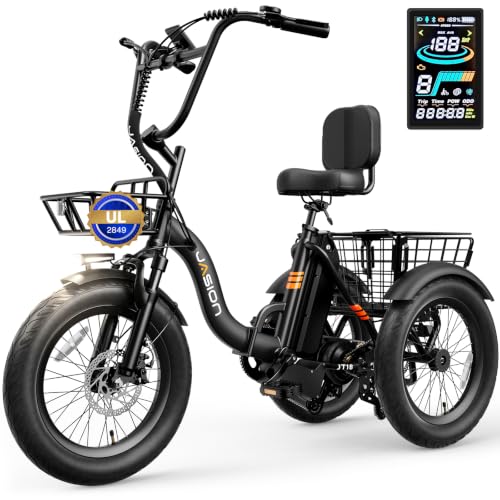
Class 2 — pedal-assist + throttle to 20 mph
Class 2 · 16 mph · Score 7.6
Free 30-day returns via Amazon
Other legal picks for California

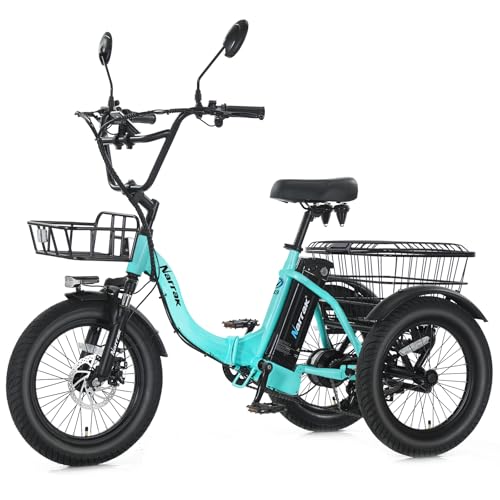
Street-legal e-bikes you can buy in California (2026)
Each fits a class California treats as a bicycle, so it needs no registration or licence to ride.
| E-bike | Buy | Class | Speed |
|---|---|---|---|
| Jasion Electric Trike | Check price at Amazon | Class 2 | 16 mph |
| Qlife Cityone Plus Step-Through Commuter | Check price at Amazon | Class 3 | 28 mph |
| NARRAK Folding Trike 350 | Check price at Amazon | Class 2 | 16 mph |
What are the e-bike rules in California?
Sourced from the California statute and verified against the PeopleForBikes State Law Tracker.
Check your setup
Is your e-bike legal in California?
Your match
Jasion
Jasion Electric Trike
Permitted on roads, bike lanes, and bike paths in California.
Our score 7.6/10
Our top class-legal pick for California, street-legal to ride today.
Free 30-day returns via Amazon
The 30-second answer
California adopted the federal three-class e-bike framework in 2015 through AB 1096, codified at California Vehicle Code §312.5. The statute was significantly tightened by SB 1271, signed September 2024 — its UL 2849/UL 2271 certification requirements and frame-label rules became operative 1 January 2026 (rental provisions take effect 1 January 2028).
You do not need a driver license, registration, or insurance to ride a compliant e-bike (CVC §24016(b)). The big things to know: Class 3 riders must be 16+, all Class 3 riders must wear a helmet at any age, and Class 3 path access is governed by local ordinance — the statewide statutory default since AB 1909 (2023) is permission on paths, not the prior ban.
The full California rules, section by section. Tap any section to read it.
Quick reference
Quick reference
| Class | Max speed | Throttle | Where allowed | Helmet | Minimum age |
|---|---|---|---|---|---|
| Class 1 | 20 mph pedal-assist | No | Roads, bike lanes, bike paths, mountain trails (Class 1-only by default) | Under 18 (any cyclist) | None statewide |
| Class 2 | 20 mph (throttle OR pedal-assist) | Yes | Roads, bike lanes, most bike paths | Under 18 (any cyclist) | None statewide |
| Class 3 | 28 mph pedal-assist | No (pedal-assist only) | Roads, bike lanes, and bike paths by default since AB 1909 (2023) — local authority or State Parks may prohibit specific paths by ordinance | All ages | 16+ |
Speedometer is required on Class 3 e-bikes (CVC §312.5). All three classes cap rated motor power at 750 W.
The three-class system in California
The three-class system in California
California's e-bike framework lives in CVC §312.5, originally enacted by AB 1096 (Chiu, 2015) effective 1 January 2016. Most recently amended by SB 1271 (Min) — Stats. 2024 Ch. 791, signed 27 September 2024 — which tightened class definitions, codified the walk-mode rule, and added the UL 2849 system + UL 2271 battery certification regime. Most SB 1271 provisions became operative 1 January 2026 (rental provisions 1 January 2028).
Class 1 — pedal-assist only, 20 mph cutoff
The motor only engages when you are pedalling. There is no throttle. The motor cuts out at 20 mph. Class 1 is the most universally permitted class in California — every road, bike lane, and bike path that allows bicycles also allows Class 1 e-bikes.
On mountain-bike trails, Class 1 is usually the only allowed class. East Bay Regional Parks, for example, opens all trails to Class 1 but restricts Class 2 to paved Regional Trails and bans Class 3 entirely.
Class 2 — pedal-assist plus throttle, 20 mph cutoff
Adds a throttle so you can move without pedalling. Same 20 mph cap. Class 2 is allowed on every road and bike lane and on most bike paths, though increasingly restricted on multi-use trails because non-pedalling riders are harder for other path users to anticipate.
Several San Diego County cities have moved to ban Class 2 operation by under-12s, and Marin County can prohibit under-16s from operating Class 2 under AB 1778. See "Local variations" below.
Class 3 — pedal-assist only, 28 mph cutoff
No throttle (in California — SB 1271 closed the loophole that previously allowed Class 3 throttles up to 20 mph). Pedal-assist to 28 mph. Speedometer required.
Class 3 carries the most restrictions of any class:
- Minimum age 16 to operate (CVC §21213)
- Helmet required for all riders regardless of age (CVC §21213)
- Permitted on Class I bike paths by default since 1 January 2023 under CVC §21207.5 (as amended by AB 1909). §21207.5(b) lets local authorities prohibit e-bikes on equestrian, hiking, or recreational trails (not Class I bike paths). §21207.5(c) lets California State Parks prohibit e-bikes on bicycle paths or trails within DPR jurisdiction. Local cities/counties seeking to ban Class 3 on Class I bike paths must rely on separate police-power authority
- Allowed on roads and Class II (painted) bike lanes everywhere
Where can each class ride in California?
Where can each class ride in California?
Can you ride on the road?
All three classes are allowed on every public road in California. There is no class restriction on roadways.
Class II bike lanes (painted lanes within a roadway)
All three classes are allowed. CVC §21207.5 explicitly carves out lanes "within or adjacent to a roadway."
Class I bike paths (separated paths and multi-use trails)
CVC §21207.5 is the controlling statute. AB 1909 (2022), effective 1 January 2023, REMOVED the prior Class 3 carve-out — today the statute reads:
"Notwithstanding Sections 21207 and 23127 of this code, or any other law, a motorized bicycle shall not be operated on a bicycle path or trail, bikeway, bicycle lane established pursuant to Section 21207, equestrian trail, or hiking or recreational trail, unless it is within or adjacent to a roadway or unless the local authority or the governing body of a public agency having jurisdiction over the path or trail permits, by ordinance, that operation."
Subsection (b) lets a local authority prohibit "an electric bicycle or any class of electric bicycle" on equestrian, hiking, or recreational trails; subsection (c) gives California State Parks the same authority.
In plain English: all three classes of electric bicycle are permitted on Class I bike paths by default since 1 January 2023. Only "motorized bicycles" (CVC §406-type mopeds) are statutorily banned by §21207.5(a). Subsection (b) lets local authorities (cities, counties, local park districts) prohibit e-bikes on equestrian, hiking, or recreational trails (NOT Class I bike paths). Subsection (c) lets California State Parks prohibit e-bikes on bicycle paths or trails within DPR jurisdiction. Local cities and counties seeking to ban Class 3 on Class I bike paths must rely on separate police-power authority (e.g., a municipal micromobility ordinance) — and many have. Always check the trail-operator posting.
Can you ride an e-bike on the sidewalk?
No statewide rule. Regulated by local ordinance and varies city by city. San Francisco allows under-13s only (with carve-outs for the Embarcadero corridor). Most coastal beach cities prohibit sidewalk riding for all ages.
Mountain bike trails
Allowed-class varies by land manager. Most California land managers default to Class 1 only on singletrack. Class 2 and Class 3 are typically restricted to paved or fire-road surfaces.
State parks, national parks, and beach paths
State parks, national parks, and beach paths
California State Parks
Per the California State Parks e-bike policy:
- Roadways within all park units: all three classes allowed
- State Park trails and controlled-access roads: Class 1 may be allowed only by Superintendent's Order. Class 2 and Class 3 are not allowed.
- State Vehicular Recreation Areas (OHV parks): any class may be allowed by Superintendent's Order
National Park Service land in California
The federal rule (NPS Order 3376 + 36 CFR §4.30(i)) allows e-bikes only where regular bicycles are allowed AND only on routes the park superintendent has specifically opened to e-bike use.
- Yosemite: Park policy allows e-bikes (any class, ≤750 W) wherever regular bicycles are allowed — primarily paved roads and bikeways. 15 mph cap on all paved bikeways. Verify the current Yosemite Superintendent's Compendium for any park-area-specific restrictions before riding the Hetch Hetchy or backcountry road areas.
- Sequoia, Joshua Tree, Lassen, Pinnacles: Default federal rule applies — paved and maintained roads where bikes go. Check each park's compendium before you ride; specific closures change annually.
The Marvin Braude Bike Trail ("The Strand", 22 miles, Will Rogers to Torrance)
The Santa Monica section permits Class 1 and Class 2 e-bikes; motorised pedicabs are prohibited. Class 3 access along the full 22-mile trail varies by jurisdiction — Santa Monica, Manhattan Beach, Hermosa Beach, Redondo Beach, and Torrance each have their own micromobility ordinances and several restrict or ban Class 3. Check the specific city's municipal code before riding Class 3 on the Strand.
Lake Tahoe Basin
A January 2026 USFS Lake Tahoe Basin Management Unit decision opened 112 miles of trails to e-bikes, including Flume Trail, Incline Flume, Pope-Baldwin, Angora Ridge, Gunmount, Meeks Creek, Blackwood Canyon, Kingsbury Stinger, and Stateline Lookout.
Do you need a helmet, license, or registration in California?
Do you need a helmet, license, or registration in California?
Do you need a helmet?
- CVC §21212: Every cyclist under 18 must wear an ASTM- or CPSC-certified helmet. Applies to bicycles AND e-bikes of any class.
- CVC §21213 (Class 3 specific): Every operator and passenger on a Class 3 e-bike — regardless of age — must wear an ASTM or CPSC helmet. California is one of the strictest states in the country on this rule.
How old do you have to be?
- Class 1 and Class 2: no statewide minimum age. Local rules apply (see Marin and San Diego County below).
- Class 3: 16 years old minimum (CVC §21213).
Do you need a license, insurance, or registration?
None of these are required to ride a compliant e-bike in California. CVC §24016(b) explicitly exempts e-bike operators from driver license, vehicle registration, license plate, and financial responsibility (insurance) requirements.
This exemption applies only to bikes that meet the §312.5 definition. A modified bike that exceeds 28 mph pedal-assist or 750 W rated power falls out of §312.5 and is reclassified as a motorized bicycle (moped) under CVC §406 — which DOES require registration and an M1/M2 license.
California e-bike helmet rule for under 18 (2026)
California e-bike helmet rule for under 18 (2026)
Riders under 18 must wear a helmet on any e-bike, any class — Class 1, Class 2, or Class 3 — under CVC §21212. The helmet must meet ASTM F1447 or CPSC 16 C.F.R. part 1203 standards and be properly fitted and fastened. §21212(a) is written for "a bicycle," and electric bicycles are bicycles under §312.5 — meaning the under-18 helmet rule applies to e-bikes by operation of the §312.5 incorporation. §21212(f) explicitly contemplates a "specialized electric bicycle safety course" as part of the youth-violation correction path, confirming the legislature treats e-bikes as covered.
Separately, CVC §21213 requires every Class 3 operator and passenger to wear a helmet — regardless of age. So:
- Under 18, Class 1 or 2: helmet required (CVC §21212).
- Under 18, Class 3: helmet required (CVC §21212 + §21213).
- 18 or over, Class 1 or 2: helmet optional statewide (some cities require — see local section).
- 18 or over, Class 3: helmet required (CVC §21213).
First offence is a "fix-it" infraction with a $25 base fine (plus county fees, typically reaching $150-$200 after surcharges). The California DMV official bicycle FAQ confirms the helmet rule.
California Vehicle Code §312.5 — electric bicycle classes explained
California Vehicle Code §312.5 — electric bicycle classes explained
CVC §312.5 is the operative statute defining electric bicycles in California. It splits them into three classes — the federal model the state adopted in 2015 (AB 1096) and significantly tightened in 2024 (SB 1271, operative 1 January 2026):
(a) An "electric bicycle" is a bicycle equipped with fully operable pedals and an electric motor of less than 750 watts.
(1) Class 1 electric bicycle: motor provides assistance only when the rider is pedaling and ceases assistance when the bicycle reaches 20 mph.
(2) Class 2 electric bicycle: motor may be used exclusively to propel the bicycle, and ceases assistance when the bicycle reaches 20 mph.
(3) Class 3 electric bicycle: motor provides assistance only when the rider is pedaling and ceases assistance when the bicycle reaches 28 mph. Equipped with a speedometer.
The classifications are operationally enforced by §24016 (label + speedometer), §21213 (Class 3 age + helmet), and §21207.5 (path access). The DMV does not register or issue plates for any e-bike that meets the §312.5 definition — see CVC §24016(b).
Do local rules differ within California?
Do local rules differ within California?
California's e-bike landscape is heavily shaped by local ordinances. The state baseline above is just the starting point.
Marin County (AB 1778)
AB 1778 (Connolly) is the most-cited local pilot in California. Signed 30 September 2024; the statute is operative on the default 1 January 2025 timeline and sunsets 1 January 2029. Compliance reports are due to the Legislature by 1 January 2028. The statute authorises unincorporated Marin County to adopt local ordinances that:
- Prohibit operators under 16 from riding Class 2 e-bikes
- Require helmets for all Class 2 riders, regardless of age
- Enforce with a 60-day warning period, then $25 fines (waivable with a safety course)
These are local-ordinance options, not statewide rules — the AB 1778 statute itself does not impose the under-16 ban or all-age helmet; it gives Marin County the authority to adopt them locally.
San Diego County (Carlsbad, Encinitas, Oceanside, and more)
Under a state law signed by Governor Newsom in October 2024, San Diego County cities have moved more aggressively than any other region in California:
- Carlsbad: After a multi-year campaign on local e-bike injuries, the City Council advanced an e-bike ordinance in December 2025, adopted it 24 February 2026, and the rules took effect 26 March 2026 following a 60-day warning period. The ordinance prohibits under-12s from operating Class 2 e-bikes, restricts sidewalk riding, and gives police seizure authority for minors.
- Encinitas + Oceanside: Early-2026 ordinances allow seizure for reckless operation. Oceanside's rules took effect 28 February 2026.
- Six San Diego County cities had under-12 Class 2 bans in force by December 2025.
San Francisco
- Sidewalk riding allowed only for under-13s, with carve-outs for the Embarcadero, Marina Boulevard, and Crissy Field waterfront where adult sidewalk riding is legal
- Golden Gate Bridge sidewalks: 15 mph cap
- Golden Gate Park: no formal class restriction; Class 1 and Class 2 encouraged
East Bay Regional Park District
The September 2023 board vote at East Bay Regional Parks set rules that significantly differ from the state baseline:
- Class 1: allowed on every trail where bicycles are allowed
- Class 2: allowed on paved Regional Trails only
- Class 3: prohibited everywhere in the EBRPD system
- 15 mph maximum speed; 5 mph when passing
Los Angeles and the Beach Cities
Class 3 access on the Marvin Braude Bike Trail (The Strand) varies by jurisdiction along its 22-mile length — Santa Monica, Manhattan Beach, Hermosa Beach, Redondo Beach, and Torrance each set their own micromobility rules and several restrict or ban Class 3. Speed enforcement also varies. Check the specific city's municipal code before riding Class 3 on this corridor.
Recent legislation (2024-2025)
Recent legislation (2024-2025)
| Bill | Status | What it did |
|---|---|---|
| SB 1271 (Min) | Signed 27 Sep 2024; most provisions operative 1 Jan 2026; rental rules operative 1 Jan 2028 | Tightened CVC §312.5 class definitions; mandatory frame labels (class, max speed, motor watts) in ≥9pt Arial; UL 2849 (e-bike system) and UL 2271 (battery) certification required for sale; prohibited advertising or selling non-compliant motor vehicles as "electric bicycles" |
| AB 1774 (Dixon) | Stats. 2024 Ch. 55; signed 2 Jul 2024; operative 1 Jan 2025 | Added CVC §24016(e) — prohibits the sale of any product or device that can modify an e-bike's speed such that it no longer meets the §312.5 definition (i.e. the speed-tuning / dongle ban) |
| AB 1778 (Connolly) | Signed 30 Sep 2024; sunsets 1 Jan 2029 | Marin County Class 2 pilot — authorises local ordinances banning under-16 operation or requiring helmets for all Class 2 riders |
| SB 381 (Min) | Law; MTI study was due by 1 January 2026 per statute | Required San Jose State University's Mineta Transportation Institute to deliver an e-bike safety study to inform legislative priorities. Statute repeals 1 January 2030. |
| AB 544 (Davies) | Stats. 2025 Ch. 36; signed 14 Jul 2025; effective 1 Jan 2026 | Amended CVC §21201 and §21212 — adds the "specialized electric bicycle safety course" pathway in §21212(f) that lets parents/guardians of cited minors avoid the fine + court record by showing proof of an approved helmet and course completion |
| AB 875 (Muratsuchi) | Stats. 2025 Ch. 168; signed 1 Oct 2025; operative 1 Jan 2026 | Added CVC §22651.08 — statewide peace-officer authority to remove (impound) a Class 3 e-bike operated by a person under 16 in violation of §21213(a). Agency must release after a minimum 48-hour hold once removal/storage costs are paid; release may be conditioned on proof the violator completed an approved e-bike safety and training program (Streets & Hwys Code §894) or local equivalent |
| SB 586 (Jones) | Signed 10 Oct 2025; effective 1 Jan 2026 | Defines off-highway electric motorcycles (Sur-Ron, Talaria, etc.) as a distinct OHV category requiring a California Green Sticker; not classified as e-bikes or as §406 mopeds |
Pending bills (as of May 2026)
Pending bills (as of May 2026)
The 2025-26 California legislative session has several active bills that could change e-bike rules. Status as of this page's last verification:
| Bill | Status (May 2026) | What it would do |
|---|---|---|
| AB 1942 (Bauer-Kahan) — "E-Bike Accountability Act" | Assembly Appropriations (re-referred 21 April 2026) | Would require Class 2 and Class 3 e-bikes to register with DMV and display license plates. Heavily opposed by CalBike, Bike East Bay, and Streets For All. |
| SB 1167 | Passed Senate Transportation Committee | Standardized labeling enforcement; backed by PeopleForBikes |
| AB 1557 (Papan) | In committee | Would lower the Class 1 and Class 2 cap from 20 mph to 16 mph for all riders, cap continuous motor power at 250 W, ban under-16s from operating any e-bike capable of more than 250 W continuous, and introduce civil penalties up to $50,000 per subsequent violation. Heavily opposed by industry. |
For current status, check the California Legislative Information site for the specific bill, or the CalBike legislative tracker.
What are the penalties for breaking e-bike laws in California?
What are the penalties for breaking e-bike laws in California?
Most e-bike violations are infractions, not criminal offenses. Real-world consequences:
- Helmet violation (under 18 on any class, or any age on Class 3): $25 base fine under CVC §21212 / §21213. With mandatory court fees and surcharges, the all-in cost runs around $190.
- Under-16 operating a Class 3 e-bike: infraction under §21213. Some California cities (Carlsbad and other San Diego County ordinances) authorise police seizure of the bike from the minor with conditional release.
- Carlsbad and similar local ordinances: police seizure authority for minors operating in violation, with probable cause of an immediate safety risk
- Operating an out-of-compliance "e-bike" (modified above 28 mph or 750 W) without a moped plate and M1/M2 license: treated as unlicensed motor-vehicle operation under CVC §406 — much steeper penalties
Enforcement comes from municipal police (cities), county sheriffs (unincorporated areas), CHP (state highways), state park rangers (state park trails), and federal LEOs (USFS and NPS land). The California Attorney General issued a 2024 consumer alert signaling that class-compliance enforcement and false-labeling claims are on the AG's radar.
What special e-bike rules apply in California?
What special e-bike rules apply in California?
Sur-Ron, Talaria, and other "e-moto" bikes
These are NOT e-bikes under California law. Per OHV Information Bulletin 25-1 / SB 586, Sur-Ron, Talaria, and similar off-highway electric motorcycles are classified as off-highway motor vehicles. They require a California Green Sticker and can only be ridden in OHV-designated areas or on private property. They are not street-legal and cannot be converted to street-legal.
Is it legal to modify a Class 2 to go faster?
If you de-restrict a Class 2 e-bike to exceed 20 mph throttle or 28 mph pedal-assist, the bike falls out of CVC §312.5 and is reclassified as a motorized bicycle (moped) under CVC §406. That requires:
- DMV registration and a moped plate
- An M1 or M2 motorcycle license to operate
- Lights, mirrors, and a VIN
Modification also typically voids the manufacturer warranty and any related liability coverage.
Can a 14-year-old ride a Class 2 e-bike in California?
Statewide: yes. California has no statewide minimum age for Class 1 or Class 2.
Locally: NOT in Carlsbad or the other San Diego County cities with under-12 Class 2 bans. NOT in unincorporated Marin County for under-16s under AB 1778.
What about other states?
What about other states?
California's three-class framework is shared by the majority of US states. The biggest variations across the three-class states are whether Class 3 is permitted on bike paths and the minimum operating age for Class 3. The PeopleForBikes State Law Tracker is the authoritative source for the current per-state count.
For a quick state-by-state check, use the e-bike legality checker — it includes all 50 US states plus the UK and EU equivalents.
For the federal-framework explanation, read the foundational guide: Class 1, 2, 3 e-bikes explained.
Bottom line
Bottom line
California is a three-class state with stricter-than-average Class 3 rules. For most California riders, a switchable Class 1/2/3 e-bike gives the most flexibility — ride Class 3 on roads where the speed matters, drop to Class 1 for bike paths and state-park trails.
Stay compliant: 16+ to operate Class 3, always helmet on Class 3, keep your bike inside the §312.5 envelope (750 W rated, 28 mph pedal-assist cap), and check local ordinances before riding on coastal bike paths or in San Diego or Marin Counties.
California Vehicle Code citations link to leginfo.legislature.ca.gov. State Parks policy from parks.ca.gov. Local-jurisdiction rules cross-referenced against city ordinances and the CalBike + PeopleForBikes state law trackers.
E-bikes that fit California's rules
Filtered from our review catalog by class eligibility under California statute. Spec-matched, not popularity-ranked.
- Class 2
 Amazon
Jasion
Jasion Electric Trike
Class 2 — pedal-assist + throttle to 20 mph
Permitted on roads, bike lanes, and bike paths in California.500 W · 16 mph · Score 7.6
Read the review - Class 3Amazon
Qlife
Qlife Cityone Plus Step-Through Commuter
Class 3 — pedal-assist to 28 mph
California is one of the few states that allow Class 3 on bike paths. Riders must be 16+ per California law.500 W · 28 mph · Score 7.4
Read the review - Class 2Amazon
NARRAK
NARRAK Folding Trike 350
Class 2 — pedal-assist + throttle to 20 mph
Permitted on roads, bike lanes, and bike paths in California.350 W · 16 mph · Score 7.1
Read the review
Eligibility is class-based: picks shown here are legal to own and operate on roads in California. Local jurisdictions (state parks, beach paths, individual cities) may add further restrictions; see the body above for the specifics.
Recent California e-bike law coverage
News-form posts that reference California's statutes or covered a change affecting California riders.
- New E-Bike Laws 2026: Every State Change So Far
Five states changed their e-bike law in 2026, and only one of them affects what a rider must carry. New Jersey now requires registration and a licence. Hawaii adopted the three-class framework, raised its helmet age to 18 and banned stunt riding. Tennessee raised the Class 3 minimum age to 16. Florida's 10 mph sidewalk bill was vetoed. Illinois passed...
Read the post - California SB 1167: No E-Bike Ban, New Label Rules
California SB 1167 is the one e-bike bill still moving, and it targets sellers, not riders. It would make it unlawful to advertise a 750 W+ machine as an "e-bike" and require a permanent certification label. The two bills that would have hit riders — licensing and reclassification — both died. Nothing in SB 1167 becomes operative until 1 January...
Read the post - July 1st E-Bike Law: No Ban, 2 States Changed
No nationwide e-bike ban took effect on July 1, 2026. Two states had real changes in that window — New Jersey and Tennessee. Florida's much-reported 10 mph sidewalk bill was vetoed six days before it would have started. Illinois passed a major e-bike bill too (SB 3484), but it is still awaiting the governor's signature and would take effect January...
Read the post
Frequently asked questions
Are e-bikes legal in California?
Yes. E-bikes are legal in California under California Vehicle Code §312.5, which divides them into Class 1, Class 2, and Class 3. All three classes are street-legal statewide. Bikes that exceed the §312.5 limits (750 W rated motor or 28 mph pedal-assist) are classified as mopeds or off-highway motorcycles and have different rules.
Is a 750W e-bike legal in California?
Yes — 750 watts is exactly the legal ceiling. CVC §312.5 defines an electric bicycle as having a motor of no more than 750 W. A bike rated at 750 W or less, and within its class speed limit (20 mph for Class 1 and 2, 28 mph pedal-assist for Class 3), is a fully legal e-bike with no license, registration, or insurance (CVC §24016(b)). A motor rated above 750 W falls outside §312.5 and is treated as a moped or off-highway motorcycle under CVC §406, which does require registration and an M1/M2 license.
Do I need a driver license or registration to ride an e-bike in California?
No. Under CVC §24016(b), e-bike operators do not need a driver license, vehicle registration, license plate, or insurance, as long as the bike meets the §312.5 three-class definition. A modified e-bike that exceeds 28 mph or 750 W rated power falls out of §312.5 and DOES require registration and an M1/M2 motorcycle license.
How old do you have to be to ride an e-bike in California?
For Class 1 and Class 2 e-bikes, California has no statewide minimum age — though unincorporated Marin County and several San Diego County cities have set local minimums under recent ordinances. For Class 3 e-bikes, the minimum age is 16 under CVC §21213.
Do I have to wear a helmet on a Class 2 e-bike in California?
Only if you are under 18 (CVC §21212 — applies to all cyclists regardless of bike type). Marin County under AB 1778 has extended that to require helmets for ALL Class 2 riders regardless of age. For Class 3, helmets are required for every rider at every age (CVC §21213).
Are Class 3 e-bikes allowed on bike paths in California?
Yes, by default since 1 January 2023. CVC §21207.5 — as amended by AB 1909 (2022) — bans only "motorized bicycles" from paths; the prior Class 3 carve-out was removed. Class 3 is now permitted on Class I bike paths by default. §21207.5(b) lets local authorities (cities, counties, park districts) prohibit e-bikes on equestrian, hiking, or recreational trails (not Class I bike paths). §21207.5(c) lets California State Parks prohibit e-bikes on bicycle paths or trails within DPR jurisdiction. Local cities and counties seeking to restrict Class 3 on Class I bike paths must rely on separate police-power authority (e.g., a municipal micromobility ordinance) — many have. East Bay Regional Parks, several California State Parks, and most coastal jurisdictions have Class-1-only or Class-1/2-only rules on multi-use trails — always check the posted trail policy before riding Class 3.
Are Sur-Ron and Talaria bikes street-legal in California?
No. Sur-Ron, Talaria, and similar high-powered electric two-wheelers exceed the §312.5 envelope, so they are NOT e-bikes. Per OHV Information Bulletin 25-1 and SB 586, they are classified as off-highway electric motorcycles requiring a California Green Sticker. They can only be ridden in OHV-designated areas or on private property — not on public streets, and they cannot be street-legalized.
What's the fine for an e-bike helmet ticket in California?
The base fine for a helmet violation under CVC §21212 or §21213 is $25. With mandatory court fees and surcharges, the actual out-of-pocket cost is approximately $190. Most e-bike violations are infractions, not criminal offenses.
Can my e-bike legally go faster than 28 mph in California?
No — not as an e-bike. Any bike that exceeds the 28 mph pedal-assist cap (or the 750 W rated motor limit) falls outside CVC §312.5 and is reclassified as a motorized bicycle (moped) under CVC §406. That requires DMV registration, a moped license plate, and an M1 or M2 motorcycle license to operate legally on public roads.
Are e-bikes allowed in California State Parks?
It depends on the surface. All three classes are allowed on roadways within California State Park units. On state-park trails, only Class 1 may be allowed, and only if the park superintendent has issued an order permitting it — Class 2 and Class 3 are not allowed on state-park trails by default. State Vehicular Recreation Areas (OHV parks) can allow any class by superintendent's order. See the official state parks e-bike policy.
What's changing for e-bikes in California in 2026?
Several things. SB 1271 — signed September 2024 — became operative 1 January 2026, requiring frame labels showing class, max speed, and motor wattage, plus UL 2849 (e-bike system) and UL 2271 (battery) certification for any e-bike sold in California (rental provisions take effect 1 January 2028). AB 1942 (the "E-Bike Accountability Act") is pending in the 2025-26 session and would require DMV registration and license plates for Class 2 and Class 3 e-bikes — heavily opposed by cycling advocates. Several San Diego County cities have passed new local ordinances with police seizure authority for under-age violations.
Are e-bikes allowed in Yosemite and other California national parks?
Federal NPS rules (Order 3376 + 36 CFR §4.30(i)) allow e-bikes only where regular bicycles are allowed AND only where the park superintendent has specifically opened those routes to e-bike use. In Yosemite, Class 1 and Class 2 are allowed on paved bikeways with a 15 mph cap; Class 3 is mostly restricted, and e-bikes are banned on O'Shaughnessy Dam. Check each park's compendium before riding because specifics change annually.
Where can I find the exact California Vehicle Code text?
The full California Vehicle Code is published at leginfo.legislature.ca.gov. Direct links: §312.5 — e-bike classes, §21207.5 — bike path restrictions, §21212 — under-18 helmet, §21213 — Class 3 age and helmet.
How do other states compare?
Compare California's rules with states that share a similar framework.
Common e-bike law questions
The national answer to the questions California riders ask most, covering every US state, side by side.
Cite or link this page
Found this useful? Link to it.
This guide is free to reference. If it helped you, a link helps more riders find accurate, up-to-date law info, and we keep it current (last reviewed July 8, 2026). Licensed CC BY 4.0. Reuse the data with attribution.
<a href="https://ebikeoracle.com/laws/california">California E-Bike Laws 2026: Helmet Rules — Ebike Oracle</a>
Ebike Oracle. "California E-Bike Laws 2026: Helmet Rules." Ebike Oracle, 2026, https://ebikeoracle.com/laws/california.