How Far Can an Electric Bike Go on One Charge?
Most e-bikes travel 20–60 miles on a single charge, with long-range and dual-battery models reaching 80–100+ miles. The math is simple: range = battery watt-hours ÷ watt-hours used per mile, where real riding burns roughly 10 Wh/mi (efficient, flat) to 30 Wh/mi (throttle, hills, heavy load). So a 500 Wh battery does ~25 miles hard or ~50 miles easy. Always...
The short version
- Most e-bikes go 20–60 miles per charge; long-range and dual-battery models reach 80–100+.
- The formula is range = battery watt-hours ÷ watt-hours per mile. Nothing else predicts it as well.
- Real consumption runs 10 Wh/mi (efficient, flat) to 30 Wh/mi (throttle, hills, heavy load).
- So a 500 Wh battery is ~50 miles ridden easy, ~25 miles ridden hard. Same bike, same battery.
- Cut any advertised range by 20–30% — those figures assume lowest assist, a light rider and flat ground.
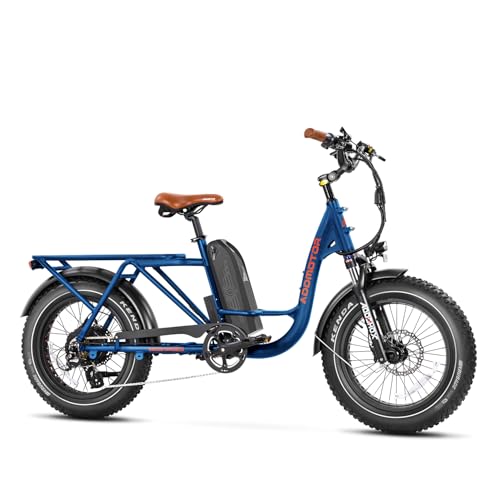
Our pick for most readers
AddMotor GAROOTAN M-81
$1,099
As an Amazon Associate I earn from qualifying purchases. Ebike Oracle may also earn a commission on links to other retailers. Full disclosure.
TL;DR — the headline number
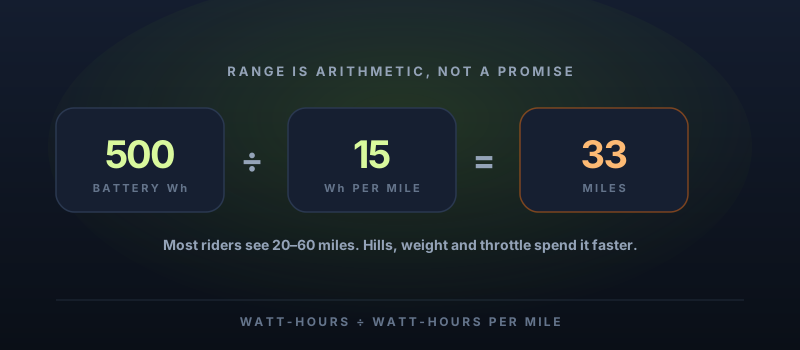
Most e-bikes go 20–60 miles per charge. Compact commuters with small batteries land at the low end; large-battery cargo and dual-battery bikes reach 80–100+ miles. The single formula that predicts it:
Range (miles) = battery capacity (Wh) ÷ energy used per mile (Wh/mi)
Real-world energy use runs about 10 Wh/mi (efficient pedaling, flat, low assist) to 30 Wh/mi (throttle-heavy, hills, heavy rider). A safe planning number is 20 Wh/mi. So a 500 Wh battery realistically does ~25 miles worked hard or ~50 miles ridden easy. Below: the full table, the eight things that change it, and eight ways to get more.
The full guide, section by section. Tap any section to read it.
The formula and the Wh-per-mile cheat sheet
The formula and the Wh-per-mile cheat sheet
Watt-hours (Wh) measure how much energy the battery holds; Wh-per-mile measures how fast you spend it. Divide one by the other and you have your range. Energy use by terrain and riding style:
| Riding conditions | Energy use | What it means |
|---|---|---|
| Flat, low assist, pedaling hard | ~10 Wh/mi | Best case — efficient commuters |
| Mixed urban, moderate assist | 15–20 Wh/mi | The realistic everyday number |
| Hilly, high assist | 20–25 Wh/mi | Climbing eats range fastest |
| Throttle-only / mountain / heavy load | 25–30+ Wh/mi | Worst case — plan conservatively |
Quick mental model: divide your battery Wh by 20 for a realistic everyday range, by 10 for a best-case easy ride, and by 30 for a worst-case (throttle, hills, cold, loaded).
Battery size → real range (catalog examples)
Battery size → real range (catalog examples)
Bigger battery = more miles per charge (cycle life is separate — see how long batteries last). Real range across our catalog, using verified battery specs:
| Battery (Wh) | Catalog example | Realistic range |
|---|---|---|
| ~230 Wh | Gotrax Nano | ~12–22 mi |
| ~468 Wh | Eleglide T1 / Heybike Cityscape 2 | ~25–50 mi |
| ~624 Wh | Heybike Mars 3 | ~30–55 mi |
| ~960 Wh | AddMotor M-81 / Cyrusher Kommoda 3 | ~40–70 mi |
| ~1,680 Wh | Lectric XPedition 2 (dual battery) | ~60–100+ mi |
Notice the two ~468 Wh bikes can return different real range: the Eleglide T1 is an efficient Class 1 (EU-spec, low-draw motor) so it stretches its battery further, while the Heybike Cityscape 2 is a 28 mph Class 3 that draws harder. Same battery, different range — because Wh-per-mile depends on the bike and how you ride it. The Cityscape 2 vs Eleglide T1 comparison breaks this down.
The 8 things that change your range
The 8 things that change your range
Most-impactful first. This is why two riders on the same bike get different numbers:
- Assist level. The biggest lever you control. Max assist can halve your range vs the lowest setting.
- Hills. Climbing is the single greatest drain — a hilly route can use double the energy of the same distance flat.
- Throttle vs pedaling. Throttle-only (Class 2) draws far more than pedal-assist. Pedaling along stretches range significantly.
- Rider + cargo weight. Every extra ~20 lb cuts range roughly 5–10% on flats and 10–20% on hills.
- Motor type. Mid-drive motors are the most efficient; hub motors typically use 15–50% more energy for the same ride.
- Wind and speed. Aerodynamic drag rises sharply with speed — holding 28 mph (Class 3) costs far more than 16 mph.
- Tire pressure and type. Under-inflated or knobby fat tires add rolling resistance; correct pressure on street tires saves energy.
- Temperature. Cold below freezing temporarily cuts range 20–30% (the cells recover when warm — it is not permanent damage).
8 ways to get more range
8 ways to get more range
Each counters one of the drains above:
- Drop an assist level. Ride PAS 1–2 instead of max; pedal more, throttle less.
- Pedal on the hills. Add your own watts where the motor works hardest.
- Keep tires at the recommended pressure. The cheapest free range there is.
- Shed weight you don't need. Empty panniers, lighter loads on long rides.
- Tuck and slow down into headwinds. Speed is expensive; 2 mph slower buys real miles.
- Warm the battery in winter. Store it indoors, install it just before riding; it warms in use.
- Carry a second battery (or buy a dual-battery bike). The only way to truly double range — see the Lectric XPedition 2.
- Keep the battery healthy. A degraded pack delivers fewer miles; good charging habits preserve both range and lifespan (battery-life guide).
Why the advertised range is optimistic
Why the advertised range is optimistic
Manufacturer range claims are real but measured under best-case lab conditions: the lowest assist level, a light rider (often ~150 lb), flat ground, no wind, warm temperature, and a brand-new battery. Your ride has none of those guarantees. The reliable correction:
Cut the advertised range by 20–30% for everyday planning — more if you ride hilly, heavy, throttle-only, or in winter.
So a bike advertised at "60 miles" is a ~40–48 mile bike in normal use, and a ~30 mile bike on a hilly, throttle-happy day. Buy enough battery that your round trip uses under ~60% of a charge, so degradation and cold weather never strand you.
Estimate your own range
Estimate your own range
Plug your battery size, terrain, weight, and assist level into our range calculator for a personalised estimate, then sanity-check it against the 20-Wh/mi rule above. If you are still choosing a bike, how to choose an e-bike covers how to size the battery to your commute, and the savings calculator turns your mileage into a running-cost estimate.
Bottom line
Bottom line
Expect 20–60 miles from a typical e-bike and 80–100+ from a big- or dual-battery model. Predict it with Wh ÷ 20 for everyday riding, lean on lower assist and pedaling to extend it, and always discount the advertised number by 20–30%. Range is set by battery size and how you ride — not by motor wattage — so buy the battery that fits your real route with margin to spare.
Longest range we rate
 Amazon
AddMotor
AddMotor GAROOTAN M-81
Range is the spec this guide is about. 105 mi claimed — the longest of any bike we rate with a live US listing. Real-world will be lower; our range calculator will tell you by how much.
Claimed figure, from the manufacturer. Ours is the estimate — run your numbers first.
As an Amazon Associate I earn from qualifying purchases. Ebike Oracle may also earn a commission on links to other retailers. Full disclosure.
Frequently asked questions
How far can an e-bike go on a single charge?
Most e-bikes travel 20–60 miles per charge; long-range and dual-battery models reach 80–100+ miles. The estimate is range = battery watt-hours ÷ energy per mile, where real riding uses ~10 Wh/mi (efficient, flat) to ~30 Wh/mi (throttle, hills, heavy). A 500 Wh battery does roughly 25 miles hard or 50 miles easy.
How do I calculate my e-bike's real range?
Divide the battery's watt-hours by your energy use per mile. Use ~20 Wh/mi for typical everyday riding, ~10 Wh/mi for an efficient flat ride, and ~30 Wh/mi for throttle/hills/heavy loads. Example: a 624 Wh battery ÷ 20 ≈ 31 miles realistic. Our range calculator does this with terrain and weight factored in.
Why is my e-bike range lower than advertised?
Manufacturer figures assume best-case conditions: the lowest assist level, a light rider, flat ground, no wind, warm weather, and a new battery. Real riding rarely matches that, so cut the advertised range by 20–30% (more for hills, heavy loads, throttle-only riding, or winter). A "60-mile" bike is realistically a 40–48 mile bike.
Does battery size or motor power determine range?
Battery size (watt-hours) determines range; motor power determines acceleration and hill-climbing. A bigger motor can actually use energy faster. To go farther, get more watt-hours — or ride in a way that lowers your Wh-per-mile (lower assist, more pedaling, correct tire pressure).
What reduces e-bike range the most?
In order: high assist level, hills, throttle-only riding, rider/cargo weight (every ~20 lb cuts 5–20%), motor type (hub motors use 15–50% more than mid-drives), high speed/headwind, low tire pressure, and cold weather (−20–30% below freezing, temporary). Assist level and hills dominate.
How can I make my e-bike battery go further?
Drop an assist level and pedal more, keep tires at the recommended pressure, shed unneeded weight, slow down into headwinds, warm the battery before winter rides, and keep the pack healthy with good charging habits. To truly double range, use a second battery or a dual-battery bike like the Lectric XPedition 2.
How far can an e-bike go on throttle only?
Throttle-only riding (Class 2) uses far more energy than pedal-assist — roughly 25–30+ Wh/mi — so expect the low end of a bike's range, often 20–30 miles on a mid-size battery. Pedaling along with the throttle, even lightly, noticeably extends it.
Does cold weather reduce e-bike range?
Yes — below freezing, range typically drops 20–30%. This is temporary: the cells deliver less energy when cold but recover their capacity once warm. Store and charge the battery indoors and install it just before riding (it warms during use). Winter range loss is chemistry, not battery damage.
Keep reading
Guide
Class 1 vs 2 vs 3 E-Bikes Explained (2026)
The US e-bike class system is actually simple: Class 1 is pedal-assist only at 20 mph, Class 2...
ReadGuide
Do You Need a License for an E-Bike? (2026)
In 49 states and Washington, DC you do not need a license, registration, or insurance to ride a...
ReadGuide
How Long Do E-Bike Batteries Last? Cycles & Years
Most e-bike batteries deliver 500–1,000 charge cycles before dropping below 80% of original capacity — roughly 3–5 years...
Read
Reviewed by