Review · ASKGO
commuter6.5/10ASKGO City 26
Spec-verified against the manufacturer listing

Our verdict
The ASKGO City 26 is the 48V step-through, basket-and-rack version of the ASKGO Mountain 26, and at $395.99 (as of Oct 30, 8:10 AM EDT, subject to change) it comes with the parts an errand rider uses: a low step frame, a detachable front basket, a rear rack, 7 speeds and dual disc brakes. The catch is the same as its sibling: it advertises 25 mph, a speed that fits no class in the US three-class system, and this listing gives only a 1500 W peak figure, never the rated wattage state laws cap. The 45-mile range claim needs its 499 Wh battery to return 11 Wh per mile, so plan on about 25 miles. Its 230 lb maximum load covers rider, basket and rack together. Buy it as a cheap errand bike you will cap at 20 mph; skip it if you need a certified, compliant commuter.
- Best for
- Errand riders who want a step-through frame, basket and rack for under $400 and will cap the speed at 20 mph
Save $44down from $440 at Amazon
As an Amazon Associate I earn from qualifying purchases. Ebike Oracle may also earn a commission on links to other retailers. Full disclosure.
Free 30-day returns via Amazon
Not sold on this one? See every ranked pick in our guide to the best e-bikes under $400 on Amazon.
At a glance
Run this in our range calculator →The numbers
ASKGO City 26 is a step-through commuter e-bike that scores 6.5/10 on our editorial rubric, last verified on October 28, 2026. Amazon listed it at $395.99 as of October 30, 2026. Prices change often, so treat that as a snapshot. On Amazon it currently ranks #3 Best Seller in Electric City Bikes. It pairs a 499 Wh battery, good for a claimed range of up to 25 miles and assisted speeds up to 25 mph. The bike is rated to carry 230 lb of rider and cargo. It best suits errand riders who want a step-through frame, basket and rack for under $400 and will cap the speed at 20 mph.
Pros
- + #3 in Amazon's Electric City Bikes (October 28, 2026), with a step-through frame, detachable front basket and rear rack included
- + 7-speed drivetrain, so it still pedals like a normal bike when the battery is flat
- + Dual disc brakes and a front suspension fork on 26 x 1.95 inch tires
- + Removable 48V 10.4Ah (499 Wh) battery charges on or off the bike, 6 to 8 hours stated
- + Low step frame with a stated fit range of 5 ft 1 in to 6 ft 6 in
Cons
- - Advertised 25 mph fits NO US class: above Class 2's 20 mph cap, and Class 3 bars throttles in most states
- - Only a 1500 W peak figure is published; the rated wattage that state laws cap at 750 W is not stated
- - 45-mile claim needs 11 Wh/mile from a 499 Wh pack, below the real-world floor; plan on about 25
- - 230 lb maximum load has to cover rider, basket and rack together
- - No UL 2849 or UL 2271 certification named, and no warranty term stated
- - 35 Nm is small-motor torque; the "20° hills" claim is a 36% grade the motor cannot climb alone
Who is this for?
- Errand riders who want a step-through frame, basket and rack for under $400 and will cap the speed at 20 mph
- Riders under about 200 lb who will actually use the basket and rack, leaving room in the 230 lb limit
- Short, flat-to-rolling trips under 20 miles with indoor charging, thanks to the removable battery
The 30-second verdict
The ASKGO City 26 was #3 in Amazon's Electric City Bikes on October 28, 2026, at $395.99 (as of Oct 30, 8:10 AM EDT, subject to change). It is the step-through version of the platform we review as the ASKGO Mountain 26: the same 1500 W peak hub motor, the same 25 mph claim, the same 48V 10.4Ah (499 Wh) removable battery and the same 45-mile range claim, plus a low step frame, a detachable front basket, a rear rack and a stated 230 lb maximum load. For the money, the parts list is good: 7 speeds, dual disc brakes, a front suspension fork and 26 x 1.95 inch tires. The problems are printed on the listing. 25 mph fits no class in the three-class system US states legislate around. The listing gives only a peak wattage, so the rated figure that state statutes cap at 750 W is unknown. 45 miles from 499 Wh needs 11 Wh per mile, below what any e-bike achieves. No UL 2849 or UL 2271 certification is named, and no warranty term is stated. And the 230 lb limit has to cover the rider and everything in the basket and on the rack. It is a capable errand bike that needs its speed limit set to 20 mph before it belongs in a bike lane.
If you have read our ASKGO Mountain 26 review, much of this page will be familiar. The differences are the frame, the carrying kit, a lower load rating and a thinner spec sheet.
The full review, section by section. Tap any section to read it.
Is the ASKGO City 26 street legal? At 25 mph, no class fits it as sold
Is the ASKGO City 26 street legal? At 25 mph, no class fits it as sold
Start here, because it decides where you can ride. The US three-class framework, adopted in some form by nearly every state, runs like this: Class 1 is pedal assist only, to 20 mph; Class 2 adds a throttle, still capped at 20 mph; Class 3 assists to 28 mph but may not have a throttle in most states. The federal product definition in 15 U.S.C. § 2085 draws the same 20 mph line for motor power alone, with a motor under 750 W.
The listing advertises 25 mph and never says whether the bike has a throttle. It mentions "4 practical riding modes" without naming them. ASKGO's own store names the four modes on its F29, a black step-through that appears to share this frame, decal, basket and rack: all-electric, bike, pedal assist and PAS. An all-electric mode is a throttle mode. Until the seller says otherwise, assume this bike has one. A throttle bike doing 25 mph is over the Class 2 cap and outside the Class 3 definition at the same time, so it is not a compliant e-bike in any state as delivered.
Even without a throttle, Class 3 would need a motor rated at 750 W or less, and this listing publishes only the 1500 W peak. Several states also keep Class 3 bikes off shared paths or bar them outright (North Carolina's ban lifts on December 1, 2026). Most controllers of this type expose a speed limit in the display settings. Set it to 20 mph before the first ride, and check your state on the street-legal-by-state guide. If the classes are new to you, the class explainer sets them out.
How powerful is the motor? A peak figure, a small torque number and a steep claim
How powerful is the motor? A peak figure, a small torque number and a steep claim
The title says 1500W Peak, and that is the only wattage on the listing. Peak is a momentary controller ceiling during a hard start. Rated (continuous) wattage is what state statutes regulate, and every state except Oregon caps e-bikes at 750 W rated. ASKGO publishes the rated figure for the Mountain 26 (750 W) but not for this bike, so we leave the rated field blank rather than guess.
The bullet that tells you more is 35 Nm. Torque, not peak watts, decides how a hub motor pulls from a stop and up a hill, and 35 Nm is small-motor territory: the Gotrax R1, a 350 W rated folding bike, states 40 Nm, while the Heybike Cityscape 2.0, a step-through commuter in a higher price tier, states 75 Nm. A 1500 W peak claim next to 35 Nm is an odd pairing, and the torque figure is the one we would plan around.
The listing also says the bike "conquers 20° steep hills". A 20-degree slope is a 36% grade, steeper than the 31.5% block of San Francisco's Filbert Street. Do the push. Take a 230 lb rider and about 50 lb of bike (this listing gives no weight; ASKGO states 49.6 lb for the F29), 280 lb in all. Holding speed on a 20-degree slope takes about 430 newtons at the tire. 35 Nm through a 26-inch wheel delivers about 105. The motor supplies roughly a quarter and your legs, through the 7 speeds, supply the rest. On an ordinary 8% city hill the same load asks for about 100 newtons, which the stated torque roughly covers on its own before rolling resistance. So: fine for typical streets, and the 20-degree line is marketing. Our throttle versus pedal assist guide explains how assist levels share that work.
How far does the ASKGO City 26 go on a charge? Plan on about 25 miles, not 45
How far does the ASKGO City 26 go on a charge? Plan on about 25 miles, not 45
The pack is 48V x 10.4Ah = 499 Wh. The listing claims 45 miles per charge "under assist mode". Divide: 499 ÷ 45 = 11 Wh per mile. Real-world e-bike use runs 15 to 30 Wh per mile depending on assist level, rider weight, hills, tire pressure and speed, so the claim sits below the floor of that range.
Run it the other way for a planning figure. At 20 Wh per mile, fair for an upright step-through on mixed assist, 499 Wh gives 25 miles. Gentle riding on the lowest assist level over flat ground might reach 33 (15 Wh per mile). Riding at the advertised 25 mph, or on the throttle, pushes use toward 30 Wh per mile and range down to about 17 miles. A loaded basket and rack, and the knobby tread visible in the listing photo, both pull toward the lower end. The battery comes out to charge indoors or charges on the bike, and the stated 6 to 8 hours makes it an overnight top-up rather than a lunch-break one. Our range guide works through the arithmetic in more depth.
How much can it carry? A basket, a rack and a 230 lb ceiling
How much can it carry? A basket, a rack and a 230 lb ceiling
The carrying kit is the reason to pick the City 26 over its mountain sibling. It comes with a detachable front iron basket and a rear cargo rack, so groceries, a backpack or a pannier have somewhere to go without extra purchases. The low step frame also matters once the rack is loaded, because swinging a leg over a top tube is awkward with a full rack behind the saddle.
The number that comes with it is the problem: 230 lb maximum load. A maximum load normally means everything the bike carries, so rider, basket contents and rack contents all come out of the same 230. That is low for a bike sold on its carrying kit. The Heybike Cityscape 2.0 states 330 lb, and ASKGO's own F29 states 365 lb. The listing also says the bike fits riders from 5 ft 1 in to 6 ft 6 in. A 6 ft 6 in rider at the top of the healthy-weight range (a BMI of 25) weighs about 216 lb, which leaves 14 lb for the basket and rack combined. If you weigh more than about 200 lb and plan to carry shopping, this is the wrong bike; our heavy rider shortlist is the better starting point.
Is the ASKGO City 26 UL certified? No certification named, and no warranty term
Is the ASKGO City 26 UL certified? No certification named, and no warranty term
Search this listing for UL 2849, the standard for an e-bike's complete electrical system, or UL 2271, the battery pack standard, and you find neither. There is no unverified claim to weigh; there is no claim. That stands out for ASKGO: on its own store, askgoebike.com, several other ASKGO models carry UL 2849 in their product titles. This bike is not sold there, so none of those claims can be extended to it.
The absence has legal weight. NYC Local Law 39 bans the sale, lease or rental of e-bikes and e-bike batteries in New York City that are not certified to these standards, and California SB 1271 restricts the sale of uncertified e-bikes from January 2026. If your building asks for certification before you charge indoors, this bike will not clear it. Our UL-certified shortlist covers the alternatives, and the battery fire safety guide explains what the standards actually test.
The bullets also name no warranty term. The Mountain 26's listing states 36 months, unusually long for an Amazon-native brand. Do not assume it carries over: ask the seller before you buy, and keep the answer in writing.
Frame, brakes and the rest of the parts list
Frame, brakes and the rest of the parts list
The rest of the sheet is ordinary for the money and mostly sensible. A reinforced high-carbon steel frame. A front suspension fork, which takes the sting out of broken pavement; there is no rear suspension. Dual disc brakes, the right answer on a bike advertised at 25 mph. 26 x 1.95 inch tires, a mountain-bike width; the main listing photo shows a knobby tread, which grips gravel and costs a little range on pavement. A 7-speed derailleur, which keeps the bike pedalable with a flat battery and gives you a low gear for hills, and a height-adjustable padded seat. The main listing photo also shows a headlight, a cable lock and a pump with the bike. The bullets do not describe them, so treat them as likely rather than promised.
Nobody independent has tested this exact model. We found no third-party review, owner forum thread or measured test, and we have not ridden it. Everything on this page is the listing, ASKGO's store, or arithmetic you can check.
How it compares
How it compares
Against the ASKGO Mountain 26 at $289.99 (as of Oct 30, 8:10 AM EDT, subject to change): the same motor claim, battery, 25 mph and 45-mile claims. The Mountain states its 750 W rated figure and a 36-month warranty. The City adds the step-through frame, basket and rack, and states a 230 lb load. If you will carry things, the City's kit is worth the difference. If you will not, the Mountain is the better-documented buy.
Against the Funhang City Cruiser 26 at $369.99 (as of Oct 30, 8:10 AM EDT, subject to change): also a step-through city bike near this price, but with a 500 W rated motor, a stated 20 mph cap that makes it a textbook Class 2, and UL 2271 and UL 2849 certification with SGS named as the lab. Its 374 Wh battery is smaller, so plan on about 20 miles. For a buyer who wants a step-through that is legal as delivered, the Funhang is the cleaner choice.
Against the Heybike Cityscape 2.0 at $609 (as of Oct 30, 8:10 AM EDT, subject to change): a higher price tier, and it shows what the extra money buys. 75 Nm, a 330 lb rating, UL 2849, and Class 3 done properly, with the throttle limited to 20 mph.
Who should buy it, and who should not
Who should buy it, and who should not
Buy the City 26 if you want a step-through e-bike with a basket and rack in the box, you weigh comfortably under 200 lb, your trips are under 20 miles on flat or rolling streets, and you will set the speed limit to 20 mph before you ride. For that rider it is a lot of useful hardware for the price.
Skip it if you need a bike that is compliant as delivered, if your building or city requires UL certification, if you plan to carry heavy loads, or if you live somewhere hilly and read the 20-degree claim as a promise that the motor does the climbing. The Funhang City Cruiser 26 is the honestly specified step-through at a similar price, our commuter shortlist has the wider field, and our guide for seniors covers easy-mount bikes for riders who want a gentler machine.
Ready to buy?
Save $44 at Amazon right now
We update prices as the listing changes, and the final price is set by the retailer at checkout.
Frequently asked questions
Is the ASKGO City 26 street legal?
Not as advertised. The listing claims 25 mph. Class 1 and Class 2 e-bikes cap at 20 mph, and Class 3 allows 28 mph but bars throttles in most states. The listing does not say whether this bike has a throttle; ASKGO's F29, a step-through on what appears to be the same frame, has an all-electric mode, so assume it does. A 25 mph throttle bike fits no class in any state. Setting the display's speed limit to 20 mph puts it on the right side of the Class 2 speed line, but the listing gives only a 1500 W peak figure, so whether the motor is within the 750 W rated cap (1,000 W in Oregon) is something only the seller can confirm. Check your state on our street-legal-by-state guide.
How far does the ASKGO City 26 go on one charge?
Plan on about 25 miles. The claimed 45 miles would need the 499 Wh battery (48V x 10.4Ah) to use 11 Wh per mile, and real e-bikes use 15 to 30. At 20 Wh per mile you get 25 miles; gentle low-assist riding on flat ground might reach 33; riding at 25 mph or on the throttle drops it toward 17. A full basket and rack push toward the low end. The battery is removable and the listing states a 6 to 8 hour charge. Our range guide shows the method.
Is the ASKGO City 26 UL certified?
No certification is named. The listing claims neither UL 2849 (the complete e-bike electrical system) nor UL 2271 (the battery pack). Some other ASKGO models carry UL 2849 in their titles on ASKGO's own store, but this bike is not sold there, so those claims do not apply to it. That rules it out in New York City under NYC Local Law 39, which bans the sale, lease or rental of uncertified e-bikes, and for buildings that require certification before indoor charging. See our UL-certified shortlist for alternatives.
How much weight can the ASKGO City 26 carry?
230 lb in total, according to the listing, and that maximum load has to cover the rider plus whatever is in the front basket and on the rear rack. It is a low figure for a city bike sold on its carrying kit: the Heybike Cityscape 2.0 states 330 lb. The listing says the frame fits riders from 5 ft 1 in to 6 ft 6 in, but a tall rider at a healthy weight can use most of the 230 lb before loading anything. If you weigh over about 200 lb and want to carry shopping, start from our heavy rider shortlist.
What is the difference between the ASKGO City 26 and the ASKGO Mountain 26?
They share the platform claims: 1500 W peak, 25 mph, a 48V 10.4Ah (499 Wh) removable battery, a 45-mile claim, 7 speeds, dual disc brakes and 26-inch wheels. The City 26 adds a step-through frame, a detachable front basket and a rear rack, and states 35 Nm of torque and a 230 lb maximum load. The Mountain 26 has a conventional frame and states its 750 W rated figure and a 36-month warranty, neither of which this listing repeats. It costs $289.99 (as of Oct 30, 8:10 AM EDT, subject to change) against $395.99 (as of Oct 30, 8:10 AM EDT, subject to change) for the City 26.
Bottom line
Is the ASKGO City 26 for you?
Check the live price + availability before deciding.
If this isn't the one

commuter
Funhang City Cruiser 26
The most honestly specified bike on our Amazon budget shelf: 500 W rated rather than peak-only, 20 mph,...
Read the review
commuter
Heybike Cityscape 2.0
The Heybike Cityscape 2.0 is a value-tier Class 3 commuter on Amazon US: 1200 W peak (750 W...
Read the review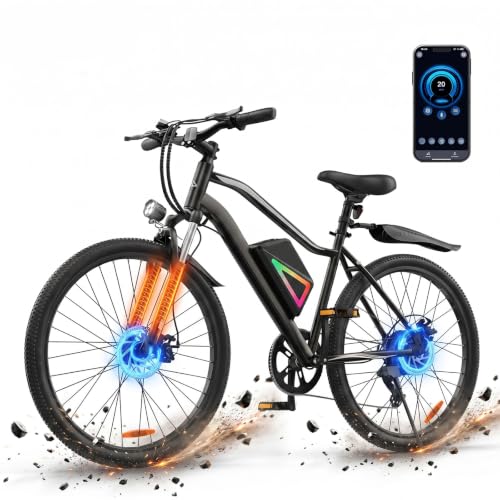
commuter
RNNSNN Commuter 26
The cheapest bike we have found that documents BOTH UL 2849 for the complete bike and UL 2271...
Read the review