Ebike Oracle
Buyer guide

Best Electric Bikes for Seniors (2026)

For most older riders who still ride a bicycle comfortably, the Gotrax Dolphin is the pick ($494.98 at our last check). It is a 26-inch step-through at 49.6 lb with a throttle for pulling away from a stop, a walk-assist mode, a 20 mph Class 2 cap and a fit range of 5'2" to 6'4", from an established US brand...

Ranked from our scored reviews

As an Amazon Associate I earn from qualifying purchases. Ebike Oracle may also earn a commission on purchases made through links to other retailers, at no extra cost to you. Full disclosure.

Best overall

7.1/10

Best overall for older riders who ride a bicycle comfortably. A 26-inch step-through with conventional city...

Check price at Amazon

Free 30-day returns via Amazon

Compare the picks

Best Electric Bikes for Seniors (2026): US e-bike class and key specs for each pick, with where to buy
PickPriceClassTop speedMotor (listed)BatteryMax loadWeightFrame
#1Gotrax Dolphin 26" Step-Through CommuterClass 220 mph350 W281 Wh264 lb50 lbStep-through
#2Jasion Electric TrikeClass 216 mph500 W624 Wh300 lbNot statedFolding, step-through
#3Vivi C26UL 500W Step-Through CruiserClass 220 mph500 W374 Wh330 lb56 lbStep-through
#4Vivi MT26GUL 26" Step-Through Electric Commuter BikeClass 220 mph500 W374 Wh300 lb50 lbStep-through
#5NARRAK Folding Trike 350Class 216 mph350 W468 Wh298 lb74 lbFolding, step-through

Prices are subject to change, and the buy links always fetch the live price. Motor is the figure the listing quotes, which is often a peak rather than a rated number; US e-bike classes are set on rated output. “Not stated” means neither the listing nor our review gives a figure.

Detailed picks

Gotrax Dolphin 26" Step-Through Commuter
AmazonSave $55
Check price at Amazon

Free 30-day returns via Amazon

Best overall for older riders who ride a bicycle comfortably. A 26-inch step-through with conventional city geometry at 49.6 lb, the lightest published weight on this page, with a throttle, five assist levels, a front suspension fork and a walk-assist Boost Mode. The adjustable stem and seat fit riders from 5'2" to 6'4". Class 2 from stated figures: 350 W rated, with throttle and pedal assist both capped at 20 mph. Gotrax is an established US company with phone support and 365-day parts assurance. The trades: a 280.8 Wh battery good for 10 to 15 real miles, mechanical brakes, and no rack or fenders.

Jasion Electric Trike
AmazonSave $25
Pick #27.6/10

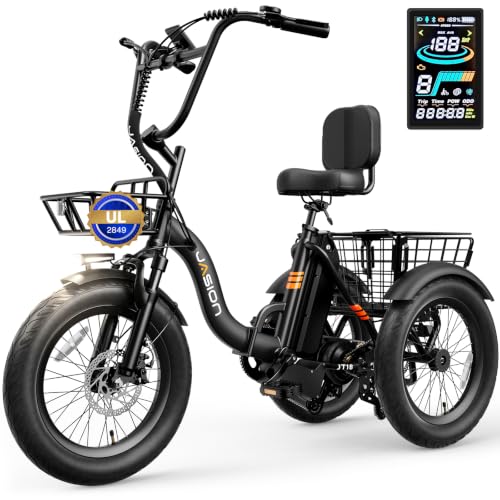
Jasion Electric Trike

Jasion
Check price at Amazon

Free 30-day returns via Amazon

Best if balance is the concern, and the trike its own review calls the one on our shelf built most deliberately for an older rider. Three wheels with a rear differential, a step-through frame, and an oversized seat with a backrest that adjusts from 4'9" to 6'3". Capped at 16 mph with a 500 W rated motor and a throttle, so it is Class 2 in every jurisdiction we track. UL 2849 is stated on the listing, and Jasion's own product page adds mechanical discs with a parking lock. No weight is published; plan on about 26 assisted miles rather than the 55 claimed.

Vivi C26UL 500W Step-Through Cruiser
AmazonSave $49
Check price at Amazon

Free 30-day returns via Amazon

The most comfortable pick, and the most complete out of the box. A true step-through with a very low top tube, relaxed cruiser geometry with upright bars and a sprung saddle, and a throttle that pulls you away from a stop to 20 mph without pedaling. The listing states 19.8 mph, so it is a clean Class 2, and it carries an SGS-issued UL 2849 mark. Lights, a rear rack, fenders and a kickstand come standard. The trades: 56 lb, mechanical disc brakes, a cadence sensor that can feel jerky, and about 20 real miles from a 374 Wh pack.

Vivi MT26GUL 26" Step-Through Electric Commuter Bike
AmazonSave $28
Check price at Amazon

Free 30-day returns via Amazon

Cruise control at 50 lb: hold the minus button for three seconds and the bike keeps your speed with no thumb on the throttle, a feature owners with wrist or thumb fatigue single out. A step-through frame that fits riders from about 5'1" to 6'1", a keyed removable battery, SGS certification to UL 2849 and a 500 W rated motor. Vivi ships it as Class 2, but our review records a 20 to 21.7 mph top speed, so confirm it tops out at 20. No lights, rack or fenders in the box.

NARRAK Folding Trike 350
Amazon
Pick #57.1/10

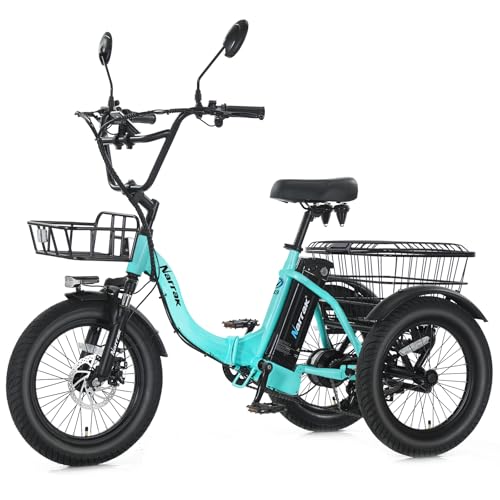
NARRAK Folding Trike 350

NARRAK
Check price at Amazon

Free 30-day returns via Amazon

Best for flat-street errands, and one of the strongest sellers among the trikes we cover. A 350 W rated motor drives through a Shimano 7-speed and a true rear differential; the folding step-through frame has front and seat suspension and cruiser bars that sit you upright. NARRAK's own spec table caps it at 16 mph (Class 2 everywhere we track) and names UL 2849 and UL 2271 for the battery, though the Amazon listing states neither. The trades: 74 lb, modest power for loaded hills, and about 22 assisted miles.

TL;DR: five picks

  1. Gotrax Dolphin, $494.98 at our last check. Best overall. A 26-inch step-through at 49.6 lb, the lightest published weight here, with a throttle, a walk-assist mode, a 20 mph Class 2 cap and a fit range of 5'2" to 6'4", from an established US brand with phone support. The trade is a 280.8 Wh battery good for 10 to 15 real miles.
  2. Jasion Electric Trike, $474.99 at our last check. Best if balance is the concern. Three wheels with a rear differential, an oversized seat with a backrest that adjusts from 4'9" to 6'3", a 16 mph cap and UL 2849 stated on the listing. Jasion publishes no weight.
  3. Vivi C26UL, $440.99 at our last check. Most comfortable, with everything included. A very low step-through frame, upright cruiser geometry, a stated 19.8 mph top speed (Class 2), an SGS-issued UL 2849 mark, and front and rear lights, a rear rack and fenders as standard. At 56 lb it is the heaviest two-wheeler here, and the brakes are mechanical.
  4. Vivi MT26GUL, $399.99 at our last check. Cruise control that holds your speed without your thumb on the throttle, at 50 lb, with SGS certification to UL 2849. No lights, rack or fenders in the box.
  5. NARRAK Folding Trike 350, $579 at our last check. Best for flat-street errands, and one of the strongest sellers among the trikes we cover. A rear differential, a Shimano 7-speed, front and seat suspension, and a 16 mph cap from the maker's own spec table. At 74 lb it is the heaviest pick.

The full guide, section by section. Tap any section to read it.

Our method in brief

Amazon US only. Every pick was in stock in our production catalog on September 11, 2026, and every pick has a full review on this site. We ranked on fit for an older rider first: a low step-through frame or three wheels, a weight you can manage, a top speed of 20 mph or less, a throttle for starting from a stop, and an upright riding position. Sales evidence came second and our editorial score third. We have not ridden these bikes. Every figure is the listing claim or our arithmetic on it, as recorded in each review, and where a listing leaves out the top speed or rated wattage that decides its legal class, we say so rather than guess. Prices move daily, so the buy buttons fetch the live number. Nothing here is medical advice: talk to your doctor about balance and whether you are fit to ride before buying any bike.

How we built this list

The questions an older rider brings to an e-bike are practical ones. Can I get on it without a struggle? Can I hold it steady at a light? Can I move it when I am not riding it? A low step-through frame comes first, because it removes the leg swing over a crossbar. Weight comes next, because a bike that has to go up a step or into a car is only as useful as your ability to move it. Then a top speed of 20 mph or less and a throttle, which pulls you away from a stop without a hard first pedal stroke. Then an upright riding position, with your hands high and your weight back over the saddle.

Three wheels answer a different need. A trike stays upright on its own at a stop and while you load it, so there is nothing to balance. In exchange it is wider, heavier and slower through corners, and it needs somewhere to live. It is the right format for riders who have had a fall, feel unsteady, or would rather not think about balance at all. Two trikes made this list, and our electric trike guide covers the full range.

We have not ridden these bikes. The ranking rests on what each listing discloses, the certifications it names, its legal class and its sales record, with fit weighed first, and each entry flags a missing top speed or rated wattage.

Which electric bike is best for a senior rider?

1. Gotrax Dolphin: best overall

The Dolphin is the two-wheeler we would point most older riders at first. It is a 26-inch step-through city bike with conventional geometry, so it is easy to mount in street clothes and rides like the bicycle you remember. At 49.6 lb it has the lightest published weight on this page, the adjustable stem and seat fit riders from 5'2" to 6'4", and Gotrax rates it for riders up to 264 lb. A throttle and five pedal-assist levels drive a 350 W rated motor, a front suspension fork takes the edge off potholes, and a walk-assist Boost Mode moves the bike at about 3.7 mph while you walk beside it. GoEBikeLife's reviewer called it "a friendly, confidence-inspiring city e-bike". Behind it is Gotrax, an established US company with real phone support, 365-day parts assurance and distribution through Target, Walmart and Best Buy, which matters when a charger or controller fails.

Legal class: Class 2, from stated figures. The motor is 350 W rated (500 W peak), and throttle and pedal assist both cap at 20 mph. The limit is the battery: at 280.8 Wh it is the smallest pack on this page, so plan on 10 to 15 real miles, which suits errands and short loops rather than long rides. The brakes are mechanical discs that need periodic cable adjustment, no rack or fenders come in the box (a headlight is built in), and 350 W climbs moderate city grades if you pedal too, while sustained steep climbs are outside its brief. Its UL 2849 certification comes from GoEBikeLife's review, and our review asks you to confirm the mark in the current listing photos if your building has charging rules. Read the full Gotrax Dolphin review.

2. Jasion Electric Trike: best if balance is the concern

If you are unsure about balancing a bicycle at all, start here. Its own review calls it the trike on our shelf built most deliberately for an older rider, and the details back that up. The seat is oversized with a backrest and adjusts from 4'9" to 6'3". The frame is step-through, so mounting means stepping in rather than climbing on. A rear differential lets both rear wheels turn properly through a corner, so it tracks predictably. The covered rear basket is rated to 77 lb, so shopping stays put over a curb. The listing states UL 2849, the whole-system electrical safety standard that fire codes reference, and Jasion's own product page adds mechanical disc brakes with a parking lock, which is what holds a trike still on a slope.

Legal class: Class 2, from stated figures. It is capped at 16 mph, below the 20 mph Class 2 ceiling, with a 500 W rated motor (1,200 W peak) and a throttle, which makes it a legal e-bike in every jurisdiction we track. What it gives up: no weight is published, which matters on a machine you may have to push by hand, and the brakes are mechanical rather than hydraulic, so steep routes ask more of them. Jasion's 55-mile range claim needs 11.3 Wh per mile, which a loaded trike cannot manage; plan on about 26 assisted miles from the 624 Wh pack. The load figures also disagree, 400 lb total on Amazon against 300 lb payload on Jasion's own site, and we go by the lower one. Read the full Jasion Electric Trike review.

3. Vivi C26UL: most comfortable, with everything included

The C26UL is the step-through for riders who put comfort first, and the whole frame is shaped around getting on and off. The top tube sits very low, so there is nothing to swing a leg over, and its review calls it the right shape for anyone whose knees, hips or balance make that swing difficult. The geometry is a relaxed Dutch-cruiser layout: upright bars, a sprung saddle and a slightly forward bottom bracket, which sets your weight back and your hands high. The throttle pulls you away from a light without pedaling. Vivi's listing carries an SGS-issued UL 2849 mark, and front and rear lights, a rear rack, fenders and a kickstand all come standard.

Legal class: Class 2, from stated figures. The listing gives a 19.8 mph top speed and the motor is 500 W rated, with a 1,000 W peak that Vivi markets separately. At 56 lb it is heavy for a cruiser. The brakes are mechanical discs that need periodic cable adjustment, and the cadence-sensor pedal assist switches power on and off, which can feel jerky. The 374 Wh battery gives about 20 real miles, and sustained climbs of 7% or more will strain it. The stock saddle is firm; budget for a softer one if you ride daily. Warranty is one year on the motor and battery and six months on the frame. Choose it over the Dolphin if comfort, a bigger battery and a full accessory kit matter more to you than about 6 lb. Read the full Vivi C26UL review.

4. Vivi MT26GUL: cruise control at 50 lb

The MT26GUL weighs 50 lb, within half a pound of the Dolphin, and adds a feature that earns its place on longer flat rides: cruise control. Get to the speed you want, hold the minus button for three seconds, and the bike keeps that speed with no thumb on the throttle. Owners in its reviews single this out, particularly riders with wrist or thumb fatigue. The step-through frame lets you plant both feet flat at a stop, the seat post fits riders from roughly 5'1" to 6'1", and the battery unlocks with a key and slides out for indoor charging. Vivi has it SGS-certified to UL 2849, and the 500 W rated (750 W peak) motor drives through a 7-speed Shimano gearset with a front suspension fork.

Legal class: Class 2 as Vivi ships it, with one caveat. The top speed in our review reads 20 to 21.7 mph, and anything over 20 falls outside Class 2, so confirm on delivery that it tops out at 20. Beyond that, it ships without lights, fenders or a rack, the brakes are mechanical, and the cadence sensor has a one-to-two-second delay before the motor joins in, which the thumb throttle covers when you start from a stop. The 374 Wh battery is the smallest in Vivi's US range. Choose it over the Dolphin if you want cruise control, a bigger battery and SGS certification to UL 2849. Read the full Vivi MT26GUL review.

5. NARRAK Folding Trike 350: best for flat-street errands

The NARRAK is one of the strongest sellers among the trikes we cover, and it earns that on the parts that make a trike ride well. A 350 W rated motor (700 W peak) drives through a Shimano 7-speed cluster and a true rear differential. The folding aluminum step-through frame carries front and seat suspension, 18-inch fat tires and cruiser bars that sit you upright with your arms relaxed. Three riding modes run down to unpowered pedaling. It arrives 85 to 90% assembled, and NARRAK runs a US support line in Los Angeles, in English and Spanish.

Legal class: Class 2, on the maker's figures. NARRAK's own spec table caps it at 16 mph, which with a 350 W rated motor and a throttle is Class 2 in every jurisdiction we track, and the same maker page names UL 2849 and UL 2271 for the battery. The Amazon listing states neither, calling the battery only "certified", so check the label on delivery. At a stated 74 lb it is the heaviest pick here, and folding it into an SUV is a two-person job. 350 W is modest for hills with a full basket, and the 468 Wh pack works out to about 22 assisted miles. If your streets climb, the NARRAK Trike 750 adds hydraulic brakes and a parking brake. Read the full NARRAK Folding Trike 350 review.

Step-through or trike?

Choose a two-wheel step-through if you ride a bicycle today without thinking about it. It is lighter, it fits a standard bike rack and a garage wall, and it handles the way you remember. The low frame removes the leg swing over a crossbar, and the throttle removes the hardest pedal stroke on any ride, the first one from a standstill.

Choose three wheels if you have had a fall, if your balance is not what it was, or if you would simply rather not think about it. A trike stands still on its own while you get on, load the basket or wait at a light, and you never need to put a foot down. The costs are width, weight and cornering. A trike does not lean into a turn the way a bicycle does, and speed is where three wheels become unstable, so both of our trike picks cap at 16 mph and both carry a rear differential for steadier turns. Plan an hour in an empty parking lot before your first ride on the road.

Weight you can actually lift

Of our five picks, four publish a figure: the Gotrax Dolphin at 49.6 lb, the Vivi MT26GUL at 50 lb, the Vivi C26UL at 56 lb and the NARRAK Folding Trike at 74 lb. The Jasion trike publishes none, which is a real gap on a machine you may need to push, turn or lift by hand.

Three things help. A removable battery lets you charge indoors without bringing the bike inside and takes a few pounds off before a lift: the Dolphin's pack weighs about 6 lb, the MT26GUL's about 5 lb, and the C26UL's comes out too. A walk-assist mode, like the Dolphin's Boost Mode at about 3.7 mph, lets the motor help when you push the bike up a ramp. And a bike that lives at ground level, in a garage or a ground-floor room, makes weight matter far less. Even 50 lb is heavy to carry up stairs every day, as the MT26GUL's own review says, and folding helps with storage rather than lifting: a folded trike is shorter and narrower, and it weighs exactly what it did before.

Throttle or pedal assist?

For most older riders the throttle is the most useful control on the bike. It moves you off from a stop without a hard first pedal stroke, which is the slowest and least steady moment of any ride, and it gets you home if your legs are tired. Every pick here has one. Class 2 is the class defined by a throttle that works up to 20 mph without pedaling, and both trikes pair theirs with a 16 mph cap.

Pedal assist still matters, because it stretches the battery much further than throttle-only riding and keeps you pedaling. The habit that works is simple: tap the throttle to get rolling, then pedal once the motor has engaged.

Torque sensor or cadence sensor?

A cadence sensor turns the motor on when it detects the cranks turning and off when they stop. The result is assistance that arrives in steps. The MT26GUL's review describes a one-to-two-second delay after you start pedaling, and the C26UL's describes power that switches on and off rather than ramping with your effort, which can feel jerky. A torque sensor measures how hard you press on the pedals and adds power in proportion, so the bike feels like a stronger version of your own legs. For a rider who dislikes surprises, that smoother build-up is worth having.

Torque sensors are uncommon at these prices. Both Vivis state cadence sensors, and the other three picks do not say which they use, so do not count on a torque sensor from any of them. The workaround is the throttle: use it to start, and the step-in of power from the cadence sensor then arrives once you are already rolling and steady.

Speed and legal class

US e-bike law sorts bikes into three classes. Class 1 assists only while you pedal, up to 20 mph. Class 2 adds a throttle, also capped at 20 mph. Class 3 assists by pedaling only, up to 28 mph. The wattage that counts is the rated figure, capped at 750 W everywhere except Oregon, which allows 1,000 W, and a peak figure is only a brief boost. A listing that gives only a peak wattage, or no top speed at all, cannot be placed in a class from the listing alone, and each entry above carries a one-line class verdict for that reason.

For an older rider, Class 1 or Class 2 at 20 mph or less is the sensible target. Those classes ride on bike lanes and most shared-use paths, every pick here is built around that limit, and the two trikes stop at 16 mph. Class 3 adds speed and restrictions: some states ban it outright and others keep it off shared paths by default. Most state laws define an e-bike as having "two or three wheels", so trikes follow the same framework. A few states add registration or licensing on top, so check your own state on our state-by-state law pages before you buy.

What to skip

  • Small wheels if balance is the issue. Folding minis are compact, but the reviews of the URLIFE Mini 14 and the Razor Rambler 16 both describe their 14-inch and 16-inch wheels as twitchy over potholes and lane markings.
  • Class 3 speed you do not need. A 28 mph step-through exists, the Jasion Roamer ST, and its review notes some frame flex at a sustained 28 mph, on top of the path restrictions Class 3 carries.
  • Listings that hide the numbers. A peak-only motor figure, no stated top speed or no battery capacity means you cannot check the legal class or the range before you buy. The Qlife Cityone states only "peak 1000W" and never gives its amp-hours.
  • Range claims that fail division. Divide the battery's watt-hours by the claimed miles. Honest commuter riding runs about 15 Wh per mile on a two-wheeler and 18 to 25 on a loaded trike, so a claim that needs far less is a best-case lab figure.
  • Unnamed certification if you charge indoors. Look for UL 2849 named on the listing, ideally with the laboratory that issued it. "Certified" on its own names no standard you can check.

Our guide to e-bikes to avoid goes through the warning signs in more detail.

Related guides

Also considered

Near misses, and the reason each one missed. Where a mention is the better buy for a specific rider, it says so.

  • MOONCOOL City Cruiser product photo

    The gentlest motor we considered: a 350 W rated hub, printed plainly beside its 700 W peak, in a low step-through frame with four riding modes down to a plain unpowered bicycle, and its review names it for returning and older riders. It sits below the picks because no UL certification is claimed, no weight is published, its 20 mph Class 2 status is inferred from its commuter setup rather than printed, and the 45-mile range claim fails division on a 374 Wh pack: plan on about 24.

    No longer sold at Amazon

    Our closest in-stock match: Gotrax Dolphin 26" Step-Through Commuter

  • NARRAK Trike 750 product photo

    The trike for hilly streets. Three hydraulic disc brakes plus a hydraulic parking brake, which holds a loaded trike still on a slope where no foot can, with a 750 W rated motor and a stated 20 mph cap that make it Class 2. At $1,099 checked it costs roughly double the folding NARRAK, the battery is called "UL Certified" without the standard named, and no weight is published.

  • NARRAK Trike 500 product photo

    The bigger sibling of the folding NARRAK: a 500 W rated (1,100 W peak) motor, Shimano 7-speed, and a UL 2849-certified 624 Wh battery stated in the listing's own bullets. Worth the step up from the 350 if you have hills or charge indoors. The listing states no top speed, so its legal class cannot be determined from the listing, and no weight is published.

  • Heybike Cityscape 2.0 product photo

    A step-through that fits riders from 5'2" to 6'2", certified to UL 2849 for the bike system and UL 2271 at the cell level, and its display can switch it from Class 3 down to Class 2 or Class 1, so it can be set to a 20 mph limit. It ships as a 28 mph Class 3, weighs 62 lb and uses mechanical disc brakes, which is why it sits below the picks for this reader.

  • Jasion Roamer ST 1200W Step-Through Commuter product photo

    A step-through with hydraulic disc brakes and "UL2849 Certified" in its title, and its review recommends it for riders with knee, hip or balance limitations who want road speed. Speed is the catch for this page: it is a Class 3 bike assisting to 28 mph, it weighs 60 lb, and its review notes some frame flex at a sustained 28 mph. Consider it only if you want to keep pace with traffic.

  • URLIFE Mini 14 product photo

    One of the stronger sellers among the folders we list, and a clean Class 2: 20 mph, a 500 W peak motor that sits under every wattage cap, and UL 2849 stated in the title. It folds small enough for a car trunk. It stays a mention because its review calls the 14-inch wheels twitchy over potholes and broken pavement, and neither the weight nor the battery capacity is published.

  • Razor Rambler 16 product photo

    The slowest bike we considered, capped at 15.5 mph, from a household US brand with a US-based service team, on a step-through frame its review recommends for riders with limited hip mobility. Class 2 as delivered. It is a mention because the 16-inch wheels have no suspension, the single fixed gear leaves hills to your legs, the payload tops out at 220 lb, and the warranty runs 90 days on components and 180 days on the motor and controller.

Frequently asked questions

What is the best e-bike for people over 70?

The right bike depends on your balance and where you ride more than on your age. If you ride a bicycle confidently today, the Gotrax Dolphin ($494.98 at our last check) is our pick: a 49.6 lb step-through with a throttle, a walk-assist mode, a 20 mph Class 2 cap and a US brand with phone support behind it, though its small battery means 10 to 15 real miles. If balance or confidence is in question, the Jasion Electric Trike ($474.99 checked) stands on three wheels, caps at 16 mph and has a seat with a backrest that adjusts from 4'9" to 6'3". Whichever you choose, talk to your doctor about balance and whether you are fit to ride first.

What type of electric bike is best for seniors?

A step-through with a throttle, a top speed of 20 mph or less and an upright riding position suits most older riders. The low frame removes the leg swing over a crossbar, the throttle handles the first push away from a stop, and Class 1 or Class 2 speeds keep you legal on bike lanes and most shared-use paths. Riders with balance concerns are usually better served by a trike, which stays upright on its own at a stop. Lighter is better if the bike has to go up a step, and a removable battery lets you charge indoors. Our five picks cover both formats.

Does Medicare pay for electric bikes for seniors?

No. Original Medicare does not list electric bikes among the equipment it covers, and an e-bike does not fit its definition. Medicare Part B covers durable medical equipment that is used for a medical reason, is typically only useful to someone who is sick or injured, is used in your home, and is ordered by your doctor or other health care provider. A bicycle of any kind is useful to a healthy rider too. The powered mobility Part B does cover is power wheelchairs and scooters, only when they are medically necessary and after a face-to-face exam and a written prescription; you then pay 20% of the Medicare-approved amount after the Part B deductible. Medicare Advantage plans may offer extra benefits that Original Medicare doesn't, and those vary by plan, so ask yours directly before assuming anything.

Will Medicare pay for an electric trike?

No, for the same reason. An electric trike is transport and exercise equipment, and Medicare Part B's durable medical equipment benefit is limited to items used for a medical reason, typically only useful to someone who is sick or injured, used in your home and ordered by your doctor. Three wheels do not change that. If a doctor judges that you need powered mobility, the route Medicare does cover is a power wheelchair or scooter, and only when it is medically necessary. If you have a Medicare Advantage plan, ask the plan about its extra benefits, which vary. The Jasion Electric Trike, our top trike pick, was $474.99 at our last check.

What is the most comfortable e-bike for seniors?

Of our picks, the Vivi C26UL. Its relaxed Dutch-cruiser geometry sits you upright with high bars and a sprung saddle, the step-through frame is very low, and a front suspension fork takes the edge off rough pavement. Two caveats from its review: the upright position puts more of your weight on the saddle, which gets tiring on rides much over 10 miles, and the stock saddle is firm, so budget for a softer one if you ride daily. If you would rather sit than perch, the Jasion Electric Trike has an oversized seat with a backrest.

Do electric trikes tip over easily?

A trike stays upright on its own at a stop and while you load it, which is its main advantage over a bicycle. The risk is in corners. Trikes do not lean into a turn the way two-wheelers do, and speed is where three wheels become unstable. That is why both of our trike picks cap at 16 mph, and why a rear differential, which lets the two rear wheels turn at different speeds, makes the handling more predictable. Both the Jasion and the NARRAK folding trike have one. Slow down before a turn rather than in it, spend an hour in an empty parking lot first, and talk to your doctor about balance and whether you are fit to ride.

What are the downsides of step-through bikes?

Fewer than the upside, for most older riders. A step-through frame is harder to make stiff at speed; the Jasion Roamer ST review notes some flex at a sustained 28 mph, which is one more reason to stay at Class 1 or Class 2 speeds. Full-size step-throughs like the Dolphin and both Vivis here do not fold, so they need floor space. And the cruiser versions set you upright, which puts more weight on the saddle over a long ride, as the C26UL's review points out. For getting on and off, it is the easiest two-wheel frame there is, which is why every two-wheeler on this page is one.

What is the best step-through electric bike for seniors?

The Gotrax Dolphin ($494.98 checked) for most riders: a 49.6 lb step-through with a throttle, walk assist, a 20 mph Class 2 cap and a fit range of 5'2" to 6'4", though its 280.8 Wh battery limits it to 10 to 15 real miles. For comfort and completeness, the Vivi C26UL ($440.99 checked) adds cruiser geometry, a bigger battery, UL 2849 with SGS named, and lights, a rack and fenders. For cruise control, the Vivi MT26GUL. For the gentlest power, the MOONCOOL City Cruiser uses a 350 W rated motor. If you want step-through access with three wheels under you, see the Jasion and NARRAK trikes above.

Reviewed by

John Weeks
Founder and editor