Florida E-Bike Laws 2026: SB 382 Vetoed
Are e-bikes legal in Florida?
E-bikes are legal in Florida under Florida Statutes §316.20655, the operating statute created by HB 971 (2020) (Rep. Michael Grant; Senate companion S 1148 by Sen. Brandes) — Chapter 2020-69, signed by Gov. Ron DeSantis on 20 June 2020, effective 1 July 2020. All three federal classes (Class 1, 2, 3) are recognised by Florida — and Class 3 is allowed on shared-use paths at the state level, making Florida one of the most permissive Class-3 states. No driver license, no registration, no insurance at any class (§316.20655(2)). Helmets are required only for riders under 16 under the general bicycle rule (§316.2065(3)(d)). The biggest 2026 story is a change that did not happen: CS/SB 382 (2026) passed both chambers unanimously (Senate 37–0 on 25 Feb 2026, House 112–0 on 9 Mar 2026) and was ordered enrolled 17 March 2026, but Governor Ron DeSantis vetoed it on 25 June 2026. It would have added a new §316.20655(10) — a 10 mph maximum within 50 feet of a pedestrian on any sidewalk or pedestrian-designated area — plus an audible-signal-and-yield rule on shared paths. None of it is law, so Florida still has no statewide e-bike sidewalk speed limit. Local rules therefore do all the work here, and can be far more restrictive: Sanibel is Class 1 only with a 16+ age floor; Miami Beach bans all e-bikes on the Beachwalk and most sidewalks with a $129 fine.
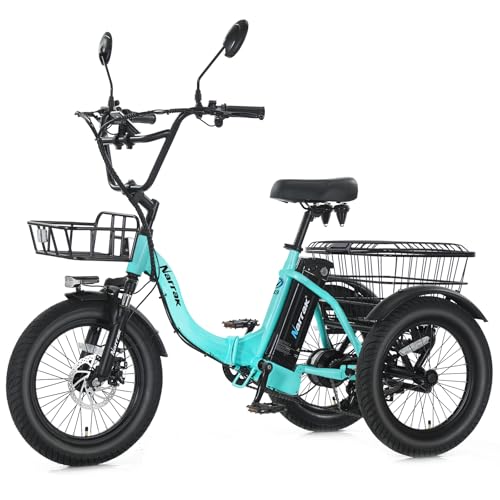
Buying one? The HQYEX Mini 14 (Class 2, 20 mph) and the NARRAK Folding Trike 350 (Class 2, 16 mph) are class-legal in Florida and in stock at Amazon. For more choice, see our best e-bikes under $300.
Legal to ride in Florida: our top class-legal pick
As an Amazon Associate I earn from qualifying purchases. Ebike Oracle may also earn a commission on links to other retailers. Full disclosure.

Class 2 — pedal-assist + throttle to 20 mph
Class 2 · 20 mph · Score 7.2
Free 30-day returns via Amazon
Other legal picks for Florida

Street-legal e-bikes you can buy in Florida (2026)
Each fits a class Florida treats as a bicycle, so it needs no registration or licence to ride.
| E-bike | Buy | Class | Speed |
|---|---|---|---|
| HQYEX Mini 14 | Check price at Amazon | Class 2 | 20 mph |
| NARRAK Folding Trike 350 | Check price at Amazon | Class 2 | 16 mph |
| TST City Commuter | Check price at Amazon | Class 2 | 20 mph |
What are the e-bike rules in Florida?
Sourced from the Florida statute and verified against the PeopleForBikes State Law Tracker.
Check your setup
Is your e-bike legal in Florida?
Your match
HQYEX
HQYEX Mini 14
Permitted on roads, bike lanes, and bike paths in Florida.
Our score 7.2/10
Our top class-legal pick for Florida, street-legal to ride today.
Free 30-day returns via Amazon
The 30-second answer
Florida adopted the federal three-class e-bike framework in 2020 through HB 971 (Rep. Michael Grant; Senate companion S 1148 by Sen. Brandes), enacted as Chapter 2020-69, Laws of Florida, signed by Gov. Ron DeSantis on 20 June 2020, effective 1 July 2020. The class definitions live in F.S. §316.003(23); the operating rules in F.S. §316.20655.
Florida's operating statute is one of the most rider-friendly in the country. §316.20655(1) states that "an electric bicycle or an operator of an electric bicycle shall be afforded all the rights and privileges, and be subject to all of the duties, of a bicycle or the operator of a bicycle." §316.20655(2) explicitly says no driver license, registration, or insurance is required for any class. §316.20655(7) opens streets, highways, roadways, shoulders, bicycle lanes, AND bicycle or multiuse paths to all three classes — meaning Class 3 is allowed on bike paths at the state level, a permission only a handful of other states (Arizona, Nevada, Utah) grant.
Three things to know about 2025-2026 changes:
- CS/SB 382 (2026) was VETOED — it is not law. It passed unanimously in both chambers (Senate 37–0 on 25 Feb 2026, House 112–0 on 9 Mar 2026) and was ordered enrolled 17 March 2026, but Governor Ron DeSantis vetoed it on 25 June 2026. It would have added a 10 mph cap within 50 feet of pedestrians, an audible-signal-and-yield rule on shared paths, a Micromobility Device Safety Task Force, and statewide crash-data reporting. None of that took effect on 1 July 2026, and none of it is enforceable today — the veto message cited the risk of "enhanced surveillance by local governments against citizens." Guides still describing a Florida 10 mph sidewalk rule are describing a bill that died.
- SB 462 (2025) / Chapter 2025-149 (effective 1 July 2025) added new §316.20655(8) and (9) — local governments may set a minimum-age requirement, require government-issued photo ID, and provide safety training. No statewide minimum age was created.
- Local restrictions matter more than ever. Sanibel, Miami Beach, Fort Myers Beach, Tampa, Jacksonville Beach, and Key West all have city-specific rules tighter than state law.
The full Florida rules, section by section. Tap any section to read it.
Quick reference
Quick reference
| Class | Top assisted speed | Throttle | Where allowed (state law) | Helmet | Min age (state) |
|---|---|---|---|---|---|
| Class 1 | 20 mph (motor cuts) | No (pedal-assist only) | Roads, bike lanes, shoulders, bicycle/multiuse paths, sidewalks (where bikes allowed) | Under 16 (general bike rule) | None |
| Class 2 | 20 mph (motor cuts) | Yes (throttle OR pedal-assist) | Same as Class 1 — bike paths included | Under 16 | None |
| Class 3 | 28 mph (motor cuts) | No (pedal-assist only) | Same as Class 1 and 2 — bike paths and multi-use paths INCLUDED at state level | Under 16 | None statewide; local govts may set one |
All three classes must be powered by a motor of less than 750 watts, have operable pedals (§316.003(23)), and have a motor that disengages when the rider stops pedaling or when the brakes are applied (§316.20655(6)). E-bikes manufactured or sold in Florida must comply with 16 C.F.R. part 1512 (federal CPSC bicycle safety standard) — §316.20655(5). Class labelling on the frame has been required since 1 January 2021.
The three-class system in Florida
The three-class system in Florida
Florida's class definitions in F.S. §316.003(23) mirror the PeopleForBikes model bill almost verbatim:
"(a) 'Class 1 electric bicycle' means an electric bicycle equipped with a motor that provides assistance only when the rider is pedaling and that ceases to provide assistance when the electric bicycle reaches the speed of 20 miles per hour.
(b) 'Class 2 electric bicycle' means an electric bicycle equipped with a motor that may be used exclusively to propel the electric bicycle and that ceases to provide assistance when the electric bicycle reaches the speed of 20 miles per hour.
(c) 'Class 3 electric bicycle' means an electric bicycle equipped with a motor that provides assistance only when the rider is pedaling and that ceases to provide assistance when the electric bicycle reaches the speed of 28 miles per hour."
Class 1 — pedal-assist only, 20 mph cutoff
The motor only engages while pedaling and must cut out at 20 mph. The most universally accepted class — permitted everywhere a regular bicycle goes under Florida state law, including bike paths and multi-use trails. Local restrictions in Sanibel (Class 1 only on shared-use paths) actually make this the most permitted class statewide.
Class 2 — pedal-assist plus throttle, 20 mph cutoff
Adds a throttle for non-pedaling propulsion. Same 20 mph cap. Allowed on bike paths under §316.20655(7), but several coastal trail systems impose speed limits that functionally cap throttle use.
Class 3 — pedal-assist only, 28 mph cutoff
No throttle. Motor must cut at 28 mph. Class 3 is allowed on bike paths and multi-use paths under §316.20655(7) — this puts Florida among Arizona, Nevada, and Utah as the most permissive Class-3 path-access states. Local governments can restrict — Sanibel allows Class 1 only on city paths, and Biscayne NP's Superintendent's Compendium explicitly prohibits Class 3 on Elliott Key. The state default permits Class 3 on paths.
Where each class can ride — F.S. §316.20655(7)
Where each class can ride — F.S. §316.20655(7)
The operative statute reads:
"An operator may ride an electric bicycle where bicycles are allowed, including, but not limited to, streets, highways, roadways, shoulders, bicycle lanes, and bicycle or multiuse paths."
This is wider state-level permission than California, New York, or most other large states grant. Class 3 path access is a real differentiator for Florida riders.
Can you ride an e-bike on the sidewalk?
Sidewalk riding is permitted under state law where bicycles are otherwise allowed — but local governments routinely override this:
- Miami Beach — e-bikes prohibited on ALL sidewalks, the Beachwalk, South Pointe Park & Pier, Marina Baywalk, and Lincoln Road Mall. Standard citation: $129 fine. Zero-tolerance enforcement since May 2024.
- Jacksonville (Code Title XXIII Ch. 804 Part 9) — sidewalk riding is permitted (bikes must yield to pedestrians); the city ordinance prohibits parking bicycles on sidewalks in the business district. Jacksonville Beach is a separate municipality with a total sidewalk-cycling ban.
- Key West — sidewalks are pedestrian-only except for ADA users.
- Tampa — sidewalks generally permitted with pedestrian yield; downtown business districts restricted.
Bike paths and multi-use trails (where Class 3 stands out)
State law permits all three classes. Trail-operator rules add:
- Pinellas Trail (Pinellas County, 47 miles) — treats e-bikes as bicycles; standard trail rules apply.
- Cady Way Trail + Cross-Seminole Trail (Orlando area) — Class 1 and Class 2 e-bikes permitted under state default.
- Tampa Riverwalk + Bayshore Multi-Use Path — Class 1/2 permitted with a 15 mph trail speed limit. A proposed ordinance to tighten this to 10 mph with stunt/wheelie bans was unanimously rejected by Tampa City Council in December 2025 — current 15 mph cap remains in force.
- Florida Keys Overseas Heritage Trail (106-mile rail-trail through the Keys) — e-bikes welcome; trail-operator 15 mph cap.
- West Orange Trail (Orange County, 22 miles) — e-bikes treated as bicycles.
The SB 382 sidewalk rule that never took effect (vetoed 25 June 2026)
This rule is not law. CS/SB 382 (2026) would have added a new subsection (10) to F.S. §316.20655, but Governor DeSantis vetoed the bill on 25 June 2026 — six days before its 1 July effective date. It is included here because the proposal was reported widely enough that many guides still present it as current Florida law. The text that would have applied:
An e-bike operator "may not operate the electric bicycle at a speed greater than 10 miles per hour if a pedestrian is within 50 feet of the electric bicycle" when on a sidewalk or pedestrian-designated area. On shared pathways not adjacent to a roadway, the operator "shall yield to pedestrians and give an audible signal before overtaking and passing a pedestrian."
Proposed penalty (never in force): noncriminal traffic infraction, $30 + court costs under §318.18(2).
Status: VETOED 25 June 2026. The Senate bill history records "6/25/2026 — Vetoed by Governor" as the final action. There is no 10 mph sidewalk rule, no audible-signal mandate, no Micromobility Device Safety Task Force, and no statewide crash-reporting mandate in Florida law. The rule that actually governs sidewalk riding in Florida is local, not statewide — see the city-by-city section above (Miami Beach, Key West, Jacksonville, Sanibel).
See the SB 382 Senate bill page for the bill history and veto record.
Florida State Parks
Florida State Parks
The Florida State Parks bike-use guideline (Florida Department of Environmental Protection) explicitly prohibits using the electric assist motors on state trails — the linear paved corridors like the Withlacoochee State Trail, Suwannee River Greenway, and the Pinellas Trail (state-managed segments).
On multi-use trails inside individual state parks, Class 1 and Class 2 are generally permitted where traditional bicycles are. Class 3 is restricted at most parks. Verify the specific park's policy before you ride — some have park-superintendent overlays.
National Park Service units in Florida
National Park Service units in Florida
NPS Order #3376 (final rule effective 8 April 2020) lets each park superintendent decide which routes are open to e-bikes via the park's Compendium:
- Everglades National Park — Bicycles and Class 1/2 e-bikes allowed on five designated trails: Shark Valley Tram Road, Snake Bight Trail, Rowdy Bend Trail, Long Pine Key Nature Trail, and L-67 Canal Road. Park trail speed limit 10 mph (15 mph on Shark Valley Tram). Throttle-only operation restricted to public roadways — pedal-assist only on trails.
- Biscayne National Park — Bicycles and Class 1/Class 2 e-bikes allowed on Elliott Key hiking trail. Class 3 e-bikes are explicitly prohibited under the current Superintendent's Compendium. Always check the park's current status page before planning a visit, as Elliott Key access can change seasonally.
- Big Cypress National Preserve — Bicycles permitted on Fire Prairie Trail, Bear Island Grade, Nobles Grade, established roads, and designated ORV trails. Order 3376 default applies for all three classes unless the Compendium narrows it.
- Dry Tortugas National Park — Garden Key is foot-only. No bicycle infrastructure.
- Canaveral National Seashore — bicycles permitted on park roads; e-bikes treated under Order 3376 default.
Do local rules differ within Florida?
Do local rules differ within Florida?
Florida has more locally-different e-bike rules than almost any other state. The big ones:
Miami Beach — the strictest coastal-city regime in the state
Miami Beach prohibits e-bikes on ALL of:
- The Beachwalk (entire 7-mile beach corridor)
- All sidewalks within city limits
- South Pointe Park & Pier
- Marina Baywalk
- Lincoln Road Mall
Standard fine: $129 per violation (treated as a moving-style civil penalty). Miami Beach PD has run zero-tolerance enforcement since May 2024. Visitors with Class 2 throttle e-bikes are the most-cited group — see the Miami Beach transportation page.
Sanibel Island — Class 1 only
Sanibel's e-bike ordinance — materially amended in September 2024 — is the most restrictive multi-use-path rule in Florida (verify the exact ordinance number against the Sanibel city site before relying on it):
- Class 1 only on shared-use paths — Class 2 and Class 3 banned from the city's 25-mile shared-use path network
- Minimum age 16 (dropped from 18 in the 2024 amendment)
- Default trail speed limit 15 mph
- Helmet recommended (not required for adults under state law)
Tour rental fleets on the island now stock Class 1-only e-bikes to comply.
Fort Myers Beach — 2025 sidewalk rules
Town Ordinance 25-03 (PDF) — adopted 2 June 2025 (second reading), supersedes the older 18-02 — permits e-bikes on sidewalks at a 15 mph maximum, with a duty to slow to idle speed (~1-3 mph) and give an audible signal when approaching pedestrians, overturning the prior 2018 sidewalk ban. Older town code separately prohibits motorised vehicles on the beach surface itself. Always verify the current ordinance text on the Fort Myers Beach website before relying on this summary.
Key West — multi-use only, 15 mph
Per the city's Car-Free Key West page, sidewalks are pedestrian-only except for ADA riders. Designated multi-use paths cap all wheeled users at 15 mph. Class labelling enforced. Florida Keys Overseas Heritage Trail (106 miles) is fully open to compliant e-bikes.
Tampa — Riverwalk and Bayshore at 15 mph
Per Tampa Parks' Greenways & Trails FAQ, Class 1 and Class 2 are permitted on the Tampa Riverwalk and Bayshore Boulevard Multi-Use Path with a 15 mph limit. A proposed 10 mph cap with stunt/wheelie penalties was unanimously rejected by Tampa City Council in December 2025; the Council signalled it may revisit later in 2026. The 15 mph limit remains in force.
Jacksonville
Jacksonville Code of Ordinances Title XXIII Ch. 804 Part 9:
- Sidewalk riding is permitted with a pedestrian-yield duty; the ordinance bans parking bicycles on business-district sidewalks, not riding them
- Jacksonville Beach (a separate municipality) prohibits all sidewalk cycling
- Riverwalk, Northbank/Southbank trails — bicycles (including e-bikes) permitted
Orlando
Orlando's Cady Way Trail and the Cross-Seminole Trail follow the F.S. §316.20655(7) state-law default that permits all three classes on shared-use paths; verify the current trail-manager policy (Orange County and Seminole County) for any class restrictions before riding. The Walt Disney World property internally enforces its own rules — verify with Disney transportation before riding inside the resort.
Do you need a helmet, license, or registration in Florida?
Do you need a helmet, license, or registration in Florida?
Helmet
Florida requires a CPSC-compliant bicycle helmet for every rider or passenger under 16 years of age on any bicycle, including e-bikes (F.S. §316.2065(3)(d)). Florida has no Class 3-specific helmet rule — a meaningful difference from California (all-ages Class 3 helmet) and New York (all-ages Class 3 helmet). No statewide helmet rule applies to adult riders.
Florida's helmet statute also includes a non-negligence clause at F.S. §316.2065(18): a rider's failure to wear a helmet "may not be considered evidence of negligence or contributory negligence" in a civil action. This is plaintiff-friendly statutory protection in injury litigation.
How old do you have to be?
No statewide minimum age for any class. The 2025 amendment (Chapter 2025-149 / SB 462) added §316.20655(8) authorising local governments to set a minimum age. Examples in force as of May 2026:
- Sanibel — 16+
- Some Lee County coastal municipalities — under consideration
Per §316.20655(9), local governments may also require government-issued photo ID and mandate safety training.
Driver license, insurance, and registration
None of these are required to operate an e-bike in Florida. F.S. §316.20655(2) is explicit: "An electric bicycle or an operator of an electric bicycle is not subject to the provisions of law relating to financial responsibility, driver or motor vehicle licenses, vehicle registration, title certificates, off-highway motorcycles, or off-highway vehicles." This applies across all three classes and all rider ages.
Recent legislation (2024-2026)
Recent legislation (2024-2026)
Florida's e-bike statute has been amended twice since enactment. A third amendment (SB 382) passed unanimously in March 2026 but was vetoed, so it never became law:
| Bill | Effective | What it did |
|---|---|---|
| HB 971 (2020) / Chapter 2020-69 | 1 July 2020 | Created the three-class framework; enacted §316.20655; required class labelling from 1 Jan 2021 |
| Chapter 2021-20 | Reviser bill — subsection renumbering, no substantive change | |
| SB 462 (2025) / Chapter 2025-149 | 1 July 2025 | Added §316.20655(8) and (9) — local governments may set minimum age, require photo ID, mandate safety training |
| CS/SB 382 (2026) | ❌ VETOED 25 June 2026 — never took effect | Would have added §316.20655(10) — 10 mph cap within 50 ft of pedestrians on sidewalks/pedestrian areas, audible-signal-and-yield on shared paths; would have created a Micromobility Device Safety Task Force (report due 1 Oct 2026); mandates statewide crash-data reporting via law-enforcement submission to FLHSMV by 15 Oct 2026, with the FLHSMV summary report due 31 Oct 2026 |
CS/SB 382 final disposition — vetoed. Filed 4 November 2025 by Sen. Truenow (co-introducers Leek and Yarborough); companion CS/HB 243 (Rep. Benarroch). Senate passed 37–0 on 25 February 2026; House passed 112–0 on 9 March 2026; ordered enrolled 17 March 2026; presented to the Governor 15 June 2026; vetoed 25 June 2026. Despite unanimous bipartisan passage, Governor DeSantis's veto message objected that the bill "will likely lead to enhanced surveillance by local governments against citizens" and that it "creates a task force, yet substantive changes are also implemented prior to any task force recommendations." The Legislature did not override. Verify at the Senate bill page, whose last recorded action is "6/25/2026 — Vetoed by Governor."
Florida has no battery-safety / UL 2849 mandate at the state level, and — because SB 382 was vetoed — no Micromobility Device Safety Task Force exists to recommend one. Any battery-safety legislation would have to start fresh in the 2027 regular session.
What are the penalties for breaking e-bike laws in Florida?
What are the penalties for breaking e-bike laws in Florida?
- Sidewalk/pedestrian-area speed: no statewide penalty exists. The §316.20655(10) infraction that would have carried a $30 base civil penalty died with the SB 382 veto on 25 June 2026. Local ordinances (Miami Beach $129, and others) are the only exposure.
- Helmet violation under §316.2065(3)(d) (under 16): $15 base (§318.18(1)). First-violation dismissal upon proof of helmet purchase.
- Bicyclist under 14 — chapter 316 infraction: $15.
- Miami Beach Beachwalk / sidewalk violation: $129 civil fine per Miami Beach city schedule.
- Operating a non-compliant e-bike (motor >750 W, or speed exceeding class limits): falls out of §316.003(23) and into the motor-vehicle code — license + registration + insurance now required, and most modified e-bikes lack the moped/motorcycle equipment needed to actually register.
What special e-bike rules apply in Florida?
What special e-bike rules apply in Florida?
Sur-Ron, Talaria, and other "e-moto" bikes
These are NOT e-bikes under Florida law. They exceed the 750 W cap and 28 mph speed-cutoff in §316.003(23). Without manufacturer-installed pedals that physically propel the bike, they also fail the "operable pedals" requirement. Florida treats them as mopeds (≤2 BHP, ≤30 mph, F.S. §316.003(83)) or motorcycles — either category requires a driver license and registration. Practical result: ride on private property or designated motorized off-highway trails.
Modifying a Class 2 to exceed 20 mph
De-restricting a Class 2 e-bike to throttle above 20 mph takes it out of §316.003(23) and into the moped or motorcycle category — license + registration + insurance now required. Most modified e-bikes lack the equipment (DOT lighting, mirrors, VIN) to complete moped registration, so the practical effect is the bike becomes street-illegal.
Snowbirds and out-of-state e-bikes
A compliant California, New York, or Pennsylvania e-bike is also a compliant Florida e-bike — the §316.003(23) definitions match the federal class structure. The reverse is true too: a Class 3 e-bike ridden into Pennsylvania becomes street-illegal because PA does not recognise Class 3. Plan rides accordingly when travelling across state lines.
Can a 12-year-old ride a Class 3 e-bike in Florida?
Statewide: yes. Florida has no statewide minimum age for any class. Locally: not in Sanibel (16+ floor), and check Lee County coastal cities for emerging local rules under §316.20655(8).
Bike-share programs
Tampa's Coast Bike Share and Miami's Citi Bike Miami operate Class 1 pedal-assist fleets at 20 mph motor cutoff — fully compliant under §316.003(23)(a). No rider license, registration, or insurance is needed to use the systems.
What about other states?
What about other states?
Florida's permissive Class-3-on-paths framework is shared by only a handful of states:
- California — Class 3 banned from paths under CVC §21207.5; mandatory all-ages helmet for Class 3 (CVC §21213)
- New York — Class 3 capped at 25 mph; NYC 15 mph operating cap; mandatory UL 2849 battery certification
- New Jersey — abolished three-class January 2026; license + registration + insurance required for ALL e-bikes
- Texas — three-class state preempts most local bans; no statewide helmet; Class 3 min age 15; state parks paved roads only
- Massachusetts — Class 1 + Class 2 only; Class 3 falls under §1B motorized bicycle
- Pennsylvania — single "pedalcycle with electric assist" category; 20 mph cap; Class 3 effectively banned
For a quick state-by-state check, use the e-bike legality checker. For the federal framework, read Class 1, 2, 3 e-bikes explained.
Bottom line
Bottom line
Florida riders: all three classes are street-legal under §316.20655, with no driver license, no registration, no insurance, and helmets required only for riders under 16. Class 3 is allowed on bike paths and multi-use trails at the state level — a real differentiator versus California, New York, and most Northeast states.
The 1 July 2026 change that did not happen: CS/SB 382 passed unanimously in both chambers but was vetoed by Governor DeSantis on 25 June 2026. There is no statewide 10 mph sidewalk cap, no 50-foot pedestrian rule, and no audible-signal mandate in Florida law. Sidewalk speed in Florida is governed entirely by local ordinance — which is why the city rules below matter more here than in most states.
Watch your local ordinance. Miami Beach's $129 Beachwalk fine, Sanibel's Class-1-only-with-16+ regime, Jacksonville Beach's total sidewalk ban, and Fort Myers Beach's 2025 sidewalk-speed rules all add real obligations on top of state law. State parks generally prohibit using the electric-assist motor on state trails; Biscayne NP's Compendium explicitly prohibits Class 3 on Elliott Key.
Sources: F.S. §316.003 (definitions, 2025); F.S. §316.20655 (operation, 2025); F.S. §316.2065 (bicycle / helmet rule); F.S. §318.18 (penalties); HB 971 (2020); CS/SB 382 (2026) and enrolled text PDF; Florida State Parks bike-use guidelines; NPS Order 3376 / 85 FR 19711; city codes for Miami Beach, Sanibel, Fort Myers Beach, Jacksonville, Tampa, Orlando, Key West. Verified 27 July 2026.
E-bikes that fit Florida's rules
Filtered from our review catalog by class eligibility under Florida statute. Spec-matched, not popularity-ranked.
- Class 2
 Amazon
HQYEX
HQYEX Mini 14
Class 2 — pedal-assist + throttle to 20 mph
Permitted on roads, bike lanes, and bike paths in Florida.20 mph · Score 7.2
Read the review - Class 2Amazon
NARRAK
NARRAK Folding Trike 350
Class 2 — pedal-assist + throttle to 20 mph
Permitted on roads, bike lanes, and bike paths in Florida.350 W · 16 mph · Score 7.1
Read the review - Class 2AmazonSave $40
TST
TST City Commuter
Class 2 — pedal-assist + throttle to 20 mph
Permitted on roads, bike lanes, and bike paths in Florida.750 W · 20 mph · Score 8.0
Read the review
Eligibility is class-based: picks shown here are legal to own and operate on roads in Florida. Local jurisdictions (state parks, beach paths, individual cities) may add further restrictions; see the body above for the specifics.
Recent Florida e-bike law coverage
News-form posts that reference Florida's statutes or covered a change affecting Florida riders.
- July 1st E-Bike Law: No Ban, 2 States Changed
No nationwide e-bike ban took effect on July 1, 2026. Two states had real changes in that window — New Jersey and Tennessee. Florida's much-reported 10 mph sidewalk bill was vetoed six days before it would have started. Illinois passed a major e-bike bill too (SB 3484), but it is still awaiting the governor's signature and would take effect January...
Read the post - What States Are Banning E-Bikes? 2026 Check
No US state has banned e-bikes. Class 1 and Class 2 are street-legal in every state under federal law. A minority restrict Class 3; only New Jersey requires a license and registration as of 19 July 2026.
Read the post
Frequently asked questions
Are e-bikes legal in Florida?
Yes. Florida adopted the federal three-class framework in 2020 through HB 971 (Chapter 2020-69), codified at Florida Statutes §316.003(23) and §316.20655. All three classes (Class 1, 2, 3) are street-legal statewide as bicycles — not motor vehicles. No driver license, no registration, no insurance is required (§316.20655(2)).
Is a Class 3 e-bike legal on bike paths in Florida?
Yes — at the state level, Florida is one of the most permissive Class 3 states. F.S. §316.20655(7) opens "streets, highways, roadways, shoulders, bicycle lanes, AND bicycle or multiuse paths" to all three classes. Local governments can restrict (Sanibel allows Class 1 only on its shared-use paths; Biscayne National Park bans Class 3 on Elliott Key) but the state default permits Class 3 on paths.
Do I need a license to ride an e-bike in Florida?
No, at any class, any age. F.S. §316.20655(2) is explicit: "An electric bicycle or an operator of an electric bicycle is not subject to the provisions of law relating to financial responsibility, driver or motor vehicle licenses, vehicle registration, title certificates, off-highway motorcycles, or off-highway vehicles."
Is there an e-bike helmet law in Florida?
Yes for riders under 16, no for adults. F.S. §316.2065(3)(d) requires every cyclist or passenger under 16 to wear a CPSC-compliant helmet on any bicycle (including e-bikes — they're treated as bicycles under §316.20655(1)). Florida has no Class 3-specific helmet rule at any age — a meaningful difference from California, Connecticut, and New York. The statute also includes a non-negligence clause: failure to wear a helmet cannot be cited as evidence of negligence in civil suits.
How old do you have to be to ride an e-bike in Florida?
No statewide minimum age for any class. The 2025 amendment (Chapter 2025-149) added §316.20655(8), authorising local governments to set their own minimum age. Sanibel Island requires 16+ on its shared-use paths. Most Florida cities have not set a local minimum.
What happened to Florida's SB 382 e-bike law?
It was vetoed and never became law. CS/SB 382 (2026) passed both Florida chambers unanimously (Senate 37–0 on 25 Feb 2026, House 112–0 on 9 Mar 2026) and was ordered enrolled 17 March 2026 — but Governor Ron DeSantis vetoed it on 25 June 2026, six days before its 1 July effective date. It would have added F.S. §316.20655(10), barring riders from exceeding 10 mph within 50 feet of a pedestrian on a sidewalk or pedestrian-designated area, plus an audible-signal-and-yield rule on shared paths and a Micromobility Device Safety Task Force. None of that is in force. The veto message cited the risk of "enhanced surveillance by local governments against citizens." Many guides published in spring 2026 still describe the 10 mph rule as current Florida law — it is not. Sidewalk speed in Florida remains a purely local matter (verify the exact figure against the current statute). SB 382 also creates a Micromobility Device Safety Task Force (report due 1 Oct 2026) and mandates statewide e-bike crash-data reporting to FLHSMV by 15 Oct 2026.
Can I ride my e-bike on the sidewalk in Florida?
Under state law, yes — where bicycles are otherwise permitted. But several Florida cities ban sidewalk riding outright: Miami Beach prohibits e-bikes on ALL sidewalks and the Beachwalk ($129 fine); Jacksonville bans sidewalk cycling in the business district; Jacksonville Beach bans all sidewalk cycling; Key West restricts sidewalks to pedestrians only (ADA carve-out). There is no statewide sidewalk speed rule — SB 382 would have added a 10 mph cap near pedestrians but was vetoed on 25 June 2026.
Can I ride my e-bike on the beach in Florida?
Almost always no. Most Florida coastal municipalities prohibit motorised vehicles on sand and beachwalks. Miami Beach bans e-bikes on the entire Beachwalk. Fort Myers Beach Ordinance 25-03 prohibits e-bikes on the beach itself. Verify with the specific beach municipality before bringing an e-bike — some allow Class 1 pedal-assist on hard-pack at low tide; most don't.
Are e-bikes allowed in Everglades or Biscayne National Park?
Everglades — bicycles and Class 1/Class 2 e-bikes are allowed on five designated trails (Shark Valley Tram Road, Snake Bight, Rowdy Bend, Long Pine Key Nature Trail, L-67 Canal Road) with a 10 mph trail speed limit (15 mph on Shark Valley Tram). Throttle-only operation is restricted to public roadways. Biscayne National Park — bicycles and Class 1/Class 2 e-bikes are allowed on the Elliott Key hiking trail under the Superintendent's Compendium; Class 3 e-bikes are explicitly prohibited. Always check the park's current status page before planning a visit, as Elliott Key access can change seasonally.
Can I ride my e-bike on the Florida Keys Overseas Heritage Trail?
Yes — the 106-mile rail-trail from Key Largo to Key West is open to compliant e-bikes. Trail-operator default is a 15 mph cap on multi-use sections. Class 1 and Class 2 are universally permitted; Class 3 access defaults to state law (allowed) but trail-operator speed limits effectively cap pedal-assist mode.
How fast can my e-bike go legally in Florida?
The motor must cut off at 20 mph (Class 1 and Class 2) or 28 mph (Class 3) per F.S. §316.003(23). The rider can pedal above those motor cutoffs — the cap is on motor assistance, not human power. There is no statewide sidewalk speed limit: SB 382 would have imposed a 10 mph cap near pedestrians, but it was vetoed on 25 June 2026. Local ordinances (Miami Beach, Key West, Fort Myers Beach) are the only speed rules that bind.
Are Sur-Ron and Talaria e-motos legal in Florida?
No, not as e-bikes. Sur-Ron, Talaria, and similar high-powered electric two-wheelers exceed the 750 W cap in F.S. §316.003(23) and lack the required operable pedals. Florida treats them as mopeds (under F.S. §316.003(83), requiring license + registration) or motorcycles (motorcycle endorsement + tag). Without DOT-spec equipment most can't actually be registered. Practical result: ride on private property or designated motorized off-highway trails only.
Is there a statewide 10 mph sidewalk speed limit for e-bikes in Florida?
No. SB 382 would have created one — a noncriminal traffic infraction for exceeding 10 mph within 50 feet of a pedestrian — but it was vetoed on 25 June 2026 and never took effect. There is no statewide e-bike sidewalk speed limit in Florida. What binds you is local: Miami Beach bans e-bikes from all sidewalks and the Beachwalk ($129 fine), Jacksonville Beach bans sidewalk cycling outright, Key West restricts sidewalks to pedestrians (ADA carve-out) and caps multi-use paths at 15 mph, and Tampa's Riverwalk and Bayshore path carry a 15 mph limit. Check the city, not the statute.
Are e-bikes allowed in Florida state parks?
The Florida State Parks bike-use guideline prohibits using the electric-assist motor on state trails (the linear paved corridors like Withlacoochee State Trail and Suwannee River Greenway). On multi-use trails inside individual state parks, Class 1 and Class 2 are generally permitted where traditional bicycles are; Class 3 is restricted at most parks. Always verify the specific park's policy before riding — some superintendents publish park-specific overlays.
How do other states compare?
Compare Florida's rules with states that share a similar framework.
Common e-bike law questions
The national answer to the questions Florida riders ask most, covering every US state, side by side.
Cite or link this page
Found this useful? Link to it.
This guide is free to reference. If it helped you, a link helps more riders find accurate, up-to-date law info, and we keep it current (last reviewed July 27, 2026). Licensed CC BY 4.0. Reuse the data with attribution.
<a href="https://ebikeoracle.com/laws/florida">Florida E-Bike Laws 2026: SB 382 Vetoed — Ebike Oracle</a>
Ebike Oracle. "Florida E-Bike Laws 2026: SB 382 Vetoed." Ebike Oracle, 2026, https://ebikeoracle.com/laws/florida.