Pennsylvania E-Bike Laws 2026: Age 16+
Are e-bikes legal in Pennsylvania?
Pennsylvania does not use the federal Class 1/2/3 e-bike framework. Under Act 154 of 2014 — signed by Governor Tom Corbett on 22 October 2014 and effective 22 December 2014 — an e-bike is a single category called "pedalcycle with electric assist" under 75 Pa.C.S. §102. To qualify, a bike must meet ALL of: ≤750 W motor, ≤100 lbs total weight, two or three wheels >11 inches in diameter, ≤20 mph on motor-only power, and operable pedals. Compliant e-bikes are treated as bicycles for PennDOT purposes — no driver license, no registration, no insurance, no helmet for adults. Minimum rider age is 16 (75 Pa.C.S. §3514). Class 3 (28 mph pedal-assist) is not legally recognised — and because Class 3 e-bikes lack moped equipment (VIN, turn signals, headlights to motor-vehicle spec), they can't easily be registered as motor-driven cycles either, creating a practical no-ride zone on PA public roads. A pending House Co-Sponsorship Memo (#47661, 2025-26 session) would adopt the three-class framework — not enacted as of May 2026.
Buying one? The Hoverfly OUREA (Class 2, 20 mph) and the Jasion Electric Trike (Class 2, 16 mph) are class-legal in Pennsylvania and in stock at Amazon. For more choice, see our best e-bikes under $600.
Legal to ride in Pennsylvania: our top class-legal pick
As an Amazon Associate I earn from qualifying purchases. Ebike Oracle may also earn a commission on links to other retailers. Full disclosure.

Class 2 — pedal-assist + throttle to 20 mph
Class 2 · 20 mph · Score 7.4
Free 30-day returns via Amazon
Other legal picks for Pennsylvania
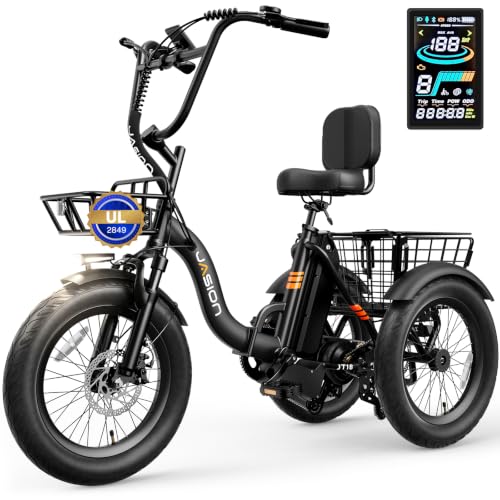
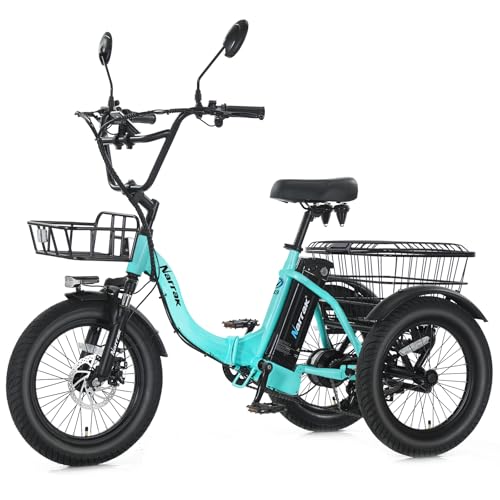
Street-legal e-bikes you can buy in Pennsylvania (2026)
Each fits a class Pennsylvania treats as a bicycle, so it needs no registration or licence to ride.
| E-bike | Buy | Class | Speed |
|---|---|---|---|
| Hoverfly OUREA | Check price at Amazon | Class 2 | 20 mph |
| Jasion Electric Trike | Check price at Amazon | Class 2 | 16 mph |
| NARRAK Folding Trike 350 | Check price at Amazon | Class 2 | 16 mph |
What are the e-bike rules in Pennsylvania?
Sourced from the Pennsylvania statute and verified against the PeopleForBikes State Law Tracker.
Check your setup
Is your e-bike legal in Pennsylvania?
Your match
Hoverfly
Hoverfly OUREA
Permitted on roads, bike lanes, and bike paths in Pennsylvania.
Our score 7.4/10
Our top class-legal pick for Pennsylvania, street-legal to ride today.
Free 30-day returns via Amazon
The 30-second answer
Pennsylvania is one of the largest US states (13.0 million pop) that has not adopted the federal three-class e-bike framework. Instead, under Act 154 of 2014 — signed by Governor Tom Corbett on 22 October 2014 and effective 60 days later (22 December 2014) — e-bikes are a single statutory category: "pedalcycle with electric assist", codified at 75 Pa.C.S. §102.
To be a legal e-bike in PA, a bike must satisfy ALL of:
- Motor rated at ≤750 W
- Total weight ≤100 lbs
- Two or three wheels more than 11 inches in diameter
- Maximum speed ≤20 mph on a level surface when powered by the motor alone
- Operable pedals
Compliant e-bikes are treated as bicycles under the PA Vehicle Code:
- No driver license required
- No registration required
- No insurance required
- No helmet required for adults (PA's general bicycle helmet rule only applies under age 12, and the e-bike minimum age is 16, so the helmet rule never applies to compliant e-bike riders)
- Minimum rider age: 16 (75 Pa.C.S. §3514)
The biggest practical consequence: a Class 3 e-bike (28 mph pedal-assist, federal model) is NOT a legal e-bike in PA. And because Class 3 e-bikes don't come with VIN plates, turn signals, headlights to motor-vehicle specifications, or other moped equipment, you also can't easily register one as a motor-driven cycle either. This puts Class 3 owners in a practical no-ride zone on PA public roads.
The full Pennsylvania rules, section by section. Tap any section to read it.
Quick reference
Quick reference
| Spec | Requirement under PA law |
|---|---|
| Framework | Single category — "pedalcycle with electric assist" (75 Pa.C.S. §102) |
| Federal Class 1 equivalent (pedal-assist, ≤20 mph) | ✅ Legal as a PA pedalcycle with electric assist |
| Federal Class 2 equivalent (throttle, ≤20 mph) | ✅ Legal as a PA pedalcycle with electric assist |
| Federal Class 3 equivalent (28 mph pedal-assist) | ❌ Not legal — falls into "motor-driven cycle" but cannot easily be registered without moped equipment |
| Motor power cap | 750 W |
| Weight cap | 100 lbs |
| Wheel diameter | >11 inches |
| Motor-only top speed | ≤20 mph on level surface |
| Operable pedals | Required |
| Driver license | Not required |
| Registration | Not required |
| Insurance | Not required |
| Helmet | Not required for adults (under-12 rule doesn't apply because min age is 16) |
| Minimum rider age | 16 |
Why Pennsylvania didn't adopt the three-class system
Why Pennsylvania didn't adopt the three-class system
Pennsylvania enacted Act 154 in 2014, before the People for Bikes three-class model law gained national traction. By the time most other states adopted Class 1 / Class 2 / Class 3 (2015-2020), PA already had its own framework locked in. Updating to the federal model would require new legislation.
A bill to adopt the three-class system has been recurringly proposed:
- House Co-Sponsorship Memo 47661 (2025-26 session): proposed three-class adoption + grants municipalities authority to enact local e-bike ordinances + permits municipal fines for violations. Not yet introduced as a numbered bill as of May 2026.
- Three-class adoption has been a recurring topic in prior sessions, but no numbered bill has advanced out of committee to date
Track current status at the Pennsylvania General Assembly site.
The 20 mph cap — what it actually means
The 20 mph cap — what it actually means
A compliant PA e-bike must be physically incapable of exceeding 20 mph on motor power alone. This is stricter than the federal Class 1 + Class 2 standard, which requires the motor to cut out at 20 mph but doesn't require the bike to be physically incapable.
Practical implications:
- A Class 1 or Class 2 e-bike (pedal-assist or throttle that cuts at 20 mph) IS a compliant PA pedalcycle with electric assist
- A Class 3 e-bike (28 mph pedal-assist) sold by Ride1Up, Aventon, Lectric, Velotric, Heybike, Cyrusher, etc. is not compliant
- A throttle bike rated above 20 mph is not compliant
- Pedaling above 20 mph is fine — the cap is on the motor's contribution, not your physical legs
The PennDOT FAQ at dmv.pa.gov does not currently distinguish between Class 1, Class 2, and Class 3 e-bikes — only between "pedalcycle with electric assist" (legal) and "motor-driven cycle" (registration required).
The motor-driven cycle catch-22 (Class 3 in PA)
The motor-driven cycle catch-22 (Class 3 in PA)
If your e-bike exceeds the 20 mph motor-only cap, it stops being a pedalcycle with electric assist. PA law would then default to:
- Motor-driven cycle under 75 Pa.C.S. §102 (motorcycle category)
- Required: Class M driver license, PennDOT registration + title, liability insurance, DOT motorcycle equipment
- Practical problem: Class 3 e-bikes don't come with VIN plates, DOT-compliant turn signals, mirrors, or headlamps to motorcycle spec. Without aftermarket conversion, you can't complete moped registration.
The practical effect: Class 3 e-bikes occupy a no-ride zone on PA public roads. Owners typically restrict use to private property, off-road motorized trails, or risk a traffic citation for operating an unregistered motor vehicle.
Sur-Ron, Talaria, and similar high-powered electric two-wheelers are even further out of compliance — they exceed 750 W and 20 mph on throttle alone. Same effective restriction: private property or posted motorized trails only.
DCNR e-bike policy — state forests and state parks
DCNR e-bike policy — state forests and state parks
The PA Department of Conservation and Natural Resources (DCNR) finalised its official e-bike policy in late 2022 after receiving 640+ public comments. Per the policy:
- E-bikes are allowed on DCNR-managed trails where traditional bicycles are allowed — opening up roughly 3,800 miles of state forest bicycle trails (447 miles specifically designated as MTB trails across 11 state forests)
- Throttle-only operation is NOT permitted on non-motorized trails. Riders must pedal on non-motorized trails — throttle is only permitted on motorized trails and public-use roads
- Motorized trails and public-use roads: e-bikes allowed unless specifically posted as prohibited
- The e-bike must meet the 75 Pa.C.S. §102 definition (the standard pedalcycle-with-electric-assist criteria)
For non-DCNR trails (county parks, municipal trails, private rail-trails), each managing authority sets its own policy. Most major PA trails default to the DCNR rule.
Major trails + cities
Major trails + cities
Philadelphia
Philadelphia treats pedalcycles with electric assist as bicycles under city code. Specific trail policy:
- Schuylkill River Trail — compliant e-bikes allowed; the trail follows the PA Vehicle Code standard
- East Coast Greenway segments through Philadelphia — same default
- Center City sidewalks — bicycle sidewalk riding generally banned in business districts; same rule applies to e-bikes
- Bus + bike lane access — e-bikes follow regular bicycle rules
The Bicycle Coalition of Greater Philadelphia maintains a comprehensive city-level guide.
Pittsburgh
- Three Rivers Heritage Trail (~33 miles connecting all three rivers) — compliant e-bikes allowed
- Eliza Furnace Trail + South Side trails — same default
- Bridge bike lanes (Smithfield St, Hot Metal Bridge, etc.) — e-bikes follow bicycle rules
- Bike Pittsburgh publishes city-specific guidance
State College / Penn State
Penn State University campus follows PA Vehicle Code; campus-specific overlays apply for parking + sidewalk riding. Verify with Penn State Transportation Services.
Lancaster County
Heavy Amish population means narrow rural roads with horse-drawn buggies + e-bikes share lanes regularly. PA Vehicle Code applies — the cycling community emphasises slow, predictable riding around buggies.
Pocono region
Resort + tourism destination with growing e-bike rental volume. Trails at Skytop, Camelback, and the Lehigh Gorge State Park follow the DCNR rule (compliant e-bikes allowed where bikes are allowed; throttle-only banned on non-motorized trails).
State Parks + federal lands
State Parks + federal lands
- PA State Parks (managed by DCNR): same DCNR e-bike policy applies — e-bikes on bicycle trails, no throttle-only on non-motorized trails. State park finder.
- PA State Forests (also DCNR): same policy
- Allegheny National Forest (federal): US Forest Service Region 9 policy applies. Default is e-bikes allowed where regular bicycles are allowed AND only on routes specifically opened by the forest supervisor.
- Gettysburg National Military Park (NPS): federal NPS Order 3376 + 36 CFR §4.30(i) — e-bikes only on paved routes that bicycles are allowed on, where the superintendent has specifically opened them
- Independence National Historical Park (Philadelphia, NPS): same federal rule
- Delaware Water Gap National Recreation Area (PA-NJ border, NPS): same federal rule
Sidewalks + bike lanes
Sidewalks + bike lanes
- Sidewalk riding: PA Vehicle Code allows bicycle (and pedalcycle-with-electric-assist) sidewalk operation except in business districts where prohibited by sign or local ordinance — same rule applies to e-bikes. Most municipalities post sidewalk-riding restrictions in their downtown business districts.
- Painted bike lanes: all compliant e-bikes are allowed in painted bike lanes alongside roadways
- Roadways: all compliant e-bikes are allowed on public roads; same rules as bicycles for stop signs, lights, signals
What are the penalties for breaking e-bike laws in Pennsylvania?
What are the penalties for breaking e-bike laws in Pennsylvania?
- Operating a non-compliant motorised vehicle on bike-only facilities: summary offense — typical fine $25-$200 + court costs
- Operating an unregistered motor-driven cycle (e.g., a non-compliant Class 3 ridden on a public road): standard PA unregistered-vehicle violation per 75 Pa.C.S. §1301 — base fine + court costs
- Operating without an operator license (when one is required): standard unlicensed-driver penalty
- Underage operation (under 16 on a pedalcycle with electric assist): violation of 75 Pa.C.S. §3514
- Sidewalk riding in a business district where prohibited: municipal ordinance fine, typically $25-$100
Enforcement is jurisdiction-dependent. Philadelphia and Pittsburgh police are the most active enforcers in the state.
What special e-bike rules apply in Pennsylvania?
What special e-bike rules apply in Pennsylvania?
Out-of-state riders crossing into PA
If you live in NJ, NY, OH, or MD and ride a compliant Class 1 or Class 2 e-bike (≤20 mph on motor only), you're also a compliant PA pedalcycle with electric assist — same rules apply. A Class 3 e-bike from another state, however, is not legal on PA public roads — it fails the 20 mph cap. Plan rides knowing the bike's legal status changes at the state line.
Bike-share programs
Philadelphia's Indego operates pedal-assist e-bikes that cut motor assistance at 17 mph — well within PA's 20 mph motor-only cap, so the fleet is fully compliant as a pedalcycle with electric assist. Pittsburgh's POGOH operates a similar pedal-assist fleet. Both are Class 1-equivalent and treated as bicycles under PA law — no rider license, registration, or insurance needed.
Converting a Class 3 e-bike to compliance
Some Class 3 e-bikes can be firmware-limited to 20 mph motor-only via the bike's display settings or a dealer flash. Once firmware-limited and unable to exceed 20 mph on motor power, the bike becomes a compliant PA pedalcycle with electric assist. Check with the manufacturer before relying on this — not all Class 3 bikes can be firmware-locked, and removing the lock yourself would put the bike back out of compliance.
E-bike incentives in PA
Pennsylvania does not currently offer a state-level e-bike rebate program (Oregon, Colorado, Connecticut, and Vermont do). Local utility companies occasionally run e-bike incentive pilots — check DCED for any current programs.
What about other states?
What about other states?
Pennsylvania is one of the largest US states still using a single-category e-bike framework. Most surrounding states have moved to the federal three-class model:
- New York — VTL §102-c three-class + NYC 15 mph operating cap + UL certification mandate
- New Jersey — abolished three-class January 2026; license + registration + insurance required for ALL e-bikes
- Massachusetts — Class 1 + Class 2 only (added 2022); Class 3 falls under §1B motorized bicycle; pending Ride Safe Act
- Ohio — full three-tier federal model (ORC §4511.01)
- Maryland — full three-tier federal model (MD Transp. §11-117.1)
- West Virginia — full three-tier federal model
- Delaware — full three-tier federal model
For state-by-state quick checks, use the e-bike legality checker. For the underlying federal three-class framework most states use, read Class 1, 2, 3 e-bikes explained.
Bottom line
Bottom line
Pennsylvania riders: stick to a Class 1 or Class 2 e-bike — those are fully legal as pedalcycles with electric assist. You don't need a license, registration, insurance, or helmet (as an adult). You can ride anywhere bicycles are allowed, including most DCNR state forest trails and the major rail-trails in Philadelphia and Pittsburgh.
Class 3 e-bike owners in PA: your bike isn't a compliant pedalcycle with electric assist (it can exceed 20 mph on motor power), but it also can't easily be registered as a motor-driven cycle because it lacks DOT-spec moped equipment. Practical advice: firmware-limit to 20 mph motor-only if your bike supports it, or restrict use to private property and off-road motorized trails.
Watch the three-class adoption bill (currently a House Co-Sponsorship Memo in the 2025-26 session). If PA finally adopts the federal framework, Class 3 e-bikes would become legal with the standard age + helmet restrictions, and municipalities would gain new authority to set local e-bike rules.
Sources: Act 154 of 2014 official page; 75 Pa.C.S. §102 (definitions) + §3514 (operation); PennDOT bicycle page; DCNR e-bike policy + PeopleForBikes DCNR coverage; Bicycle Coalition of Greater Philadelphia; Bike Pittsburgh; House Co-Sponsorship Memo 47661. Verified 15 May 2026.
E-bikes that fit Pennsylvania's rules
Filtered from our review catalog by class eligibility under Pennsylvania statute. Spec-matched, not popularity-ranked.
- Class 2
 Amazon
Hoverfly
Hoverfly OUREA
Class 2 — pedal-assist + throttle to 20 mph
Permitted on roads, bike lanes, and bike paths in Pennsylvania.750 W · 20 mph · Score 7.4
Read the review - Class 2Amazon
Jasion
Jasion Electric Trike
Class 2 — pedal-assist + throttle to 20 mph
Permitted on roads, bike lanes, and bike paths in Pennsylvania.500 W · 16 mph · Score 7.6
Read the review - Class 2Amazon
NARRAK
NARRAK Folding Trike 350
Class 2 — pedal-assist + throttle to 20 mph
Permitted on roads, bike lanes, and bike paths in Pennsylvania.350 W · 16 mph · Score 7.1
Read the review
Eligibility is class-based: picks shown here are legal to own and operate on roads in Pennsylvania. Local jurisdictions (state parks, beach paths, individual cities) may add further restrictions; see the body above for the specifics.
Recent Pennsylvania e-bike law coverage
News-form posts that reference Pennsylvania's statutes or covered a change affecting Pennsylvania riders.
Frequently asked questions
Are e-bikes legal in Pennsylvania?
Yes, but Pennsylvania does not use the federal Class 1/2/3 system. Under Act 154 of 2014 (75 Pa.C.S. §102), an e-bike is a single category: "pedalcycle with electric assist" — must be ≤750 W motor, ≤100 lbs, ≤20 mph on motor power, with operable pedals. Compliant e-bikes are bicycles for PennDOT purposes: no license, no registration, no insurance, no adult helmet rule. Minimum rider age is 16.
Why doesn't Pennsylvania use Class 1, 2, or 3?
Pennsylvania passed Act 154 in 2014, before the People for Bikes three-class model gained traction nationally. By the time most other states adopted Class 1/2/3 (2015-2020), PA already had its single-category framework locked in. The 2025-26 House Co-Sponsorship Memo 47661 proposes adopting the three-class system, but it has not been enacted as of May 2026.
Is a 28 mph e-bike legal in Pennsylvania?
No. A Class 3 e-bike (28 mph pedal-assist) exceeds the 20 mph motor-only cap in 75 Pa.C.S. §102, so it's not a pedalcycle with electric assist. It would default to "motor-driven cycle" requiring a Class M license, PennDOT registration, and motorcycle insurance — but most Class 3 e-bikes lack the moped equipment (VIN, DOT lights, turn signals) needed to complete that registration. The practical effect: Class 3 owners can't legally ride on PA public roads without aftermarket conversion or a firmware lock to 20 mph motor-only.
Do I need a license to ride an e-bike in PA?
No for compliant pedalcycles with electric assist (≤750 W, ≤20 mph motor-only). Yes (Class M license) for any e-bike that exceeds those specs and is operated as a motor-driven cycle. PennDOT does not issue a separate "e-bike license."
Do I need to register my e-bike in Pennsylvania?
No for compliant pedalcycles with electric assist — they're treated as bicycles. Yes for motor-driven cycles (anything exceeding the 20 mph cap or 750 W) — but most Class 3 e-bikes can't actually be registered because they lack the moped equipment (VIN, DOT-spec turn signals, mirrors, headlights) PennDOT requires.
What's the minimum age to ride an e-bike in PA?
16 years old, per 75 Pa.C.S. §3514. PA's general bicycle helmet rule applies under 12, but since the e-bike minimum age is 16, no helmet is ever required on a compliant e-bike.
Do I have to wear a helmet on an e-bike in Pennsylvania?
No, not for adults. PA's helmet law applies only to riders under 12 on any bicycle (75 Pa.C.S. §3510). Since the e-bike minimum age is 16, the under-12 helmet rule never applies to e-bike riders. Helmets are strongly recommended regardless.
Are e-bikes allowed on Pennsylvania state forest trails?
Yes, on most trails. The PA DCNR e-bike policy — finalised in late 2022 after 640+ public comments — allows compliant e-bikes on DCNR-managed trails where traditional bicycles are allowed (~3,800 miles statewide, 447 miles specifically designated MTB across 11 state forests). Throttle-only operation is NOT permitted on non-motorized trails — riders must pedal. Throttle is allowed on motorized trails and public-use roads.
Can I ride my e-bike on the Schuylkill River Trail or Three Rivers Heritage Trail?
Yes — both trails permit compliant pedalcycles with electric assist (≤750 W, ≤20 mph motor-only, ≤100 lbs). The Schuylkill River Trail and Pittsburgh's Three Rivers Heritage Trail follow the PA Vehicle Code default. Class 3 e-bikes are not compliant under PA law and are not permitted on these trails.
Are throttle e-bikes legal in Pennsylvania?
Yes, as long as the throttle cuts out at 20 mph or below and the rest of the §102 criteria are met (≤750 W, ≤100 lbs, operable pedals). A federal Class 2 e-bike (throttle, ≤20 mph) IS a compliant PA pedalcycle with electric assist. Anything throttle-rated above 20 mph is not compliant and falls into the motor-driven cycle catch-22.
Are Sur-Ron and Talaria bikes legal in PA?
No. Sur-Ron, Talaria, and similar high-powered electric two-wheelers exceed 750 W and 20 mph on throttle alone — they fail the pedalcycle-with-electric-assist criteria. They'd default to motor-driven cycle / motorcycle status under PA law, requiring Class M license + PennDOT registration + motorcycle insurance + DOT-compliant equipment. Without that, they're restricted to private property or posted off-road motorized trails.
Will Pennsylvania adopt the three-class system?
Possibly. House Co-Sponsorship Memo 47661 (2025-26 session) proposes adopting the three-class framework and granting municipalities authority to enact local e-bike ordinances. The memo has not yet been introduced as a numbered bill as of May 2026. Three-class adoption has been a recurring topic in prior sessions, but no numbered bill has advanced out of committee to date. Track current status at palegis.us.
Can I bring my e-bike on Philadelphia SEPTA?
Folding bicycles are permitted on SEPTA at all times. Full-size bicycles (including e-bikes) have peak-hour restrictions on Regional Rail and the Market-Frankford / Broad Street subway lines. Verify current rules at septa.org — SEPTA has been reviewing its bicycle-carriage policy to account for the growing e-bike volume in Philadelphia.
What's the difference between a "pedalcycle with electric assist" and a "motor-driven cycle" in PA?
Pedalcycle with electric assist (75 Pa.C.S. §102): ≤750 W, ≤100 lbs, two or three wheels >11", ≤20 mph motor-only, operable pedals. Treated as a bicycle — no license/registration/insurance. Motor-driven cycle: anything motorised that exceeds those specs — including Class 3 e-bikes. Requires Class M license, PennDOT registration + title, insurance, and DOT motorcycle equipment. Class 3 e-bikes face a practical catch-22: they don't meet pedalcycle specs, but they also lack the moped equipment needed for motor-driven-cycle registration.
How do other states compare?
Compare Pennsylvania's rules with states that share a similar framework.
Common e-bike law questions
The national answer to the questions Pennsylvania riders ask most, covering every US state, side by side.
Cite or link this page
Found this useful? Link to it.
This guide is free to reference. If it helped you, a link helps more riders find accurate, up-to-date law info, and we keep it current (last reviewed July 8, 2026). Licensed CC BY 4.0. Reuse the data with attribution.
<a href="https://ebikeoracle.com/laws/pennsylvania">Pennsylvania E-Bike Laws 2026: Age 16+ — Ebike Oracle</a>
Ebike Oracle. "Pennsylvania E-Bike Laws 2026: Age 16+." Ebike Oracle, 2026, https://ebikeoracle.com/laws/pennsylvania.