South Carolina E-Bike Laws 2026: No Helmet
Are e-bikes legal in South Carolina?
South Carolina is unusual: it never adopted the federal Class 1/2/3 system. Instead, Act 114 of 2020 (signed 3 February 2020) created a single category — an "electric-assist bicycle" / "bicycle with helper motor" — defined at S.C. Code §56-1-10 as a two- or three-wheeled bike with fully operable pedals, an electric motor of no more than 750 watts (1 hp), and a top motor-powered speed under 20 mph, meeting the federal CPSC standard (16 C.F.R. Part 1512). These bikes are explicitly not mopeds and are treated as ordinary bicycles under §56-5-3520 — so there is no driver license, registration, insurance, statewide helmet law, or minimum age. The only e-bike-specific mandate is a manufacturer label showing wattage and max assisted speed. Because the definition caps at under 20 mph, a faster 28 mph "Class 3" machine is not an electric-assist bicycle in SC — it falls into moped/motor-vehicle territory. With the state law this light, the real rules are local — Hilton Head, Charleston, Mount Pleasant, and the Grand Strand beaches each set their own.
Buying one? The Funhang Fat 26 (Class 2, 20 mph) and the Hoverfly OUREA (Class 2, 20 mph) are class-legal in South Carolina and in stock at Amazon. For more choice, see our best e-bikes under $500.
Legal to ride in South Carolina: our top class-legal pick
As an Amazon Associate I earn from qualifying purchases. Ebike Oracle may also earn a commission on links to other retailers. Full disclosure.

Class 2 — pedal-assist + throttle to 20 mph
Class 2 · 20 mph · Score 7.4
Free 30-day returns via Amazon
Other legal picks for South Carolina

Street-legal e-bikes you can buy in South Carolina (2026)
Each fits a class South Carolina treats as a bicycle, so it needs no registration or licence to ride.
| E-bike | Buy | Class | Speed |
|---|---|---|---|
| Funhang Fat 26 | Check price at Amazon | Class 2 | 20 mph |
| Hoverfly OUREA | Check price at Amazon | Class 2 | 20 mph |
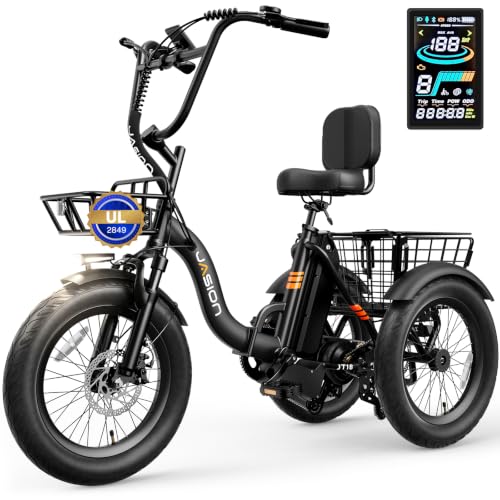
| Jasion Electric Trike | Check price at Amazon | Class 2 | 16 mph |
What are the e-bike rules in South Carolina?
Sourced from the South Carolina statute and verified against the PeopleForBikes State Law Tracker.
Check your setup
Is your e-bike legal in South Carolina?
Your match
Funhang
Funhang Fat 26
Permitted on roads, bike lanes, and bike paths in South Carolina.
Our score 7.4/10
Our top class-legal pick for South Carolina, street-legal to ride today.
Free 30-day returns via Amazon
The 30-second answer
E-bikes are legal in South Carolina, but the state did something most states did not: it never adopted the federal Class 1/2/3 framework. Act 114 of 2020 (originating as H.3174, ratified 29 January 2020, signed 3 February 2020) instead created one category — an "electric-assist bicycle" (also called a "bicycle with helper motor") — defined at S.C. Code §56-1-10.
To qualify, a bike must have fully operable pedals, an electric motor of no more than 750 watts (1 horsepower), and a top motor-powered speed under 20 mph (measured with a 170-lb rider on a paved level surface), and meet the federal CPSC standard at 16 C.F.R. Part 1512, with the motor cutting out when the brakes are applied or the rider stops pedaling. A compliant e-bike is explicitly not a moped and is treated as a regular bicycle under §56-5-3520.
The practical result is one of the lightest-touch e-bike regimes in the country:
- ✅ No driver license, registration, or insurance
- ✅ No statewide helmet law (any age)
- ✅ No statewide minimum operating age
- ✅ Same road rights and duties as a regular bicycle
- ⚠️ One mandate: a permanent manufacturer label showing wattage + max assisted speed
- ❌ No "Class 3" tier — a 28 mph machine is outside the definition and treated as a moped/motor vehicle
The full South Carolina rules, section by section. Tap any section to read it.
Quick reference
Quick reference
| Spec | South Carolina rule |
|---|---|
| Framework | No 3-class system — single "electric-assist bicycle" category (Act 114, 2020) |
| Definition statute | S.C. Code §56-1-10 |
| Treated-as-bicycle statute | §56-5-3520 → §56-5-3420 |
| Motor power cap | ≤750 W (1 hp) |
| Speed cap | Under 20 mph (motor-powered) — no 28 mph tier |
| Class 1 / Class 2 equivalent (≤20 mph) | ✅ Legal as an "electric-assist bicycle" |
| Class 3 equivalent (28 mph) | ❌ Exceeds the definition → treated as a moped/motor vehicle |
| Driver license | Not required |
| Registration | Not required |
| Insurance | Not required |
| Statewide helmet law | None (any age) |
| Statewide minimum age | None |
| Manufacturer label | Required — wattage + max assisted speed, permanently affixed |
| Bike + multi-use paths | Allowed where bicycles are (no statewide ban); local rules vary |
| Sidewalks | No statewide rule — set by local ordinance |
Two things make South Carolina distinctive: it is one of a small group of states with no Class 1/2/3 system, and its e-bike rule is so light at the state level that the binding rules are almost entirely local — especially on the coast.
Why South Carolina has no "classes"
Why South Carolina has no "classes"
Most states copied the PeopleForBikes model law, which sorts e-bikes into Class 1 (pedal-assist, 20 mph), Class 2 (throttle, 20 mph), and Class 3 (pedal-assist, 28 mph). South Carolina did not. Act 114 of 2020 instead borrowed the older federal consumer-product definition of a low-speed electric bicycle and put it in the motor-vehicle code as a single category.
The statutory text at §56-1-10 reads: "'Electric-assist bicycles' and 'bicycles with helper motors' means low-speed electrically assisted bicycles with two or three wheels, each having fully operable pedals and an electric motor of no more than 750 watts, or one horsepower, and a top motor-powered speed of less than twenty miles an hour when operated by a rider weighing one hundred seventy pounds on a paved level surface, that meet the requirements of the Federal Consumer Product Code provided in 16 C.F.R., Part 1512, and that operate in a manner such that the electric motor disengages or ceases to function when their brakes are applied or the rider stops pedaling."
Two consequences follow from having no classes:
- There is no "Class 3." A pedal-assist bike that helps past 20 mph (a 28 mph Class 3 elsewhere) does not meet the South Carolina definition. It is not an electric-assist bicycle — it is a moped (§56-1-10 defines a moped as a cycle with a motor over 750 W and up to 1,500 W) or a motor vehicle, with the licensing and registration that come with that.
- A throttle is fine, as long as the bike stays under 20 mph. The South Carolina definition does not distinguish pedal-assist from throttle the way the class system does. A throttle e-bike that tops out under 20 mph and is ≤750 W still qualifies as an "electric-assist bicycle."
E-bikes are bicycles here
E-bikes are bicycles here
§56-5-3520 is the key sentence for everyday riding: "Bicyclists operating bicycles with helper motors, as defined in Section 56-1-10, are subject to all statutory provisions applicable to bicyclists, as provided in Section 56-5-3420." In plain English, a compliant e-bike rider has the same rights and duties as any cyclist (§56-5-3420) — ride with traffic, obey signals, use lights at night — and is not subject to the moped, motorcycle, or motor-vehicle rules.
The PeopleForBikes State Law Tracker confirms the same bottom line: e-bikes under 750 W are exempt from the moped definition, so they are not subject to licensing or registration.
Where each bike can ride
Where each bike can ride
Can you ride on the road?
Compliant e-bikes ride wherever bicycles may ride and follow the bicycle rules of the road (§56-5-3420). No license, registration, or insurance is required.
Bike and multi-use paths
There is no statewide path ban. Because the law treats e-bikes as bicycles, they are allowed where bicycles are allowed — but path access in South Carolina is governed almost entirely by the agency or local government that manages the path, and several of them have set their own rules. The PeopleForBikes handout is explicit that riders should "consult your local authority… including whether they are allowed on bicycle paths."
Can you ride an e-bike on the sidewalk?
There is no statewide sidewalk rule for e-bikes. Sidewalk riding is controlled by local ordinance — and several coastal cities now restrict or ban it (see the local section).
The label requirement (the one statewide mandate)
The label requirement (the one statewide mandate)
The single e-bike-specific obligation in South Carolina law is labeling. Per Act 114: "Manufacturers and distributors of electric-assist bicycles shall apply a label that is affixed permanently, in a prominent location, to each electric-assist bicycle, indicating its wattage and maximum electrically assisted speed." The owner may not remove or tamper with the label, and a rider who modifies the bike's speed capability must replace it. Some coastal jurisdictions (notably Hilton Head) actively check for this label.
Do you need a helmet, license, or registration in South Carolina?
Do you need a helmet, license, or registration in South Carolina?
Do you need a helmet?
South Carolina has no statewide helmet law — for bicycles or e-bikes, at any age. (The under-21 helmet rule at §56-5-3660 applies only to two-wheeled motorized vehicles — mopeds and motorcycles — not to a compliant e-bike, which is treated as a bicycle.) Local ordinances can add helmet rules — Charleston, for example, has moved to require helmets for riders under 21. A helmet is strongly recommended regardless.
How old do you have to be?
No statewide minimum age. Because there is no Class 3, there is no age-16 floor like the three-tier states have. Local rules can impose age limits — confirm the ordinance where you ride.
Driver license, registration, insurance
None required for a compliant electric-assist bicycle — it is exempt from the moped and motor-vehicle rules. By contrast, a moped in South Carolina (a cycle over 750 W and up to 1,500 W) does require registration and a moped license, and anything faster than that is a motor vehicle. So the 750 W / under-20-mph envelope is the line between "no paperwork" and "DMV."
Local + coastal variations (where the real rules live)
Local + coastal variations (where the real rules live)
Because the state rule is so light, the rules that actually affect riders are local — and South Carolina is a major e-bike-tourism state, so the coast is heavily regulated.
Hilton Head Island
Hilton Head is the e-bike-tourism epicenter, with roughly 64 miles of public multi-use pathways ("Leisure Trails") plus about 12 miles of hard-packed beach rideable at low tide. The town ordinance permits only lower-speed e-bikes (its "Class 1 and Class 2" equivalents, ≤20 mph) on public pathways, and every e-bike on public pathways or roads must carry the permanent wattage/max-speed label required by §56-1-10. Note that Hilton Head uses "class" labels in its local ordinance even though the state statute does not. Gated communities (Sea Pines, Palmetto Dunes) set their own rules. See the Hilton Head e-bike rules.
Greenville — Prisma Health Swamp Rabbit Trail
The Swamp Rabbit Trail is South Carolina's marquee rail-trail: a paved multi-use path of roughly 22+ miles running from Greenville through Falls Park and downtown up to Travelers Rest, with the network still growing. It draws on the order of a million users a year and is a documented economic engine for Travelers Rest. E-bikes are treated as bicycles under state law, but the City of Greenville has been adding trail rules (including a proposed speed limit and keep-right/single-file etiquette) on the segments it manages — check current signage before riding.
Myrtle Beach + the Grand Strand
The Grand Strand beaches set seasonal bike/e-bike windows:
- City of Myrtle Beach — Boardwalk: bicycles and e-bikes are allowed only 5:00–10:00 a.m. from May 1 through Labor Day, and any time the rest of the year. On the beach, bikes are prohibited 10:00 a.m.–5:00 p.m. from May 1 through Labor Day (allowed before 10 a.m./after 5 p.m. in season, and any time off-season).
- North Myrtle Beach: a 2023 ordinance bans bikes, e-bikes, and battery-assisted wheeled devices on the beach 10:00 a.m.–4:00 p.m. from May 15 through Labor Day; riding is permitted outside those hours.
Charleston + Mount Pleasant
The Charleston area moved to regulate e-bikes in 2026. Charleston has advanced a micromobility ordinance that bars e-bikes from sidewalks, allows them on most multi-use/shared-use paths, and requires helmets for riders under 21, while adopting the state 750 W / 20 mph definition (anything faster is a moped). Mount Pleasant caps sidewalk e-bike speed (around 12 mph), limits sidewalk riding to younger riders, and treats faster "Class 3"-style machines as mopeds (off sidewalks). Because these rules are new and evolving, confirm the current city ordinance before relying on specifics.
State forests, state parks, and federal land
State forests, state parks, and federal land
- South Carolina state forests (SC Forestry Commission): as of a 2025 policy, Class 1-style e-bikes are allowed wherever regular bikes are permitted; higher-power/throttle models are not.
- South Carolina State Parks (SCPRT): there is no single statewide eMTB policy — access is set per park, so contact the park directly before riding singletrack.
- Federal land (U.S. Forest Service — e.g. Francis Marion & Sumter National Forests): the USFS treats eMTBs as motorized, so they are allowed on routes open to motorized use, not on non-motorized singletrack generally.
Is South Carolina changing its e-bike laws?
Is South Carolina changing its e-bike laws?
The governing law is still Act 114 of 2020 — the single "electric-assist bicycle" category. No 2024, 2025, or 2026 South Carolina bill has reclassified e-bikes into the federal three-class system or changed the 750 W / under-20-mph envelope as of May 2026. The most active developments are local (the 2026 Charleston and Mount Pleasant ordinances) rather than statewide. Track the South Carolina Legislature for any future class-system bill.
What are the penalties for breaking e-bike laws in South Carolina?
What are the penalties for breaking e-bike laws in South Carolina?
Because a compliant e-bike carries the duties of a bicycle, most violations are handled as ordinary bicycle/traffic infractions at the local level. The bigger exposure comes from the edges:
- Operating an over-spec machine (over 750 W, or one that assists past 20 mph) without moped/motor-vehicle registration and a license — treated as unregistered moped or unlicensed motor-vehicle operation.
- Removing or tampering with the manufacturer label — prohibited by §56-1-10.
- Local ordinance violations — riding on a banned beach/boardwalk in season, on a prohibited sidewalk (Charleston), or on a Hilton Head pathway with a non-permitted bike. Fines are set locally (commonly in the tens to low hundreds of dollars).
Enforcement is shared by municipal police (heavy on the coast in season), county sheriffs, state park rangers, and federal officers on USFS land.
What special e-bike rules apply in South Carolina?
What special e-bike rules apply in South Carolina?
Is a 28 mph (Class 3) e-bike legal in South Carolina?
Not as an e-bike. South Carolina's definition caps a legal electric-assist bicycle at a top motor-powered speed under 20 mph. A pedal-assist bike that helps to 28 mph — a "Class 3" in other states — exceeds that cap, so it is not an electric-assist bicycle here. Depending on power it is a moped (over 750 W up to 1,500 W) or a motor vehicle, which requires registration and a license.
Sur-Ron, Talaria, and other "e-moto" bikes
These are not e-bikes under South Carolina law. Sur-Ron, Talaria, and similar high-power electric two-wheelers exceed the 750 W cap (and usually have no functional pedals), so they fall outside §56-1-10. They are mopeds or motorcycles depending on power and require registration, a license, and (for motorcycles) insurance to use on public roads.
Can I ride my e-bike on the beach?
Only outside the posted seasonal windows. The Grand Strand cities (Myrtle Beach, North Myrtle Beach) ban beach riding during peak daytime hours from spring through Labor Day; Hilton Head allows beach riding on the hard-packed sand at low tide. Always check the local rule — beach ordinances are strictly enforced in season.
What about other states?
What about other states?
South Carolina's "single category, no classes" approach puts it in a small group of states that did not adopt the federal three-tier model:
- North Carolina — custom tier (no Class 3), reform pending
- Hawaii — custom tier with mandatory registration
- Alaska — no statewide statute at all (rules are local)
- New Jersey — abolished classes; license + registration for all e-bikes
Compare with neighbouring three-tier states such as Georgia and Tennessee. For a side-by-side check, use the e-bike legality checker. For the federal framework most states use, read Class 1, 2, 3 e-bikes explained.
Bottom line
Bottom line
South Carolina is one of the most lightly regulated e-bike states at the state level: a compliant electric-assist bicycle (≤750 W, under 20 mph) is treated as a regular bicycle, with no license, registration, insurance, statewide helmet law, or minimum age — just a manufacturer label. The catch is twofold: there is no Class 3, so a 28 mph machine becomes a moped with all the paperwork that implies; and the binding rules are local, especially on Hilton Head and the Grand Strand. Ride a ≤750 W / under-20-mph bike, keep the label on, and check the city or beach ordinance before you go.
South Carolina rules sourced from Act 114 of 2020 (H.3174) and the S.C. Code of Laws (§56-1-10, §56-5-3520 / §56-5-3420) via scstatehouse.gov, cross-checked against the PeopleForBikes State Law Tracker. Local rules from the Town of Hilton Head Island and city ordinances (Myrtle Beach, North Myrtle Beach, Charleston, Mount Pleasant). Verified 24 May 2026.
E-bikes that fit South Carolina's rules
Filtered from our review catalog by class eligibility under South Carolina statute. Spec-matched, not popularity-ranked.
- Class 2
 Amazon
Funhang
Funhang Fat 26
Class 2 — pedal-assist + throttle to 20 mph
Permitted on roads, bike lanes, and bike paths in South Carolina.500 W · 20 mph · Score 7.4
Read the review - Class 2AmazonSave $75
Hoverfly
Hoverfly OUREA
Class 2 — pedal-assist + throttle to 20 mph
Permitted on roads, bike lanes, and bike paths in South Carolina.750 W · 20 mph · Score 7.4
Read the review - Class 2Amazon
Jasion
Jasion Electric Trike
Class 2 — pedal-assist + throttle to 20 mph
Permitted on roads, bike lanes, and bike paths in South Carolina.500 W · 16 mph · Score 7.6
Read the review
Eligibility is class-based: picks shown here are legal to own and operate on roads in South Carolina. Local jurisdictions (state parks, beach paths, individual cities) may add further restrictions; see the body above for the specifics.
Recent South Carolina e-bike law coverage
News-form posts that reference South Carolina's statutes or covered a change affecting South Carolina riders.
Frequently asked questions
Are e-bikes legal in South Carolina?
Yes. Under Act 114 of 2020 and S.C. Code §56-1-10, an "electric-assist bicycle" — a bike with operable pedals, a motor of no more than 750 W, and a top motor-powered speed under 20 mph — is legal and treated as a regular bicycle (§56-5-3520). No license, registration, or insurance is required.
Does South Carolina use the Class 1, 2, 3 e-bike system?
No. South Carolina is one of the few states that never adopted the federal three-class framework. Act 114 of 2020 created a single "electric-assist bicycle" category instead — ≤750 W and a top motor-powered speed under 20 mph. Because there is no Class 3, a faster 28 mph machine is not an e-bike here; it is treated as a moped or motor vehicle.
Do I need a helmet to ride an e-bike in South Carolina?
No — South Carolina has no statewide bicycle or e-bike helmet law, for any age. (The under-21 helmet rule in §56-5-3660 covers two-wheeled motorized vehicles like mopeds, not bicycles or compliant e-bikes.) Local ordinances can add helmet rules — Charleston has moved to require helmets for riders under 21 — so check your city. A helmet is strongly recommended regardless.
Do I need a license or registration for an e-bike in South Carolina?
No. A compliant electric-assist bicycle (≤750 W, under 20 mph) is exempt from the moped and motor-vehicle rules, so no driver license, registration, title, or insurance is required. A machine over 750 W is a moped (which does require registration and a moped license) or a motor vehicle.
Is a 28 mph (Class 3) e-bike legal in South Carolina?
Not as an e-bike. South Carolina's definition caps a legal electric-assist bicycle at a top motor-powered speed under 20 mph, so a pedal-assist bike that helps to 28 mph (a "Class 3" elsewhere) falls outside it. It is regulated as a moped (over 750 W up to 1,500 W) or a motor vehicle, requiring registration and a license.
What's the minimum age to ride an e-bike in South Carolina?
There is no statewide minimum age. Because South Carolina has no Class 3 tier, it has no age-16 floor like the three-class states. Local ordinances can set their own age limits, so check the rules where you ride.
Can I ride an e-bike on the Swamp Rabbit Trail?
Yes — compliant e-bikes are treated as bicycles, so they are allowed on the Prisma Health Swamp Rabbit Trail (the ~22-mile paved rail-trail from Greenville to Travelers Rest). The City of Greenville has been adding trail rules (including speed and etiquette limits) on the segments it manages, so follow posted signage.
Can I ride an e-bike on Hilton Head Island?
Yes, with limits. Hilton Head allows only lower-speed e-bikes (its "Class 1 and Class 2" equivalents, ≤20 mph) on its ~64 miles of public pathways, and every e-bike must carry the permanent wattage/max-speed label required by state law. The hard-packed beach is rideable at low tide. Gated communities set their own rules. See the Hilton Head e-bike rules.
Can I ride an e-bike on the beach in Myrtle Beach?
Only outside the seasonal daytime windows. The City of Myrtle Beach bans beach riding 10 a.m.–5 p.m. from May 1 through Labor Day (and limits the Boardwalk to 5–10 a.m. in that season). North Myrtle Beach bans beach riding 10 a.m.–4 p.m. from May 15 through Labor Day. Riding is allowed outside those hours and off-season.
Are Sur-Ron and Talaria e-motos legal on South Carolina roads?
No. Sur-Ron, Talaria, and similar high-power electric two-wheelers exceed the 750 W cap (and usually lack functional pedals), so they are not electric-assist bicycles under §56-1-10. They are mopeds or motorcycles depending on power and require registration, a license, and (for motorcycles) insurance to ride on public roads.
How do other states compare?
Compare South Carolina's rules with states that share a similar framework.
Common e-bike law questions
The national answer to the questions South Carolina riders ask most, covering every US state, side by side.
Cite or link this page
Found this useful? Link to it.
This guide is free to reference. If it helped you, a link helps more riders find accurate, up-to-date law info, and we keep it current (last reviewed July 16, 2026). Licensed CC BY 4.0. Reuse the data with attribution.
<a href="https://ebikeoracle.com/laws/south-carolina">South Carolina E-Bike Laws 2026: No Helmet — Ebike Oracle</a>
Ebike Oracle. "South Carolina E-Bike Laws 2026: No Helmet." Ebike Oracle, 2026, https://ebikeoracle.com/laws/south-carolina.