Georgia E-Bike Laws 2026: Legal, No License
Are e-bikes legal in Georgia?
Georgia adopted the federal three-class e-bike framework on 1 July 2019 via HB 454, codified at OCGA §40-6-300 as the definition of "electric assisted bicycle". The statute caps motor power at not more than 750 watts — the standard federal CPSC ceiling. Class 1 (20 mph pedal-assist) and Class 2 (20 mph throttle) are legal for all ages; Class 3 (28 mph pedal-assist) requires operators to be 15 or older, and any person who operates or rides as a passenger on a Class 3 e-bike must wear a helmet regardless of age (PeopleForBikes Georgia handout). Class 3 is not allowed on a bicycle path or shared-use path unless the path is within or adjacent to a highway/roadway, or the local authority or state agency with jurisdiction specifically permits it. Helmets for Class 1 + Class 2 riders are required under 16 under the general bicycle helmet rule. No driver license, no registration, no insurance required for any compliant e-bike — they are regulated like bicycles. The biggest local-rule layer is the Atlanta BeltLine corridor (Atlanta BeltLine Inc. + City of Atlanta) and Silver Comet Trail (61-mile rail-trail) — both have their own posted policies that ride on top of the OCGA baseline; verify the trail-operator signage before riding.
Buying one? The NARRAK Folding Trike 350 (Class 2, 16 mph) and the TST City Commuter (Class 2, 20 mph) are class-legal in Georgia and in stock at Amazon. For more choice, see our best e-bikes under $600.
Legal to ride in Georgia: our top class-legal pick
As an Amazon Associate I earn from qualifying purchases. Ebike Oracle may also earn a commission on links to other retailers. Full disclosure.
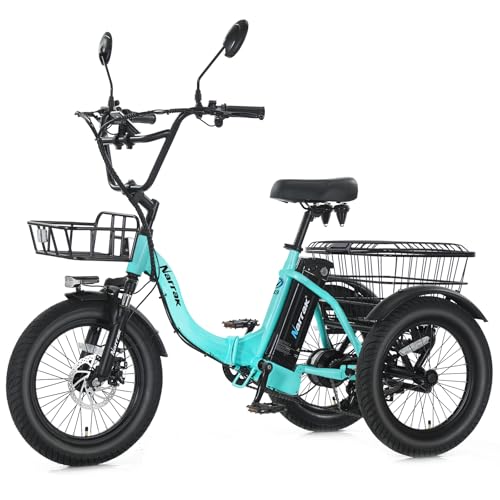
Class 2 — pedal-assist + throttle to 20 mph
Class 2 · 16 mph · Score 7.1
Free 30-day returns via Amazon
Other legal picks for Georgia


Street-legal e-bikes you can buy in Georgia (2026)
Each fits a class Georgia treats as a bicycle, so it needs no registration or licence to ride.
| E-bike | Buy | Class | Speed |
|---|---|---|---|
| NARRAK Folding Trike 350 | Check price at Amazon | Class 2 | 16 mph |
| TST City Commuter | Check price at Amazon | Class 2 | 20 mph |
| Hoverfly OUREA | Check price at Amazon | Class 2 | 20 mph |
What are the e-bike rules in Georgia?
Sourced from the Georgia statute and verified against the PeopleForBikes State Law Tracker.
Check your setup
Is your e-bike legal in Georgia?
Your match
NARRAK
NARRAK Folding Trike 350
Permitted on roads, bike lanes, and bike paths in Georgia.
Our score 7.1/10
Our top class-legal pick for Georgia, street-legal to ride today.
Free 30-day returns via Amazon
The 30-second answer
E-bikes are legal in Georgia under OCGA §40-6-300, which adopts the federal Class 1/2/3 framework. The statute was enacted by HB 454 (2019), signed by Governor Brian Kemp, effective 1 July 2019. Motor power cap: not more than 750 W — the federal CPSC standard.
The practical rules: no driver license, no registration, no insurance for any compliant e-bike. Class 1 and Class 2 are usable at any age. Class 3 requires operators to be 15+ and all Class 3 operators + passengers must wear a helmet regardless of age (PeopleForBikes Georgia handout). Class 3 is banned from bike paths and shared-use paths by state default — local authorities and state agencies with jurisdiction may permit it specifically.
The full Georgia rules, section by section. Tap any section to read it.
Quick reference
Quick reference
| Spec | Georgia rule |
|---|---|
| Framework | Federal Class 1/2/3 (adopted 1 July 2019 via HB 454) |
| Definition statute | OCGA §40-6-300 |
| Motor power cap | ≤750 W (federal CPSC standard) |
| Class 1 (pedal-assist, ≤20 mph) | ✅ Legal at any age |
| Class 2 (throttle, ≤20 mph) | ✅ Legal at any age |
| Class 3 (pedal-assist, ≤28 mph) | ✅ Legal — operator 15+ |
| Driver license | Not required for compliant e-bikes |
| Registration | Not required |
| Insurance | Not required |
| Minimum age (Class 1 + 2) | None statewide |
| Minimum age (Class 3) | 15 |
| Class 3 helmet | Required for any operator OR passenger, regardless of age |
| Class 1 + 2 helmet | Under 16 (general bicycle rule) |
| Class 3 on bike paths | Banned by state default — unless within/adjacent to a roadway, or specifically permitted by the local authority or state agency with jurisdiction |
| Sidewalk operation | Regulated by city ordinance (Atlanta, Savannah, and others restrict in business districts) |
All classes cap motor power at 750 W in Georgia. The all-rider Class 3 helmet rule is one of the strictest in the US.
The three-class system in Georgia
The three-class system in Georgia
Georgia is among the earliest US states to adopt the federal three-class framework. The legislature passed HB 454 in the 2019 session and Governor Brian Kemp signed it; the statute took effect 1 July 2019. The definition lives at OCGA §40-6-300 and uses the phrase "electric assisted bicycle" rather than the more common "electric bicycle".
Per the PeopleForBikes Georgia handout, Georgia designates three classes of electric bicycles, matching the federal Class 1/2/3 model:
Class 1 — pedal-assist only, 20 mph cutoff
Per the PFB handout: "Bicycle equipped with a motor that provides assistance only when the rider is pedaling, and that ceases to provide assistance when the electric bicycles reaches 20 mph." The motor engages only when the rider is pedaling and ceases assistance at 20 mph. No throttle.
Class 1 is the most universally permitted class in Georgia — every road and bike lane that allows bicycles allows Class 1.
Class 2 — pedal-assist plus throttle, 20 mph cutoff
Per the PFB handout: "Bicycle equipped with a throttle-actuated motor, that ceases to provide assistance when the electric bicycle reaches 20 mph." Adds a throttle so the bike can move without pedaling. Same 20 mph motor cap.
Class 2 is allowed on every road and bike lane in Georgia. Multi-use path access varies by trail operator — check posted signage at the BeltLine, Silver Comet, and PATH Foundation trails before riding.
Class 3 — pedal-assist only, 28 mph cutoff
Per the PFB handout: "Bicycle equipped with a motor that provides assistance only when the rider is pedaling, and that ceases to provide assistance when the electric bicycle reaches 28 mph." No throttle. Class 3 carries Georgia's strictest e-bike rules:
- Minimum age 15 to operate (a person under 15 may ride as a passenger)
- Helmet required for any operator OR passenger, regardless of age
- Banned from bike paths and shared-use paths by state default — unless the path is within or adjacent to a highway/roadway, or the local authority or state agency with jurisdiction specifically permits it
The all-rider Class 3 helmet rule is one of the strictest in the country.
Where can each class ride in Georgia?
Where can each class ride in Georgia?
Can you ride on the road?
All three classes are allowed on every public road in Georgia. There is no class restriction on roadways.
Class II bike lanes (painted lanes within a roadway)
All three classes are allowed.
Class I bike paths and shared-use paths
Per the PFB Georgia handout: "Class 3 electric bicycles are not allowed on a bicycle path or shared use path unless it is within or adjacent to a highway or roadway, or they are specifically allowed by the local authority or state agency with jurisdiction."
Class 1 and Class 2 are allowed on most paved Georgia multi-use paths. Class 3 is banned by state default — only permitted where (a) the path is within or adjacent to a roadway, or (b) a local authority has specifically opened the path to Class 3 by ordinance. Most major Georgia multi-use paths default to a Class-3 restriction.
Can you ride an e-bike on the sidewalk?
No statewide e-bike sidewalk rule. Most major Georgia cities have municipal sidewalk restrictions that apply to all bicycles, e-bikes included. Atlanta, Savannah, and Augusta each prohibit sidewalk riding in their downtown commercial districts.
Mountain bike trails
The PeopleForBikes Georgia handout notes that "The Georgia Department of Natural Resources does not currently have an eMTB policy" — contact the DNR for current status. On USFS-managed land (Chattahoochee National Forest, Oconee National Forest), eMTBs are considered motorized vehicles by US Forest Service policy and have access to motorized trails only. Contact the USFS Southern Regional Office for the specific motorized-trail map.
IMBA-affiliated trail networks at Mulberry Gap, Yonah, and Bear Creek follow the same federal motorized-vehicle defaults.
Atlanta BeltLine + Silver Comet + PATH Foundation
Atlanta BeltLine + Silver Comet + PATH Foundation
The biggest local-rule layer in Georgia for e-bikes is the metro Atlanta trail network.
Atlanta BeltLine — the fastest-growing urban trail in the US, ~22 miles when complete (currently ~12 miles paved). High pedestrian density. Class 1 and Class 2 use is common; Class 3 access is restricted under the state-default OCGA rule (banned on shared-use paths unless within/adjacent to a roadway or specifically permitted). Check the Atlanta BeltLine trail policies and posted signage for current speed limits and any class-specific carve-outs before riding.
Silver Comet Trail — Georgia's longest paved rail-trail (~61 miles from Smyrna to the Alabama line, connecting to Chief Ladiga for an additional 33 miles). Same state-default Class 3 restriction applies. Class 1 and Class 2 are generally permitted; verify with posted signage and the PATH Foundation.
PATH Foundation network — 300+ miles of paved multi-use trails across metro Atlanta (Stone Mountain Trail, South Peachtree Creek Trail, Lionel Hampton Beecher Trail, and more). Same state-default Class 3 restriction applies — check posted signage at the specific trail.
The pattern: under OCGA, Class 3 is banned on these paths unless the path operator has specifically permitted it. None of the major Atlanta-metro path operators have issued a Class 3 carve-out as of mid-2026, so Class 3 in Georgia is effectively roads-and-bike-lanes only.
Georgia State Parks
Georgia State Parks
Georgia State Parks are administered by the Georgia DNR State Parks Division. The PeopleForBikes Georgia handout notes that the GA DNR does not currently have an eMTB policy — contact the department for the most up-to-date guidance.
General policy:
- Roadways within state parks: all three classes typically allowed.
- Paved multi-use trails inside state parks: Class 1 and Class 2 generally permitted; Class 3 subject to the state-default path restriction unless the specific park has opted in.
- Backcountry / singletrack trails: mostly closed to e-bikes unless the land manager has specifically opened them.
Verify each park's current posted policy before riding.
National Park Service land in Georgia
National Park Service land in Georgia
NPS Order 3376 + 36 CFR §4.30(i) allows e-bikes only where regular bicycles are allowed AND only on routes the park superintendent has specifically opened to e-bike use.
- Chattahoochee River National Recreation Area — paved multi-use trails (the Cochran Shoals trail network) allow Class 1 and Class 2 by general policy; verify the current superintendent's compendium.
- Cumberland Island National Seashore — main road only; backcountry trails closed to e-bikes.
- Kennesaw Mountain National Battlefield Park — paved roads allowed; trails are pedestrian-only.
- Ocmulgee Mounds National Historical Park — paved roads only.
Always check the park superintendent's most recent compendium for any park-specific e-bike rules before riding.
Do you need a helmet, license, or registration in Georgia?
Do you need a helmet, license, or registration in Georgia?
Do you need a helmet?
- Class 3: Any operator or passenger on a Class 3 electric bicycle must wear a helmet, regardless of age (per the PeopleForBikes Georgia handout). This is one of the strictest Class 3 helmet rules in the US — comparable to California's.
- Class 1 + Class 2: Helmet required for any cyclist under 16 under the general bicycle helmet rule (OCGA §40-6-296).
- Some Georgia cities have additional helmet rules — verify with the local municipal code before riding without one.
How old do you have to be?
- Class 1 and Class 2: no statewide minimum age. (Local rules in Atlanta and Savannah's downtown core may add age restrictions for sidewalk use.)
- Class 3: 15+ minimum under OCGA §40-6-300 — a person under 15 may ride a Class 3 e-bike as a passenger but cannot operate one.
Do you need a license, insurance, or registration?
None of these are required to ride a compliant e-bike in Georgia. The OCGA explicitly treats electric assisted bicycles as bicycles for purposes of vehicle registration, licensing, and insurance — "Electric bicycles are regulated like bicycles. The same rules of the road apply to both electric bicycles and human-powered bicycles. Electric bicycles are not subject to the registration, licensing, or insurance requirements that apply to motor vehicles." (PeopleForBikes Georgia handout)
A bike modified to exceed 28 mph pedal-assist or 750 W rated power falls out of OCGA §40-6-300 and is reclassified as a moped or motor-driven cycle under Georgia's motor-vehicle code — which DOES require a driver license, registration, and insurance.
Do local rules differ within Georgia?
Do local rules differ within Georgia?
Atlanta
The City of Atlanta defers to the BeltLine and PATH Foundation policies on multi-use paths. Sidewalk riding is prohibited in the central business district under Atlanta city code — this applies to all bicycles, e-bikes included.
Savannah
Savannah's historic district has its own sidewalk + bike-lane rules under the city's bicycle ordinance. Tybee Island (a separate city) restricts e-bikes on the beach itself but allows them on the paved beach-side path and on city streets.
Decatur and the PATH Foundation network
The PATH Foundation maintains over 300 miles of paved multi-use trails across metro Atlanta. PATH policy follows the state-default Class 3 restriction; Class 1 and Class 2 are generally permitted at posted cycling speeds.
Athens (UGA campus)
Athens-Clarke County maintains the Firefly Trail and the UGA campus has its own e-bike rules — Class 1 and 2 allowed on campus bike lanes; e-bikes not permitted on pedestrian-only walkways.
Tybee Island and the Georgia coast
Tybee Island bans motorized vehicles on the beach itself; e-bikes are allowed on paved beach paths and city streets at posted speeds. Adjacent South Carolina cities (Hilton Head, Bluffton) follow similar coastal beach rules — verify with local ordinance if traveling cross-border.
Is Georgia changing its e-bike laws?
Is Georgia changing its e-bike laws?
Georgia has not materially amended OCGA §40-6-300 since the 2019 HB 454 adoption — the three-class framework remains as enacted in 2019.
For current bill status, check the Georgia General Assembly site and search OCGA 40-6-300 or "electric assisted bicycle". The PeopleForBikes Georgia handout is the canonical secondary source — verify against the actual OCGA text directly via the Georgia General Assembly statutes site when researching specific provisions.
What are the penalties for breaking e-bike laws in Georgia?
What are the penalties for breaking e-bike laws in Georgia?
Most e-bike violations in Georgia are infractions, not criminal offenses, and are handled at the municipal/county level:
- Class 3 helmet violation: subject to municipal/county fines.
- Under-15 operating a Class 3 e-bike: infraction under OCGA §40-6-300 — enforcement is municipal-discretion.
- Sidewalk riding in restricted areas (Atlanta CBD, Savannah historic district): subject to municipal fines.
- Operating an out-of-compliance bike (modified above 28 mph pedal-assist or 750 W rated motor) without a moped plate and driver license: treated as unlicensed motor-vehicle operation — much steeper penalties up to $1,000 + possible vehicle impound.
Enforcement is shared by municipal police (cities), county sheriffs (unincorporated areas), state troopers (state highways), DNR rangers (state parks), and federal LEOs (NPS / USFS land).
What special e-bike rules apply in Georgia?
What special e-bike rules apply in Georgia?
Sur-Ron, Talaria, and other "e-moto" bikes
These are NOT e-bikes under Georgia law. Sur-Ron, Talaria, and similar off-road electric motorcycles exceed the 750 W rated motor cap (most are 3,000-15,000 W peak) and exceed the 28 mph pedal-assist Class 3 ceiling, so they fall out of OCGA §40-6-300 entirely.
Under Georgia law, these are classified as mopeds or motorcycles depending on power. Operation on public roads requires DMV registration, license plates, and a driver license. They cannot be street-legalized without meeting full motor-vehicle equipment requirements.
Is it legal to modify a Class 2 to go faster?
If you de-restrict a Class 2 e-bike to exceed 20 mph throttle or 28 mph pedal-assist, the bike falls out of OCGA §40-6-300 and is reclassified as a moped under Georgia's motor-vehicle code. That requires:
- DMV registration and a moped plate
- A driver license to operate
- Motor-vehicle insurance
- Lights, mirrors, and a VIN
Modification also typically voids the manufacturer warranty and any related liability coverage.
Can a 14-year-old ride a Class 2 e-bike in Georgia?
Statewide: yes. Georgia has no statewide minimum age for Class 1 or Class 2 e-bikes.
On Class 3: no — operators must be 15 or older. A 14-year-old may ride a Class 3 e-bike as a passenger only.
Locally: subject to municipal ordinance. Atlanta and Savannah's sidewalk-riding restrictions apply to all bicycles including those operated by under-16s.
What about other states?
What about other states?
Georgia's three-class framework is shared by most US states. The biggest variations across the three-class states are whether Class 3 is permitted on bike paths and the minimum operating age for Class 3. The PeopleForBikes State Law Tracker is the authoritative source for the current per-state count.
For a quick state-by-state check, use the e-bike legality checker — it includes all 50 US states plus the UK and EU equivalents.
For the federal-framework explanation, read the foundational guide: Class 1, 2, 3 e-bikes explained.
Bottom line
Bottom line
Georgia is a clean three-tier state with one of the strictest Class 3 helmet rules in the US: any operator or passenger on a Class 3 e-bike must wear a helmet regardless of age. Combined with the 15+ Class 3 operator minimum and the state-default Class 3 path restriction, Class 3 is the most-regulated class in Georgia.
Stay compliant: 15+ to operate Class 3, helmet on Class 3 always (operator AND passenger), keep your bike inside the 750 W / 28 mph envelope, and check Atlanta BeltLine + Silver Comet + PATH Foundation posted rules before riding the major metro corridors. Class 3 is roads-and-lanes only by state default — if you want full path access, drop to Class 1 or Class 2.
Georgia rules sourced from the PeopleForBikes Georgia handout. OCGA §40-6-300 lives at law.justia.com. Atlanta BeltLine policy from beltline.org. State park rules from gastateparks.org. PATH Foundation network from pathfoundation.org.
E-bikes that fit Georgia's rules
Filtered from our review catalog by class eligibility under Georgia statute. Spec-matched, not popularity-ranked.
- Class 2
 Amazon
NARRAK
NARRAK Folding Trike 350
Class 2 — pedal-assist + throttle to 20 mph
Permitted on roads, bike lanes, and bike paths in Georgia.350 W · 16 mph · Score 7.1
Read the review - Class 2AmazonSave $40
TST
TST City Commuter
Class 2 — pedal-assist + throttle to 20 mph
Permitted on roads, bike lanes, and bike paths in Georgia.750 W · 20 mph · Score 8.0
Read the review - Class 2Amazon
Hoverfly
Hoverfly OUREA
Class 2 — pedal-assist + throttle to 20 mph
Permitted on roads, bike lanes, and bike paths in Georgia.750 W · 20 mph · Score 7.4
Read the review
Eligibility is class-based: picks shown here are legal to own and operate on roads in Georgia. Local jurisdictions (state parks, beach paths, individual cities) may add further restrictions; see the body above for the specifics.
Recent Georgia e-bike law coverage
News-form posts that reference Georgia's statutes or covered a change affecting Georgia riders.
Frequently asked questions
Are e-bikes legal in Georgia?
Yes. E-bikes are legal in Georgia under OCGA §40-6-300, which divides them into Class 1, Class 2, and Class 3 — adopted by HB 454 (2019), effective 1 July 2019. All three classes are street-legal statewide. Bikes that exceed Georgia's 750 W or 28 mph envelope are classified as mopeds and require a driver license + DMV registration.
Do I need a license or registration to ride an e-bike in Georgia?
No. Georgia treats compliant e-bikes as bicycles, not motor vehicles. You do not need a driver license, motor-vehicle registration, license plate, or insurance — as long as the bike meets the OCGA §40-6-300 definition (≤750 W rated motor, ≤28 mph pedal-assist).
Do I have to wear a helmet on a Class 3 e-bike in Georgia?
Yes — for any operator OR passenger, regardless of age. Per the PeopleForBikes Georgia handout: "Helmets must be worn by any person who operates or rides as a passenger on a Class 3 electric bicycle." This is one of the strictest Class 3 helmet rules in the US — comparable to California's.
What's the minimum age for a Class 3 e-bike in Georgia?
15 years old to operate. Per OCGA §40-6-300, you must be 15 or older to operate a Class 3 electric bicycle. A person under 15 may ride a Class 3 e-bike as a passenger but cannot operate one. Class 1 and Class 2 have no statewide minimum age.
Are Class 3 e-bikes allowed on bike paths in Georgia?
Not by state default. Per the PeopleForBikes Georgia handout, "Class 3 electric bicycles are not allowed on a bicycle path or shared use path unless it is within or adjacent to a highway or roadway, or they are specifically allowed by the local authority or state agency with jurisdiction." Class 1 and Class 2 are generally allowed. Local authorities can grant Class 3 carve-outs but few have.
Can I ride my Class 3 e-bike on the Atlanta BeltLine?
Class 3 is restricted on the Atlanta BeltLine under the state-default OCGA rule, which bans Class 3 on bicycle paths and shared-use paths unless within/adjacent to a roadway or specifically permitted by the local authority. Class 1 and Class 2 are generally permitted at posted cycling speeds. Verify with the BeltLine's current trail policies and posted signage before riding.
Are e-bikes allowed on the Silver Comet Trail?
Class 1 and Class 2 are generally allowed on the Silver Comet Trail. Class 3 is restricted under the state-default OCGA rule (banned from shared-use paths unless specifically permitted by the trail operator). Verify with posted signage before riding.
Are e-bikes allowed in Georgia state parks?
Per the PeopleForBikes Georgia handout, the Georgia Department of Natural Resources does not currently have a formal eMTB policy. Roadways within state parks generally allow all three classes; paved multi-use trails follow the state-default Class 3 restriction (Class 1 and Class 2 generally permitted, Class 3 only where the park has specifically opted in). Singletrack trails are mostly closed to e-bikes. Check the specific park's posted policy before riding.
How old do you have to be to ride an e-bike in Georgia?
For Class 1 and Class 2, there is no statewide minimum age. For Class 3 e-bikes, the minimum operating age is 15 under OCGA §40-6-300. A person under 15 may ride a Class 3 e-bike as a passenger but cannot operate one. Class 1 + Class 2 helmet rules under 16 still apply via the general bicycle helmet rule.
Are Sur-Ron and Talaria e-motos legal on Georgia roads?
No. Sur-Ron, Talaria, and similar high-powered off-road electric motorcycles exceed Georgia's 750 W rated motor cap and the 28 mph Class 3 pedal-assist ceiling, so they are NOT e-bikes under OCGA §40-6-300. They are classified as mopeds or motorcycles depending on power and require DMV registration, license plates, and a driver license to operate on public roads.
Is my 28 mph throttle e-bike legal in GA?
No. The federal Class 3 definition (and Georgia's adoption of it) is pedal-assist only to 28 mph — no throttle above 20 mph. A 28 mph throttle-equipped bike falls out of OCGA §40-6-300 and is classified as a moped, requiring DMV registration and a driver license.
What's the fine for an e-bike violation in Georgia?
Most e-bike violations are infractions handled at the municipal level. Class 3 helmet violation and under-15 Class 3 operation violations: typically $25-100 base fine, enforcement-discretion. Sidewalk riding in restricted areas: $25-100. Operating a modified (non-compliant) bike without a moped plate and driver license: treated as unlicensed motor-vehicle operation — fines up to $1,000 plus possible vehicle impound.
How do other states compare?
Compare Georgia's rules with states that share a similar framework.
Common e-bike law questions
The national answer to the questions Georgia riders ask most, covering every US state, side by side.
Cite or link this page
Found this useful? Link to it.
This guide is free to reference. If it helped you, a link helps more riders find accurate, up-to-date law info, and we keep it current (last reviewed May 24, 2026). Licensed CC BY 4.0. Reuse the data with attribution.
<a href="https://ebikeoracle.com/laws/georgia">Georgia E-Bike Laws 2026: Legal, No License — Ebike Oracle</a>
Ebike Oracle. "Georgia E-Bike Laws 2026: Legal, No License." Ebike Oracle, 2026, https://ebikeoracle.com/laws/georgia.