Kentucky E-Bike Laws 2026: No Class System
Are e-bikes legal in Kentucky?
Kentucky has not enacted a three-class e-bike statute. There is no KRS section that defines "Class 1", "Class 2", or "Class 3" — and no statewide e-bike helmet, age, license, registration, or insurance requirement. The Kentucky Transportation Cabinet's bicycle-safety regulation, 601 KAR 14:020 (issued under the standards-setting authority in KRS 189.287), defines a bicycle as "a device with an attached seat propelled primarily by human power" — silent on electric-assist motors. The PeopleForBikes Kentucky handout confirms the practical treatment: e-bikes are handled as bicycles. The federal CPSC definition (15 U.S.C. §2085 — under 750 W, working pedals, motor-only top speed under 20 mph) is the consumer-product baseline. The rules that matter most in practice are local: Louisville Metro Code §74.02 explicitly governs "bicycles and electric bicycles", The Parklands of Floyds Fork restricts trails to Class I with "persons over the age of 16", and Lexington bars cycling on business-district sidewalks. KRS 189.289 is about electric low-speed scooters — not e-bikes — and is often misquoted as if it were a Class 3 rule.
Legal to ride in Kentucky: our top class-legal pick
As an Amazon Associate I earn from qualifying purchases. Ebike Oracle may also earn a commission on links to other retailers. Full disclosure.

Class 2 — pedal-assist + throttle to 20 mph
Class 2 · 20 mph · Score 8.0
Free 30-day returns via Amazon
Other legal picks for Kentucky

Street-legal e-bikes you can buy in Kentucky (2026)
Each fits a class Kentucky treats as a bicycle, so it needs no registration or licence to ride.
| E-bike | Buy | Class | Speed |
|---|---|---|---|
| TST City Commuter | Check price at Amazon | Class 2 | 20 mph |
| Funhang Fat 26 | Check price at Amazon | Class 2 | 20 mph |
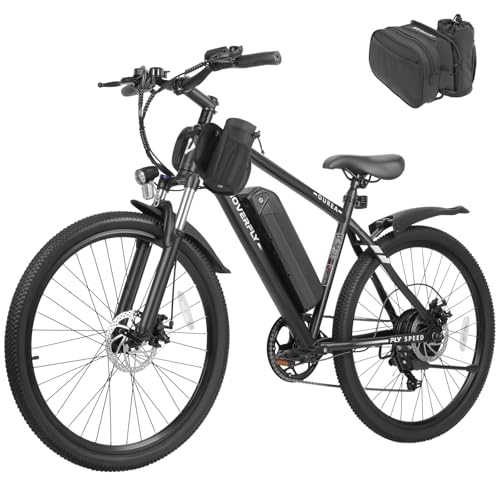
| Hoverfly OUREA | Check price at Amazon | Class 2 | 20 mph |
What are the e-bike rules in Kentucky?
Sourced from the Kentucky statute and verified against the PeopleForBikes State Law Tracker.
Check your setup
Is your e-bike legal in Kentucky?
Your match
TST
TST City Commuter
Permitted on roads, bike lanes, and bike paths in Kentucky.
Our score 8.0/10
Our top class-legal pick for Kentucky, street-legal to ride today.
Read our full review firstThe 30-second answer
Kentucky does not have a statewide three-class e-bike statute. No KRS section defines "Class 1," "Class 2," or "Class 3," and there is no statewide e-bike-specific helmet, age, license, registration, or insurance rule. The Kentucky Transportation Cabinet's bicycle-safety regulation 601 KAR 14:020 — issued under the standards-setting authority in KRS 189.287 — defines a bicycle as "a device with an attached seat propelled primarily by human power upon which a person rides astride or upon, regardless of the number and size of the wheels in contact with the ground." The regulation is silent on electric-assist motors, and Kentucky has no separate e-bike definition anywhere in state law. E-bikes are handled as bicycles by practical application of the "propelled primarily by human power" language (the rider's pedaling is the primary motive force) — confirmed by the PeopleForBikes Kentucky handout.
This is unusual. As of 2026, 44 US states have adopted the federal three-class framework. Kentucky is in the small group (with South Carolina, North Carolina, and Alaska) that has not. The PeopleForBikes Kentucky handout confirms this: "Helmets are not required and there is no age minimum for e-bike use."
The rules that govern Kentucky e-bike riding in practice are local:
- Louisville Metro Code §74.02 — an explicit "Operation of Bicycles and Electric Bicycles" ordinance: anyone 11 or older is banned from sidewalks across all of Louisville/Jefferson County Metro, with an additional all-ages ban inside the Downtown Form District; e-bikes expressly named; police, EMS, fire, and security personnel exempted on duty; violations carry a fine of up to $50.
- The Parklands of Floyds Fork (Louisville's Olmsted-Conservancy park system) — Class I only on park trails, "persons over the age of 16", Class II and Class III prohibited.
- Lexington — no bicycles on business-district sidewalks.
The full Kentucky rules, section by section. Tap any section to read it.
Quick reference
Quick reference
| Spec | Kentucky rule |
|---|---|
| Statewide 3-class statute | No — none enacted |
| Controlling state regulation | 601 KAR 14:020 — defines a bicycle as "propelled primarily by human power", silent on motors; e-bikes handled as bicycles in practice |
| Standards-setting authority | KRS 189.287 |
| Motor power cap | No state cap — federal CPSC 750 W applies as the consumer-product definition (15 U.S.C. §2085) |
| Driver license | Not required for bicycles or e-bikes |
| Registration | Not required |
| Insurance | Not required |
| Statewide helmet rule | None |
| Statewide minimum age | None |
| Where to ride | Roads, bike lanes, multi-use paths; sidewalks unless prohibited by local ordinance |
| Louisville sidewalks | 11+ banned citywide; all ages banned in the Downtown Form District (Metro Code §74.02) — $50 fine; police/EMS/fire/security exempted |
| The Parklands trails | Class I only, "persons over the age of 16" (park rules) |
| Equipment | Front light visible 500 ft (illuminating 50 ft ahead), both a rear reflector visible 100 ft and a flashing rear red light visible 500 ft, working brakes that stop the bike within 15 ft from 10 mph on dry pavement — 601 KAR 14:020 |
Two things to flag immediately. First, KRS 189.289 is the electric-low-speed-scooter statute (the 16+ scooter rule), not an e-bike rule. It is regularly miscited in retailer blog posts as if it were a Class 3 age requirement — it is not. Second, every Kentucky e-bike question ultimately has to be answered locally: the statewide picture is "you're a bicycle, ride accordingly," and the consequential rules are in city ordinances and parks-system policies.
What Kentucky law actually says about e-bikes
What Kentucky law actually says about e-bikes
Kentucky's traffic chapter is KRS Chapter 189. It does not define "electric bicycle" anywhere. KRS 189.010 defines "bicycle" by reference to the cabinet's standards. KRS 189.287 gives the Transportation Cabinet authority to promulgate bicycle equipment and safety standards. The cabinet exercised that authority by issuing 601 KAR 14:020, which defines a bicycle in Section 1 as "a device with an attached seat propelled primarily by human power upon which a person rides astride or upon, regardless of the number and size of the wheels in contact with the ground." The regulation makes no mention of electric-assist motors, e-bikes, or motors of any kind — there is no express statutory or regulatory classification of e-bikes in Kentucky.
The practical result: e-bikes are handled as bicycles in Kentucky, but by definitional fit rather than express inclusion. An e-bike with operable pedals satisfies the regulation's "propelled primarily by human power" requirement (the rider's pedaling is the primary motive force, with the motor assisting), so it falls within the bicycle category and is governed by the general bicycle rules — equipment (lights, reflectors, brakes), right-of-way, prohibited maneuvers. The PeopleForBikes Kentucky handout confirms this practical treatment.
Why some sources mention "Class 1/2/3"
Some retailers, blogs, and even park operators talk about "Class 1," "Class 2," and "Class 3" in Kentucky. This is the federal CPSC consumer-product classification (15 U.S.C. §2085 + industry convention), not Kentucky state law. The Class 1/2/3 labels are visible on the bike's sticker because federal law requires the labeling — but Kentucky has not adopted them as a regulatory framework.
Where the class label does matter in Kentucky is in private trail policies (e.g., The Parklands of Floyds Fork limits trails to Class 1) — those policies use the federal label to define their access rule. Riders should treat "Class 1 only" signage at a trailhead as binding, even though the state statute is silent.
Why "Class 3" is legally ambiguous in Kentucky
A federal CPSC "Class 3" e-bike (pedal-assist up to 28 mph) has a motor-only top speed of 20 mph or less — that is the CPSC ceiling — so it still qualifies as a low-speed electric bicycle under 15 U.S.C. §2085. In Kentucky, a CPSC-compliant Class 3 e-bike with operable pedals fits the 601 KAR 14:020 "propelled primarily by human power" language and is handled as a bicycle in practice. A bike whose motor alone can propel it past 20 mph fails the federal low-speed definition, and arguably fails the "propelled primarily by human power" reading too — likely landing in moped or motor-vehicle territory under KRS 189.010, with registration and license obligations. Because the statewide framework is silent on this distinction, in close cases the Kentucky State Police or local prosecutor would make the call.
Where can you ride an e-bike in Kentucky?
Where can you ride an e-bike in Kentucky?
Can you ride on roads and bike lanes?
Same rules as a regular bicycle. Since e-bikes are handled as bicycles in Kentucky (via the "propelled primarily by human power" reading of 601 KAR 14:020), they have all the rights and duties of a non-motorized bicycle on Kentucky roads and bike lanes under KRS 189.287 and the cabinet's 601 KAR 14:020 regulation.
Can you ride an e-bike on the sidewalk?
Default: allowed unless prohibited by local ordinance. Kentucky has no statewide sidewalk-cycling rule, so the practical answer depends on the city:
- Louisville — under Metro Code §74.02 ("Operation of Bicycles and Electric Bicycles"): "No person 11 years of age or older shall operate a bicycle or an electric bicycle on the sidewalks located within the geographical boundary limits of Louisville/Jefferson County Metro Government" — and "no person, regardless of age, shall operate a bicycle or an electric bicycle on the sidewalks of Louisville Metro within the Downtown Form District." Police, EMS, fire, and security personnel are exempted; violations carry a fine of up to $50.
- Lexington — bicycles prohibited from sidewalks in the business district.
- Smaller cities — most have no specific sidewalk-cycling ordinance; check the municipal code before relying on the statewide default.
Multi-use paths
Permitted on most multi-use paths under the same rules as a regular bicycle. The marquee example is the Louisville Loop — a city-managed paved shared-use trail with a planned final length over 100 miles. The Loop has a 15 mph speed limit posted on the shared-use path, and e-bikes are allowed.
Natural-surface trails
Per land manager — and policy varies sharply even inside a single park system:
- The Parklands of Floyds Fork (Louisville's premier Olmsted park) — "The Parklands authorizes persons over the age of 16 to use 'Class I' electronic-assist bicycles ... on roadways and authorized bike trails throughout The Parklands." Class II and Class III prohibited; Class I subject to the 15 mph Loop/trail speed limit.
- Daniel Boone National Forest (USFS) — e-bikes treated as motor vehicles on non-motorized trails by default; allowed only on routes designated for motor-vehicle use unless a specific exception is posted. Subject to revision under the federal 2019 Bernhardt Order (DOI Order 3376), which steers DOI agencies toward treating e-bikes as non-motorized.
- Mammoth Cave National Park (NPS) — follows the federal DOI policy: e-bikes allowed where regular bicycles are allowed, but the park's Big Hollow Trail is the principal mountain-bike trail and current rules apply.
Always verify with the land manager before riding singletrack or natural-surface trails in Kentucky.
Louisville — the practical center of Kentucky e-bike law
Louisville — the practical center of Kentucky e-bike law
Louisville is where most Kentucky e-bike riding happens and where the consequential rules live.
Louisville Metro Code §74.02 — Operation of Bicycles and Electric Bicycles. The city has an explicit e-bike-aware bicycle ordinance. The key provisions, verbatim:
- "No person 11 years of age or older shall operate a bicycle or an electric bicycle on the sidewalks located within the geographical boundary limits of Louisville/Jefferson County Metro Government." — i.e., the 11+ ban applies citywide, not just downtown.
- "No person, regardless of age, shall operate a bicycle or an electric bicycle on the sidewalks of Louisville Metro within the Downtown Form District." — an additional all-ages ban inside the Downtown Form District (a specific land-use overlay covering the downtown core).
- "Electric bicycle" is expressly named alongside "bicycle" throughout the ordinance.
- Exemption: Louisville Metro Police, EMS, Louisville Fire, suburban fire-protection districts, Emergency Management Agency, the Downtown Management District Clean and Safe Team, and private hospital-security personnel in the Downtown Form District — all while acting within official duties.
- Violations carry a fine of up to $50.
- General right-of-way and traffic rules mirror state bicycle law.
Louisville Loop. Once complete, the Loop will encircle the metro with over 100 miles of paved shared-use trail. The posted speed limit is 15 mph; e-bikes are allowed; motorized vehicles (ATVs, mopeds, motorcycles) are not.
Big Four Bridge. The bicycle-and-pedestrian conversion of the historic Big Four Railroad Bridge across the Ohio River connects the Louisville Waterfront Park with Jeffersonville, Indiana. The bridge is open to cyclists (and e-cyclists) under the Louisville Loop rules.
The Parklands of Floyds Fork. A privately operated, Olmsted-designed 4,000-acre park system on Louisville's southeast side. The park's e-bike policy is verbatim: "The Parklands authorizes persons over the age of 16 to use 'Class I' electronic-assist bicycles — commonly known as 'e-bikes' — on roadways and authorized bike trails throughout The Parklands." Class I is defined by the park as pedal-assist that ceases at 20 mph. Class II (throttle) and Class III (28 mph) bikes are prohibited. Class I bikes are subject to the same rules as human-powered bicycles, including the 15 mph speed limit on the Louisville Loop and park trails. This is a park-policy rule, not state law, but it is binding inside the park.
Lexington local rules
Lexington local rules
Lexington (population ~325,000, home of the University of Kentucky) prohibits bicycling on sidewalks in its business district. Outside the business district, sidewalk cycling defaults to allowed. The 2018 Kentucky Transportation Cabinet Bicycle Laws and Rules booklet is the canonical statewide reference and treats e-bikes under the bicycle framework.
State parks + federal lands
State parks + federal lands
- Kentucky State Parks follow the cabinet's bicycle framework — e-bikes are bicycles for purposes of paved-trail access. Specific park trails may post Class-1-only rules at the trailhead.
- Mammoth Cave National Park (NPS) — follows the federal DOI Order 3376 treating e-bikes the same as non-motorized bikes on non-motorized trails, subject to superintendent discretion.
- Daniel Boone National Forest (USFS) — historically treats e-bikes as motor vehicles on non-motorized trails. Check the district ranger station before riding singletrack.
Do you need a helmet, license, or registration in Kentucky?
Do you need a helmet, license, or registration in Kentucky?
| Topic | Kentucky rule |
|---|---|
| Driver license | Not required for bicycles or e-bikes |
| Registration | Not required |
| Insurance | Not required (liability still exists at common law) |
| Statewide helmet | None — no statewide bicycle or e-bike helmet mandate |
| Statewide minimum age | None — no statewide age requirement |
| Local helmet ordinances | Check Louisville Metro and Lexington-Fayette ordinances |
| Equipment (lights, brakes) | Front light visible 500 ft (illuminating 50 ft ahead), both a rear reflector visible 100 ft and a flashing rear red light visible 500 ft, working brakes that stop the bike within 15 ft from 10 mph on dry pavement (601 KAR 14:020) |
Kentucky's permissive baseline — no helmet, no age, no license, no registration — is why the state ranks among the more rider-friendly e-bike jurisdictions for compliance purposes. The flip side is that the consequential rules are local, and a Louisville commuter or Parklands trail rider has to know the local ordinance to ride legally.
KRS 189.289 is about scooters, not e-bikes
KRS 189.289 is about scooters, not e-bikes
KRS 189.289 sets a 16-and-older operating requirement and a list of equipment rules — for electric low-speed scooters (a standing-rider, ≤20 mph, two- or three-wheeled motorized device), not e-bikes. The statute is commonly miscited in retailer SEO copy as if it were a Kentucky Class 3 age rule. It is not. E-bikes are handled under the general bicycle framework (601 KAR 14:020 + KRS Chapter 189), not by §189.289.
Is Kentucky changing its e-bike laws?
Is Kentucky changing its e-bike laws?
No statewide e-bike-specific bill has been enacted in Kentucky in 2024, 2025, or the 2026 session as of the verification date below. The Transportation Cabinet retains authority to update 601 KAR 14:020 administratively under KRS 189.287. Track the Kentucky General Assembly bill tracker for any e-bike legislation.
Check your setup against Kentucky law
Check your setup against Kentucky law
The rules above are the statewide baseline. Two things decide whether a specific bike is legal for a specific rider: which class it actually is, and how old the rider is.
- E-bike legality checker — enter motor wattage, top assisted speed, throttle and rider age, and get the Kentucky verdict with the statute reference.
- Class 1, 2, 3 e-bikes explained — what the three classes mean and why the label on the frame is the thing states regulate. Most compliance problems are a bike that was never in-class to begin with.
- All 50 states + DC compared — one sortable table: classification tier, Class 3 legality, path access, helmet rule, minimum age, licence and registration.
Sources
Sources
- KRS 189.287 — Bicycle equipment and safety standards authority
- KRS 189.010 — Definitions (including bicycle)
- KRS 189.289 — Electric low-speed scooter rules (NOT e-bikes)
- 601 KAR 14:020 — Bicycle safety regulation (silent on electric-assist motors)
- Kentucky Transportation Cabinet — Bicycle Laws and Rules for Bicycle Travel (2018 booklet)
- PeopleForBikes — State by State Electric Bike Laws (Kentucky)
- Louisville Metro Code §74.02 — Operation of Bicycles and Electric Bicycles
- Louisville Loop — official guide
- The Parklands of Floyds Fork — Park Safety + e-bike rules
- Mammoth Cave National Park — Bicycling
- DOI Order 3376 — federal lands e-bike policy
E-bikes that fit Kentucky's rules
Filtered from our review catalog by class eligibility under Kentucky statute. Spec-matched, not popularity-ranked.
- Class 2
 AmazonSave $30
TST
TST City Commuter
Class 2 — pedal-assist + throttle to 20 mph
Permitted on roads, bike lanes, and bike paths in Kentucky.750 W · 20 mph · Score 8.0
Read the review - Class 2Amazon
Funhang
Funhang Fat 26
Class 2 — pedal-assist + throttle to 20 mph
Permitted on roads, bike lanes, and bike paths in Kentucky.500 W · 20 mph · Score 7.4
Read the review - Class 2AmazonSave $50
Hoverfly
Hoverfly OUREA
Class 2 — pedal-assist + throttle to 20 mph
Permitted on roads, bike lanes, and bike paths in Kentucky.750 W · 20 mph · Score 7.4
Read the review
Eligibility is class-based: picks shown here are legal to own and operate on roads in Kentucky. Local jurisdictions (state parks, beach paths, individual cities) may add further restrictions; see the body above for the specifics.
Recent Kentucky e-bike law coverage
News-form posts that reference Kentucky's statutes or covered a change affecting Kentucky riders.
Frequently asked questions
Are e-bikes legal in Kentucky?
Yes — but the framework is unusual. Kentucky has no e-bike-specific statute or regulation. The Transportation Cabinet's bicycle regulation 601 KAR 14:020 (issued under KRS 189.287) defines a bicycle as "a device with an attached seat propelled primarily by human power" — silent on electric-assist motors. E-bikes with operable pedals fit that definition because the rider's pedaling is the primary motive force, and the PeopleForBikes Kentucky handout confirms the practical treatment. There is no Kentucky statute that defines "Class 1," "Class 2," or "Class 3" — the federal CPSC consumer-product definition (15 U.S.C. §2085 — under 750 W, operable pedals, motor-only top speed under 20 mph) is the baseline.
Do you need a license or registration for an e-bike in Kentucky?
No. Because e-bikes are handled as bicycles in Kentucky (they fit the "propelled primarily by human power" language in 601 KAR 14:020), no driver license, vehicle registration, or insurance is required. This is confirmed by the PeopleForBikes Kentucky handout.
Does Kentucky have a Class 1/2/3 system for e-bikes?
No statewide system. KRS Chapter 189 has no e-bike definitions or class distinctions, and there is no separate Kentucky e-bike statute. Some retailers and parks reference "Class 1," "Class 2," "Class 3" — that is the federal CPSC classification that the bike's sticker carries, not Kentucky state law. The classification matters in practice only where a local rule (e.g., The Parklands of Floyds Fork — Class 1 only) uses the federal labels to define access.
Are helmets required on e-bikes in Kentucky?
No statewide helmet law. The PeopleForBikes Kentucky handout explicitly states: "Helmets are not required and there is no age minimum for e-bike use." Local ordinances and parks may impose helmet rules — verify with the city or park you'll ride in.
Can I ride an e-bike on the Louisville Loop?
Yes. The Louisville Loop — Louisville's 100+ mile metro-encircling paved shared-use trail — allows e-bikes under the same rules as regular bicycles, with a 15 mph posted speed limit on the path. Motorized vehicles like ATVs, mopeds, and motorcycles are prohibited; e-bikes are treated as bicycles for trail-access purposes.
Can I ride an e-bike at The Parklands of Floyds Fork?
Only a Class I e-bike, and only if you're over 16. The Parklands of Floyds Fork — the privately operated Olmsted-designed park system on Louisville's southeast side — limits park trails to "persons over the age of 16" using "Class I" electronic-assist bicycles (defined by the park as pedal-assist that ceases at 20 mph). Class II (throttle) and Class III (28 mph) e-bikes are prohibited. Class I bikes are subject to the 15 mph speed limit on the Louisville Loop and park trails. This is a park-policy rule, not state law, but it is binding inside the park.
Can I ride an e-bike on the sidewalk in Louisville?
Mostly no. Louisville Metro Code §74.02 — the city's explicit "Operation of Bicycles and Electric Bicycles" ordinance — bans anyone 11 or older from sidewalks anywhere in Louisville/Jefferson County Metro (citywide, not just downtown), with an additional all-ages ban inside the Downtown Form District (the downtown core). The ordinance expressly names "electric bicycle" alongside "bicycle"; police, EMS, fire, and security personnel are exempted; violations carry a fine of up to $50. Outside Louisville, sidewalk rules are set by the local municipality.
What is the motor power limit for e-bikes in Kentucky?
Kentucky has no state cap. The federal consumer-product definition at 15 U.S.C. §2085 — less than 750 watts, operable pedals, motor-only top speed under 20 mph — applies as the federal baseline a Kentucky e-bike must meet to be sold as a low-speed electric bicycle. A bike whose motor alone can exceed 20 mph falls outside that federal definition and would be regulated as a moped or motor vehicle under KRS 189.010, with license and registration obligations.
How do other states compare?
Compare Kentucky's rules with states that share a similar framework.
Common e-bike law questions
The national answer to the questions Kentucky riders ask most, covering every US state, side by side.
Cite or link this page
Found this useful? Link to it.
This guide is free to reference. If it helped you, a link helps more riders find accurate, up-to-date law info, and we keep it current (last reviewed May 29, 2026). Licensed CC BY 4.0. Reuse the data with attribution.
<a href="https://ebikeoracle.com/laws/kentucky">Kentucky E-Bike Laws 2026: No Class System — Ebike Oracle</a>
Ebike Oracle. "Kentucky E-Bike Laws 2026: No Class System." Ebike Oracle, 2026, https://ebikeoracle.com/laws/kentucky.