Montana E-Bike Laws 2026: No 3-Class, Trail Bans
Are e-bikes legal in Montana?
Montana is one of a small handful of US states that has NOT adopted the federal Class 1/2/3 e-bike framework. The definition at MCA §61-8-102(7) is a single-tier "electrically assisted bicycle" — a two-tandem-wheeled vehicle with an electric motor that cannot propel a 170-pound rider faster than 20 mph on a paved, level surface. There is no Class 1, no Class 2, no Class 3 — and no separate treatment for throttle vs pedal-assist. The 2025 attempt to fix that, SB 387 (Sen. Greg Hertz, R-Polson), passed Senate 2nd reading 29-21 on 5 March 2025, FAILED 3rd reading 24-26 on 6 March 2025, missed the general transmittal deadline of 12 May, and died in process on 23 May 2025. As a "bicycle" under §61-8-102(2), an e-bike meeting the single-tier definition needs no driver license, no DMV registration, no insurance, and no statewide helmet (only Billings imposes an under-16 helmet ordinance). The hidden trap is that Montana DNRC classifies ALL e-bikes as motorized vehicles on state trust lands — they are restricted to signed-open roads, not trails — even though they're bicycles under §61-8-102 for street-law purposes. Glacier National Park and Yellowstone (via West Yellowstone) follow the federal NPS rule: motor under 750 W, pedal-required engagement, allowed where bicycles are allowed.
Legal to ride in Montana: our top class-legal pick
As an Amazon Associate I earn from qualifying purchases. Ebike Oracle may also earn a commission on links to other retailers. Full disclosure.

Class 2 — pedal-assist + throttle to 20 mph
Class 2 · 20 mph · Score 8.0
Free 30-day returns via Amazon
Other legal picks for Montana

Street-legal e-bikes you can buy in Montana (2026)
Each fits a class Montana treats as a bicycle, so it needs no registration or licence to ride.
| E-bike | Buy | Class | Speed |
|---|---|---|---|
| TST City Commuter | Check price at Amazon | Class 2 | 20 mph |
| Funhang Fat 26 | Check price at Amazon | Class 2 | 20 mph |
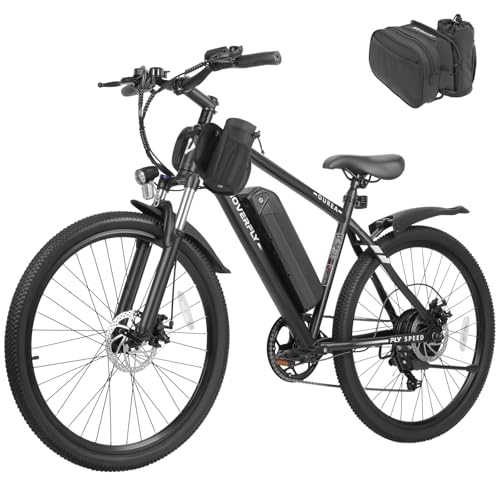
| Hoverfly OUREA | Check price at Amazon | Class 2 | 20 mph |
What are the e-bike rules in Montana?
Sourced from the Montana statute and verified against the PeopleForBikes State Law Tracker.
Check your setup
Is your e-bike legal in Montana?
Your match
TST
TST City Commuter
Permitted on roads, bike lanes, and bike paths in Montana.
Our score 8.0/10
Our top class-legal pick for Montana, street-legal to ride today.
Read our full review firstThe 30-second answer
E-bikes are legal across Montana under MCA §61-8-102(7) — but Montana is a single-tier state, not a three-class state. The definition is the original pre-PeopleForBikes model law shape: an "electrically assisted bicycle" is a two-tandem-wheeled vehicle with an electric motor that cannot propel a 170-pound rider faster than 20 mph on a paved, level surface. There is no Class 1/2/3 distinction in the statute and no separate treatment for pedal-assist vs throttle.
Three things make Montana stand out from neighboring three-class states (ID, WY, ND, SD):
- No three-class framework. SB 387 (2025), sponsored by Sen. Greg Hertz (R-Polson), was the most serious attempt to adopt the federal three-class model. It passed Senate 2nd reading 29-21 on 5 March 2025, then FAILED 3rd reading 24-26 on 6 March 2025, missed the general bill transmittal deadline of 12 May, and died in process on 23 May 2025. Earlier attempts (HB 261 of 2023, HB 200 of 2025) also failed.
- State trust lands classify e-bikes as motorized. Per DNRC's Bikes and E-Bikes guidance, e-bikes — including pedal-assist — are treated as motorized vehicles on Montana state trust lands. Allowed on signed-open roads only; not on trails, not off-road. Standard pedal bicycles are fine on dispersed trail riding with a Conservation License; e-bikes are not.
- No statewide helmet rule for anyone. Montana has no statewide bicycle or e-bike helmet law for any rider, any age. Only Billings imposes an under-16 helmet ordinance. There is also no statewide minimum age.
No driver license, no DMV registration, no insurance. As a "bicycle" under §61-8-102(2), an e-bike meeting the single 20-mph definition is treated identically to a human-powered bicycle for Title 61 (Motor Vehicles) purposes — full stop.
The full Montana rules, section by section. Tap any section to read it.
Quick reference
Quick reference
| Spec | Montana rule |
|---|---|
| Framework | SINGLE-TIER — no Class 1/2/3 (SB 387 of 2025 failed) |
| Definition statute | MCA §61-8-102(7) |
| Bicycle definition (includes e-bikes) | MCA §61-8-102(2) |
| Speed cap | 20 mph propelling a 170-lb rider on a paved, level surface (motor-output test) |
| Motor power cap | None numeric in statute — defined by the speed-output test, not wattage |
| Throttle vs pedal-assist | Not distinguished in statute |
| Driver license | Not required (treated as bicycle) |
| Registration | Not required |
| Insurance | Not required |
| Statewide helmet rule | None — any age, any rider |
| Statewide minimum age | None |
| Sidewalk riding (statewide default) | Permitted unless prohibited by local ordinance |
| Missoula CBD | Sidewalk riding prohibited (Ordinance 3638) |
| Bozeman city sidewalks | Prohibited for riders over 15 |
| Billings downtown | Sidewalk restrictions + helmet required under 16 |
| State trust lands (DNRC) | E-bikes are MOTORIZED — signed-open roads only, no trails |
| MT State Parks (paths) | Generally permitted where bicycles are; MTFWP has no formal eMTB policy |
| Glacier National Park | E-bikes <750 W allowed on roads + multi-use paths, motor only while pedaling (no throttle-only); Going-to-the-Sun Road peak-season time restrictions apply |
| Yellowstone NP (gateway: West Yellowstone) | Class 1/2 on roads + paved paths under Secretary's Order 3376; throttle-only banned except on motor-vehicle roads |
| Route of the Hiawatha (East Portal trailhead in MT) | Class 1 ✅; Class 2 only with throttle physically disabled; Class 3 banned |
| USFS (Custer-Gallatin, Flathead, Lolo, etc.) | Per USFS national e-bike policy: all classes on motorized roads/trails; non-motorized singletrack only where specifically designated |
Two practical reads. First, Montana's on-road statute is rider-friendly — single 20-mph definition, treated as a bicycle, no license, no helmet, no minimum age. Second, the off-road and city picture is more complicated than the headline suggests: state trust lands lock you out of all non-road riding, Missoula/Bozeman/Billings each have downtown sidewalk overlays, and Glacier/Yellowstone require pedal engagement (no throttle-only) even where they admit e-bikes. The single-tier definition is the most consequential gap — without statutory Class 1/2/3 categories, every land manager has to pick their own policy, which is why the off-road landscape is so fragmented.
The single-tier definition — MCA §61-8-102
The single-tier definition — MCA §61-8-102
Montana defines "electrically assisted bicycle" at MCA §61-8-102(7). The verbatim text:
"Electrically assisted bicycle" means a vehicle on which a person may ride that has two tandem wheels and an electric motor capable of propelling the vehicle and a rider who weighs 170 pounds no faster than 20 miles an hour on a paved, level surface.
And the umbrella "bicycle" definition at §61-8-102(2):
"Bicycle" means a vehicle propelled solely by human power on which any person may ride, irrespective of the number of wheels, except scooters, wheelchairs, and similar devices. The term includes an electrically assisted bicycle.
That last sentence — "The term includes an electrically assisted bicycle" — is the load-bearing language: it folds e-bikes meeting §61-8-102(7) into the broader bicycle category for all of Title 61 (Motor Vehicles). That's the statutory hook that exempts e-bikes from driver licensing, DMV registration, insurance, and motorcycle rules — exactly as a human-powered bicycle would be exempted.
Note on §61-1-101. Some secondary sources cite Montana e-bike law to §61-1-101 (the general Definitions section). That section mentions "electrically assisted bicycle" only once — inside the motorized scooter definition, which says a motorized scooter "does not include an electrically assisted bicycle." That's a useful disclaimer (it keeps e-bikes out of the motorized-scooter regime introduced by HB 442 of 2025), but it is not the definitional statute. The actual definition is at §61-8-102.
Why Montana doesn't have Class 1/2/3
Why Montana doesn't have Class 1/2/3
Most states adopted the PeopleForBikes-drafted three-class model between 2017 and 2023 — California (2015) was the first, and Idaho (2019), Wyoming (2019), North Dakota (2017), and South Dakota (2018) all adopted it before Montana made any attempt. Montana has tried at least three times:
- HB 261 (2023) — Rep. Denley Loge's bill to define three classes and make e-bike access on bicycle paths the default. Failed amid land-manager concerns about default trail access.
- HB 200 (2025) — earlier 2025-session attempt, also failed.
- SB 387 (2025) — Sen. Greg Hertz's bill, the most advanced of the three. Passed Senate 2nd reading 29-21 on 5 March 2025, failed 3rd reading 24-26 on 6 March 2025, missed the general bill transmittal deadline of 12 May 2025, and died in process on 23 May 2025.
The core controversy across all three bills was default trail access. Under three-class statutes elsewhere, Class 1 (and sometimes Class 2) is typically presumed-allowed on multi-use paths and natural-surface bike trails unless a land manager affirmatively excludes them. Montana conservation groups, state-trust-land administrators, and Wilderness Study Area advocates pushed back hard — preferring the current regime where every land manager decides independently. That tension is what kept all three bills from passing.
Bottom line: until the Legislature returns to this question (likely in the 2027 session), Montana stays single-tier. A bike that meets the 20-mph motor-output cap is a "bicycle" under §61-8-102; a bike that exceeds it is not — and falls into the moped or motor-vehicle regime instead.
Where can you ride an e-bike in Montana?
Where can you ride an e-bike in Montana?
Can you ride on roads and bike lanes?
Same rights and duties as a regular bicycle under MCA Title 61, Chapter 8, Part 6 (Bicycles and Mopeds). The bicycle and motor-vehicle rules apply identically; there is no separate e-bike road code.
Can you ride an e-bike on the sidewalk?
Permitted statewide default unless prohibited by local ordinance — but the three biggest cities have all opted out of downtown sidewalk e-bike riding:
- Missoula — Ordinance 3638 prohibits e-bikes on sidewalks in the Central Business District. Outside the CBD, sidewalk riding is generally allowed.
- Bozeman — riders over 15 are prohibited from all city sidewalks. (Riders 15 and under may use sidewalks.)
- Billings — downtown sidewalk restrictions; helmet required for riders under 16 (the only Montana municipality with a helmet ordinance for any rider).
Outside these three cities, default rules apply — but check the local code before riding any city sidewalk.
Multi-use paths + bicycle paths
Per §61-8-102(2), an electrically assisted bicycle is a "bicycle" — so anywhere a bicycle is permitted on a city or county path, the e-bike is permitted too. There is no statewide path-class-overlay rule (because there are no classes). Local agencies can and do post specific exclusions; the Missoula River Front Trail, Bozeman Gallagator Linear Trail, and Billings Heritage Trail follow their respective city codes.
State trust lands — the motorized classification
State trust lands — the motorized classification
This is the single biggest practical surprise for Montana e-bike riders. Per the Montana DNRC Bikes and E-Bikes page:
"Electric Bikes, aka peddle [sic] assist bikes, are considered to be motorized vehicles within the context of recreational use of trust lands."
Practical effect:
- Standard pedal bicycles — allowed for dispersed riding on most trust lands with a Conservation License (~$8/year for residents, ~$10 for nonresidents).
- All e-bikes (Class 1, Class 2, or single-tier Montana-definition) — treated as motorized. Permitted only on signed-open roads (federal, state, dedicated county roads). Not on trails, off-trail, or on gated roads.
This is despite the fact that the same e-bike is a "bicycle" under §61-8-102 for road-law purposes. DNRC's authority comes from MCA Title 77 (State Lands), not Title 61 — different statute, different agency, different default.
Montana State Parks (a different agency — Montana Fish, Wildlife & Parks) does not currently have a formal eMTB policy; e-bikes are generally permitted on state-park paths where bicycles are permitted, but agency staff have discretion to restrict by trail.
Glacier National Park
Glacier National Park
Per NPS Glacier bicycling guidance:
- Motor cap: less than 750 watts (≈1 hp).
- Engagement: motor must be engaged only while pedaling — throttle-only operation is not allowed.
- Where: same as standard bicycles — paved roads, unpaved roads, and designated multi-use paths. Not on hiking trails or in backcountry.
- Going-to-the-Sun Road peak-season restrictions (when fully open through ~late September):
- Eastbound (Apgar → Logan Pass): no biking 12 pm – 6 pm.
- Westbound (Logan Pass → Apgar): no biking 3 pm – 6 pm.
Glacier is one of the most popular NPS units for e-bike use in the country because the Going-to-the-Sun Road climbs ~3,400 ft over 32 miles to Logan Pass — a brutal climb on a pedal bike that becomes a reasonable day ride on a pedal-assist e-bike. The seasonal vehicle-free spring window (typically late March through May, when plowing is in progress and the road is closed to motor traffic) is the best window — quiet road, climbing legs, no Going-to-the-Sun timing rules.
Yellowstone National Park — via West Yellowstone, MT
Yellowstone National Park — via West Yellowstone, MT
Yellowstone's primary west entrance is at West Yellowstone, Montana (US-191/US-20). The NPS rules apply uniformly to all three states bordering the park (MT, WY, ID).
Per Secretary's Order 3376 (effective 2 December 2020) and the NPS Yellowstone bicycling page:
- E-bikes are allowed wherever traditional bicycles are allowed.
- Throttle-only operation is prohibited (rider must pedal) except on roads open to public motor vehicle traffic.
- Not allowed in designated wilderness, areas managed as wilderness, or on oversnow routes in winter.
Practical read: Class 1 (pedal-assist ≤20 mph) is the cleanest fit; Class 2 (throttle) is allowed on motor-vehicle roads but you cannot use throttle-only on paved bike paths inside the park. Class 3 (pedal-assist ≤28 mph) is allowed under the same framework but Yellowstone's park-road speed limit (45 mph max, often 25-35) makes the 28-mph Class 3 distinction practically irrelevant.
Route of the Hiawatha — Montana side
Route of the Hiawatha — Montana side
The Route of the Hiawatha starts in Montana at the East Portal trailhead, climbs through the 1.66-mile St. Paul Pass (Taft) Tunnel under the Bitterroot Mountains, and descends 15 miles into Idaho. It's administered by Lookout Pass Ski & Recreation under a USFS special-use permit; the e-bike policy is permit-driven, not state-law-driven:
- Class 1 e-bikes — allowed.
- Class 2 e-bikes — allowed only with throttle physically disabled and inspected by Hiawatha Trail staff to fit the USFS Class 1 definition.
- Class 3 e-bikes — prohibited at all times.
- E-bikes pay an additional shuttle fee (heavier and bulkier than standard bikes; don't always fit shuttle racks).
Note that the trail itself is in Idaho for most of its length, but the start, the parking, and the ticket office are in Montana — and the East Portal is technically on the Montana side of the state line.
USFS lands (Custer-Gallatin, Flathead, Lolo, Helena-Lewis & Clark)
USFS lands (Custer-Gallatin, Flathead, Lolo, Helena-Lewis & Clark)
Per the USFS national e-bike policy, the default rule on USFS lands is:
- All three classes generally allowed on motorized roads and trails.
- Non-motorized singletrack: only where specifically designated as e-bike-permitted by the Forest Supervisor or Ranger District.
Montana hosts five of the largest National Forests in the lower 48 — and each Forest Supervisor sets its own designation policy. Always check the USFS Motor Vehicle Use Map (MVUM) for the specific district before riding.
Do you need a helmet, license, or registration in Montana?
Do you need a helmet, license, or registration in Montana?
| Topic | Montana rule |
|---|---|
| Driver license | Not required (e-bike is a "bicycle" under §61-8-102) |
| Registration | Not required |
| Insurance | Not required (liability still exists at common law) |
| Statewide helmet | None — any class, any age, any rider |
| Billings under-16 helmet | Required (only Montana municipality with a helmet ordinance) |
| Statewide minimum age | None |
| Class 3 operator age | N/A — Montana has no Class 3 (single-tier state) |
The single-tier definition removes the most common helmet-age trigger (Class 3 operator/passenger helmets under 18) that other states impose. Combined with no statewide minimum age and no statewide helmet, Montana's on-road rules are among the most permissive in the country — comparable to neighboring Idaho.
Is Montana changing its e-bike laws?
Is Montana changing its e-bike laws?
- SB 387 (2025) — Sen. Greg Hertz, R-Polson. Would have adopted the three-class framework and folded e-bikes into the standard bicycle path-access regime. Passed Senate 2nd reading 29-21 (5 Mar 2025), failed Senate 3rd reading 24-26 (6 Mar 2025), missed the general bill transmittal deadline (12 May 2025), died in process 23 May 2025.
- HB 200 (2025) — earlier 2025-session companion attempt; failed.
- HB 261 (2023) — Rep. Denley Loge. Would have defined Class 1/2/3 and made e-bike trail access the default. Failed amid land-manager concerns.
- HB 442 (2025) — separate bill on motorized scooters (e-scooters), enacted. Added the §61-1-101 motorized-scooter definition that explicitly excludes electrically assisted bicycles — keeping e-bikes outside the new e-scooter regime. Does NOT change e-bike classification.
Current law remains: MCA §61-8-102 (single-tier definition + bicycle inclusion), with no driver license, registration, or insurance required. Watch the 2027 session for a fourth three-class attempt — the political math is close (the 2025 SB 387 lost by 2 votes on 3rd reading).
Bottom line
Bottom line
Montana is one of the most permissive on-road e-bike states in the West — single 20-mph definition, treated as a bicycle, no license, no registration, no insurance, no helmet, no minimum age. The catch is off-road: Montana DNRC classifies all e-bikes as motorized on state trust lands (roads-only, no trails), and the failed adoption of the federal three-class framework means there's no clean statutory baseline for path access. National Park access is good (Glacier, Yellowstone both admit e-bikes on roads and multi-use paths), the Route of the Hiawatha is open to Class 1 and disabled-throttle Class 2, and USFS lands follow the standard motorized-roads-only default.
Check your setup against Montana law
Check your setup against Montana law
The rules above are the statewide baseline. Two things decide whether a specific bike is legal for a specific rider: which class it actually is, and how old the rider is.
- E-bike legality checker — enter motor wattage, top assisted speed, throttle and rider age, and get the Montana verdict with the statute reference.
- Class 1, 2, 3 e-bikes explained — what the three classes mean and why the label on the frame is the thing states regulate. Most compliance problems are a bike that was never in-class to begin with.
- All 50 states + DC compared — one sortable table: classification tier, Class 3 legality, path access, helmet rule, minimum age, licence and registration.
Sources
Sources
- MCA §61-8-102 — Uniformity of interpretation and definitions (bicycle + electrically assisted bicycle)
- MCA §61-1-101 — General definitions (motorized scooter excludes e-bike)
- Montana Free Press — SB 387 Capitol Tracker
- LegiScan — Montana SB 387 (2025)
- Montana HB 261 (2023) — three-class attempt (the 2023 bill archive has been restructured; search bills.legmt.gov)
- DNRC — Bikes and E-Bikes on Montana Trust Lands
- DNRC — Public Use of Trust Lands
- Glacier National Park — Bicycling
- Yellowstone National Park — Bicycling
- Secretary's Order 3376 — DOI federal lands e-bike policy
- Route of the Hiawatha — e-bike policy
- USFS — National e-bike policy
- Montana Fish, Wildlife & Parks — Conservation License
- PeopleForBikes — State Electric Bike Laws (Montana row)
- Montana Transportation Interim Committee — E-Bikes and Scooters briefing (Sep 2019)
- Flathead Beacon — Bills to expand e-bike use on trails elicit access concerns (Feb 2023)
E-bikes that fit Montana's rules
Filtered from our review catalog by class eligibility under Montana statute. Spec-matched, not popularity-ranked.
- Class 2
 AmazonSave $30
TST
TST City Commuter
Class 2 — pedal-assist + throttle to 20 mph
Permitted on roads, bike lanes, and bike paths in Montana.750 W · 20 mph · Score 8.0
Read the review - Class 2Amazon
Funhang
Funhang Fat 26
Class 2 — pedal-assist + throttle to 20 mph
Permitted on roads, bike lanes, and bike paths in Montana.500 W · 20 mph · Score 7.4
Read the review - Class 2AmazonSave $50
Hoverfly
Hoverfly OUREA
Class 2 — pedal-assist + throttle to 20 mph
Permitted on roads, bike lanes, and bike paths in Montana.750 W · 20 mph · Score 7.4
Read the review
Eligibility is class-based: picks shown here are legal to own and operate on roads in Montana. Local jurisdictions (state parks, beach paths, individual cities) may add further restrictions; see the body above for the specifics.
Recent Montana e-bike law coverage
News-form posts that reference Montana's statutes or covered a change affecting Montana riders.
Frequently asked questions
Are e-bikes legal in Montana?
Yes — and an e-bike meeting MCA §61-8-102(7) is treated as a "bicycle" under §61-8-102(2) for all of Title 61 (Motor Vehicles). No driver license, no DMV registration, no insurance, no statewide helmet, no statewide minimum age. The definition is a single 20-mph motor-output cap (cannot propel a 170-lb rider faster than 20 mph on level pavement) — Montana does not have a Class 1/2/3 framework.
Does Montana have Class 1, Class 2, and Class 3 e-bikes?
No. Montana is one of the few US states that has not adopted the federal three-class framework. The most recent attempt — SB 387 (2025) by Sen. Greg Hertz (R-Polson) — passed Senate 2nd reading 29-21 on 5 March 2025, FAILED 3rd reading 24-26 on 6 March 2025, missed the general bill transmittal deadline of 12 May, and died in process on 23 May 2025. Earlier attempts (HB 261 of 2023, HB 200 of 2025) also failed. Montana keeps the single 20-mph definition at §61-8-102(7).
Do I need a license or registration for an e-bike in Montana?
No. An "electrically assisted bicycle" under MCA §61-8-102(7) is included in the "bicycle" definition at §61-8-102(2), so all of the Title 61 bicycle exemptions apply: no driver license, no DMV registration, no insurance. The same definition also keeps e-bikes out of the new motorized-scooter regime added by HB 442 of 2025 — MCA §61-1-101 explicitly states that a "motorized scooter" does not include an electrically assisted bicycle.
Is there a helmet law for e-bikes in Montana?
No statewide helmet rule — for any rider, any age. The only Montana municipality with a helmet ordinance is Billings, which requires a helmet for any bicycle rider under 16. Missoula, Bozeman, and the rest of the state have no helmet requirement, although a properly fitted CPSC-certified helmet is strongly recommended.
Can I ride my e-bike on Montana state trust lands?
Only on signed-open roads — not on trails or off-road areas. Per the Montana DNRC Bikes and E-Bikes page, "Electric Bikes, aka peddle [sic] assist bikes, are considered to be motorized vehicles within the context of recreational use of trust lands." That means e-bikes are restricted to the motorized-vehicle regime: federal, state, and dedicated county roads only, plus DNRC-signed open roads. Standard pedal bicycles are permitted for dispersed trail riding with a Conservation License; e-bikes are not. DNRC's authority comes from MCA Title 77 (State Lands), separate from the Title 61 bicycle exemption.
Are e-bikes allowed in Glacier National Park?
Yes. Per NPS Glacier bicycling guidance, e-bikes with a motor less than 750 watts are allowed wherever traditional bicycles are allowed — paved roads, unpaved roads, and designated multi-use paths — but the motor must be engaged only while pedaling (no throttle-only). Not allowed on hiking trails or in backcountry. The Going-to-the-Sun Road has peak-season time restrictions: no biking eastbound (Apgar → Logan Pass) from 12 pm to 6 pm, no biking westbound (Logan Pass → Apgar) from 3 pm to 6 pm. The spring vehicle-free window (typically late March through May during plowing) is the best e-bike window with no timing rules.
Are e-bikes allowed in Yellowstone National Park (via West Yellowstone, MT)?
Yes, on roads and designated paved paths. Per Secretary's Order 3376 and the NPS Yellowstone bicycling page, e-bikes are allowed wherever traditional bicycles are allowed, but throttle-only operation is prohibited except on roads open to public motor vehicle traffic. So Class 1 (pedal-assist) is the cleanest fit; Class 2 throttle riders can use throttle on park roads but not on paved bike paths. Not allowed in designated wilderness or on oversnow routes in winter.
Are e-bikes allowed on the Route of the Hiawatha?
Class 1 only, with one exception. The trail starts at the East Portal trailhead in Montana and descends 15 miles into Idaho. Per the official Hiawatha e-bike policy: Class 1 e-bikes (pedal-assist ≤20 mph, no throttle) are allowed. Class 2 e-bikes are allowed only with the throttle physically disabled and inspected by trail staff to fit the USFS Class 1 definition. Class 3 e-bikes are prohibited at all times. E-bikes also pay an additional shuttle fee — they're heavier and don't always fit shuttle racks.
What is the motor power or speed limit for e-bikes in Montana?
Montana uses a speed-output test, not a wattage cap. Per MCA §61-8-102(7), an "electrically assisted bicycle" is one whose motor cannot propel a 170-pound rider faster than 20 miles per hour on a paved, level surface. The statute does not impose a numeric watt cap — a bike could in principle have a 1,000-watt motor and still qualify, provided the motor is governed to keep a 170-lb rider under 20 mph on level pavement. (In practice, almost all e-bikes meeting this test have motors under 750 W.) On federal lands inside Montana — Glacier, Yellowstone, USFS Forests — the federal 750-watt cap applies separately.
Can I ride my e-bike on the sidewalk in Montana?
Statewide default: yes, unless prohibited by local ordinance. But Montana's three biggest cities have all opted out for at least part of their footprint: Missoula prohibits e-bikes on Central Business District sidewalks (Ordinance 3638), Bozeman prohibits riders over 15 from any city sidewalk, and Billings restricts downtown sidewalks and requires under-16 riders to wear a helmet. Outside these CBD/downtown footprints, sidewalk riding is generally allowed. Always check the local municipal code before riding any city sidewalk.
Will Montana adopt the three-class framework in the next session?
It's likely to be tried again. The 2025 attempt (SB 387) lost on 3rd Senate reading by just 2 votes (24-26) — the political margin is narrow. The Montana Legislature meets in odd-numbered years, so the next opportunity is the 2027 Regular Session. Watch bills.legmt.gov for any pre-filed bill in late 2026. The recurring sticking point across HB 261 (2023), HB 200 (2025), and SB 387 (2025) has been default trail access — land managers and conservation groups have consistently pushed back against the presumption that Class 1 e-bikes are permitted wherever traditional bicycles are permitted.
How do other states compare?
Compare Montana's rules with states that share a similar framework.
Common e-bike law questions
The national answer to the questions Montana riders ask most, covering every US state, side by side.
Cite or link this page
Found this useful? Link to it.
This guide is free to reference. If it helped you, a link helps more riders find accurate, up-to-date law info, and we keep it current (last reviewed May 31, 2026). Licensed CC BY 4.0. Reuse the data with attribution.
<a href="https://ebikeoracle.com/laws/montana">Montana E-Bike Laws 2026: No 3-Class, Trail Bans — Ebike Oracle</a>
Ebike Oracle. "Montana E-Bike Laws 2026: No 3-Class, Trail Bans." Ebike Oracle, 2026, https://ebikeoracle.com/laws/montana.