Review · Kingbull
folding7.5/10Kingbull Literider 2.0 Folding Fat-Tire E-Bike
Spec-verified against the manufacturer listing
Our verdict
The Literider 2.0 is the folding version of Kingbull's Hunter 2.0: same fat-tire DNA, same 720 Wh battery, same hydraulic brakes, but built around a 20" wheel + folding hinge for sedan-trunk and apartment-closet storage. At $799-999 it competes directly with the Jasion EB6 (under $600), ENGWE EP-2 Pro (discontinued), and Vivi 26" Folding ($441.99). The Kingbull differentiator is the hydraulic brakes + 2-year warranty + California service team, features missing on most folding fat-tire competitors at this price.
- Best for
- Folder buyers who specifically need fat tires + 720 Wh battery
The listing we reviewed has been removed by the retailer. Here's the bike we'd buy instead: same class, verified in stock.
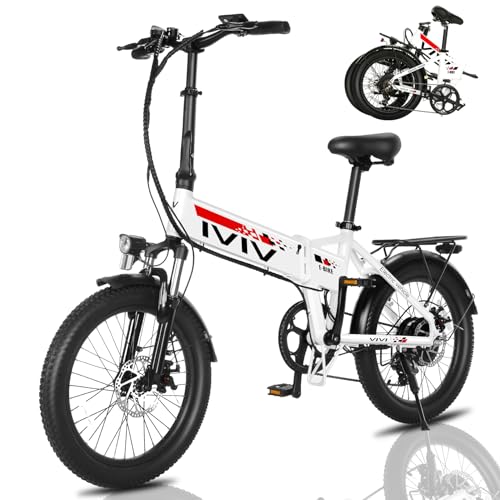
Vivi 20" 500W Folding Electric Bike
7.1/10 Amazon
The Vivi 20" 500W is the budget-folder option for commuters who care about three things: under $700, under 60 lb, fits in...
As an Amazon Associate I earn from qualifying purchases. Ebike Oracle may also earn a commission on links to other retailers. Full disclosure.

At a glance
Run this in our range calculator →The numbers
Kingbull Literider 2.0 Folding Fat-Tire E-Bike is a Class 2 folding e-bike that scores 7.5/10 on our editorial rubric, last verified on May 17, 2026. It carries a $999 list price. It pairs a 500 W hub motor with 70 Nm of torque and a 720 Wh battery, good for a claimed range of up to 35 miles and assisted speeds up to 20 mph. As a Class 2 e-bike it adds a throttle while keeping assistance capped at 20 mph, which keeps it street-legal in nearly every US state without a licence or registration. The bike weighs 68 lb and is rated to carry 330 lb of rider and cargo. It best suits folder buyers who specifically need fat tires + 720 Wh battery.
Pros
- + Hydraulic disc brakes + 720 Wh battery + 2-year warranty under $1,000, an uncommon combination
- + Fold + fat tires (same drivetrain as the non-folding Hunter 2.0)
- + Aluminum frame with cleaner welds than typical Amazon-import folders
- + California-based phone support: the best warranty path in the folding fat-tire bracket
- + Full fenders + rear rack + front/rear lights standard
Cons
- - 68 lb total weight, too heavy for multiple flights of stairs
- - Class 2 only (20 MPH), so no Class 3 mode for road riding
- - Cadence-sensor pedal assist, so no smooth power ramp
- - Fat tires cost ~10-30% range on smooth pavement
- - Amazon "brand" field shows APEFOX (Kingbull is product brand, APEFOX is Amazon seller of record), which is a checkout confusion risk
Who is this for?
- Folder buyers who specifically need fat tires + 720 Wh battery
- Buyers wanting hydraulic brakes on a folding fat-tire bike under $1,000
- Mixed paved + gravel commuters needing sedan-trunk storage
- Riders prioritizing 2-year warranty + US phone support over the cheapest possible price
The 30-second verdict
Kingbull's catalog logic: the Hunter 2.0 is the mountain-focused high-top-tube fat bike; the Literider 2.0 is the folding sibling for buyers who want the same drivetrain (48V × 15Ah = 720 Wh battery, 1000W peak motor, hydraulic brakes) in a fold-and-store form factor. Aluminum frame, single-hinge central fold, 20x4 fat tires, mechanical hydraulic dual-system brakes, plus Kingbull's standard 2-year frame/motor/battery warranty with US phone support.
The Literider's positioning vs the fold-competition: better warranty (2 years vs 1 year on Jasion/ENGWE), hydraulic brakes (vs mechanical on EB6 + EP-2 Pro), but 68-lb weight is at the heavy end of the folding-bike spectrum. If you carry the bike up multiple flights of stairs, the lighter Gotrax R1 (48 lb) or Vivi PONY01 (34 lb) are better choices.
The full review, section by section. Tap any section to read it.
Power and battery
Power and battery
500W rated rear hub (Kingbull markets 1000W peak, a brief boost) with 70 Nm torque. Same drivetrain as the Hunter 2.0 but tuned for the 20" wheel: the smaller wheels give a lower effective gearing, which makes the bike feel snappier at low speed than the Hunter's 26" wheels. Class 2 (20 MPH cap), and Kingbull doesn't publish a Class 3 mode for the Literider.
The 720 Wh battery (48V × 15Ah) is the load-bearing spec, meaningfully larger than the typical 374-470 Wh budget folder battery. Kingbull claims "up to 60 miles" range; real-world fat-tire commuter riding (PAS 3, 170-lb rider, mixed terrain) lands at 30-40 mi per charge. Throttle-only riding drops to ~22 mi. Fat tires on smooth pavement cost ~10% range vs equivalent street-tire bike. Cold weather drops another 15-20%. Plan around 35 mi practical range.
Folding fat-tire, and the trade-offs
Folding fat-tire, and the trade-offs
Folding fat-tire bikes are a deliberate compromise. What works: the 4" tires absorb potholes a 20" folder with skinny tires would deflect off; the 720 Wh battery extends your usable range vs the typical 374 Wh budget folder; the rear rack + fender package handles real commuter loads.
What doesn't work as well: at 68 lb the Literider is too heavy to carry up multiple flights of stairs, and even the single-flight carry is a workout. Folded dimensions (~36" × 18" × 28") are bigger than a Brompton because the 4" tires push the folded width. And fat tires on smooth pavement cost you range vs narrower-tire alternatives.
Buyers who specifically need fat tires + fold + 720 Wh battery have very few options under $1,000. The Literider is one of them; the Jasion EB6 (under $600, 624 Wh, mechanical brakes, 1-year warranty) and ENGWE EP-2 Pro (624 Wh, mechanical brakes, rear shock, now discontinued) are the closest competitors.
Build, brakes, drivetrain
Build, brakes, drivetrain
Hydraulic disc brakes are the standout feature in this folder bracket. Mechanical disc brakes on a 68-lb fat-tire folder are under-spec'd; the Literider's hydraulic setup gives proper modulation and stopping power. The Hunter 2.0 carries the same brake spec, and it's one of the load-bearing differences from the Jasion / ENGWE alternatives at this price.
Aluminum frame: Kingbull uses hydroformed aluminum across the lineup, welds are cleaner than the generic round-tube extrusion you see on most under $1,000 folders. 7-speed Shimano Tourney drivetrain, front spring fork (basic, not adjustable), integrated front + rear lights, full fenders, rear rack standard.
Kingbull warranty: 2 years on motor, battery, and frame; 1 year on components. California-based phone support. This is the biggest delta vs the Amazon-only competition: Jasion, Vivi, and ENGWE all ship 1-year warranties with email-only support.
Who should buy it
Who should buy it
Buy this if you want a folding fat-tire bike with hydraulic brakes + 720 Wh battery + 2-year warranty under $1,000 (rare combination), if you specifically need a fold + fat tires (rules out the Hunter 2.0 which is non-folding), or if you want Kingbull's California-based service team vs the Amazon-only brands. Skip this if 68 lb is too heavy for your carry-into-storage logistics (look at Gotrax R1 at 48 lb), if you commute on smooth pavement only (fat tires cost range, so buy a narrow-tire folder like the Vivi 26" Folding), or if you want Class 3 (28 MPH) speed (Kingbull caps the Literider at Class 2; look at the Hunter 2.0 for Class 3 fat-tire, giving up the fold to get it).
Frequently asked questions
How is the Literider 2.0 different from the Hunter 2.0?
Same Kingbull drivetrain (48V × 15Ah = 720 Wh battery, 1000W peak motor, hydraulic brakes), packaged differently. Hunter 2.0 ($899): non-folding, 26x4 fat tires, mountain-bike geometry with knobby tires, designed for trails. Literider 2.0 ($999): folding, 20x4 fat tires, commuter/utility geometry, designed for sedan-trunk + apartment-closet storage. Pick the Hunter if you ride trails; pick the Literider if you fold the bike daily.
How does the Literider 2.0 compare to the Jasion EB6 and ENGWE EP-2 Pro?
Three direct competitors in the folding fat-tire bracket. Jasion EB6 (under $600): 624 Wh battery, mechanical brakes, 1-year warranty, front-only suspension, 62 lb. ENGWE EP-2 Pro (discontinued): 624 Wh battery, mechanical brakes, 1-year warranty, front + rear suspension, 66 lb. Kingbull Literider 2.0 ($999): 720 Wh battery, hydraulic brakes, 2-year warranty, front-only suspension, 68 lb. The Literider is the bigger-battery / better-brakes / better-warranty pick; the ENGWE has the rear shock; the Jasion is the cheapest.
Will the Literider 2.0 fit in my apartment closet?
Folded dimensions are roughly 36" × 18" × 28", so it fits most apartment closets if you push the seatpost down, fits SUV cargo area upright, fits sedan trunk diagonally. The 68 lb weight is the meaningful constraint: manageable for one flight of stairs by a moderately strong adult, awkward for three flights. If portability dominates, the Gotrax R1 (48 lb, narrow tires) or Vivi PONY01 (34 lb, 14" mini-fold) are better choices.
How much real-world range will I get?
Kingbull claims "up to 60 miles" from the 720 Wh battery. Real-world fat-tire commuter riding (PAS 3, 170-lb rider, mixed terrain, some throttle use) lands at 30-40 mi per charge. Throttle-only riding drops to ~22 mi. Fat tires on smooth pavement cost ~10% range vs equivalent street-tire bike. Cold weather (below 50°F / 10°C) drops another 15-20%. Plan around 35 mi practical range.
Are the brakes really hydraulic?
Yes, the Amazon listing confirms hydraulic disc brakes front and rear. This is meaningfully better than the mechanical brakes on the Jasion EB6 and ENGWE EP-2 Pro at the same or lower price point. For a 68-lb fat-tire folder, hydraulic brakes are the right call, because mechanical brakes at this mass need cable adjustment every few weeks and don't modulate well.
Why does the Amazon listing show "APEFOX" as the brand?
APEFOX is the Amazon seller of record (the legal entity that ships the bike); Kingbull is the product brand. Common arrangement for direct-to-consumer e-bike brands that use Amazon as one of several distribution channels; the brand is registered with Amazon under a different LLC name for tax / customs reasons. The bike itself is a real Kingbull Literider 2.0; the frame, drivetrain, and warranty are all Kingbull's. Warranty claims go to Kingbull's California service team (not APEFOX).
If this isn't the one

folding
URLIFE Mini 14
Save $14
The URLIFE Mini 14, #3 in Amazon's Electric Folding Bikes (September 2026), is a 14-inch mini that costs...
Read the review
folding
Askmy Mini 14
A 14-inch folding e-bike at carrying a stated 480 Wh, in line with the better-equipped 14-inch minis we...
Read the review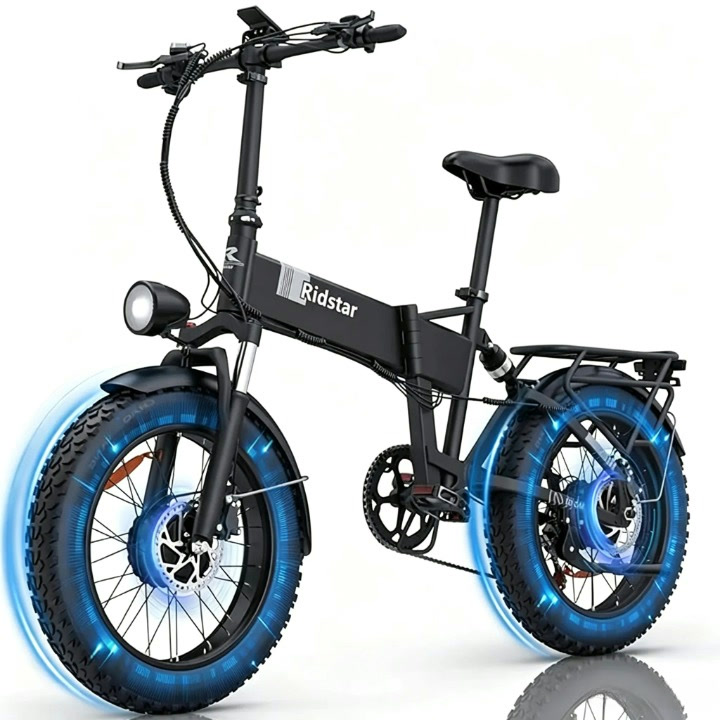
folding
Ridstar H20 Pro 2000W Folding Fat Tire E-Bike
Save $1,201
Two hub motors, a 1,104 Wh battery, hydraulic brakes at both ends, front and rear suspension and a...
Read the review
