Alabama E-Bike Laws 2026: Class 3 Helmet, 16+
Are e-bikes legal in Alabama?
Alabama adopted the federal three-class e-bike framework in 2021 through HB 99 (Act 2021-134), codified at Ala. Code §32-5A-267. The motor cap is less than 750 watts. Class 1 (20 mph pedal-assist), Class 2 (20 mph throttle), and Class 3 (28 mph pedal-assist) are all street-legal and regulated like bicycles — no driver license, no registration, no insurance. The Class-3 rules are the strict part: operators must be 16 or older, every Class 3 operator and passenger must wear a helmet (no age exemption), and a Class 3 must have a speedometer. (Separately, Alabama's child-helmet law requires a helmet for anyone under 16 on any bicycle.) All three classes may use bike and multi-use paths by default, but a local authority may prohibit Class 3 (or restrict Class 1/2 after a hearing). There is no e-bike-specific sidewalk ban — the general "no vehicle on a sidewalk" rule applies, and cities set their own sidewalk rules. The Gulf Coast and the Chief Ladiga Trail are the marquee rides.
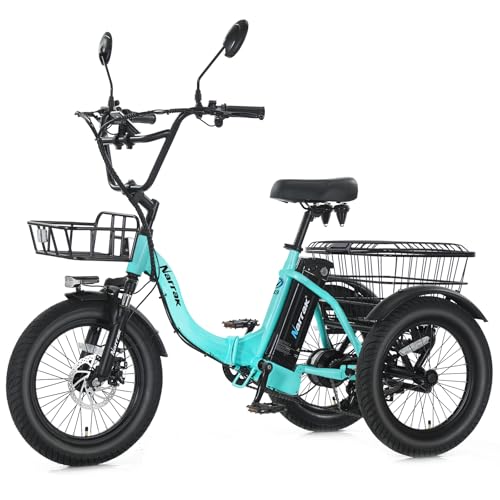
Buying one? The Qlife Cityone Plus Step-Through (Class 3, 28 mph) and the NARRAK Folding Trike 350 (Class 2, 16 mph) are class-legal in Alabama and in stock at Amazon. For more choice, see our best e-bikes under $700.
Legal to ride in Alabama: our top class-legal pick
As an Amazon Associate I earn from qualifying purchases. Ebike Oracle may also earn a commission on links to other retailers. Full disclosure.

Qlife
Qlife Cityone Plus Step-Through Commuter
Class 3 — pedal-assist to 28 mph
Class 3 · 28 mph · Score 7.4
Free 30-day returns via Amazon
Other legal picks for Alabama

Street-legal e-bikes you can buy in Alabama (2026)
Each fits a class Alabama treats as a bicycle, so it needs no registration or licence to ride.
| E-bike | Buy | Class | Speed |
|---|---|---|---|
| Qlife Cityone Plus Step-Through Commuter | Check price at Amazon | Class 3 | 28 mph |
| NARRAK Folding Trike 350 | Check price at Amazon | Class 2 | 16 mph |
| Vivi F26FUL 500W Long-Range Fat-Tire E-Bike | Check price at Amazon | Class 3 | 25 mph |
What are the e-bike rules in Alabama?
Sourced from the Alabama statute and verified against the PeopleForBikes State Law Tracker.
Check your setup
Is your e-bike legal in Alabama?
Your match
Qlife
Qlife Cityone Plus Step-Through Commuter
Alabama is one of the few states that allow Class 3 on bike paths. Riders must be 16+ per Alabama law.
Our score 7.4/10
Our top class-legal pick for Alabama, street-legal to ride today.
Free 30-day returns via Amazon
The 30-second answer
E-bikes are legal in Alabama under the Code of Alabama, which adopted the federal Class 1/2/3 framework in 2021 via HB 99 (Act 2021-134). The operative statute is Ala. Code §32-5A-267 ("Operation and Regulation of Electric Bicycles"). Motor cap: less than 750 W.
The practical rules: no driver license, no registration, no insurance for any compliant e-bike — they are treated as bicycles. The strict pieces are all about Class 3: you must be 16+ to operate one, every Class 3 operator and passenger must wear a helmet (there is no age cutoff — adults included), and a Class 3 must have a speedometer. All three classes may ride bike and multi-use paths by default, with local authorities able to prohibit Class 3 on a given path.
The full Alabama rules, section by section. Tap any section to read it.
Quick reference
Quick reference
| Spec | Alabama rule |
|---|---|
| Framework | Federal Class 1/2/3 (adopted 2021, HB 99 / Act 2021-134) |
| Statute | Ala. Code §32-5A-267 |
| Motor power cap | <750 W |
| Class 1 (pedal-assist, ≤20 mph) | ✅ Legal |
| Class 2 (throttle, ≤20 mph) | ✅ Legal |
| Class 3 (pedal-assist, ≤28 mph) | ✅ Legal — operator 16+, helmet for all riders, speedometer required |
| Driver license | Not required |
| Registration | Not required |
| Insurance | Not required |
| Minimum age (Class 1 + 2) | None statewide |
| Minimum age (Class 3) | 16 (under-16 may ride as a passenger) |
| Helmet — Class 3 | Required for all operators and passengers (no age exemption) |
| Helmet — under 16 (any bike) | Required under the Brad Hudson Bicycle Safety Act |
| Bike + multi-use paths | All classes allowed by default; local authority may prohibit Class 3 |
| Sidewalks | No e-bike-specific ban — general §32-5A-52 rule + local ordinances |
Two things define Alabama: it is a clean, standard three-class state on paperwork (no license/registration/insurance), but its Class 3 helmet rule is unusually strict — it applies to every Class 3 rider regardless of age, not just minors.
The three-class system in Alabama
The three-class system in Alabama
Alabama defines an "electric bicycle" at §32-5A-267 as a bicycle with fully operable pedals and an electric motor of less than 750 watts that meets one of three class definitions. HB 99 also amended the general Title 32 definitions (§32-1-1.1) to cross-reference e-bikes, but the operating rules live in §32-5A-267 — that is the section to cite.
The statute gives e-bikes the rights and duties of bicycles: "an electric bicycle or an operator of an electric bicycle shall be afforded all the rights and privileges, and be subject to all of the duties" of a bicycle, and an e-bike is "deemed a vehicle to the same extent as a bicycle." It is not a motor vehicle.
Class 1 — pedal-assist only, 20 mph cutoff
A motor that assists only while the rider is pedaling and cuts off at 20 mph. No throttle.
Class 2 — throttle, 20 mph cutoff
A throttle-actuated motor that can move the bike without pedaling, capped at 20 mph.
Class 3 — pedal-assist only, 28 mph cutoff
A pedal-assist motor that cuts off at 28 mph. Alabama's Class 3 rules are the strict ones: the operator must be 16 or older (an under-16 may ride only as a passenger), the bike must be equipped with a speedometer that displays speed in mph, and all operators and passengers must wear a helmet — see below.
The helmet rules (Alabama's strict part)
The helmet rules (Alabama's strict part)
Alabama has two helmet rules that can apply to an e-bike rider:
- Class 3 — everyone. Per §32-5A-267: "All operators and passengers of Class 3 electric bicycles shall wear a properly fitted and fastened protective bicycle helmet" meeting CPSC or ASTM standards. There is no age exemption — an adult on a Class 3 must wear a helmet. (The statute adds that a helmet violation is not admissible as evidence of negligence.)
- Under 16 — any bicycle. Alabama's Brad Hudson Bicycle Safety Act (§32-5A-283 / §32-5A-285) requires a helmet for anyone under 16 operating or riding any bicycle — electric or not — on public roads, paths, and rights-of-way.
So a 14-year-old on a Class 1 must wear a helmet (child-helmet law), and every rider on a Class 3 must wear one (e-bike statute). Class 1 and Class 2 have no statewide adult helmet requirement. A common online error claims the under-16 rule applies "because Alabama treats e-bikes as motor vehicles" — that is wrong; the statute explicitly treats e-bikes as bicycles, and the under-16 rule applies because they are bicycles.
Where can each class ride in Alabama?
Where can each class ride in Alabama?
Can you ride on the road?
All three classes ride where bicycles may ride, with the rights and duties of a cyclist (§32-5A-267). No registration, title, license, or insurance applies.
Bike and multi-use paths
Alabama's default is permissive: an electric bicycle "may be ridden in places where bicycles are allowed, including… bicycle or multi-use paths." All three classes are allowed by default. Local control is layered on top:
- A local authority or agency may prohibit Class 3 on a specific bicycle or multi-use path.
- A local authority may also restrict Class 1 and Class 2 on a path, but only after notice and a public hearing and a safety/compatibility finding.
- The statute does not grant access to natural-surface trails specifically designated as non-motorized — singletrack access is set by the trail manager, not the statute.
This is the opposite of the typical three-tier state, where Class 3 is banned from paths by default. In Alabama, Class 3 is allowed unless a local agency has prohibited it — so check the managing agency for the specific path.
Can you ride an e-bike on the sidewalk?
There is no e-bike-specific statewide sidewalk ban. The common claim of a "statewide sidewalk ban" comes from the general rule at §32-5A-52 (no vehicle on a sidewalk), which reaches bicycles — and therefore e-bikes — because they are "vehicles." In practice, sidewalk riding is governed locally: many Alabama cities allow it outside business districts and set their own rules. Check the city ordinance where you ride.
Do you need a helmet, license, or registration in Alabama?
Do you need a helmet, license, or registration in Alabama?
How old do you have to be?
- Class 1 and Class 2: no statewide minimum age.
- Class 3: the operator must be 16 or older; an individual under 16 may ride a Class 3 only as a passenger.
Do you need a license, insurance, or registration?
None are required for a compliant e-bike — it is treated as a bicycle, not a motor vehicle. A bike that exceeds the §32-5A-267 envelope (750 W or more, or outside the class speed limits) is regulated as a motor vehicle / motor-driven cycle, which does carry licensing and registration requirements.
Labeling + equipment
On and after 1 January 2022, each e-bike must carry a permanent label stating its class number, top assisted speed, and motor wattage, and the motor must disengage when the rider stops pedaling or applies the brakes. Every Class 3 must also have a speedometer.
Do local rules differ within Alabama?
Do local rules differ within Alabama?
Gulf Coast — Gulf Shores + Orange Beach
The Gulf Coast is Alabama's e-bike-tourism hub. The Hugh S. Branyon Backcountry Trail in Gulf State Park is ~28+ miles of paved multi-use trail with a 12 mph speed limit, daylight-hours riding, and a non-motorized character — pedal-style Class 1/2 e-bikes are used on the paved sections consistent with state law, while gas/electric motorcycles are not allowed. Riding on the beach itself is prohibited for all motorized devices, including e-bikes. Confirm current signage with the park.
Chief Ladiga Trail (northeast Alabama)
The Chief Ladiga Trail is Alabama's marquee rail-trail: about 39 paved miles through Weaver, Jacksonville, Piedmont, and (with a recent extension) downtown Anniston that connect at the Georgia line to the Silver Comet Trail, forming one of the longest contiguous paved trail systems in the country — roughly 100 miles combined. Compliant e-bikes are treated as bicycles and are accepted on the trail; the "no motorized vehicles" rule targets cars and ATVs, not pedal e-bikes. See Rails-to-Trails Conservancy.
Birmingham — Red Rock Trail System
The Birmingham area's Red Rock Trail System is a growing multi-use greenway network in Jefferson County where compliant e-bikes ride as bicycles. One local quirk: the downtown Rotary Trail promenade does not permit bicycles on the trail surface — use the parallel on-street bike lanes — so e-bikes belong in the bike lane there, not on the path. Verify the specific segment's rule before riding.
State parks + federal land
- Alabama State Parks have no single statewide eMTB policy; riding is limited to trails signed for bikes, so eMTB access on natural-surface singletrack is trail-by-trail. Oak Mountain State Park (~50 miles of MTB trails near Birmingham) directs riders to marked cycling trails — contact the park before riding.
- Federal land (USFS — e.g. Talladega and Bankhead National Forests): the USFS treats eMTBs as motorized, so they are allowed on routes open to motorized use, not on non-motorized singletrack generally.
Is Alabama changing its e-bike laws?
Is Alabama changing its e-bike laws?
Alabama's three-class framework was enacted by HB 99 (Act 2021-134) and is current as of 2026. In 2023, SB 73 would have extended the helmet requirement to all classes of e-bike and barred under-14s from operating Class 1/2 — it passed the Senate 30–0 but died in a House committee, so it did not become law. As a result, current law remains Class-3-only helmets (plus the under-16 child-helmet law) and no minimum age for Class 1/2. No 2024, 2025, or 2026 act has amended §32-5A-267. Track the Alabama Legislature for future activity.
What are the penalties for breaking e-bike laws in Alabama?
What are the penalties for breaking e-bike laws in Alabama?
Because an e-bike carries the duties of a bicycle, most violations are handled as ordinary bicycle/traffic infractions at the local level. Typical triggers:
- Operating a Class 3 under age 16, or carrying an under-16 operator
- Riding a Class 3 without a helmet (any age) or without a speedometer
- A child under 16 on any bike without a helmet (Brad Hudson Act)
- Riding a Class 3 on a path where the local agency has prohibited it
- Operating an out-of-compliance bike (750 W or more, or outside the class limits) without motor-vehicle registration and a license — treated as unlicensed motor-vehicle operation, with steeper penalties
Enforcement is shared by municipal police, county sheriffs, the Alabama Law Enforcement Agency (ALEA), state-park rangers, and federal officers on USFS land.
What special e-bike rules apply in Alabama?
What special e-bike rules apply in Alabama?
Do I need a helmet on a Class 3 e-bike in Alabama?
Yes — every operator and passenger of a Class 3, regardless of age, must wear a properly fitted helmet (§32-5A-267). Class 1 and Class 2 have no statewide adult helmet rule, but anyone under 16 on any bicycle (electric or not) must wear one under the Brad Hudson Bicycle Safety Act.
Can I ride my Class 3 on a bike path in Alabama?
Usually yes — Alabama allows all three classes on bike and multi-use paths by default. But a local authority or agency may prohibit Class 3 on a specific path, so check the managing agency. Natural-surface, non-motorized singletrack is set by the trail manager and is not guaranteed by the statute.
Is a 3000 W e-bike street-legal in Alabama?
No. Alabama caps a legal e-bike at less than 750 W (§32-5A-267). A 3000 W machine is outside the electric-bicycle definition and is regulated as a motor vehicle or motor-driven cycle, requiring registration and a license.
Sur-Ron, Talaria, and other "e-moto" bikes
These are not e-bikes under Alabama law. Sur-Ron, Talaria, and similar high-power electric two-wheelers exceed the 750 W cap and lack a compliant pedal-assist setup, so they fall outside §32-5A-267. They are motor-driven cycles or motorcycles depending on power and require registration, a license, and (for motorcycles) insurance to ride on public roads.
What about other states?
What about other states?
Alabama's clean three-class framework is shared by most US states, though its all-ages Class 3 helmet rule is on the stricter end. Compare with neighbours:
- Georgia — three-tier, all-ages Class 3 helmet, Class 3 path ban
- Tennessee — three-tier framework (2016)
- Mississippi — three-tier
- Florida — three-tier, very permissive (Class 3 allowed on paths)
For a side-by-side check, use the e-bike legality checker. For the federal framework, read Class 1, 2, 3 e-bikes explained.
Bottom line
Bottom line
Alabama is a standard three-class state with light paperwork — no license, registration, or insurance for any compliant e-bike — but with a strict Class 3 helmet rule: every Class 3 rider, adult or not, must wear a helmet, the operator must be 16+, and the bike must have a speedometer. Add the under-16 child-helmet law for any bicycle, and remember the permissive path default (all classes allowed unless a local agency prohibits Class 3). The standout rides are the Gulf Coast (Hugh S. Branyon Backcountry Trail, 12 mph) and the Chief Ladiga Trail into Georgia's Silver Comet. Check the local ordinance and the trail manager before you go.
Alabama rules sourced from Ala. Code §32-5A-267 (2021 HB 99 / Act 2021-134, see LegiScan) and the Brad Hudson Bicycle Safety Act (§32-5A-283, §32-5A-285), cross-checked against the PeopleForBikes State Law Tracker. 2023 SB 73 (helmets-for-all-classes) passed the Senate but died in the House. Trail context from Gulf State Park and Rails-to-Trails Conservancy. Verified 24 May 2026.
E-bikes that fit Alabama's rules
Filtered from our review catalog by class eligibility under Alabama statute. Spec-matched, not popularity-ranked.
- Class 3
 Amazon
Qlife
Qlife Cityone Plus Step-Through Commuter
Class 3 — pedal-assist to 28 mph
Alabama is one of the few states that allow Class 3 on bike paths. Riders must be 16+ per Alabama law.500 W · 28 mph · Score 7.4
Read the review - Class 2Amazon
NARRAK
NARRAK Folding Trike 350
Class 2 — pedal-assist + throttle to 20 mph
Permitted on roads, bike lanes, and bike paths in Alabama.350 W · 16 mph · Score 7.1
Read the review - Class 3AmazonSave $348
Vivi
Vivi F26FUL 500W Long-Range Fat-Tire E-Bike
Class 3 — pedal-assist to 25 mph
Alabama is one of the few states that allow Class 3 on bike paths. Riders must be 16+ per Alabama law.500 W · 25 mph · Score 7.0
Read the review
Eligibility is class-based: picks shown here are legal to own and operate on roads in Alabama. Local jurisdictions (state parks, beach paths, individual cities) may add further restrictions; see the body above for the specifics.
Recent Alabama e-bike law coverage
News-form posts that reference Alabama's statutes or covered a change affecting Alabama riders.
Frequently asked questions
Are e-bikes legal in Alabama?
Yes. E-bikes are legal under Ala. Code §32-5A-267, which adopted the Class 1/2/3 framework via HB 99 (Act 2021-134) in 2021. All three classes are street-legal statewide, with a motor cap of less than 750 W, and are treated as bicycles — no license, registration, or insurance. Bikes that exceed that envelope are regulated as motor vehicles.
Do I need a helmet to ride an e-bike in Alabama?
For a Class 3, yes — every operator and passenger must wear a helmet regardless of age (§32-5A-267). Class 1 and Class 2 have no statewide adult helmet requirement. Separately, anyone under 16 on any bicycle (electric or not) must wear a helmet under Alabama's Brad Hudson Bicycle Safety Act.
What's the minimum age for a Class 3 e-bike in Alabama?
16 to operate. Under §32-5A-267, an individual under 16 may not operate a Class 3 electric bicycle, though they may ride as a passenger. Class 1 and Class 2 have no statewide minimum age. A Class 3 must also be equipped with a speedometer.
Do I need a license or registration to ride an e-bike in Alabama?
No. Alabama treats compliant e-bikes as bicycles, not motor vehicles, so no driver license, registration, title, or insurance is required — as long as the bike meets the §32-5A-267 definition (less than 750 W, within the class speed limits).
Can I ride my Class 3 e-bike on a bike path in Alabama?
Usually yes. Alabama allows all three classes on bike and multi-use paths by default; under §32-5A-267, a local authority or agency may choose to prohibit Class 3 on a specific path. Natural-surface, non-motorized singletrack is set by the trail manager and is not guaranteed by the statute — so check the managing agency.
Is e-bike sidewalk riding banned in Alabama?
There is no e-bike-specific statewide sidewalk ban. The general rule at §32-5A-52 prohibits driving any vehicle on a sidewalk, which reaches bicycles and e-bikes, but sidewalk riding is regulated locally in practice — many cities allow it outside business districts. Check the ordinance for the city where you ride.
Did Alabama change its e-bike helmet law in 2023?
No. SB 73 (2023) would have required helmets for all classes of e-bike and barred under-14s from Class 1/2, and it passed the Senate 30–0 — but it died in a House committee and never became law. Current law keeps helmets mandatory only for Class 3 riders (plus the under-16 child-helmet rule for any bicycle).
Is a 3000 W e-bike street legal in Alabama?
No. Alabama caps a legal e-bike at less than 750 W (§32-5A-267). A 3000 W machine falls outside the electric-bicycle definition and is regulated as a motor vehicle or motor-driven cycle, requiring registration and a license.
Can I ride an e-bike on the Gulf Shores beach or the Backcountry Trail?
Riding on the beach is prohibited for all motorized devices, including e-bikes. On the Hugh S. Branyon Backcountry Trail in Gulf State Park, pedal-style Class 1/2 e-bikes are used on the paved multi-use sections, which carry a 12 mph speed limit and daylight-hours rule; gas and electric motorcycles are not allowed. Confirm current signage with the park.
Are Sur-Ron and Talaria e-motos legal on Alabama roads?
No. Sur-Ron, Talaria, and similar high-power off-road electric motorcycles exceed Alabama's 750 W cap and lack a compliant pedal-assist setup, so they are not e-bikes under §32-5A-267. They are motor-driven cycles or motorcycles depending on power and require registration, a license, and (for motorcycles) insurance.
How do other states compare?
Compare Alabama's rules with states that share a similar framework.
Common e-bike law questions
The national answer to the questions Alabama riders ask most, covering every US state, side by side.
Cite or link this page
Found this useful? Link to it.
This guide is free to reference. If it helped you, a link helps more riders find accurate, up-to-date law info, and we keep it current (last reviewed May 24, 2026). Licensed CC BY 4.0. Reuse the data with attribution.
<a href="https://ebikeoracle.com/laws/alabama">Alabama E-Bike Laws 2026: Class 3 Helmet, 16+ — Ebike Oracle</a>
Ebike Oracle. "Alabama E-Bike Laws 2026: Class 3 Helmet, 16+." Ebike Oracle, 2026, https://ebikeoracle.com/laws/alabama.