Review · Skeri
cargo7.2/10Skeri Electric Tricycle 750
Spec-verified against the manufacturer listing
Our verdict
The Skeri is the only trike we list with a genuine rear differential, hydraulic brakes including a hydraulic parking brake, and a stated 750W rated figure rather than peak-only marketing — three real answers to the three things that actually go wrong on cheap e-trikes. It is also $500 more than the ESKUTE E-Trike or NARRAK 500, and its 50-mile range claim is the least plausible of any trike on this site. Worth the premium if you ride hills or park on a slope; hard to justify if you do not.
- Best for
- Riders who need three wheels for balance on a route with hills or slopes
Save $100down from $1,300 at Amazon
As an Amazon Associate I earn from qualifying purchases. Ebike Oracle may also earn a commission on links to other retailers. Full disclosure.
Free 30-day returns via Amazon
Not sold on this one? See every ranked pick in our guide to the best e-bikes under $1,500 on Amazon.

At a glance
Run this in our range calculator →The numbers
Skeri Electric Tricycle 750 is a Class 2 folding, step-through cargo e-bike that scores 7.2/10 on our editorial rubric, last verified on July 29, 2026. Amazon lists it at $1,200 right now. On Amazon it currently ranks #22 Best Seller in Electric Tricycles. It pairs a 750 W hub motor and a 624 Wh battery, good for a claimed range of up to 22 miles and assisted speeds up to 20 mph. As a Class 2 e-bike it adds a throttle while keeping assistance capped at 20 mph, which keeps it street-legal in nearly every US state without a licence or registration. It best suits riders who need three wheels for balance on a route with hills or slopes.
Pros
- + Genuine rear differential — the rear wheels track a corner instead of scrubbing
- + Hydraulic brakes plus a hydraulic parking brake that holds it on a slope
- + States 750W RATED alongside 1350W peak — legally checkable before you buy
- + Folds, which very few electric trikes do
- + 24-month warranty, the longest of any trike we list
Cons
- - $1,199.99 is $500 more than any other trike on this site with the same 624Wh battery
- - 50-mile range claim needs 12.5 Wh/mile; a fat-tyred trike draws 25-35
- - "UL Certified battery" is UL 2271 cell-level only — not UL 2849 whole-system
- - Weight and payload capacity both unpublished
- - 750W rated at 20 mph sits exactly on the federal ceiling, with no headroom
Who is this for?
- Riders who need three wheels for balance on a route with hills or slopes
- Anyone loading a basket while parked on an incline
- Trike buyers who need the machine to fold for storage or transport
The 30-second verdict
Three things go wrong on budget electric trikes, and this is the first one we have listed that addresses all three. Cheap trikes drive a single rear wheel, which makes them lurch and skip in turns; the Skeri fits a differential, letting the rear wheels turn at different speeds through a corner the way a car does. Cheap trikes use mechanical disc brakes that fade and pull unevenly on a vehicle that cannot lean; this uses hydraulics, plus a hydraulic parking brake that holds it on an incline while you load shopping into the basket. And cheap trikes quote a peak wattage and hide the rated one; Skeri prints 750W rated, 1350W peak, which means it can be reasoned about legally before you buy. Against that: $1,199.99 is $500 more than any trike already on this site, the range claim is the most inflated of the four, and the certification wording is narrower than it first appears. This is the trike to buy if your route has hills and your parking has a slope. On flat ground the cheaper three do the same job.
The full review, section by section. Tap any section to read it.
Why a differential is not a marketing word
Why a differential is not a marketing word
On a two-wheeler, cornering is solved by leaning. A trike cannot lean, so its two rear wheels must travel different distances through every turn — the outside wheel further than the inside one. Drive them off a single fixed axle and something has to give: either the inside wheel scrubs and chirps, or the trike pushes wide and resists the turn. That is the characteristic wobble riders describe on inexpensive e-trikes, and it is worst exactly where it matters most, at low speed with a loaded basket. A differential lets the two wheels rotate independently under power, so the trike tracks the line you steer. It is the single biggest ride-quality difference available in this category, and the reason the same feature appears on trikes costing three times this. The ESKUTE E-Trike and NARRAK 500 do not advertise one; if stability in turns is why you are buying three wheels in the first place, that omission is the whole argument.
The range claim does not survive division
The range claim does not survive division
Skeri claims up to 50 miles in PAS mode from a 48V 13Ah pack. That pack is 624Wh, so 50 miles requires 624 ÷ 50 = 12.5 Wh per mile. A two-wheeled commuter on slim tyres manages that. A three-wheeled vehicle on 20×4 fat tyres does not: it has 50% more tyre contact patch, more rolling resistance, more frontal area and a differential taking its own cut. Realistic consumption is 25-35 Wh per mile, which puts genuine range at 18-25 miles — and the bottom of that band on throttle alone or into a headwind. This is the least plausible range figure of the four trikes we list, and it is the one number on this listing we would not repeat without the arithmetic attached. Plan around 20 miles. If your regular round trip is longer than that, this is not the machine, and no trike at this price is.
Read the certification wording carefully
Read the certification wording carefully
The listing says "UL Certified 48V 13Ah battery". That is a battery-level claim — the UL 2271 standard covering the cell pack — and it is not the same thing as UL 2849, which certifies the complete e-bike electrical system including charger, controller and wiring. The distinction has teeth: New York City's Local Law 39 of 2023 requires UL 2849 or equivalent for the whole device, not just the pack, and buildings that ask for paperwork increasingly ask for the system certificate. A certified battery is meaningfully better than nothing and covers the component that actually causes fires — but if you need to satisfy a landlord or an employer, confirm which certificate Skeri can produce before you rely on it. The NARRAK 500 is the trike on this site with UL certification stated at the system level.
Where the three-class system gets awkward for trikes
Where the three-class system gets awkward for trikes
Federal law is clear that trikes count: 15 U.S.C. §2085 defines a low-speed electric bicycle as a two- or three-wheeled vehicle with working pedals and a motor under 750 watts, ridden at under 20 mph on motor power alone. The Skeri's 750W rated / 20 mph combination sits right at that boundary — legal, but with no headroom, which is why the stated rated figure matters so much here. State law is patchier: the three-class framework most states adopted was drafted around two-wheelers, and whether a given state's definition of "bicycle" extends to three wheels varies in the wording rather than the intent. In practice e-trikes are treated as e-bikes almost everywhere, but if you ride somewhere with active enforcement it is worth reading the actual definition — our state-by-state map has the statute text for all 51 jurisdictions.
Who should buy it
Who should buy it
Riders who need three wheels for balance and whose route includes hills, slopes or regular cornering with a load — the differential, the hydraulic brakes and the parking brake are worth real money to that rider, and the 24-month warranty is the longest of any trike here. Also anyone who wants a trike that folds, which narrows the field considerably. Do not buy it for range, and do not buy it if you ride flat ground and park on the level: the ESKUTE E-Trike at $669 and the NARRAK 500 at $519 carry the same 624Wh battery, and the $530-680 you save buys a lot of shopping.
Ready to buy?
Save $100 at Amazon right now
We update prices as the listing changes, and the final price is set by the retailer at checkout.
Frequently asked questions
What's the best electric tricycle for adults?
Depends what is going wrong on your route. For hills and slopes, the Skeri — it is the only trike we list with a rear differential, hydraulic brakes and a hydraulic parking brake. For value on flat ground, the ESKUTE E-Trike at $669 or the NARRAK 500 at $519 carry the same 624Wh battery for $530-680 less. For certification, the NARRAK is the one stating system-level UL. There is no single best; there is a best for the thing you are solving.
Is 750 watts good for an electric trike?
Yes, and it is the most you can have while staying inside the federal definition. 15 U.S.C. §2085 caps a low-speed electric bicycle — explicitly including three-wheeled vehicles — at under 750 watts. A trike is heavier and less efficient than a two-wheeler, so it needs the power more: the other trikes we list run 500W. The trade is that at 750W rated you are sitting exactly on the ceiling with no margin, so the rated figure being stated at all matters.
How fast will a 750 watt e-bike go?
This one is stated at 20 mph, which is what the federal definition requires of a low-speed electric bicycle on motor power alone. Wattage sets how quickly you reach that speed and how well you hold it up a hill — not the top speed itself, which is set by the controller. A 750W trike will get to 20 mph more confidently under load than a 500W one, but will not exceed it.
How far will it actually go on one charge?
Plan around 20 miles, not the 50 claimed. The pack is 48V × 13Ah = 624Wh, and 50 miles from that needs 12.5 Wh per mile — a figure a light two-wheeler on slim tyres can hit, but not a three-wheeled vehicle on 20×4 fat tyres, which draws 25-35. That arithmetic gives 18-25 miles realistically, with throttle-only riding at the bottom of the band.
Is the "UL Certified battery" the same as UL 2849?
No, and the difference matters. The listing certifies the battery (the UL 2271 standard). UL 2849 certifies the complete e-bike system — battery, charger, controller and wiring together — and that is what NYC Local Law 39 and most building policies actually require. A certified pack covers the component that causes fires, so it is far from meaningless, but confirm which certificate Skeri can produce if someone is going to ask you for it.
Why is it $500 more than the other trikes you list?
Three things the cheaper trikes do not have: a rear differential, hydraulic braking with a parking brake, and 750W rated instead of 500W. If you ride hills, corner with a loaded basket, or park on a slope, those are worth real money. If you ride flat ground on the level, they are not — and the ESKUTE or NARRAK give you the same 624Wh battery for $519-669.
Bottom line
Is the Skeri Electric Tricycle 750 for you?
Check the live price + availability before deciding.
If this isn't the one

cargo
NARRAK Trike 750
Save $81
The trike to buy if the route has hills, and the one to buy if you carry a...
Read the review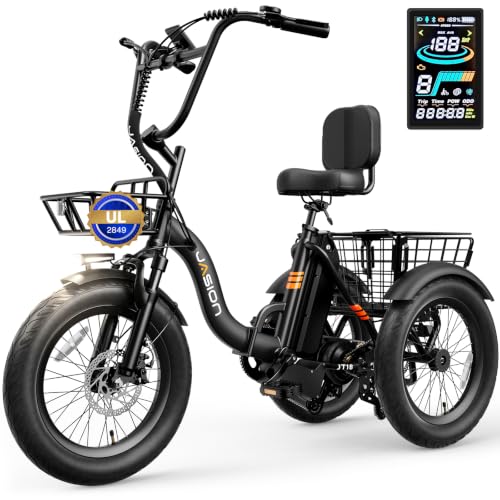
cargo
Jasion Electric Trike
Save $25
At this is the cheapest UL 2849-certified electric trike we have found, and certification is the spec that...
Read the review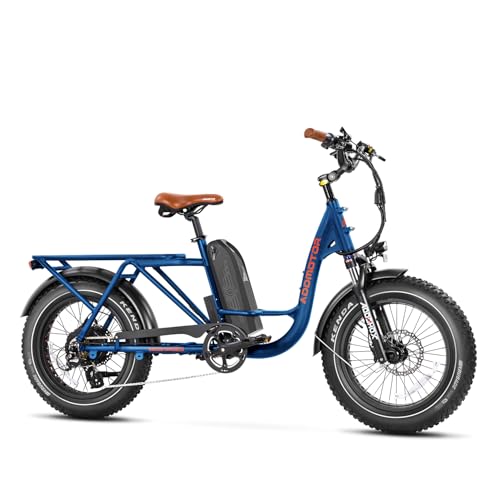
cargo
AddMotor GAROOTAN M-81
The AddMotor GAROOTAN M-81 is the longest-running real cargo longtail on Amazon US, originally launched in 2022 and,...
Read the review