Vermont E-Bike Laws 2026: No Helmet, §1136a
Are e-bikes legal in Vermont?
Vermont adopted the federal three-class e-bike framework through S.66 / Act 40 of 2021, signed by Governor Phil Scott on 20 May 2021 and effective 1 January 2022 (NOT 2018, 2019, or 2020 — Vermont was a relatively late three-class adopter). The definition is at 23 V.S.A. §4 with the operating rules at 23 V.S.A. §1136a. Motor cap: less than 750 W. Vermont stands out for what it does NOT have: there is no statewide bicycle or e-bike helmet law for any age — Vermont is one of 13 US states with no helmet mandate at all (per the Bicycle Helmet Safety Institute compilation). Several retailer blogs misattribute a helmet rule to §1139 (Riding on roadways and bicycle paths — not a helmet statute) or to §1256 (the motorcycle helmet statute) — neither imposes a bicycle helmet requirement. No license, no registration, no insurance under §1136a. Class 3 operator must be 16+. Path access is permissive by default for all three classes, with local authorities able to opt-out (notice-and-hearing required for Class 1/2 restrictions, simpler local restriction permitted for Class 3). The MTB tourism hook: Kingdom Trails in East Burke / Lyndonville reversed its long-standing e-bike ban on 5 June 2025 — Class 1 pedal-assist eMTBs are now permitted network-wide, with about 85% of the network open and a few landowner-excluded sections remaining off-limits. Class 2 (throttle) and Class 3 remain prohibited.
Legal to ride in Vermont: our top class-legal pick
As an Amazon Associate I earn from qualifying purchases. Ebike Oracle may also earn a commission on links to other retailers. Full disclosure.

Class 2 — pedal-assist + throttle to 20 mph
Class 2 · 20 mph · Score 8.6
Free 30-day returns via Amazon
Other legal picks for Vermont

Street-legal e-bikes you can buy in Vermont (2026)
Each fits a class Vermont treats as a bicycle, so it needs no registration or licence to ride.
| E-bike | Buy | Class | Speed |
|---|---|---|---|
| Funhang City Cruiser 26 | Check price at Amazon | Class 2 | 20 mph |
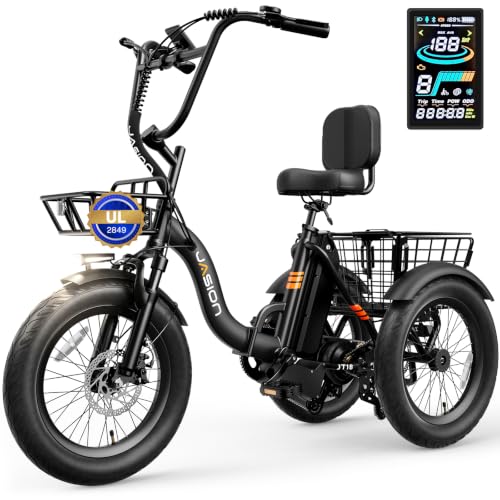
| Jasion Electric Trike | Check price at Amazon | Class 2 | 16 mph |
| Gotrax Dolphin 26" Step-Through Commuter | Check price at Amazon | Class 2 | 20 mph |
What are the e-bike rules in Vermont?
Sourced from the Vermont statute and verified against the PeopleForBikes State Law Tracker.
Check your setup
Is your e-bike legal in Vermont?
Your match
Funhang
Funhang City Cruiser 26
Permitted on roads, bike lanes, and bike paths in Vermont.
Our score 8.6/10
Our top class-legal pick for Vermont, street-legal to ride today.
Free 30-day returns via Amazon
The 30-second answer
E-bikes are legal across Vermont under the federal Class 1/2/3 framework adopted by S.66 / Act 40 of 2021, signed by Governor Phil Scott on 20 May 2021 and effective 1 January 2022. The definition is at 23 V.S.A. §4, with operating rules at 23 V.S.A. §1136a. Motor cap is less than 750 watts.
Three things make Vermont stand out:
- No statewide helmet law — at all. Vermont has no statewide bicycle or e-bike helmet mandate for any age. It's one of 13 US states with no helmet law per the Bicycle Helmet Safety Institute compilation. §1136a adds no e-bike-specific helmet requirement either. Helmets are still strongly recommended — and some programs (Burlington's bikeshare) and trail networks require them as a condition of use — but the state does not mandate them.
- Kingdom Trails opened to Class 1 in June 2025. After a years-long ban tied to the 2019 "Kingdom Trails crisis" landowner-access fallout, the Kingdom Trails Association formally welcomed Class 1 pedal-assist eMTBs network-wide on 5 June 2025, with about 85% of the network open and several landowner-excluded sections remaining off-limits. Throttle (Class 2) and 28 mph (Class 3) remain prohibited.
- Path access default is permissive, with asymmetric local opt-out. Under §1136a, e-bikes may be ridden anywhere bicycles are allowed by default. A municipality, local authority, or state agency may prohibit Class 1 or Class 2 on a specific path only after notice and a public hearing. For Class 3, the local authority may prohibit access without the notice-and-hearing requirement — a deliberate asymmetry to make the higher-speed class easier to restrict locally.
No license, no registration, no insurance under §1136a. Vermont treats e-bikes as bicycles for licensing/registration/insurance purposes as long as the motor is under 750 W and the bike falls within one of the three classes.
The full Vermont rules, section by section. Tap any section to read it.
Quick reference
Quick reference
| Spec | Vermont rule |
|---|---|
| Framework | Federal Class 1/2/3 (adopted 2021, Act 40 / S.66, effective 1 Jan 2022) |
| Definition statute | 23 V.S.A. §4 |
| Operating rules | 23 V.S.A. §1136a |
| Motor power cap | <750 W (§4) |
| Class 1 (pedal-assist, ≤20 mph) | ✅ Legal · paths ✅ default · local opt-out requires notice + hearing |
| Class 2 (throttle, ≤20 mph) | ✅ Legal · paths ✅ default · local opt-out requires notice + hearing |
| Class 3 (pedal-assist, ≤28 mph) | ✅ Legal · operator 16+ · paths ✅ default · local opt-out simpler (no hearing required) |
| Driver license | Not required (§1136a) |
| Registration | Not required |
| Insurance | Not required |
| Statewide helmet rule | None — for any class, any age, any rider |
| Minimum age (Class 1 + 2 operator) | None |
| Minimum age (Class 3 operator) | 16 (§1136a) |
| Class 3 passenger | Under 16 may ride as passenger on a Class 3 designed to accommodate passengers |
| Class label | Required — class, top assisted speed, motor wattage |
| Path access (statewide default) | All three classes permitted where bicycles are; asymmetric local opt-out |
| Kingdom Trails (~100+ mi singletrack, East Burke / Lyndonville) | Class 1 only — opened 5 June 2025; ~85% of network open, landowner-excluded sections remain off-limits |
| Stowe Trails Partnership — Cady Hill / Adams Camp / Sterling Forest | Class 1 only (Billings Trail in Sterling Forest closed to all e-bikes) |
| Trapp Family Lodge / von Trapp Outdoor Center (Stowe) | Class 1 only — welcomed September 2024 · day-use pass required |
| Island Line Trail (~14 mi, incl. ~3-mi Colchester Causeway) | Class 1 by default; check signage for Class 2/3 |
| Green Mountain National Forest | E-bikes ONLY on motorized trails/forest roads; non-motorized USFS trails closed (USFS treats e-bikes as motor vehicles); Long Trail + Appalachian Trail + Wilderness Areas closed to ALL bicycles |
| VAST snowmobile trails | Closed to e-bikes (and to all summer bike use) by default unless landowner + club specifically authorise |
Two practical reads. First, Vermont's statewide statute is mainstream federal three-class — the law itself is straightforward. The standout is the complete absence of any helmet mandate, which makes it one of the most permissive helmet jurisdictions in the country. Second, the trail story is granular: the state's flagship MTB destinations (Kingdom Trails, Stowe Trails Partnership networks, Trapp Family Lodge) are Class 1 only — and the Green Mountain National Forest is closed to e-bikes on non-motorized singletrack under the USFS national policy. Plan accordingly.
The three-class system in Vermont
The three-class system in Vermont
Vermont defines an "electric bicycle" at 23 V.S.A. §4 (Definitions), with the operating chapter at §1136a:
A bicycle equipped with fully operable pedals and an electric motor of less than 750 watts, and that meets one of the following requirements:
- Class 1 — motor "provides assistance only when the rider is pedaling, and ceases to provide assistance when the bicycle reaches the speed of 20 miles per hour."
- Class 2 — motor "may be used exclusively to propel the bicycle, and is not capable of providing assistance when the bicycle reaches the speed of 20 miles per hour."
- Class 3 — motor "provides assistance only when the rider is pedaling, and ceases to provide assistance when the bicycle reaches the speed of 28 miles per hour."
The framework was enacted by S.66 (Act 40 of 2021), signed by Governor Phil Scott on 20 May 2021, effective 1 January 2022.
Why some sources cite the wrong year or bill
A handful of common citation traps:
- Vermont's three-class law is from 2021, not 2018 or 2019. Some secondary sources cite "Act 167 of 2018" — that is unrelated. The operative enactment is S.66 / Act 40 of 2021, effective 1 January 2022.
- §1139 is NOT a helmet statute. §1139 is "Riding on roadways and bicycle paths." A few state-overview blogs misattribute a Vermont under-16 helmet rule to §1139 — the rule does not exist.
- §1256 is the motorcycle helmet statute, not the bicycle helmet statute. Vermont has no bicycle helmet statute.
- Class 3 in Vermont has no separate helmet rule. Several state-overview blogs claim "helmet required regardless of age for Class 3 in VT" — that is not in §1136a. The Class 3 operator-age-16 rule exists; the helmet rule does not.
Do you need a helmet, license, or registration in Vermont?
Do you need a helmet, license, or registration in Vermont?
| Topic | Vermont rule |
|---|---|
| Driver license | Not required (§1136a) |
| Registration / title / inspection | Not required (§1136a explicitly exempts from Title 23 Chapter 7) |
| Insurance | Not required (§1136a explicitly exempts from Title 23 Chapter 11 financial-responsibility) |
| Statewide helmet | None — for any class, any age, any rider |
| Minimum age (Class 1 + 2 operator) | None |
| Minimum age (Class 3 operator) | 16 (§1136a) |
| Class 3 passenger | Under 16 may ride as passenger on a Class 3 designed for passengers |
| Class label | Required — class, top assisted speed, motor wattage |
Vermont's complete absence of a helmet law is the rule that surprises most out-of-state riders. Helmets are still strongly recommended (and required by most trail networks and Burlington's bikeshare program as a condition of use), but the state imposes no mandate.
Where can you ride an e-bike in Vermont?
Where can you ride an e-bike in Vermont?
Can you ride on roads and bike lanes?
All three classes have the same rights and duties as a regular bicycle. Roads, road shoulders, and on-street bike lanes are open to all three classes statewide.
Multi-use paths — permissive default, asymmetric local opt-out
Under §1136a:
- Default rule: All three classes may be ridden anywhere bicycles are allowed, including highways, bicycle lanes, and bicycle/multi-use paths.
- Class 1 + Class 2 local restriction: Requires notice and a public hearing by the municipality, local authority, or state agency. This is a procedural protection — an agency cannot quietly post a Class 1/2 exclusion sign without first putting the action on a public meeting agenda.
- Class 3 local restriction: Simpler — the local authority may prohibit Class 3 on a specific path without the notice-and-hearing requirement, reflecting the legislature's recognition that Class 3 raises higher safety concerns on shared paths.
This is the opposite asymmetry of states like Idaho (where the procedural protection applies to all three classes equally) and West Virginia (where Class 3 is statutorily banned from paths by default).
Can you ride an e-bike on the sidewalk?
No statewide rule. Local ordinance controls. Burlington prohibits sidewalk and Church Street Marketplace riding in the downtown core (Title 8 / Chapter 6 / Chapter 27 of the City Code), with full prohibition in the City Center (bounded by Pearl St., S. Winooski Ave., Main St., St. Paul St.) and an over-16 sidewalk-riding ban within the inner fire district. Montpelier prohibits sidewalk cycling in the Central Business District.
Kingdom Trails — the 2025 reversal
Kingdom Trails — the 2025 reversal
Kingdom Trails in East Burke / Lyndonville is one of the top MTB destinations in the US — approximately 100+ miles of singletrack on private land managed by the Kingdom Trails Association (KTA). In 2019, several landowners revoked trail-access permission in what became known as the "Kingdom Trails crisis" — and KTA imposed an outright e-bike ban as part of the landowner-relationship reset.
After a multi-year landowner-consultation process from 2021 through 2025, KTA formally welcomed Class 1 pedal-assist eMTBs network-wide on 5 June 2025:
- Class 1 only — pedal-assist, ≤750 W (≤1 HP), assistance cuts out at 20 mph, disengages on coast or brake. The strict federal Class 1 definition.
- Class 2 (throttle) and Class 3 (28 mph) are prohibited.
- ~85% of the network is open to Class 1 eMTBs. Landowner-excluded sections remain off-limits and are shown on the official KTA map and signed at trailhead.
This is one of the highest-profile e-bike-policy reversals in US MTB. The trail-by-trail map at kingdomtrails.org is the authoritative source — check it before riding.
Stowe + Cady Hill + Trapp Family Lodge
Stowe + Cady Hill + Trapp Family Lodge
Managed by the Stowe Trails Partnership:
- Cady Hill Forest — Class 1 pedal-assist eMTBs allowed.
- Adams Camp — Class 1 allowed.
- Sterling Forest — Class 1 allowed except the Billings Trail (closed to all e-bikes per landowner request).
- Trapp Family Lodge / von Trapp Outdoor Center — Class 1 welcomed since September 2024. Restricted to designated bike trails (foot/ski-only trails remain off-limits). Day-use pass required (~$15 adult / $12 senior / $8 child).
- Throttle classes (Class 2 + Class 3) are prohibited across all four networks.
Burlington Bike Path + Island Line Trail
Burlington Bike Path + Island Line Trail
The Burlington Bike Path runs about 8 miles along the Lake Champlain waterfront from Oakledge Park (south) to the Winooski River (north). Combined with the Colchester sections to the north, it forms the Island Line Trail (~14 miles total) — Oakledge Park to Allen Point — including the iconic ~3-mile Colchester Causeway across Lake Champlain toward the Champlain Islands.
Under the state default in §1136a, Class 1 and Class 2 are permitted; Class 3 may be locally restricted. Local Motion (the trail steward and advocacy organisation) supports e-bikes and rents Class 1 e-bikes on the path. Check signage at trailheads for any city-specific Class 2/3 posture.
Green Mountain National Forest
Green Mountain National Forest
Approximately 150 miles of singletrack and trail are managed for mountain bike use across the Green Mountain National Forest. Per the USFS national e-bike directive (FSM 2355, applying DOI Secretary's Order 3376):
- E-bikes are classified as motor vehicles for USFS trail-management purposes.
- E-bikes are NOT allowed on non-motorized USFS trails unless the local unit has gone through environmental analysis and reclassified a specific trail to motorized.
- E-bikes ARE allowed on USFS-designated motorized trails and forest roads open to motor vehicles.
- The Appalachian Trail, the Long Trail, their side trails, and all Wilderness Areas are closed to all bicycles — motorized or not.
This is stricter than the NPS framework for federal-lands e-bike access. Plan on the Green Mountain NF as a forest-roads + designated-motorized-trails environment for e-bikes.
VAST snowmobile trails
VAST snowmobile trails
Closed to e-bikes (and to all summer bike use) by default. The Vermont Association of Snow Travelers (VAST) landowner policy states:
"Permission to use snowmobile trails does not extend to use of these trails by Fat Bikes, ATVs, four-wheelers, motor or mountain bikes, hiking, cross-country skiing, or other uses, unless specifically authorized by the landowner and club, and properly signed. A VAST trail is a trail only during the snow season; any other use will be considered trespassing."
Some specific dual-use easements may permit summer e-MTB with explicit landowner + club authorization, but do not generalize "VAST allows e-bikes in summer." The default is summer closure.
Cross-state comparison (vs ME, NH, MA, NY)
Cross-state comparison (vs ME, NH, MA, NY)
| State | Framework | Helmet (statewide) | Class 3 min age | Path default |
|---|---|---|---|---|
| Vermont | 3-class (Act 40 / S.66, eff. 2022) | None — any age | 16 | Permissive; asymmetric local opt-out |
| Maine | 3-class | Under 16 (all classes) | 16 | Class 1/2 permitted on paved paths (opt-out), Class 3 banned on paved paths unless within highway |
| New Hampshire | 3-class (RSA 265:144-a) | Under 16 cyclists + under 18 on Class 3 | 16 | Permissive |
| Massachusetts | Class 1 + 2 ONLY (H. 5151 Transportation Bond Bill, eff. 8 November 2022; Ride Safe Act S.3077 pending in Senate Transportation Cmte) | Under 17 | n/a — Class 3 not recognised (defaults to "motorized bicycle" requiring registration + license) | Class 1/2 permissive; Class 3 = motorized bicycle |
| New York | 3-class (modified — Class 3 capped at 25 mph, legal only in cities of 1M+ pop = effectively NYC) | Under 14 cyclists + ALL Class 3 e-bike operators (any age, VTL §1238 / §1242) | 16 | Local; NYC has detailed sub-rules |
Vermont is the outlier in the New England cluster for having no helmet law at all. Otherwise it's the most "vanilla" three-class adopter in the region, closest in structure to Maine. Massachusetts is unusual: it has not adopted Class 3, so a 28 mph pedelec is a "motorized bicycle" in MA requiring registration and a driver's license (Gov. Healey's Ride Safe Act S.3077, filed 4 May 2026, would change this).
Is Vermont changing its e-bike laws?
Is Vermont changing its e-bike laws?
- Act 165 of 2024 — strengthened cyclist protections; included the 4-foot safe-passing rule (minimum $200 fine for violations). Does NOT alter e-bike classification, helmet posture, or age rules.
- 2025 session (per Local Motion summary): bike use of pedestrian signals (cyclists may proceed on a WALK signal, effective 1 July 2026); statutory definition of "bike signal" added; education-campaign funding for the 4-foot passing rule.
- Did NOT pass in 2025: stop-as-yield (Idaho stop) — to be reintroduced; state e-bike rebate program — not funded for FY26.
- Utility-level e-bike rebates remain available: Burlington Electric Department and Green Mountain Power (amounts vary by program year — confirm directly with each utility).
- Current law remains: 23 V.S.A. §4 + §1136a.
Check your setup against Vermont law
Check your setup against Vermont law
The rules above are the statewide baseline. Two things decide whether a specific bike is legal for a specific rider: which class it actually is, and how old the rider is.
- E-bike legality checker — enter motor wattage, top assisted speed, throttle and rider age, and get the Vermont verdict with the statute reference.
- Class 1, 2, 3 e-bikes explained — what the three classes mean and why the label on the frame is the thing states regulate. Most compliance problems are a bike that was never in-class to begin with.
- All 50 states + DC compared — one sortable table: classification tier, Class 3 legality, path access, helmet rule, minimum age, licence and registration.
Sources
Sources
- 23 V.S.A. §4 — Definition of electric bicycle
- 23 V.S.A. §1136a — Electric bicycles (operating rules, exemptions, age, path access)
- 23 V.S.A. §1139 — Riding on roadways and bicycle paths (NOT a helmet statute)
- 23 V.S.A. §1256 — Motorcycle helmets (NOT the bicycle helmet statute)
- Vermont S.66 / Act 40 of 2021 — bill status
- Kingdom Trails — Ride With Gratitude (Class 1 policy)
- Stowe Trails Partnership — e-bike policy
- VMBA — eMTB position
- Local Motion — 2025 biking legislation summary
- Vermont DMV
- Green Mountain National Forest — biking
- USFS national e-bike policy
- VAST landowner policy (summer bike use)
- Burlington City Code, Chapter 6 (Bicycles)
- DOI Secretary's Order 3376 — federal-lands e-bike policy
E-bikes that fit Vermont's rules
Filtered from our review catalog by class eligibility under Vermont statute. Spec-matched, not popularity-ranked.
- Class 2
 Amazon
Funhang
Funhang City Cruiser 26
Class 2 — pedal-assist + throttle to 20 mph
Permitted on roads, bike lanes, and bike paths in Vermont.500 W · 20 mph · Score 8.6
Read the review - Class 2AmazonSave $25
Jasion
Jasion Electric Trike
Class 2 — pedal-assist + throttle to 20 mph
Permitted on roads, bike lanes, and bike paths in Vermont.500 W · 16 mph · Score 7.6
Read the review - Class 2AmazonSave $55
Gotrax
Gotrax Dolphin 26" Step-Through Commuter
Class 2 — pedal-assist + throttle to 20 mph
Permitted on roads, bike lanes, and bike paths in Vermont.350 W · 20 mph · Score 7.1
Read the review
Eligibility is class-based: picks shown here are legal to own and operate on roads in Vermont. Local jurisdictions (state parks, beach paths, individual cities) may add further restrictions; see the body above for the specifics.
Recent Vermont e-bike law coverage
News-form posts that reference Vermont's statutes or covered a change affecting Vermont riders.
Frequently asked questions
Are e-bikes legal in Vermont?
Yes. Vermont adopted the federal Class 1/2/3 framework via S.66 / Act 40 of 2021, signed by Governor Phil Scott on 20 May 2021 and effective 1 January 2022. The definition is at 23 V.S.A. §4 ("less than 750 watts") and the operating rules at §1136a. All three classes are street-legal and treated as bicycles for licensing/registration/insurance purposes — no driver license, no registration, no insurance required.
Does Vermont require a helmet to ride an e-bike?
No. Vermont has no statewide bicycle or e-bike helmet law for any age. Vermont is one of 13 US states with no helmet mandate at all per the Bicycle Helmet Safety Institute compilation. §1136a adds no e-bike-specific helmet requirement either. A few retailer blogs misattribute a helmet rule to §1139 (Riding on roadways and bicycle paths — not a helmet statute) or to §1256 (the motorcycle helmet statute) — neither imposes a bicycle helmet requirement. Helmets are still strongly recommended, and some programs (Burlington's bikeshare) and trail networks require them as a condition of use, but the state does not mandate them.
Do you need a license or registration for an e-bike in Vermont?
No. §1136a explicitly exempts e-bikes meeting the §4 definition from driver-licensing (Title 23 Chapter 9, Subchapter 1), motor-vehicle registration / inspection / title (Title 23 Chapter 7), and financial-responsibility / insurance (Title 23 Chapter 11) requirements — provided the motor is under 750 W and the bike falls within one of the three classes.
What is the minimum age to ride an e-bike in Vermont?
Only for operating Class 3. §1136a sets the Class 3 operator minimum age at 16. No minimum age for operating a Class 1 or Class 2. A person under 16 may ride as a passenger on a Class 3 e-bike that is designed to accommodate passengers.
Can I ride my e-bike on Kingdom Trails?
Yes — Class 1 pedal-assist eMTBs only, as of 5 June 2025. Throttle (Class 2) and 28 mph (Class 3) are not permitted. About 85% of the network is open to Class 1 e-bikes; a few landowner-excluded sections remain off-limits and are shown on the official Kingdom Trails Association map. This is a major reversal of KTA's previous outright e-bike ban (the post-2019 "Kingdom Trails crisis" landowner-access fallout), driven by a multi-year landowner-consultation process from 2021 through 2025.
Are e-bikes allowed at Stowe (Cady Hill, Adams Camp, Sterling Forest, Trapp Family Lodge)?
Yes — Class 1 only — across all four networks managed by the Stowe Trails Partnership. Cady Hill Forest, Adams Camp, and Sterling Forest welcome Class 1 pedal-assist eMTBs; the Billings Trail in Sterling Forest is closed to all e-bikes per landowner request. Trapp Family Lodge / von Trapp Outdoor Center has welcomed Class 1 eMTBs since September 2024, restricted to designated bike trails (foot/ski-only trails remain off-limits) with a day-use pass required. Throttle classes (Class 2 + Class 3) are prohibited.
Can I ride my Class 3 e-bike on a bike path in Vermont?
By default yes — but the local authority can restrict you. Under §1136a, all three classes may be ridden anywhere bicycles are allowed by default. A municipality, local authority, or state agency may prohibit Class 1 or Class 2 on a specific path only after notice and a public hearing. For Class 3, the local authority may prohibit access without the notice-and-hearing requirement — a deliberate asymmetry to make the higher-speed class easier to restrict locally. Check trailhead signage and the managing authority's posted policy.
Are e-bikes allowed in the Green Mountain National Forest?
Only on motorized trails and forest roads open to motor vehicles. Under the USFS national directive (FSM 2355, applying DOI Secretary's Order 3376), e-bikes are classified as motor vehicles for USFS trail-management purposes and are NOT allowed on non-motorized USFS trails unless the local unit has gone through environmental analysis to reclassify a specific trail to motorized. The Long Trail, the Appalachian Trail, their side trails, and all Wilderness Areas are closed to all bicycles regardless of class.
How do other states compare?
Compare Vermont's rules with states that share a similar framework.
Common e-bike law questions
The national answer to the questions Vermont riders ask most, covering every US state, side by side.
Cite or link this page
Found this useful? Link to it.
This guide is free to reference. If it helped you, a link helps more riders find accurate, up-to-date law info, and we keep it current (last reviewed May 31, 2026). Licensed CC BY 4.0. Reuse the data with attribution.
<a href="https://ebikeoracle.com/laws/vermont">Vermont E-Bike Laws 2026: No Helmet, §1136a — Ebike Oracle</a>
Ebike Oracle. "Vermont E-Bike Laws 2026: No Helmet, §1136a." Ebike Oracle, 2026, https://ebikeoracle.com/laws/vermont.