North Dakota E-Bike Laws 2026: Idaho Stop Law
Are e-bikes legal in North Dakota?
North Dakota adopted the federal three-class e-bike framework in 2021 through HB 1148 (67th Legislative Assembly), signed by Governor Doug Burgum on 21 April 2021 and effective 1 August 2021. The definition + operating rules live at NDCC §39-10.1-09 — motor of 750 watts or fewer, Class 1 pedal-assist 20 mph, Class 2 throttle 20 mph, Class 3 pedal-assist 28 mph with a mandatory functioning speedometer. The certificate-of-title exemption is at NDCC §39-05-02.2(12). No driver license, no DMV registration, no insurance. The ONLY statewide helmet rule is Class 3 operators under 18 (§39-10.1-09(7)) — NO statewide helmet rule for Classes 1 or 2 at any age. Path access is permissive-default for all three classes under §39-10.1-09(5): an e-bike may be ridden on any bicycle or multi-use path unless the governmental entity having jurisdiction prohibits.
THE distinctive North Dakota feature lives in a separate 2021 bill: HB 1252, codified at NDCC §39-10.1-05.1 and also effective 1 August 2021, adopts a UNIQUE multi-lane variant of the Idaho Stop — cyclists (including all three e-bike classes via the §39-10.1-09 bicycle treatment) may treat stop signs as yields only on roadways with two or fewer lanes; at three-or-more-lane intersections a complete stop is required regardless of traffic. North Dakota is the only Idaho-Stop state in the country with a lane-count limit — Idaho, Delaware, Arkansas, Oregon, Washington, Utah, Oklahoma, Colorado, DC, Minnesota, and New Mexico all use the standard yield-at-any-stop-sign form. The third 2021 bicycle bill was HB 1290 (three-foot safe-passing rule).
Practical wrinkles: (1) the Maah Daah Hey Trail (~144 mi USFS Dakota Prairie Grasslands singletrack, an IMBA Epic) is statutorily non-motorized — all three e-bike classes are banned off roads per the USFS national e-bike policy treating e-bikes as motorized on non-motorized trails; (2) Theodore Roosevelt NP allows bikes on ALL paved + dirt park roads (Scenic Loop Drive in the South Unit, Scenic Drive in the North Unit) but bans bikes on ALL park trails including the Maah Daah Hey segments that cross the North and South Units — no singletrack open; (3) Fargo Ordinance 8-1418 creates the Broadway Bicycle/Pedestrian Safety Zone (Broadway between NP Avenue North and 6th Avenue North downtown) where bikes including e-bikes must be walked; 2025 city-commission discussion to raise the fine from $20 to $100.
Legal to ride in North Dakota: our top class-legal pick
As an Amazon Associate I earn from qualifying purchases. Ebike Oracle may also earn a commission on links to other retailers. Full disclosure.

Vivi
Save $30Vivi ACE01 750W Torque-Sensor Fat-Tire E-Bike
Class 3 — pedal-assist to 25 mph
Class 3 · 25 mph · Score 7.6
Free 30-day returns via Amazon
Other legal picks for North Dakota

Street-legal e-bikes you can buy in North Dakota (2026)
Each fits a class North Dakota treats as a bicycle, so it needs no registration or licence to ride.
| E-bike | Buy | Class | Speed |
|---|---|---|---|
| Vivi ACE01 750W Torque-Sensor Fat-Tire E-Bike | Check price at Amazon | Class 3 | 25 mph |
| Vivi C26UL 500W Step-Through Cruiser | Check price at Amazon | Class 2 | 20 mph |
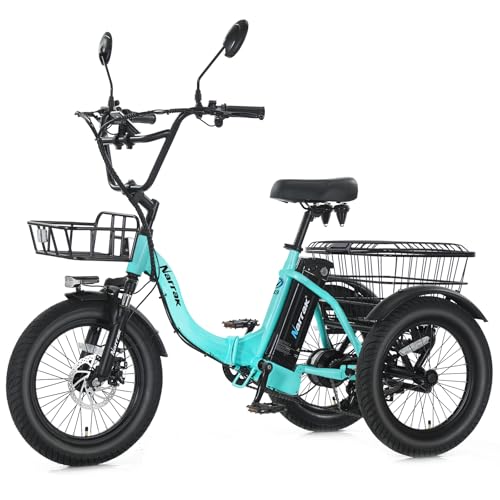
| NARRAK Folding Trike 350 | Check price at Amazon | Class 2 | 16 mph |
What are the e-bike rules in North Dakota?
Sourced from the North Dakota statute and verified against the PeopleForBikes State Law Tracker.
Check your setup
Is your e-bike legal in North Dakota?
Your match
Vivi
Vivi ACE01 750W Torque-Sensor Fat-Tire E-Bike
North Dakota is one of the few states that allow Class 3 on bike paths. Riders must be 16+ per North Dakota law.
Our score 7.6/10
Our top class-legal pick for North Dakota, street-legal to ride today.
Read our full review firstThe 30-second answer
E-bikes are legal across North Dakota under the federal Class 1/2/3 framework adopted by HB 1148 (2021), signed by Governor Doug Burgum and effective 1 August 2021. The definition + operating rules are at NDCC §39-10.1-09; the certificate-of-title exemption is at NDCC §39-05-02.2(12). Motor cap is 750 watts or fewer.
Three things make North Dakota stand out from the rest of the country:
- The multi-lane Idaho Stop — NDCC §39-10.1-05.1, enacted by HB 1252 of the 2021 session and also effective 1 August 2021. North Dakota is the only Idaho-Stop state in the country with a lane-count limit: cyclists may treat stop signs as yields ONLY on roadways with two or fewer lanes. On three-or-more-lane intersections a complete stop is required regardless of whether a vehicle is present. The eleven other Idaho-Stop jurisdictions (Idaho, Delaware, Arkansas, Oregon, Washington, Utah, Oklahoma, Colorado, DC, Minnesota, New Mexico) all use the standard yield-at-any-stop-sign form.
- One narrow helmet rule. Only Class 3 operators under 18 are required to wear a helmet (§39-10.1-09(7)). No statewide helmet rule for Classes 1 or 2 at any age, and no helmet rule for Class 3 adults — making ND one of the more permissive states in the helmet column.
- Permissive-default path access for all three classes. §39-10.1-09(5) permits an electric bicycle on any bicycle or multi-use path unless the governmental entity having jurisdiction prohibits — Class 3 is NOT walled off statutorily the way it is in New Hampshire, California, Arizona, or North Carolina.
No driver license, no DMV registration, no insurance. NDCC §39-05-02.2(12) explicitly excludes electric bicycles meeting the §39-10.1-09 definition from the certificate-of-title regime that would otherwise put them under motor-vehicle treatment.
The full North Dakota rules, section by section. Tap any section to read it.
Quick reference
Quick reference
| Spec | North Dakota rule |
|---|---|
| Framework | Federal Class 1/2/3 (adopted 2021, HB 1148) |
| Definition + operating-rules statute | NDCC §39-10.1-09 |
| Certificate-of-title exemption | NDCC §39-05-02.2(12) |
| Multi-lane Idaho Stop | NDCC §39-10.1-05.1 — yield at stop signs on roads ≤2 lanes ONLY; full stop required at 3+ lane intersections |
| Three-foot safe passing | NDCC §39-10-26.1 (added by HB 1290, 2021) |
| Enacting bills | HB 1148 (e-bike framework) + HB 1252 (multi-lane Idaho Stop) + HB 1290 (3-foot safe passing) — all 67th Legislative Assembly, all signed by Gov. Burgum, all effective 1 August 2021 |
| Motor power cap | ≤750 W (§39-10.1-09(1)) |
| Class 1 (pedal-assist, ≤20 mph) | ✅ Legal · paths ✅ default · helmet none |
| Class 2 (throttle, ≤20 mph) | ✅ Legal · paths ✅ default · helmet none |
| Class 3 (pedal-assist, ≤28 mph) | ✅ Legal · operator under 18 must wear helmet · speedometer required · paths ✅ default |
| Driver license | Not required |
| DMV registration | Not required |
| Certificate of title | Not required (§39-05-02.2(12)) |
| License plate | Not required |
| Insurance | Not required |
| Statewide helmet rule | Class 3 operator under 18 ONLY (§39-10.1-09(7)); no helmet for Classes 1 or 2 at any age |
| Minimum age (Class 1 + 2) | None |
| Class 3 operator | Under 18 must wear a helmet; Class 3 must carry a functioning speedometer |
| Manufacturer label | Required from 1 January 2022 — permanent label, minimum 9-point Arial, with class, top assisted speed, motor wattage (§39-10.1-09) |
| Path access (statewide default) | All three classes permitted on bicycle + multi-use paths unless the governmental entity having jurisdiction prohibits (§39-10.1-09(5)) |
| Maah Daah Hey Trail (~144 mi USFS singletrack, IMBA Epic) | All three classes banned off roads — statutorily non-motorized; USFS treats e-bikes as motorized on non-motorized trails |
| Theodore Roosevelt NP | Bikes ✅ on all paved + dirt park roads (Scenic Loop Drive South Unit, Scenic Drive North Unit); ❌ all park trails — no singletrack open |
| ND State Parks (Cross Ranch, Fort Abraham Lincoln, Lake Sakakawea, Beaver Lake, Fort Ransom) | All three classes ✅ default (§39-10.1-09(5)); ~100+ miles of bike trails statewide |
| Paved state-park trails | Missouri Valley Millennium Legacy (Mandan), Lake Metigoshe (11 mi loop), Cavlandic (6.5 mi Cavalier→Icelandic SP) — all classes default-permissive |
| Fargo | Bicycle/Pedestrian Safety Zone — Broadway between NP Ave N + 6th Ave N — bikes including e-bikes must be walked (Ord. 8-1418); 2025 commission discussion to raise fine from $20→$100 |
Two practical reads. First, North Dakota's statewide statute is among the more permissive three-class regimes in the country — no license, no registration, no title, no plate, no insurance, helmet only for Class 3 operators under 18, no Class 1/2 age, and a permissive path-access default for all three classes. Second, the bite is geographic and federal: the Maah Daah Hey Trail (the marquee MTB destination in the state) is statutorily non-motorized and closed to all three e-bike classes off roads, and Theodore Roosevelt NP closes its entire trail network to bikes — so for trail-based eMTB riding in western ND, you are looking at park-road riding or out-of-state options.
The three-class system in North Dakota
The three-class system in North Dakota
North Dakota defines an "electric bicycle" at NDCC §39-10.1-09 as a bicycle equipped with fully operable pedals, a saddle or seat for the rider, and an electric motor of 750 watts or fewer, meeting one of three classes:
- Class 1 — motor "provides assistance only when the individual is pedaling and ceases to provide assistance when a speed of 20 miles per hour is achieved."
- Class 2 — motor "is capable of propelling the bicycle without the individual pedaling and ceases to provide assistance when a speed of 20 miles per hour is achieved."
- Class 3 — motor "provides assistance only when the individual is pedaling and ceases to provide assistance when a speed of 28 miles per hour is achieved."
The framework was enacted by HB 1148 of the 67th Legislative Assembly (2021), signed by Governor Doug Burgum on 21 April 2021 and effective 1 August 2021.
Three §39-10.1-09 requirements ride along with the class definitions:
- Speedometer mandatory on Class 3. §39-10.1-09 requires every Class 3 to be equipped with a functioning speedometer. (The same is true in Arkansas, Iowa, Louisiana, Ohio, Oklahoma, and Texas.)
- Motor must cut when pedaling stops or brakes apply. The electric motor must be capable of being disengaged or ceasing to function when the rider stops pedaling or applies the brakes — a safety condition lifted from the model bill.
- Manufacturer label (from 1 January 2022). Permanently affixed label in minimum 9-point Arial font containing the class number, top assisted speed, and motor wattage. Equipment + manufacturing must conform to 16 CFR part 1512 (the CPSC bicycle standard).
The multi-lane Idaho Stop — North Dakota's national first
The multi-lane Idaho Stop — North Dakota's national first
North Dakota was the eighth state to adopt a stop-as-yield law (after Idaho in 1982, Delaware in 2017, Arkansas in 2019, Oregon and Washington in 2020, Utah and Oklahoma in 2021), via HB 1252 of the 67th Legislative Assembly. Signed by Governor Burgum and effective 1 August 2021, the bill created NDCC §39-10.1-05.1.
But North Dakota's version is structurally unique: it is the only Idaho-Stop state in the country with a lane-count limit. The other eleven Idaho-Stop jurisdictions (Idaho, Delaware, Arkansas, Oregon, Washington, Utah, Oklahoma, Colorado, DC, Minnesota, New Mexico) all let cyclists treat any stop sign as a yield. North Dakota draws the line at the number of lanes:
- Roadways with two or fewer lanes: cyclists approaching a stop sign may slow, yield if required for safety, and proceed without coming to a complete stop. (Standard Idaho Stop behaviour.)
- Roadways with three or more lanes: cyclists must come to a complete stop at the stop sign regardless of whether a vehicle is present. The lane-count overrides the yield permission.
- Stop sign with a vehicle already stopped: cyclists must also come to a complete stop, regardless of lane count.
The lane-count limit reflects a 2021 floor compromise between cycling advocates pushing for the full Idaho Stop and rural legislators concerned about multi-lane US-83 / I-94 / I-29 frontage-road intersections in Bismarck, Fargo, Grand Forks, and Minot. The result is the only US Idaho-Stop framework that varies behaviour by intersection geometry.
Does the multi-lane Idaho Stop apply to e-bikes? Yes. §39-10.1-09 treats e-bikes as bicycles for purposes of Chapter 39-10.1 — and §39-10.1-05.1 is in Chapter 39-10.1. All three classes are covered. There is no distinction between pedal-assist and throttle; Class 2 throttle riders are covered by the plain text.
The third 2021 bill, HB 1290 (codified at §39-10-26.1), added the three-foot safe-passing rule for motor vehicles overtaking cyclists — bringing North Dakota into the majority of US states with an explicit passing-distance statute.
Where can you ride an e-bike in North Dakota?
Where can you ride an e-bike in North Dakota?
Can you ride on roads and bike lanes?
Same rights and duties as a regular bicycle. NDCC §39-10.1-09 treats electric bicycles as bicycles for purposes of Chapter 39-10.1, and Chapter 39-10.1 confers on bicyclists the rights and duties of vehicle operators. All three classes may use roads and bike lanes — and the multi-lane Idaho Stop at §39-10.1-05.1 applies.
Multi-use paths — North Dakota is permissive by default
NDCC §39-10.1-09(5) verbatim: "Unless otherwise prohibited by a governmental entity having jurisdiction, an individual may operate an electric bicycle on any bicycle path or multi-use path."
The statewide default is permissive for ALL three classes with bicycle and multi-use paths expressly named. The "governmental entity having jurisdiction" clause leaves the door open for cities, counties, ND Parks and Recreation, USFS, or NPS to post a more restrictive policy on specific paths — but the default starting point is permissive.
Can you ride an e-bike on the sidewalk?
No statewide rule — local ordinance controls. The headline city ordinance is Fargo Ordinance 8-1418, which creates the Broadway Bicycle/Pedestrian Safety Zone: bicycles (including e-bikes) on Broadway between NP Avenue North and 6th Avenue North downtown must be walked, not ridden. Bicycles are allowed on any other street or sidewalk outside the Broadway Safety Zone in Fargo. As of summer 2025, the Fargo City Commission has discussed raising the fine for violations from $20 to $100 and making the offense criminal — verify the current fine before relying on the old figure.
Other cities default to general bicycle rules unless specifically posted.
Maah Daah Hey Trail — non-motorized statewide hook
Maah Daah Hey Trail — non-motorized statewide hook
The Maah Daah Hey Trail is the marquee MTB destination in North Dakota: ~144 miles of singletrack from the southern terminus near Sully Creek State Park to the CCC Campground north of the North Unit of Theodore Roosevelt National Park, traversing the Badlands and the Little Missouri National Grasslands. The Maah Daah Hey is an IMBA Epic trail.
The Maah Daah Hey is statutorily non-motorized. Per the Maah Daah Hey Trail Association FAQ: "Motors, whether they are operated by electricity or gasoline, are prohibited on the Maah Daah Hey Trail. The MDHT has been designated a non-motorized trail since its inception."
The trail is administered by the US Forest Service through the Dakota Prairie Grasslands (Medora Ranger District + McKenzie Ranger District). Per the USFS national e-bike policy, e-bikes are treated as motorized vehicles on USFS lands — they are allowed on motorized trails and roads, but not on non-motorized trails. Since the Maah Daah Hey is non-motorized, all three e-bike classes are banned off roads along the entire trail corridor.
Where the Maah Daah Hey crosses into Theodore Roosevelt NP (the North Unit and the South Unit), the NPS bicycle prohibition applies (bikes banned from all NPS trails) — so the e-bike ban continues uninterrupted across the trail.
Theodore Roosevelt National Park
Theodore Roosevelt National Park
Per NPS Theodore Roosevelt NP bicycling guidance, the park's bicycle policy is geographically clean:
- All park roads — paved and dirt — are open to bicycles. The signature rides are the Scenic Loop Drive in the South Unit (~36 mi paved) and the Scenic Drive in the North Unit (~14 mi paved). The Old East Entrance Station Road in the South Unit is dirt and also open to bikes.
- All park trails — singletrack, hiking, backcountry — are closed to bicycles. There is no singletrack open to bikes anywhere in the park.
- Maah Daah Hey segments crossing the park — closed to bikes (NPS rule, not Maah Daah Hey Trail Association rule).
Per NPS national e-bike policy and DOI Secretary's Order 3376, e-bikes are allowed wherever traditional bicycles are allowed within NPS units — which at Theodore Roosevelt NP means park roads only. Throttle-only operation is prohibited on non-motorized roads/trails (rider must pedal).
North Dakota State Parks + paved trails
North Dakota State Parks + paved trails
The North Dakota Parks and Recreation Department manages roughly 100+ miles of bike trails across the state-park system. The default rule under NDCC §39-10.1-09(5) is permissive — all three classes are allowed unless the park specifically prohibits — and ND Parks and Recreation has not posted a system-wide Class 3 or Class 2 exclusion of the kind seen at Kansas KDWP units or Arkansas State Parks.
Bike-friendly ND state parks include:
- Cross Ranch State Park — ~14 mi of trails, central ND on the Missouri River.
- Fort Abraham Lincoln State Park — ~8 mi of trails, near Mandan; the Missouri Valley Millennium Legacy Trail (paved, ~2.9 mi) connects the park to Mandan.
- Lake Sakakawea State Park — ~5 mi of trails, on the Missouri River reservoir.
- Beaver Lake State Park — ~5 mi of trails, south-central ND.
- Fort Ransom State Park — ~14 mi of trails, southeastern ND.
- Lake Metigoshe State Park — paved 11-mile loop trail, north-central ND.
- Icelandic State Park — connected via the Cavlandic Trail (paved, ~6.5 mi from Cavalier).
All default to permissive-default access for all three e-bike classes under §39-10.1-09(5). Verify the trailhead sign for any localized restriction.
Federal lands beyond Theodore Roosevelt NP
Federal lands beyond Theodore Roosevelt NP
- Dakota Prairie Grasslands (USFS) — covers the Little Missouri National Grasslands (the western ND badlands where the Maah Daah Hey runs) plus the Sheyenne National Grassland (southeastern ND) and the Cedar River National Grassland. Per USFS national e-bike policy, e-bikes are treated as motorized vehicles — allowed on motorized routes/roads, prohibited on non-motorized singletrack.
- Knife River Indian Villages National Historic Site (NPS) — paved trails open to bicycles; e-bikes covered by Secretary's Order 3376 wherever traditional bicycles are allowed.
- International Peace Garden — straddles the ND/Manitoba border; verify local rules at the gate.
Do you need a helmet, license, or registration in North Dakota?
Do you need a helmet, license, or registration in North Dakota?
| Topic | North Dakota rule |
|---|---|
| Driver license | Not required |
| DMV registration | Not required |
| Certificate of title | Not required (§39-05-02.2(12)) |
| License plate | Not required |
| Insurance | Not required (common-law liability still applies) |
| Statewide helmet | Class 3 operator under 18 only (§39-10.1-09(7)). NO statewide helmet rule for Classes 1 or 2 at any age. NO helmet rule for Class 3 adults. |
| Minimum age (Class 1 + 2) | None |
| Minimum age (Class 3) | Effectively 16 — Class 3 operators 16-17 must wear a helmet; 18+ exempt |
| Class 3 speedometer | Required (§39-10.1-09) |
| Manufacturer label | Required from 1 January 2022 — minimum 9-point Arial, class number, top assisted speed, motor wattage |
North Dakota's permissive baseline — helmet only for Class 3 operators under 18, no Class 1/2 age, no license/registration/title/plate/insurance, plus the multi-lane Idaho Stop and 3-foot passing — makes it one of the more rider-friendly jurisdictions in the Upper Midwest, comparable to Iowa, Nebraska, and Wyoming. The trade-off is federal: the Maah Daah Hey Trail and Theodore Roosevelt NP trail closures shut e-bikes out of the most-photographed MTB terrain in the state.
Is North Dakota changing its e-bike laws?
Is North Dakota changing its e-bike laws?
- 2025 session (69th Legislative Assembly) — no e-bike-specific bills enacted that change §39-10.1-09 or the multi-lane Idaho Stop at §39-10.1-05.1. Verify against the ND Legislative Branch bill tracker before relying on this for any active dispute.
- 2023 session (68th Legislative Assembly) — no e-bike-specific bills enacted; the 2021 framework remains the operative law.
Current law remains: NDCC §39-10.1-09 (definition + classes + operating rules) + NDCC §39-05-02.2(12) (title exemption) + NDCC §39-10.1-05.1 (multi-lane Idaho Stop) + NDCC §39-10-26.1 (3-foot safe passing).
What are the penalties for breaking e-bike laws in North Dakota?
What are the penalties for breaking e-bike laws in North Dakota?
North Dakota does not impose a specific statutory penalty for operating an out-of-class e-bike (e.g., a >750 W direct-drive at 32 mph). Two enforcement pathways apply:
- Reclassification as a motor vehicle. A two-wheeler that exceeds the §39-10.1-09 motor cap (>750 W) or speed caps falls outside the electric-bicycle definition. It then defaults into the motorcycle or moped regime under NDCC Title 39 — full driver license, registration, title, plate, and insurance required.
- Citation under §39-10.1-09(7) for the under-18 Class 3 helmet rule — typically a written warning escalating to a fine. Local ordinances (e.g., the Fargo Broadway Safety Zone under Ord. 8-1418) carry their own scheduled fines.
What special e-bike rules apply in North Dakota?
What special e-bike rules apply in North Dakota?
What if you are riding in from out of state?
An electric bicycle that meets the §39-10.1-09 definition is street-legal in North Dakota regardless of where it was bought. The bike does not need a North Dakota-issued label as long as it carries the manufacturer's permanent class label conforming to §39-10.1-09 (which itself tracks the federal CPSC 16 CFR part 1512 standard). The Class 3 helmet-under-18 rule applies to the rider, not the bike.
DIY / converted e-bikes
A homebuilt or conversion-kit e-bike still qualifies under §39-10.1-09 if it has operable pedals, a saddle, a motor of 750 W or fewer, and behaves within one of the three class speed caps. The §39-10.1-09 manufacturer-label requirement (effective 1 January 2022) is on commercial manufacturers — for a DIY build the practical workaround is a sticker or plate noting "Class 1/2/3" so an enforcement officer can read the configuration without disassembly.
Cargo e-bikes and family hauling
North Dakota has no specific cargo-e-bike or passenger-carrying rule. The §39-10.1-09(7) Class 3 helmet-under-18 rule applies to the operator — under-18 passengers on a Class 3 designed for passengers are not directly covered by §39-10.1-09(7) but may be covered by general parental-judgement and common-law liability concerns.
E-bike share / rental fleets
Operators (e.g., university bike-share, municipal fleets) deploy bikes configured to whichever class fits the local overlay — typically Class 1 or Class 2 capped at 20 mph for the broadest path-access compatibility. The Fargo Broadway Safety Zone (Ord. 8-1418) is the headline geographic exception to plan around.
Bottom line
Bottom line
North Dakota runs one of the cleaner three-class regimes in the Upper Midwest: no license, no registration, no title, no plate, no insurance, helmet only for Class 3 operators under 18, no Class 1/2 age, permissive-default path access for all three classes, plus the multi-lane Idaho Stop at §39-10.1-05.1 that places ND alone among the twelve Idaho-Stop states in tying yield permission to intersection geometry. The two practical wrinkles to remember are (1) the Maah Daah Hey Trail — the marquee MTB destination — is statutorily non-motorized and bans all three e-bike classes off roads, and (2) Theodore Roosevelt NP closes its entire trail network to bikes (paved + dirt park roads only). Read the trailhead sign, ride within your class, and the North Dakota statute leaves you alone.
Check your setup against North Dakota law
Check your setup against North Dakota law
The rules above are the statewide baseline. Two things decide whether a specific bike is legal for a specific rider: which class it actually is, and how old the rider is.
- E-bike legality checker — enter motor wattage, top assisted speed, throttle and rider age, and get the North Dakota verdict with the statute reference.
- Class 1, 2, 3 e-bikes explained — what the three classes mean and why the label on the frame is the thing states regulate. Most compliance problems are a bike that was never in-class to begin with.
- All 50 states + DC compared — one sortable table: classification tier, Class 3 legality, path access, helmet rule, minimum age, licence and registration.
Sources
Sources
- NDCC §39-10.1-09 — Electric bicycles (definition + three classes + operating rules)
- NDCC Chapter 39-10.1 — Bicycles (full chapter, includes §39-10.1-05.1 multi-lane Idaho Stop)
- HB 1148 (67th Legislative Assembly, 2021) — e-bike framework enacting bill
- PeopleForBikes — 2021 Mid-Year Legislative Recap (ND HB 1148)
- Dakota Free Press — North Dakota Enacts "Stop as Yield" for Bicyclists August 1 (29 Jul 2021)
- Valley News Live — New bike laws will soon go into effect in North Dakota (28 Jul 2021)
- KFYR-TV — HB 1252 changes road rules for North Dakota cyclists (24 Apr 2021)
- NPS Theodore Roosevelt NP — Bicycling
- Maah Daah Hey Trail Association — FAQ (non-motorized policy)
- USFS — Electric Bicycle Use national policy
- NPS — Electric Bicycles in National Parks
- DOI Secretary's Order 3376 — federal lands e-bike policy
- City of Fargo — Bicycling Downtown (Ord. 8-1418)
- Valley News Live — Fines for biking on Broadway sidewalks could rise from $20 to $100 (6 Jun 2025)
- Bike Walk North Dakota — Drivers Manual + State Statutes
- North Dakota Parks and Recreation — Biking
- League of American Bicyclists — Idaho Stop / Stop as Yield 2021 report
E-bikes that fit North Dakota's rules
Filtered from our review catalog by class eligibility under North Dakota statute. Spec-matched, not popularity-ranked.
- Class 3
 AmazonSave $30
Vivi
Vivi ACE01 750W Torque-Sensor Fat-Tire E-Bike
Class 3 — pedal-assist to 25 mph
North Dakota is one of the few states that allow Class 3 on bike paths. Riders must be 16+ per North Dakota law.750 W · 25 mph · Score 7.6
Read the review - Class 2AmazonSave $49
Vivi
Vivi C26UL 500W Step-Through Cruiser
Class 2 — pedal-assist + throttle to 20 mph
Permitted on roads, bike lanes, and bike paths in North Dakota.500 W · 20 mph · Score 7.2
Read the review - Class 2Amazon
NARRAK
NARRAK Folding Trike 350
Class 2 — pedal-assist + throttle to 20 mph
Permitted on roads, bike lanes, and bike paths in North Dakota.350 W · 16 mph · Score 7.1
Read the review
Eligibility is class-based: picks shown here are legal to own and operate on roads in North Dakota. Local jurisdictions (state parks, beach paths, individual cities) may add further restrictions; see the body above for the specifics.
Recent North Dakota e-bike law coverage
News-form posts that reference North Dakota's statutes or covered a change affecting North Dakota riders.
Frequently asked questions
Are e-bikes legal in North Dakota?
Yes. North Dakota adopted the federal Class 1/2/3 framework via HB 1148 of the 67th Legislative Assembly (2021), signed by Governor Doug Burgum and effective 1 August 2021. The definition + operating rules are at NDCC §39-10.1-09 — motor of 750 watts or fewer, two or three wheels, fully operable pedals, saddle, meeting one of the three classes. All three classes are street-legal and treated as bicycles, not motor vehicles. Certificate-of-title exemption is at NDCC §39-05-02.2(12).
Does North Dakota have the Idaho Stop for e-bikes?
Yes — but with a unique multi-lane twist that no other Idaho-Stop state uses. NDCC §39-10.1-05.1, enacted by HB 1252 of the 2021 session and effective 1 August 2021, lets cyclists treat stop signs as yields only on roadways with two or fewer lanes. On three-or-more-lane intersections a complete stop is required regardless of whether a vehicle is present. North Dakota is the only Idaho-Stop state in the country with a lane-count limit — Idaho, Delaware, Arkansas, Oregon, Washington, Utah, Oklahoma, Colorado, DC, Minnesota, and New Mexico all use the standard yield-at-any-stop-sign form. The rule applies to all three e-bike classes via the §39-10.1-09 bicycle treatment.
Do you need a license, registration, or insurance for an e-bike in North Dakota?
No to all of them. NDCC §39-05-02.2(12) explicitly excludes electric bicycles meeting the §39-10.1-09 definition from the certificate-of-title regime that would otherwise put them under motor-vehicle treatment. No driver license, no DMV registration, no license plate, no insurance. Common-law liability for negligent operation still applies, but you carry no DMV paperwork.
Does North Dakota require a helmet on an e-bike?
Only for Class 3 operators under 18. NDCC §39-10.1-09(7) requires a safety helmet for any operator under 18 on a Class 3 (pedal-assist to 28 mph). No statewide helmet rule for Classes 1 or 2 at any age. No statewide helmet rule for Class 3 adults (18+). Some municipalities may impose additional helmet ordinances — verify locally — but the statewide baseline is one of the more permissive in the country.
What is the minimum age to ride an e-bike in North Dakota?
No explicit statewide minimum age for any class. The practical floor on Class 3 is age 16 (Class 3 operators 16-17 must wear a helmet under §39-10.1-09(7); under-16 operating a Class 3 is not directly addressed by §39-10.1-09 but the helmet rule is conditioned on operator age). No minimum age for Class 1 or Class 2.
Are Class 3 e-bikes allowed on bike paths in North Dakota?
Yes by default. Unlike New Hampshire, California, Arizona, or North Carolina (which statutorily ban Class 3 from bike/multi-use paths), NDCC §39-10.1-09(5) is permissive for ALL three classes: "Unless otherwise prohibited by a governmental entity having jurisdiction, an individual may operate an electric bicycle on any bicycle path or multi-use path." Cities, ND Parks and Recreation, USFS, and NPS may post more restrictive rules on specific paths, but the statewide default is permissive.
Can I ride my e-bike on the Maah Daah Hey Trail?
No. The Maah Daah Hey Trail (~144 mi of singletrack across the Little Missouri National Grasslands and Theodore Roosevelt NP, an IMBA Epic) is statutorily non-motorized — the Maah Daah Hey Trail Association FAQ says verbatim: "Motors, whether they are operated by electricity or gasoline, are prohibited on the Maah Daah Hey Trail." The trail is administered by the USFS through the Dakota Prairie Grasslands, and per the USFS national e-bike policy, e-bikes are treated as motorized vehicles on non-motorized trails. All three e-bike classes are banned off roads along the entire 144-mile corridor.
Can I ride my e-bike in Theodore Roosevelt National Park?
Yes on park roads; no on park trails. Per NPS Theodore Roosevelt NP bicycling guidance, all paved and dirt park roads are open to bicycles — the Scenic Loop Drive in the South Unit (~36 mi paved) and the Scenic Drive in the North Unit (~14 mi paved) are the signature rides. All park trails are closed to bicycles including the Maah Daah Hey segments that cross the North and South Units — no singletrack is open. Per NPS national e-bike policy, e-bikes are allowed wherever traditional bicycles are allowed (so: park roads only). Throttle-only operation is prohibited on non-motorized roads — rider must pedal.
What is the motor power limit for e-bikes in North Dakota?
750 watts or fewer under NDCC §39-10.1-09. North Dakota is not a 1,000-watt state — Oregon remains the only US 1,000 W state. A bike whose motor exceeds 750 W (or whose throttle alone propels it past the class speed cap) falls outside §39-10.1-09 and defaults into the motorcycle or moped regime under NDCC Title 39 — full driver license, registration, title, plate, and insurance required.
Can I ride my e-bike on the sidewalk in downtown Fargo?
Not on Broadway between NP Avenue North and 6th Avenue North. Fargo Ordinance 8-1418 creates the Bicycle/Pedestrian Safety Zone covering Broadway between NP Ave N and 6th Ave N downtown — bicyclists (including e-bike riders) must walk their bikes in the Safety Zone and obey the rules for pedestrians. Bicycles are allowed on any other street or sidewalk outside the Broadway Safety Zone. As of summer 2025, the Fargo City Commission has discussed raising the fine for violations from $20 to $100 and making it a criminal offense — verify the current fine before relying on the old figure.
How do other states compare?
Compare North Dakota's rules with states that share a similar framework.
Common e-bike law questions
The national answer to the questions North Dakota riders ask most, covering every US state, side by side.
Cite or link this page
Found this useful? Link to it.
This guide is free to reference. If it helped you, a link helps more riders find accurate, up-to-date law info, and we keep it current (last reviewed June 1, 2026). Licensed CC BY 4.0. Reuse the data with attribution.
<a href="https://ebikeoracle.com/laws/north-dakota">North Dakota E-Bike Laws 2026: Idaho Stop Law — Ebike Oracle</a>
Ebike Oracle. "North Dakota E-Bike Laws 2026: Idaho Stop Law." Ebike Oracle, 2026, https://ebikeoracle.com/laws/north-dakota.