Idaho E-Bike Laws 2026: Idaho Stop, No Helmet
Are e-bikes legal in Idaho?
Idaho adopted the federal three-class e-bike framework in 2019 through HB 76 (NOT HB 508 of 2018, which did not pass; NOT HB 71 of 2017, which is unrelated). The definition is at Idaho Code §49-106 — yes, the bicycle definitions section, because Idaho classifies e-bikes as a subset of bicycles. The §49-114 citation that some retailer blogs use is actually the moped statute (and §49-114 explicitly excludes electric-assisted bicycles). Motor cap: less than 750 watts. The operating-rules sections §49-725 (rights/duties), §49-726 (no license/registration/insurance), §49-727 (15+ for Class 3, labeling), and §49-728 (path access) were all added by HB 76, effective 1 July 2019. Idaho is unusually permissive: the Class 3 minimum age is 15 (not 16 like most states), NO statewide helmet rule for any class at any age, and the path-access default is permissive for all three classes under §49-728 (Class 3 path bans on the Boise Greenbelt and Trail of the Coeur d'Alenes are local/agency rules, not statutory). And the most famous Idaho cycling law of all: the Idaho Stop (§49-720) — adopted in 1982 — lets cyclists treat stop signs as yields and red lights as stops. §49-720(1) was amended to explicitly include "electric-assisted bicycle" at stop signs; subsection (2) (red lights) still reads "bicycle or human-powered vehicle" but the practical reading via §49-725 includes e-bikes.
Legal to ride in Idaho: our top class-legal pick
As an Amazon Associate I earn from qualifying purchases. Ebike Oracle may also earn a commission on links to other retailers. Full disclosure.

Class 2 — pedal-assist + throttle to 20 mph
Class 2 · 20 mph · Score 8.0
Free 30-day returns via Amazon
Other legal picks for Idaho

Street-legal e-bikes you can buy in Idaho (2026)
Each fits a class Idaho treats as a bicycle, so it needs no registration or licence to ride.
| E-bike | Buy | Class | Speed |
|---|---|---|---|
| TST City Commuter | Check price at Amazon | Class 2 | 20 mph |
| Funhang Fat 26 | Check price at Amazon | Class 2 | 20 mph |
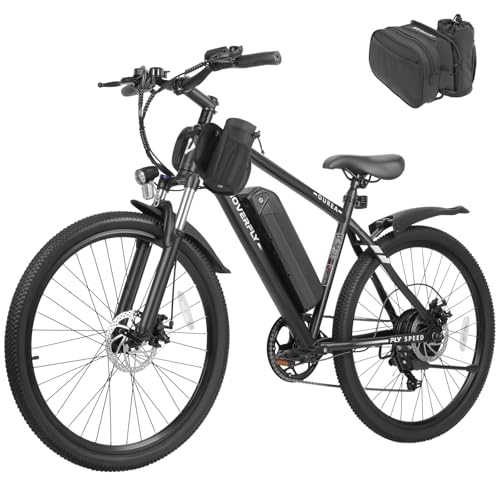
| Hoverfly OUREA | Check price at Amazon | Class 2 | 20 mph |
What are the e-bike rules in Idaho?
Sourced from the Idaho statute and verified against the PeopleForBikes State Law Tracker.
Check your setup
Is your e-bike legal in Idaho?
Your match
TST
TST City Commuter
Permitted on roads, bike lanes, and bike paths in Idaho.
Our score 8.0/10
Our top class-legal pick for Idaho, street-legal to ride today.
Read our full review firstThe 30-second answer
E-bikes are legal across Idaho under the federal Class 1/2/3 framework adopted by HB 76 (2019), effective 1 July 2019. The definition is at Idaho Code §49-106 (Definitions — B), with operating rules at §§49-725 through 49-728. Motor cap is less than 750 watts.
Two things make Idaho stand out from the rest of the country:
- The Idaho Stop (§49-720) — adopted in 1982 and the foundation of the national stop-as-yield movement. Cyclists may treat stop signs as yield signs and treat red lights as stop signs (proceed when safe). Subsection (1) was explicitly amended to include "electric-assisted bicycle"; subsection (2) (red lights) still reads "bicycle or human-powered vehicle" verbatim but is practically read to include e-bikes via §49-725.
- Class 3 minimum age is 15 (§49-727), not 16 like most three-tier states. Most states adopted the model-law 16+ floor; Idaho did not. There is also no statewide helmet rule for any class at any age, and no statewide minimum age for Class 1 or Class 2.
Path access is permissive by default under §49-728 for all three classes — e-bikes "may be ridden where bicycles are permitted to travel, unless excluded by local ordinance or by signage posted by the public agency with jurisdiction." The Class 3 bans you'll encounter — on the Boise Greenbelt (city ordinance Code 6-13), the Trail of the Coeur d'Alenes (IDPR policy), and Idaho State Parks generally (IDPR department policy) — are local/agency overlays, not statutory.
No driver license, no DMV registration, no insurance under §49-726. Idaho's "moped" definition at §49-114 expressly excludes electric-assisted bicycles — that's the statutory hook keeping e-bikes out of the DMV regime.
The full Idaho rules, section by section. Tap any section to read it.
Quick reference
Quick reference
| Spec | Idaho rule |
|---|---|
| Framework | Federal Class 1/2/3 (adopted 2019, HB 76) |
| Definition statute | Idaho Code §49-106 |
| Rights + duties | §49-725 |
| License/registration exemption | §49-726 |
| Class 3 age + labeling | §49-727 |
| Path access | §49-728 |
| Moped exclusion (DMV exemption hook) | §49-114 — "Moped does not include an electric-assisted bicycle" |
| The Idaho Stop | §49-720 — stop-as-yield + red-as-stop, 1982 |
| Motor power cap | <750 W (§49-106) |
| Class 1 (pedal-assist, ≤20 mph) | ✅ Legal · paths ✅ default |
| Class 2 (throttle, ≤20 mph) | ✅ Legal · paths ✅ default |
| Class 3 (pedal-assist, ≤28 mph) | ✅ Legal · operator 15+ · paths ✅ default (but locally restricted on most paved trails) |
| Driver license | Not required (§49-726) |
| Registration | Not required |
| Insurance | Not required |
| Statewide helmet rule | None — for any class, any age |
| Minimum age (Class 1 + 2) | None |
| Minimum age (Class 3) | 15 (§49-727) — unusually low |
| Path access (statewide default) | All three classes permitted where bicycles are; local agencies + signage may exclude (§49-728) |
| Boise Greenbelt (~25 mi paved) | Class 1 + 2 ✅; Class 3 banned (Boise Code 6-13) |
| Trail of the Coeur d'Alenes (~73 mi paved) | Class 1 + 2 ✅; Class 3 banned; 15 mph speed limit (IDPR) |
| Idaho State Parks (department policy) | Class 1 + 2 ✅; Class 3 not permitted by IDPR policy |
| Lewiston Levee Parkway | All classes excluded (IDPR) |
| Sawtooth NF (USFS) | All 3 classes on motorized roads/trails; non-motorized singletrack varies by Ranger District |
| Sun Valley / Ketchum singletrack | Granular by trail — Quigley Trails Park is Class 1 only; many USFS singletrack trails closed to e-bikes; see Wood River Trails Coalition |
Two practical reads. First, Idaho's statewide statute is among the most rider-friendly in the country — no helmet, no Class 1/2 age, Class 3 age just 15, all classes permitted on paths by default, plus the Idaho Stop. Second, the bite is local: the Boise Greenbelt, the Trail of the Coeur d'Alenes, and Idaho State Parks have all opted Class 3 out, and Sun Valley's singletrack scene is heavily trail-by-trail. Check the trailhead sign before riding.
The three-class system in Idaho
The three-class system in Idaho
Idaho defines an "electric-assisted bicycle" at Idaho Code §49-106:
An "electric-assisted bicycle" means a bicycle equipped with fully operable pedals and an electric motor of less than seven hundred fifty (750) watts and that meets one of the following requirements:
- Class 1 — motor "provides assistance only when the rider is pedaling and ceases when the rider stops pedaling or when the bicycle reaches the speed of twenty (20) miles per hour."
- Class 2 — motor "may be used exclusively to propel the bicycle and that is not capable of providing assistance when the bicycle reaches the speed of twenty (20) miles per hour."
- Class 3 — motor "provides assistance only when the rider is pedaling and ceases when the rider stops pedaling or when the bicycle reaches the speed of twenty-eight (28) miles per hour."
The framework was enacted by HB 76 during the 2019 Regular Session, signed by Governor Brad Little, effective 1 July 2019 (Idaho's default effective date for non-emergency bills).
Why some sources cite the wrong statute or wrong bill
Three citation traps are common in retailer SEO content:
- §49-114 is NOT the e-bike statute. §49-114 is the moped statute — and it explicitly says "Moped does not include an electric-assisted bicycle." That's the statutory hook for keeping e-bikes out of the DMV regime, not the definitional statute. The actual e-bike definition is at §49-106.
- HB 508 (2018) is NOT the enacting bill. HB 508 was the predecessor that did not pass. The version that became law is HB 76 (2019).
- HB 71 (2017) is unrelated. Some blogs cite HB 71 — it's a different bill, not the e-bike law.
The Idaho Stop — §49-720
The Idaho Stop — §49-720
Idaho is the birthplace of stop-as-yield. Idaho Code §49-720 — originally enacted in 1982 (HB 541) — lets cyclists treat stop signs as yield signs and red lights as stops. It's been the foundation of the national "Idaho Stop" movement, now adopted by Delaware (2017), Arkansas (2019, Act 650 / SB 388 — the unrelated AR e-bike law is Act 956 of 2017), Oregon (2020), Washington (2020), Utah (2021), Oklahoma (2021, HB 1770), Colorado (2022), Washington DC (2022), and most recently New Mexico (2025).
§49-720(1) — stop signs (verbatim, with the 2019 e-bike amendment):
A person operating a bicycle, human-powered vehicle, or an electric-assisted bicycle approaching a stop sign shall slow down and, if required for safety, stop before entering the intersection. After slowing to a reasonable speed or stopping, the person shall yield the right-of-way to any vehicle in the intersection or approaching on another highway so closely as to constitute an immediate hazard during the time the person is moving across or within the intersection or junction of highways, except that a person, after slowing to a reasonable speed and yielding the right-of-way, if required, may cautiously make a turn or proceed through the intersection without stopping.
§49-720(2) — red lights (verbatim):
A person operating a bicycle or human-powered vehicle approaching a steady red traffic control light shall stop before entering the intersection and shall yield to all other traffic. Once the person has yielded, he may proceed through the steady red light with caution. Provided however, that a person, after slowing to a reasonable speed and yielding the right-of-way, if required, may cautiously make a right-hand turn. A left-hand turn onto a one-way highway may be made on a red light after stopping and yielding to other traffic.
The drafting gap to know: §49-720(1) (stop signs) was amended in 2019 to explicitly include "electric-assisted bicycle", alongside "bicycle" and "human-powered vehicle." §49-720(2) (red lights) was NOT amended — it still reads only "bicycle or human-powered vehicle" verbatim. Practitioners read subsection (2) as applying to e-bikes too, because §49-106 classifies an electric-assisted bicycle as a type of bicycle and §49-725 grants e-bike riders "all the rights and privileges" of bicycle riders — but the statute does not say so verbatim for red lights. Conservative read: yes, the Idaho Stop applies to e-bikes; but the red-light half of the rule rests on inference rather than express text.
Throttle Class 2 question: No Idaho case law or AG opinion has distinguished pedal-assist vs throttle for §49-720 purposes. The text says "person operating a bicycle [...] or an electric-assisted bicycle" — no pedaling requirement. Class 2 throttle riders are covered by the plain text.
Where can you ride an e-bike in Idaho?
Where can you ride an e-bike in Idaho?
Can you ride on roads and bike lanes?
Same rights and duties as a regular bicycle under §49-725. All three classes may use roads and bike lanes — and the Idaho Stop (§49-720) applies.
Multi-use paths — Idaho is permissive by default
§49-728 verbatim: electric-assisted bicycles "may be used in places where bicycles are permitted to travel including but not limited to multiuse paths, unless excluded by local ordinance or by signage posted by the public agency with jurisdiction after notice by inclusion on a governing board agenda."
The statewide default is permissive for ALL three classes, with multi-use paths expressly named. The "governing board agenda" clause is the procedural protection: an agency cannot quietly post an exclusion sign without first putting the action on a public meeting agenda. The Class 3 bans you'll encounter on Idaho's marquee paved trails — the Boise Greenbelt, the Trail of the Coeur d'Alenes, Idaho State Parks generally — are local-ordinance or agency-policy overlays that went through that public-process requirement; they are not statutory bans. This is the opposite of states like Arizona or Connecticut where the statute itself bans Class 3 from paths.
Can you ride an e-bike on the sidewalk?
No statewide rule — local ordinance controls. Boise allows e-bike sidewalk riding (Code 6-13) with a dismount requirement when pedestrian density makes riding unsafe. Idaho Falls has Title 9 Chapter 8 specifically for e-bikes + e-scooters — equipment requirements, Central Downtown Area restrictions. Moscow has Title 11 Chapter 2. Other cities default to general bicycle rules.
Boise Greenbelt + Boise city rules
Boise Greenbelt + Boise city rules
The Boise Greenbelt is Idaho's most-used urban cycling corridor — ~25 miles of paved shared-use trail along the Boise River, from Lucky Peak to Eagle Road. Per Boise City Code Ch. 6-13:
- Class 1 and Class 2 e-bikes: permitted on the entire Greenbelt, sidewalks, crosswalks, and bike lanes.
- Class 3 e-bikes: prohibited on the Greenbelt, sidewalks, crosswalks, and bike lanes — Class 3 stays on roads in Boise.
- Sidewalks: riders must dismount if pedestrian density makes safe riding impossible (§6-13-10).
Trail of the Coeur d'Alenes
Trail of the Coeur d'Alenes
The Trail of the Coeur d'Alenes is Idaho's marquee long-distance paved trail — ~73 miles from Plummer to Mullan, across the Idaho Panhandle. Managed by Idaho Department of Parks and Recreation.
- Class 1 and Class 2 e-bikes: ✅ permitted (since 2019). Many secondary sources still say "Class 1 only" — this is stale.
- Class 3 e-bikes: ❌ prohibited (IDPR policy, not statute).
- 15 mph speed limit trail-wide.
Sun Valley + Ketchum (trail-by-trail)
Sun Valley + Ketchum (trail-by-trail)
The Wood River Valley's MTB scene is administered by the Wood River Trails Coalition, Blaine County Recreation District, and the Sawtooth NF Ketchum Ranger District. There is no single municipal e-bike ordinance — access varies trail by trail. Per the Wood River Trails Coalition e-bike page:
- Quigley Loop + Quigley Trails Park — Class 1 only.
- USFS motorized routes — all classes generally permitted.
- USFS non-motorized singletrack — varies; trails like Fisher Canyon #314, Porcupine Creek #172, and Osberg Ridgeline #147 are explicitly e-bike-friendly; others (Alden Gulch #144, Baker Lake #818, Apollo Creek #139, Easley/Curly's #148, Adam's Rib #142) exclude e-bikes.
Always check the trailhead sign — Sun Valley's singletrack network is one of the most granularly-managed e-bike environments in the country.
Can you ride an e-bike on federal land in Idaho?
Can you ride an e-bike on federal land in Idaho?
- Sawtooth National Forest (USFS): per the USFS national e-bike policy, all three classes allowed on motorized roads/trails; on non-motorized singletrack only where specifically designated. Varies by Ranger District (Ketchum, Fairfield, Minidoka all manage trails differently).
- Yellowstone NP (Idaho gateway via West Yellowstone): per 36 CFR §7.13 and Secretary's Order 3376 (effective 2 Dec 2020), e-bikes allowed wherever traditional bicycles are allowed; throttle-only operation prohibited (rider must pedal) except on roads open to public motor vehicle traffic. Not allowed in designated wilderness or on oversnow routes in winter.
Do you need a helmet, license, or registration in Idaho?
Do you need a helmet, license, or registration in Idaho?
| Topic | Idaho rule |
|---|---|
| Driver license | Not required (§49-726) |
| Registration | Not required |
| Insurance | Not required (liability still exists at common law) |
| Statewide helmet | None — Idaho has no statewide bicycle or e-bike helmet law for any class at any age. Municipal-only. |
| Minimum age (Class 1 + 2) | None |
| Minimum age (Class 3, operator) | 15 (§49-727) — unusually low; most three-tier states are 16 |
| Class 3 labeling | Required (§49-727) — visible class label on the bike |
Idaho's permissive baseline — no helmet, no Class 1/2 age, Class 3 just 15, no license/registration/insurance, plus the Idaho Stop — makes it one of the most rider-friendly e-bike jurisdictions in the United States. The trade-off: the marquee paved trails (Boise Greenbelt, Trail of the Coeur d'Alenes) and the state-parks system have all opted Class 3 out, so the practical Class 3 footprint is roads + USFS motorized routes + select municipalities.
Is Idaho changing its e-bike laws?
Is Idaho changing its e-bike laws?
- HB 500 (2026) — signed by Governor Little on 16 March 2026, effective 1 July 2026. Cleanup bill adding "electric-assisted bicycle" to §49-615 (driver due care), §49-714 (traffic rights/duties), §49-715 (seating). Does NOT change the e-bike classification or path access.
- 2024 + 2025 sessions — no e-bike-specific bills enacted that change classification, helmet, or path access. (Verify against the Idaho Legislature bill tracker before relying on this for any active dispute.)
Current law remains: §49-106 + §§49-725..49-728 + §49-114 (moped exclusion) + §49-720 (Idaho Stop).
Check your setup against Idaho law
Check your setup against Idaho law
The rules above are the statewide baseline. Two things decide whether a specific bike is legal for a specific rider: which class it actually is, and how old the rider is.
- E-bike legality checker — enter motor wattage, top assisted speed, throttle and rider age, and get the Idaho verdict with the statute reference.
- Class 1, 2, 3 e-bikes explained — what the three classes mean and why the label on the frame is the thing states regulate. Most compliance problems are a bike that was never in-class to begin with.
- All 50 states + DC compared — one sortable table: classification tier, Class 3 legality, path access, helmet rule, minimum age, licence and registration.
Sources
Sources
- Idaho Code §49-106 — Definitions B (electric-assisted bicycle)
- Idaho Code §49-114 — Moped definition (excludes e-bikes)
- Idaho Code §49-720 — Stopping at stop signs / red lights (the Idaho Stop)
- Idaho Code §49-725 — E-bike rights and duties
- Idaho Code §49-728 — E-bike path use
- HB 76 (2019) — enacting bill, full text
- HB 500 (2026) — cleanup bill, signed 16 Mar 2026
- Idaho Parks & Rec — Trail of the Coeur d'Alenes
- Boise Code Ch. 6-13 — e-bikes + e-scooters
- City of Boise — official e-bike + scooter guidance
- Idaho Falls — Title 9 Ch. 8 (e-bikes + e-scooters)
- Moscow ID — Title 11 Ch. 2 (bicycles, e-bikes, e-scooters, e-boards)
- Wood River Trails Coalition — e-bike trail-by-trail
- USFS national e-bike policy
- NPS Yellowstone — bicycling
- DOI Secretary's Order 3376 — federal lands e-bike policy
- League of American Bicyclists — Idaho Stop / Delaware Yield 2018 report
- NHTSA — Bicyclist Yield-as-Stop fact sheet (2023)
E-bikes that fit Idaho's rules
Filtered from our review catalog by class eligibility under Idaho statute. Spec-matched, not popularity-ranked.
- Class 2
 AmazonSave $30
TST
TST City Commuter
Class 2 — pedal-assist + throttle to 20 mph
Permitted on roads, bike lanes, and bike paths in Idaho.750 W · 20 mph · Score 8.0
Read the review - Class 2Amazon
Funhang
Funhang Fat 26
Class 2 — pedal-assist + throttle to 20 mph
Permitted on roads, bike lanes, and bike paths in Idaho.500 W · 20 mph · Score 7.4
Read the review - Class 2AmazonSave $50
Hoverfly
Hoverfly OUREA
Class 2 — pedal-assist + throttle to 20 mph
Permitted on roads, bike lanes, and bike paths in Idaho.750 W · 20 mph · Score 7.4
Read the review
Eligibility is class-based: picks shown here are legal to own and operate on roads in Idaho. Local jurisdictions (state parks, beach paths, individual cities) may add further restrictions; see the body above for the specifics.
Recent Idaho e-bike law coverage
News-form posts that reference Idaho's statutes or covered a change affecting Idaho riders.
- July 1st E-Bike Law: No Ban, 2 States Changed
No nationwide e-bike ban took effect on July 1, 2026. Two states had real changes in that window — New Jersey and Tennessee. Florida's much-reported 10 mph sidewalk bill was vetoed six days before it would have started. Illinois passed a major e-bike bill too (SB 3484), but it is still awaiting the governor's signature and would take effect January...
Read the post - What States Are Banning E-Bikes? 2026 Reality Check
No US state has banned e-bikes. Class 1 and Class 2 are street-legal in every state under federal law. A minority restrict Class 3; only New Jersey requires a license and registration as of 19 July 2026.
Read the post
Frequently asked questions
Are e-bikes legal in Idaho?
Yes. Idaho adopted the federal Class 1/2/3 framework via HB 76 (2019), effective 1 July 2019. The definition is at Idaho Code §49-106 — "less than 750 watts" — and the operating rules at §§49-725 through 49-728. All three classes are street-legal and treated as bicycles; no driver license, no registration, no insurance under §49-726. Idaho's "moped" definition at §49-114 explicitly excludes electric-assisted bicycles — that's the statutory hook keeping e-bikes out of the DMV regime.
Does the Idaho Stop apply to e-bikes?
Yes — but the statute is asymmetric. §49-720(1) (stop-as-yield at stop signs) was explicitly amended in 2019 to include "electric-assisted bicycle" alongside "bicycle" and "human-powered vehicle." So stop-signs-as-yields applies verbatim to e-bikes. §49-720(2) (red-as-stop) was NOT amended — it still reads only "bicycle or human-powered vehicle." The practical reading via §49-106 (which classifies e-bikes as bicycles) and §49-725 (which grants e-bike riders "all the rights and privileges" of bicycle riders) includes e-bikes — but the text is not symmetrical. Conservative reading: yes, the full Idaho Stop applies to e-bikes; but the red-light half rests on inference rather than express text.
Do you need a license or registration for an e-bike in Idaho?
No. §49-726 exempts electric-assisted bicycles meeting the §49-106 definition from driver's licensing, registration, and insurance requirements under Title 49. Idaho's "moped" definition at §49-114 explicitly states "Moped does not include an electric-assisted bicycle" — that's the statutory hook.
Is there a minimum age to ride an e-bike in Idaho?
Only for operating Class 3. §49-727 sets the Class 3 operator minimum age at 15 (unusually low — most three-tier states use 16). No minimum age for Class 1 or Class 2.
Does Idaho require a helmet on an e-bike?
No statewide helmet rule — for any class, any age, any rider. Idaho has no statewide bicycle or e-bike helmet law. §49-666 covers motorcycles/UTV/ATV only — it does not extend to bicycles or e-bikes. Some municipalities may impose an under-18 helmet ordinance — verify locally.
Are Class 3 e-bikes allowed on the Boise Greenbelt?
No. Per Boise City Code Ch. 6-13, Class 1 and Class 2 e-bikes are permitted on the entire 25-mile Boise Greenbelt (plus sidewalks, crosswalks, and bike lanes), but Class 3 is prohibited on the Greenbelt, sidewalks, crosswalks, and bike lanes. Class 3 stays on roads in Boise. This is a city ordinance, not state law — Idaho's statewide path-access default at §49-728 permits all three classes.
Are e-bikes allowed on the Trail of the Coeur d'Alenes?
Class 1 and Class 2 are permitted; Class 3 is prohibited. Per Idaho Parks & Rec, the 73-mile paved Trail of the Coeur d'Alenes allows Class 1 and Class 2 e-bikes (since 2019), prohibits Class 3, and enforces a 15 mph trail-wide speed limit. Note: many secondary sources still say "Class 1 only" — that's stale.
What is the motor power limit for e-bikes in Idaho?
Less than 750 watts under Idaho Code §49-106 (strict inequality). Idaho is not a 1,000-watt state — Oregon remains the only US 1,000 W state. A bike whose motor exceeds 750 W (or whose throttle alone propels it past the class speed cap) falls outside §49-106 and becomes a moped or motor vehicle, with full license/registration/insurance obligations.
How do other states compare?
Compare Idaho's rules with states that share a similar framework.
Common e-bike law questions
The national answer to the questions Idaho riders ask most, covering every US state, side by side.
Cite or link this page
Found this useful? Link to it.
This guide is free to reference. If it helped you, a link helps more riders find accurate, up-to-date law info, and we keep it current (last reviewed May 31, 2026). Licensed CC BY 4.0. Reuse the data with attribution.
<a href="https://ebikeoracle.com/laws/idaho">Idaho E-Bike Laws 2026: Idaho Stop, No Helmet — Ebike Oracle</a>
Ebike Oracle. "Idaho E-Bike Laws 2026: Idaho Stop, No Helmet." Ebike Oracle, 2026, https://ebikeoracle.com/laws/idaho.