Delaware E-Bike Laws 2026: No License, Yield Law
Are e-bikes legal in Delaware?
Delaware adopted the federal three-class e-bike framework through HB 19 of the 151st General Assembly, signed by Governor John Carney on 26 October 2022 — NOT the often-miscited "SB 142 of 2019" (which did not enact this framework). Delaware was therefore a late three-class adopter, well after most New England and Mid-Atlantic neighbours. The definition lives at 21 Del. C. §101(18) with the operating rules at 21 Del. C. §4198P. Motor cap: ≤750 W. No license, no registration, no insurance (§4198P(b)). The general bicycle helmet rule at §4198K requires a helmet for any operator or passenger under 18 on any bicycle, and §4198P(i) additionally requires a helmet for ALL operators and passengers of a Class 3 e-bike regardless of age — so any rider on a Class 3 needs a helmet, full stop.
Delaware's signature contribution to US bike law is THE DELAWARE YIELD at 21 Del. C. §4196A, enacted by HB 185 of 2017 (the "Bicycle Friendly Delaware Act") and signed by Gov. Carney on 5 October 2017. Delaware became the second state after Idaho (1982) to legalize stop-as-yield, opening the cascade that brought Arkansas (2019), Oregon (2020), Washington (2020), Utah (2021), Oklahoma (2021), North Dakota (2021), Colorado (2022), DC (2022), Minnesota (2023), and New Mexico (2025) into the same regime. Delaware's version is narrower than Idaho's: stop signs only (not red lights) and only on roads with 2 or fewer travel lanes. The 2021 amendment removed the original sunset clause unanimously after a state study showed bicycle crashes at stop-sign-controlled intersections fell over 20% post-enactment. E-bikes inherit the Delaware Yield via §4198P(a) ("all the rights and privileges, and is subject to all the duties, of a bicycle").
Legal to ride in Delaware: our top class-legal pick
As an Amazon Associate I earn from qualifying purchases. Ebike Oracle may also earn a commission on links to other retailers. Full disclosure.

Class 2 — pedal-assist + throttle to 20 mph
Class 2 · 20 mph · Score 7.4
Free 30-day returns via Amazon
Other legal picks for Delaware
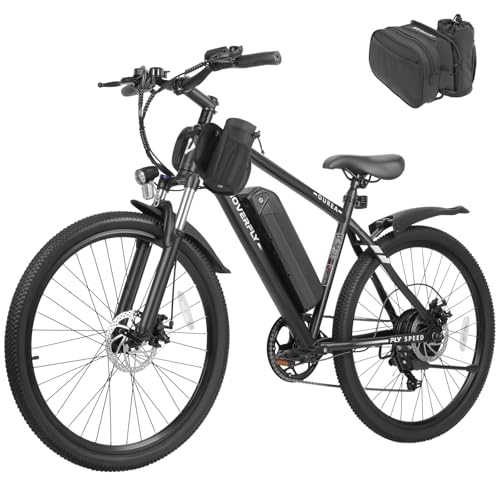

Street-legal e-bikes you can buy in Delaware (2026)
Each fits a class Delaware treats as a bicycle, so it needs no registration or licence to ride.
| E-bike | Buy | Class | Speed |
|---|---|---|---|
| Funhang Fat 26 | Check price at Amazon | Class 2 | 20 mph |
| Hoverfly OUREA | Check price at Amazon | Class 2 | 20 mph |
| Funhang City Cruiser 26 | Check price at Amazon | Class 2 | 20 mph |
What are the e-bike rules in Delaware?
Sourced from the Delaware statute and verified against the PeopleForBikes State Law Tracker.
Check your setup
Is your e-bike legal in Delaware?
Your match
Funhang
Funhang Fat 26
Permitted on roads, bike lanes, and bike paths in Delaware.
Our score 7.4/10
Our top class-legal pick for Delaware, street-legal to ride today.
Free 30-day returns via Amazon
The 30-second answer
E-bikes are legal across Delaware under the federal Class 1/2/3 framework adopted by HB 19 (2022), signed by Governor John Carney on 26 October 2022. The definition is at 21 Del. C. §101(18), with operating rules at §4198P. Motor cap is ≤750 watts.
Four things to know up front:
- No license, no registration, no insurance under §4198P(b). All three classes are treated as bicycles for licensing/registration/insurance purposes as long as the motor is ≤750 W and the bike falls within one of the three classes.
- Class 3 requires a helmet for ALL ages. §4198P(i) requires a CPSC-compliant helmet for any operator OR passenger of a Class 3 e-bike, any age. Adults riding a Class 1 or Class 2 are not legally required to wear a helmet — but adults riding a Class 3 are.
- The general bicycle helmet rule is under 18. §4198K requires a helmet for any operator or passenger under 18 on any bicycle (e-bike or regular). The under-18 floor + the Class-3-all-ages rule stack: a 14-year-old on a Class 1 needs a helmet via §4198K, a 30-year-old on a Class 3 needs one via §4198P(i).
- The Delaware Yield (§4196A) applies. Delaware was the second state after Idaho to legalize stop-as-yield (HB 185 of 2017). Bicyclists — including Class 1/2/3 e-bike riders — may treat stop signs as yield signs on roads with 2 or fewer lanes of moving traffic. Stop signs only, NOT red lights (Delaware's version is narrower than Idaho's).
Class 3 operators must be 16+ (§4198P(h)). The bike must have a working speedometer. Sidewalk operation is prohibited while using the electric motor (pedal-only operation is treated as a regular bicycle and follows local sidewalk rules).
The full Delaware rules, section by section. Tap any section to read it.
Quick reference
Quick reference
| Spec | Delaware rule |
|---|---|
| Framework | Federal Class 1/2/3 (adopted 2022, HB 19) |
| Definition statute | 21 Del. C. §101(18) |
| Operating rules | 21 Del. C. §4198P |
| The Delaware Yield | 21 Del. C. §4196A — HB 185 of 2017, made permanent 2021 |
| General bicycle helmet (under 18) | 21 Del. C. §4198K |
| Class 3 helmet (all ages) | §4198P(i) |
| Motor power cap | ≤750 W (§101(18)) |
| Class 1 (pedal-assist, ≤20 mph) | ✅ Legal · paths ✅ default |
| Class 2 (throttle, ≤20 mph) | ✅ Legal · paths ✅ default |
| Class 3 (pedal-assist, ≤28 mph) | ✅ Legal · operator 16+ · speedometer required · paths ✅ default · all-ages helmet required |
| Driver license | Not required (§4198P(b)) |
| Registration / title / plate | Not required |
| Insurance | Not required |
| Statewide helmet (under 18) | All bicycles + all e-bike classes (§4198K) |
| Class 3 helmet (all ages) | Operator + passenger, any age (§4198P(i)) |
| Minimum age (Class 1 + 2 operator) | None |
| Minimum age (Class 3 operator) | 16 (§4198P(h)) |
| Sidewalk operation | Prohibited while motor engaged (§4198P(g)); pedal-only treated as regular bicycle |
| Path access default | Permitted anywhere bicycles are; nonmotorized natural-surface trails excluded; local authority may opt-out specific paths after notice + public hearing |
| Helmet-non-use as negligence | Inadmissible in civil action (§4198K) — plaintiff shield |
| Delaware Yield scope | Stop signs only (NOT red lights) · roads with ≤2 moving-traffic lanes only · applies to all 3 e-bike classes via §4198P(a) |
| Junction & Breakwater Trail (~5.8 mi paved, Cape Henlopen → Rehoboth) | Permitted per §4198P default |
| Gordons Pond Trail (~3.2 mi one-way, Cape Henlopen SP) | Permitted per §4198P default |
| Michael N. Castle C&D Canal Trail (~8.7 mi in DE; ~12.1 mi end-to-end with the Ben Cardin Trail extension into Chesapeake City, MD) | Permitted per §4198P default |
| Georgetown-Lewes Trail (~9.8 mi currently open across 3 segments; 17 mi planned, final phase delayed to late 2026) | Permitted per §4198P default |
| Rehoboth Beach Boardwalk | ❌ E-bikes BANNED (no motorized vehicles allowed) |
Two practical reads. First, Delaware's statewide statute is mainstream federal three-class — the headline differentiator is the Delaware Yield, the legal innovation that broke Idaho's 35-year monopoly on stop-as-yield in 2017 and seeded every Idaho-Stop state that followed. Second, the helmet rule is layered: under-18 needs a helmet on any bicycle; any age on a Class 3 needs a helmet. There is no carve-out — Class 3 = helmet, full stop.
The three-class system in Delaware
The three-class system in Delaware
Delaware defines an "electric bicycle" at 21 Del. C. §101(18), created by HB 19 of the 151st General Assembly:
A bicycle equipped with fully operable pedals and an electric motor of less than or equal to 750 watts, and that meets the requirements of one of the following three classes:
- Class 1 — motor "provides assistance only when the rider is pedaling, and ceases to provide assistance when the bicycle reaches the speed of 20 miles per hour."
- Class 2 — motor "may be used exclusively to propel the bicycle, and is not capable of providing assistance when the bicycle reaches the speed of 20 miles per hour." (Throttle-only OK, capped at 20 mph.)
- Class 3 — motor "provides assistance only when the rider is pedaling, and ceases to provide assistance when the bicycle reaches the speed of 28 miles per hour, and is equipped with a speedometer."
The framework was enacted by HB 19 during the 151st General Assembly, signed by Governor John Carney on 26 October 2022. Sponsors: Reps. Longhurst, Baumbach, Bolden, Osienski; Sens. Hansen, Sokola.
Why some sources cite the wrong bill
Multiple retailer guides cite "SB 142 of 2019" as Delaware's enacting e-bike bill. This is wrong — the actual three-class framework is HB 19 of the 151st GA, signed 26 October 2022. Delaware was a late three-class adopter (most other US states adopted between 2017–2021); a 2019 bill would predate that pattern by years. The §4198P operating rules and §101(18) definition both date to the October 2022 signing.
THE DELAWARE YIELD — §4196A
THE DELAWARE YIELD — §4196A
Delaware is the second state in US history to legalize stop-as-yield for cyclists, after Idaho (1982). The 35-year gap from Idaho's 1982 enactment to Delaware's 2017 enactment is why the Delaware Yield matters: it broke the policy monopoly and opened the cascade that led to ten more states adopting variants over the next eight years.
The enacting bill
- Bill: HB 185 of the 149th General Assembly — the "Bicycle Friendly Delaware Act" (BFDA)
- Signed: 5 October 2017 by Governor John Carney in Newark
- Sponsors: Rep. Larry Mitchell (House lead), Sen. Dave Sokola (Senate lead)
- Made permanent: A 2021 amendment removed the original sunset clause — unanimous in both chambers after a state-run study found bicycle crashes at stop-sign-controlled intersections decreased over 20% after the law took effect.
The statutory rule (paraphrased from §4196A)
- On a roadway with 3 or more lanes of moving traffic → bicyclist must come to a complete stop at stop signs.
- On a roadway with 2 or fewer lanes of moving traffic → bicyclist must reduce speed and yield; stop only if safety requires. After yielding, the cyclist must yield right-of-way to any vehicle in the intersection or approaching closely enough to be an immediate hazard.
Scope — narrower than Idaho
- Stop signs ONLY. Delaware did NOT adopt the "dead-red" / treat-red-lights-as-stop-signs half of the Idaho Stop. Idaho's §49-720 covers both stop signs and red lights; Delaware's §4196A covers only stop signs.
- Lane-count limited. Stop-sign intersections on 3-or-more-lane roads are excluded — full-stop rule still applies there.
Does the Delaware Yield apply to e-bikes?
Yes. Under §4198P(a), electric bicycles receive "all the rights and privileges, and [are] subject to all the duties, of a bicycle or the operator of a bicycle" — which carries §4196A to Class 1, Class 2, and Class 3 riders.
The Idaho Stop cascade Delaware opened
Idaho (1982) → Delaware (2017) → Arkansas (2019, Act 650) → Oregon (2020) → Washington (2020) → Utah (2021) → Oklahoma (2021, HB 1770) → North Dakota (2021, HB 1252) → Colorado (2022, SB 22-144) → Washington DC (2022) → Minnesota (2023) → New Mexico (2025, SB 73). The League of American Bicyclists' Idaho Stop / Delaware Yield 2018 report is the canonical reference.
Do you need a helmet, license, or registration in Delaware?
Do you need a helmet, license, or registration in Delaware?
| Topic | Delaware rule |
|---|---|
| Driver license | Not required (§4198P(b)) |
| Registration / title / plate | Not required |
| Insurance / financial responsibility | Not required |
| Statewide helmet (under 18, any bicycle including e-bike) | Required — operator or passenger (§4198K) |
| Class 3 helmet (ALL ages) | Required for operator AND passenger, any age (§4198P(i)) |
| Helmet penalty | Parent/guardian liable — $25 first offence, $50 subsequent. Court may dismiss on proof of helmet purchase after the violation. |
| Helmet-non-use as negligence | Inadmissible in civil action (§4198K) — plaintiff shield |
| Religious exemption | §4198K provides an affirmative defence for members of recognized churches/denominations whose tenets oppose helmets |
| Minimum age (Class 1 + 2 operator) | None |
| Minimum age (Class 3 operator) | 16 (§4198P(h)) |
| Class 3 speedometer | Required |
| Class 3 label | Required — class number, top assisted speed, motor wattage (§4198P(c)) |
Net helmet rule: Under 18 on any bike OR any age on Class 3 → helmet required. Class 1/2 adults are not legally required to wear a helmet (but it's recommended).
Where can you ride an e-bike in Delaware?
Where can you ride an e-bike in Delaware?
Can you ride on roads and bike lanes?
All three classes have the same rights and duties as a regular bicycle under §4198P(a), and the Delaware Yield (§4196A) applies on roads with 2 or fewer lanes. Roads, road shoulders, and on-street bike lanes are open to all three classes statewide.
Multi-use paths — permissive default, with local opt-out
Under §4198P(g): electric bicycles may be operated "anywhere bicycles are allowed," including streets, highways, shoulders, bike lanes, bikeways, and bicycle or multi-use paths. Two carve-outs:
- Sidewalks — prohibited while using the electric motor. Pedal-only operation is treated as a regular bicycle.
- Trails specifically designated as nonmotorized natural-surface trails — off-limits to e-bikes.
A local authority or state agency may, after notice and a public hearing, prohibit Class 1 e-bikes on specific paths or trails if necessary for safety or to comply with other legal obligations. Class 2 and Class 3 may be restricted more readily because of throttle / higher speed.
Delaware State Parks + signature trails
Delaware State Parks + signature trails
Delaware State Parks generally follow the §4198P(g) default — e-bikes are allowed where bicycles are allowed on paved multi-use trails. Natural-surface / singletrack / nonmotorized-designated trails are off-limits per the §4198P(g) carve-out.
- Junction & Breakwater Trail — ~5.8 mi mostly-paved trail from Cape Henlopen toward Rehoboth Beach. Open to e-bikes per §4198P default.
- Gordons Pond Trail — ~3.2 mi one-way in Cape Henlopen State Park; elevated boardwalk + crushed-stone surface.
- Michael N. Castle C&D Canal Trail — ~8.7 mi in Delaware along the Chesapeake & Delaware Canal towpath (or ~12.1 mi end-to-end including the ~1.8-mi Ben Cardin Recreational Trail extension into Chesapeake City, Maryland).
- Georgetown-Lewes Trail — ~9.8 mi currently open across three segments (Cool Spring → Lewes contiguous main run + a ~1.6-mi Cape Henlopen connector + a ~0.7-mi Georgetown rail-with-trail segment); 17 mi at full buildout, with the final phase delayed to late 2026.
- Northern Delaware Greenway — ~10.4 mi (Brandywine Park to US-13 at Stoney Creek, Wilmington area) — Delaware's oldest and longest off-road greenway.
- Pomeroy & Newark Rail Trail — ~4.2 mi paved (National Recreation Trail; Hopkins Rd in White Clay Creek State Park to James F. Hall Trail).
- Christina Riverwalk — Wilmington urban path.
Cape Henlopen State Park restricts bicycling to designated roadways and trails — paved multi-use trails (Cape Henlopen Bike Loop, Gordons Pond Trail) are open; off-trail and beach riding are prohibited. Always check signage.
Rehoboth Beach Boardwalk — e-bikes banned
Rehoboth Beach Boardwalk — e-bikes banned
The Rehoboth Beach Boardwalk prohibits all motorized vehicles including e-bikes of any class (ADA mobility devices excepted). Regular acoustic bicycles are permitted on the boardwalk only 5:00 AM–10:00 AM, 15 May – 15 September; outside that window the boardwalk is pedestrian-only. Rehoboth Beach has retained the motor-vehicle ban on the boardwalk through multiple bicycle-rule reviews; riding an e-bike on the boardwalk at any time is a violation.
Cross-state comparison — and the New Jersey contrast
Cross-state comparison — and the New Jersey contrast
| State | Framework | Helmet | Cross-border note |
|---|---|---|---|
| Delaware | 3-class | Under 18 + all ages on Class 3 | The benchmark — permissive, with the unique Delaware Yield |
| Pennsylvania | "Pedalcycle with electric assistance" (single tier, ≤20 mph, ≤750 W) — NOT a three-class state | No statewide e-bike helmet rule | DE↔PA Class 3 riders leave the legal pedal-assist zone the moment they cross north (PA caps assist at 20 mph) |
| Maryland | 3-class (HB 728 of 2014, MD Transp. §11-117.1, ≤750 W) | Under 16 (general bicycle) | C&D Canal trail crosses into MD's Ben Cardin Trail — same operational rules, fully harmonized |
| New Jersey | Reclassified all e-bikes as "motorized bicycles" via S4834/A6235 (signed by Gov. Murphy on 19 Jan 2026), 6-month grace through 19 July 2026 | NJ existing helmet rules | DE↔NJ riders crossing the Delaware Memorial Bridge or Cape May–Lewes Ferry move from "no license/registration/insurance" → "all three required." Effectively the most restrictive e-bike regime in the US. |
The DE/NJ contrast is the load-bearing comparison: Delaware's framework looks downright permissive next to New Jersey's January 2026 reclassification.
Is Delaware changing its e-bike laws?
Is Delaware changing its e-bike laws?
- No 2024–2025 e-bike-specific Delaware legislation has been enacted. Gov. Matt Meyer (sworn in January 2025, replacing Carney) has not signed e-bike-targeted legislation as of mid-2026.
- HB 439 (153rd GA, introduced 21 May 2026) — pending in House Public Safety & Homeland Security Committee. Concerns electric mopeds and electric motorcycles, NOT e-bikes per se. Watch item only.
- The 2022 framework (HB 19) plus the 2021 sunset removal (Delaware Yield) remain the operative law.
- Always confirm against the Delaware General Assembly bill tracker for the current session.
Check your setup against Delaware law
Check your setup against Delaware law
The rules above are the statewide baseline. Two things decide whether a specific bike is legal for a specific rider: which class it actually is, and how old the rider is.
- E-bike legality checker — enter motor wattage, top assisted speed, throttle and rider age, and get the Delaware verdict with the statute reference.
- Class 1, 2, 3 e-bikes explained — what the three classes mean and why the label on the frame is the thing states regulate. Most compliance problems are a bike that was never in-class to begin with.
- All 50 states + DC compared — one sortable table: classification tier, Class 3 legality, path access, helmet rule, minimum age, licence and registration.
Sources
Sources
- 21 Del. C. §101 — Definitions (including §101(18) electric bicycle)
- 21 Del. C. §4198P — Operation of electric bicycles
- 21 Del. C. §4196A — Delaware Yield (Justia mirror)
- 21 Del. C. §4198K — General bicycle helmet (Justia mirror)
- HB 19 (151st GA) detail — Delaware General Assembly
- Bike Delaware — Bicycle Friendly Delaware Act (HB 185 of 2017)
- Bike Delaware — 2021 sunset removal + crash-reduction stat
- League of American Bicyclists — Idaho Stop / Delaware Yield 2018 report
- Delaware Office of Highway Safety — bicycle page
- DelDOT — Delaware bicycle laws PDF
- Delaware Greenways — Junction & Breakwater
- Delaware Greenways — Gordons Pond
- Delaware Greenways — Michael N. Castle C&D Canal Trail
- Delaware Greenways — Georgetown-Lewes Trail final phase
- Cape Henlopen State Park — DE State Parks
- Rehoboth Beach Boardwalk rules
E-bikes that fit Delaware's rules
Filtered from our review catalog by class eligibility under Delaware statute. Spec-matched, not popularity-ranked.
- Class 2
 Amazon
Funhang
Funhang Fat 26
Class 2 — pedal-assist + throttle to 20 mph
Permitted on roads, bike lanes, and bike paths in Delaware.500 W · 20 mph · Score 7.4
Read the review - Class 2AmazonSave $50
Hoverfly
Hoverfly OUREA
Class 2 — pedal-assist + throttle to 20 mph
Permitted on roads, bike lanes, and bike paths in Delaware.750 W · 20 mph · Score 7.4
Read the review - Class 2Amazon
Funhang
Funhang City Cruiser 26
Class 2 — pedal-assist + throttle to 20 mph
Permitted on roads, bike lanes, and bike paths in Delaware.500 W · 20 mph · Score 8.6
Read the review
Eligibility is class-based: picks shown here are legal to own and operate on roads in Delaware. Local jurisdictions (state parks, beach paths, individual cities) may add further restrictions; see the body above for the specifics.
Recent Delaware e-bike law coverage
News-form posts that reference Delaware's statutes or covered a change affecting Delaware riders.
Frequently asked questions
Are e-bikes legal in Delaware?
Yes. Delaware adopted the federal Class 1/2/3 framework via HB 19 of the 151st General Assembly, signed by Governor John Carney on 26 October 2022. The definition is at 21 Del. C. §101(18) (≤750 W) and the operating rules at §4198P. All three classes are street-legal and treated as bicycles for licensing/registration/insurance purposes. Note: retailer guides that cite "SB 142 of 2019" as the enacting bill are wrong — that bill did not enact the three-class framework.
What is the Delaware Yield, and does it apply to e-bikes?
The Delaware Yield (21 Del. C. §4196A, enacted by HB 185 of 2017 — the Bicycle Friendly Delaware Act, signed by Gov. Carney on 5 October 2017, made permanent in 2021) lets bicyclists treat stop signs as yield signs on roads with 2 or fewer lanes of moving traffic. It does not apply to red lights, and does not apply at 3-or-more-lane intersections (full stop required there). Because §4198P(a) gives e-bikes "all the rights and privileges, and is subject to all the duties, of a bicycle," Class 1/2/3 riders inherit the Delaware Yield. Delaware was the second US state after Idaho (1982) to legalize stop-as-yield — Arkansas, Oregon, Washington, Utah, Oklahoma, North Dakota, Colorado, DC, Minnesota, and New Mexico have since followed.
Do you need a license, registration, or insurance for an e-bike in Delaware?
No. §4198P(b) explicitly exempts electric bicycles meeting the §101(18) definition from driver-licensing, motor-vehicle registration, title, license-plate, and financial-responsibility (insurance) requirements — for all three classes. Note the cross-border contrast: neighbouring New Jersey reclassified all e-bikes as "motorized bicycles" via S4834/A6235 (signed by Gov. Murphy on 19 January 2026, 6-month grace period through 19 July 2026), and now requires a driver's license, MVC registration, and insurance for all NJ e-bike riders.
Does Delaware require a helmet on an e-bike?
Yes — two overlapping rules. (1) The general bicycle helmet rule at §4198K requires a properly fitted, securely fastened helmet for any operator or passenger under 18 on any bicycle (including e-bikes of any class). (2) §4198P(i) additionally requires a helmet for all operators and passengers of a Class 3 e-bike, regardless of age. Net effect: under-18 on any bike, or any age on a Class 3 → helmet required. The penalty is $25 first offence / $50 subsequent (court may dismiss on proof of helmet purchase). Notably, helmet non-use is inadmissible as evidence of comparative or contributory negligence in a civil action.
What is the minimum age for a Class 3 e-bike in Delaware?
16. §4198P(h) prohibits anyone under 16 from operating a Class 3 e-bike. The bike must also be equipped with a working speedometer. There is no statewide minimum age for operating a Class 1 or Class 2 e-bike (the under-18 helmet rule still applies regardless of class).
Can I ride my e-bike on the sidewalk in Delaware?
Not while the motor is engaged. §4198P(g) prohibits e-bike operation on a sidewalk "while using the electric motor." Pedal-only operation is treated as a regular bicycle and follows local sidewalk rules. (§4198B requires yielding to pedestrians and giving an audible signal before passing.) Some cities — including Rehoboth Beach — also prohibit any bicycle riding on downtown sidewalks year-round.
Are e-bikes allowed on the Rehoboth Beach Boardwalk?
No. The Rehoboth Beach Boardwalk prohibits all motorized vehicles, including e-bikes of any class (ADA mobility devices excepted). Regular acoustic bicycles are permitted on the boardwalk only 5:00 AM–10:00 AM, 15 May – 15 September; outside that window the boardwalk is pedestrian-only. The city has retained the motor-vehicle ban on the boardwalk through multiple bicycle-rule reviews. Riding an e-bike on the boardwalk at any time is a violation.
What is the motor power limit for e-bikes in Delaware?
Less than 750 watts under 21 Del. C. §101(18). Delaware uses the federal CPSC standard — same as Maryland (≤750 W) and Pennsylvania (≤750 W). Oregon is currently the only US state allowing motors above 750 W. A bike whose motor exceeds 750 W (or whose throttle alone propels it past the class speed cap) falls outside §101(18) and becomes a moped or motor vehicle, with full driver-licensing, registration, and insurance obligations.
How do other states compare?
Compare Delaware's rules with states that share a similar framework.
Common e-bike law questions
The national answer to the questions Delaware riders ask most, covering every US state, side by side.
Cite or link this page
Found this useful? Link to it.
This guide is free to reference. If it helped you, a link helps more riders find accurate, up-to-date law info, and we keep it current (last reviewed May 31, 2026). Licensed CC BY 4.0. Reuse the data with attribution.
<a href="https://ebikeoracle.com/laws/delaware">Delaware E-Bike Laws 2026: No License, Yield Law — Ebike Oracle</a>
Ebike Oracle. "Delaware E-Bike Laws 2026: No License, Yield Law." Ebike Oracle, 2026, https://ebikeoracle.com/laws/delaware.