Review · ASKGO
mountain6.6/10ASKGO Mountain 26
Spec-verified against the manufacturer listing
Our verdict
Amazon's #2 best-selling electric mountain bike costs $270, and that price buys real hardware: 26-inch wheels, a 7-speed drivetrain, a 365 lb payload rating and a 36-month warranty almost nobody at this price offers. Two things should stop you. It advertises 25 mph, a speed that fits no class in the US three-class system — Class 1 and 2 cap at 20, Class 3 allows 28 but bans throttles, and this bike has one. And the 65-mile range claim needs its 499Wh battery to return 7.7 watt-hours per mile, less than half what any e-bike achieves. Buy it as a cheap, geared trail bike you will cap at 20 mph; do not buy it expecting a compliant commuter.
- Best for
- Trail and private-land riders who want gears and full-size wheels for under $300
Save $15down from $285 at Amazon
As an Amazon Associate I earn from qualifying purchases. Ebike Oracle may also earn a commission on links to other retailers. Full disclosure.
Free 30-day returns via Amazon
At a glance
Run this in our range calculator →The numbers
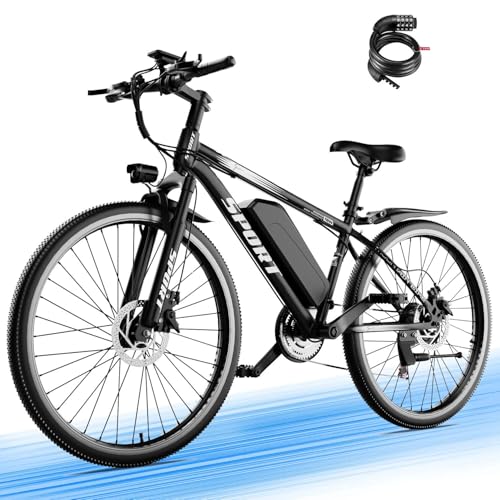
ASKGO Mountain 26 is a electric mountain bike that scores 6.6/10 on our editorial rubric, last verified on July 30, 2026. Amazon listed it at $270 as of August 1, 2026 — prices change often, so treat that as a snapshot. On Amazon it currently ranks #2 Best Seller in Electric Mountain Bikes. It pairs a 750 W hub motor and a 499 Wh battery, good for a claimed range of up to 25 miles and assisted speeds up to 25 mph. The bike is rated to carry 365 lb of rider and cargo. It best suits trail and private-land riders who want gears and full-size wheels for under $300.
Pros
- + Cheapest route onto 26-inch wheels with a 7-speed drivetrain on Amazon at $269.99
- + 36-month warranty — three times what most Amazon-native brands offer
- + 365 lb payload rating, the highest of Amazon's current e-bike best-sellers
- + States the 750W rated figure alongside the 1500W peak rather than peak alone
- + Dual disc brakes and a genuine 400-lumen headlight, not a token lamp
- + Geared drivetrain means it still pedals properly when the battery is flat
Cons
- - Advertised 25 mph fits NO US class — above Class 2's 20 mph cap, and Class 3 bans throttles
- - Not legal as configured in the seven Class-3-restricted states (DC, KY, MA, MT, NC, PA, SC)
- - 65-mile claim needs 7.7 Wh/mile from a 499Wh pack — under half the real-world floor; plan on 20-30
- - No UL 2849 or UL 2271 certification claimed anywhere on the listing
- - Weakest buyer feedback of the current best-sellers at 3.8 out of 5 from 159 ratings
- - "Dual suspension" is a front fork plus a sprung seatpost — it is a hardtail
- - No published total weight
Who is this for?
- Trail and private-land riders who want gears and full-size wheels for under $300
- Larger riders who need a documented 365 lb payload rating at entry-level money
- First-time buyers willing to cap the bike at 20 mph in the settings menu before riding
The 30-second verdict
At $269.99 this is the cheapest way onto full-size wheels with real gears on Amazon, and it is #2 in Electric Mountain Bikes (rank #8,501 site-wide in Sports & Outdoors, checked 2026-07-30) because that combination genuinely is hard to find. ASKGO states the 750W rated figure next to its 1500W peak, fits a 7-speed drivetrain, rates the frame to a 365 lb payload, specifies dual disc brakes and a 400-lumen headlight, and backs it with a 36-month warranty — three times what most of this tier offers. The problems are not build-quality guesses, they are printed on the listing. It advertises 25 mph, which sits outside every class in the framework US states legislate around. It claims 65 miles from a 499Wh battery, which is arithmetically impossible. It names no UL certification anywhere. And it carries the weakest buyer feedback of Amazon's current e-bike best-sellers at 3.8 out of 5 from 159 ratings. This is a lot of bike for the money with a compliance problem stapled to it.
The 25 mph problem — this bike fits no class
This matters more than any spec, so it goes first. The US three-class framework, which nearly every state has adopted, works like this: Class 1 is pedal-assist only to 20 mph; Class 2 adds a throttle, still capped at 20 mph; Class 3 allows assistance to 28 mph but is pedal-assist only in most states, with no throttle permitted. ASKGO advertises "speeds up to 25MPH" and buyers on the listing describe operating a twist throttle. A throttle-equipped bike doing 25 mph is above the Class 2 ceiling and outside the Class 3 definition at the same time. There is no state where that configuration is a compliant e-bike as delivered.
What that means practically: in the seven states where Class 3 is banned outright — DC, Kentucky, Massachusetts, Montana, North Carolina, Pennsylvania and South Carolina — this bike is not legal on public roads or paths as configured. Elsewhere it may be treated as an unregistered moped or motor vehicle, which brings licensing, registration and insurance questions with it. Most controllers of this type expose a speed limit in the display settings menu, and dropping the cap to 20 mph is usually enough to bring the bike inside Class 2. That is a setting to change before your first ride, not after. Check your own state on the street-legal-by-state guide, and read the class explainer if any of the above is new.
Motor and gearing: the honest half of the spec sheet
Credit where it is due — ASKGO states 750W rated alongside the 1500W peak. Rated wattage is the continuous figure that 15 U.S.C. § 2085 and the state statutes derived from it regulate; peak is a momentary controller ceiling during a hill start. Every US state except Oregon caps e-bikes at 750W rated, so on wattage this bike is inside the line, and the 1500W in the title is marketing about draw rather than a legal problem. Plenty of listings in this bracket quote only the peak number and leave you guessing, so the disclosure is worth something.
The 7-speed drivetrain is the underrated feature here. It means the bike is pedalable with the motor off — which the single-speed DTTZH A12 is not — and it gives you a cadence range for climbing instead of relying on throttle alone. 26-inch wheels roll over the potholes that punish 14-inch folders. The listing specifies dual disc brakes, the correct answer for a bike claiming 25 mph, and a 400-lumen headlight, which is genuinely useful rather than the token lamp most budget bikes fit. Whether you want a throttle at all is worth thinking through first — our throttle versus pedal assist guide covers the trade, and on this bike the throttle is precisely what puts the 25 mph claim out of class.
The 65-mile claim is off by a factor of two and a half
The battery is 48V × 10.4Ah = 499Wh. The listing claims 65 miles on a charge. Do the division: 499 ÷ 65 = 7.7 watt-hours per mile. Real-world e-bike consumption runs 15 to 30 Wh per mile depending on assist level, rider weight, terrain and tire pressure. The claim is not optimistic, it is below half the physical floor — no e-bike at any price returns 7.7 Wh per mile.
Work it the other way for a planning number. At 20 Wh per mile — fair for a 26-inch hardtail on mixed assist — 499Wh gives you 25 miles. Ride gently on the lowest assist setting on flat ground and you might see 33. Use the throttle at the advertised 25 mph and you will see closer to 15. So this is a 20 to 30 mile bike, and its pack is the smallest of the three current best-sellers: the DTTZH A12 carries 720Wh for $49 more. A 4-5 hour recharge is claimed and the battery is removable, so charging at a desk is possible. Our range guide works through the arithmetic in more depth.
No certification named anywhere
Search the ASKGO listing for UL 2849 — the safety standard covering an e-bike's complete electrical system — or UL 2271, which covers the battery pack, and you find nothing. Not an unverified claim: no claim at all. Competing listings on the same search results page cite these standards, and the RPINT Mini 14 names SGS as the body validating both, so the omission is a choice rather than a category norm.
That absence carries legal weight now, not just theoretical risk. NYC Local Law 39 requires certified equipment to charge an e-bike battery indoors. California SB 1271 restricts the sale of uncertified e-bikes from January 2026. If you live in a building that asks about certification, or in a state moving that direction, this bike will not clear the bar and no price advantage fixes it. Our UL-certified shortlist covers the alternatives — several of them cost less than this bike — and the battery fire safety guide explains what the standards actually test.
Build, warranty, and what buyers report
Two details on the listing need translation. ASKGO markets "dual suspension" and Amazon's spec table repeats it, but the bullet defines it as "front fork + seat post". A suspension seatpost is not rear suspension: it takes the edge off buzz through the saddle and does nothing for the rear wheel's contact with the ground. Read this as a hardtail with a sprung seatpost — normal at $270, fine for gravel paths, not equipment for descending.
The 36-month warranty is the standout claim on the page. Most Amazon-native brands offer twelve months, and three years suggests more confidence than the price implies. Against it, the buyer feedback is the weakest of the current best-sellers: 3.8 out of 5 from 159 ratings, where the DTTZH A12 sits at 4.5 and the RPINT Mini 14 at 4.1. Reviewers describe the twist throttle as having a noticeable delay both applying and releasing, which reads as controller tuning rather than a fault — we have not ridden the bike and cannot attribute the rating to a single cause. The frame is alloy steel with a 365 lb payload rating, the highest of the three, which is worth real money if you are a larger rider or carry a loaded pack. No total weight is published; a 26-inch steel e-bike with this pack will land around 60-70 lb.
Who should buy it — and who should not
Buy the ASKGO if you want the cheapest full-size geared e-bike on Amazon, you ride mostly on private land, trails, or roads where class enforcement is not a live concern, and you will drop the speed cap to 20 mph in the settings menu before your first ride. The 365 lb payload, 7-speed drivetrain, 36-month warranty and $270 price make a genuinely strong first-e-bike package, and its rank says thousands of buyers agree.
Do not buy it if you need a compliant commuter out of the box, if you live in one of the seven Class-3-restricted states, if your building requires UL certification, or if you need more than 30 miles per charge. The Heybike Cityscape 2.0 is our benchmark commuter on full-size wheels; the Hoverfly OUREA documents its certification and costs little more; and if you specifically want a compliant fast bike, start from our street-legal shortlist rather than trying to make this one behave.
Ready to buy?
Save $15 at Amazon right now
We update prices as the listing changes — final price is set by the retailer at checkout.
Frequently asked questions
Is the ASKGO Mountain 26 street legal?
Not as delivered. The listing advertises 25 mph and the bike has a throttle. In the US three-class framework, Class 1 and Class 2 cap at 20 mph, and Class 3 permits 28 mph but is pedal-assist only — no throttle. A 25 mph throttle bike therefore fits no class in any state. Its 750W rated motor is inside the wattage cap everywhere, so speed is the only barrier: most controllers of this type let you set a 20 mph limit in the display menu, which brings the bike inside Class 2. In DC, Kentucky, Massachusetts, Montana, North Carolina, Pennsylvania and South Carolina, Class 3 is banned outright, so capping it is not optional. Check your state on our street-legal-by-state guide.
How far will the ASKGO Mountain 26 really go on one charge?
Plan on 20 to 30 miles. The advertised 65 miles would require the 499Wh battery (48V × 10.4Ah) to deliver 7.7 watt-hours per mile, and real-world e-bike consumption runs 15-30 Wh per mile — the claim is under half the physical floor, not merely optimistic. At a realistic 20 Wh per mile you get 25 miles; gentle low-assist riding on flat ground might reach 33; heavy throttle use at the advertised speed drops it nearer 15. This is the smallest battery of Amazon's three current best-sellers — the DTTZH A12 carries 720Wh for $49 more.
Is the ASKGO Mountain 26 UL certified?
No — the listing claims neither UL 2849 (the complete-bike electrical standard) nor UL 2271 (the battery-pack standard). There is no unverified claim to weigh; there is no claim at all. That rules it out for indoor charging under NYC Local Law 39, and California SB 1271 restricts sales of uncertified e-bikes from January 2026. If certification matters where you live, see our UL-certified shortlist — several certified bikes cost less than this one.
Why is the Amazon rating only 3.8 stars?
3.8 out of 5 across 159 ratings (checked 2026-07-30) is the weakest score among Amazon's current e-bike best-sellers — the DTTZH A12 sits at 4.5 and the RPINT Mini 14 at 4.1. Reviewers on the listing describe the twist throttle as having a noticeable delay both applying and releasing, which reads as controller tuning rather than a defect. We have not ridden the bike, so we will not attribute the rating to a single cause — but at this price, with a 30-day Amazon return window and a 36-month warranty, the cost of finding out is limited.
Does the ASKGO Mountain 26 have real rear suspension?
No. ASKGO markets "dual suspension" and Amazon's spec table repeats it, but the listing bullet defines it as front fork plus seat post. A suspension seatpost damps buzz through the saddle; it does nothing for the rear wheel's grip on rough ground. Treat this as a hardtail with a sprung seatpost — normal and acceptable at $270, but not equipment for descending. If genuine full suspension is the requirement, the DTTZH F6 documents it at a comparable price.
Bottom line
Is the ASKGO Mountain 26 for you?
Check the live price + availability before deciding.
If this isn't the one

mountain
GAMVIRE 7000W Dual Motor Fat Tire Electric Mountain Bike
The GAMVIRE 7000W Dual Motor is the most powerful e-bike in our catalog — and one of the...
Read the review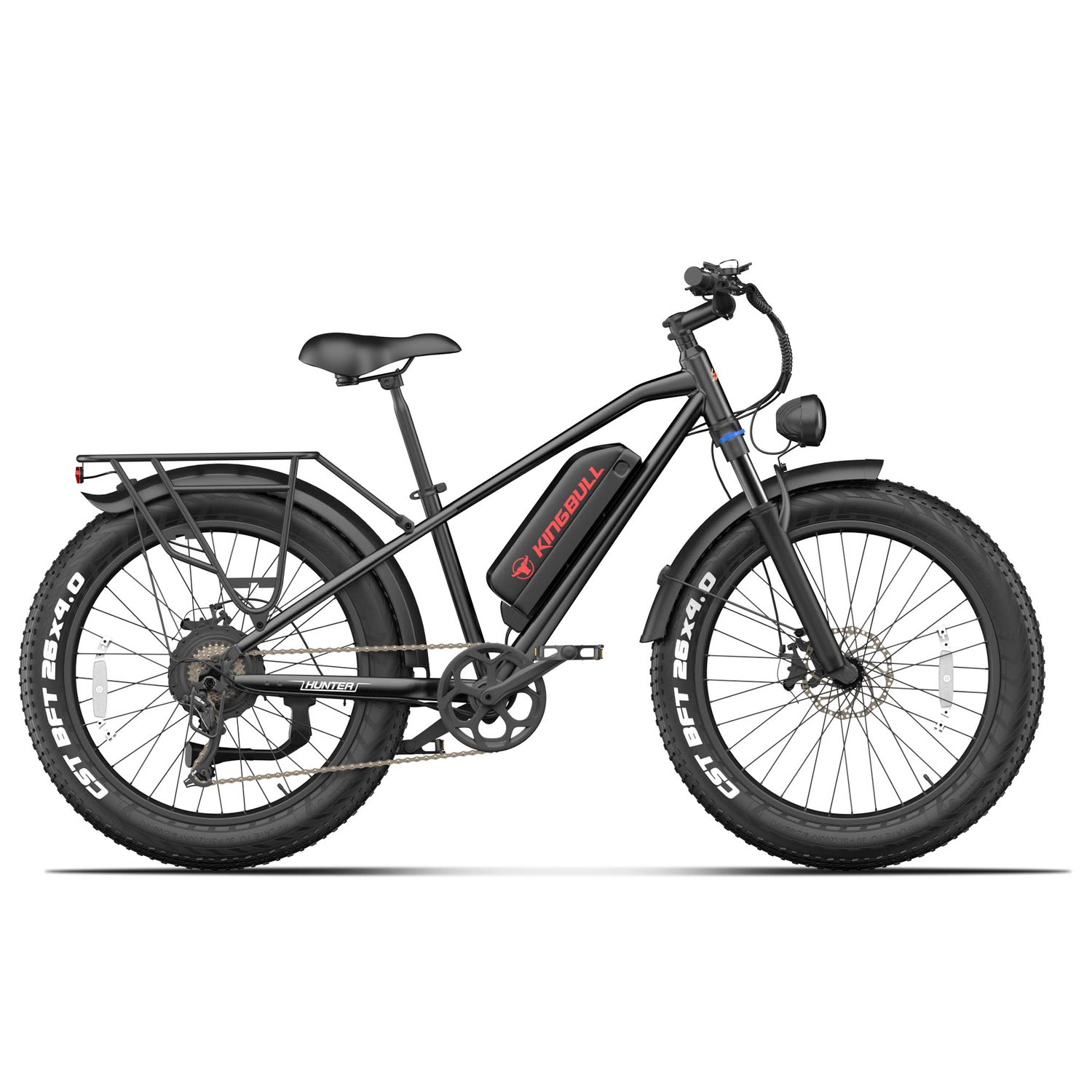
mountain
Kingbull Hunter 2.0 1200W Fat-Tire Mountain E-Bike
Save $900
Kingbull's Hunter 2.0 is the most-featured spec sheet under $1,000 in the catalog — 750W rated / 1200W...
Read the review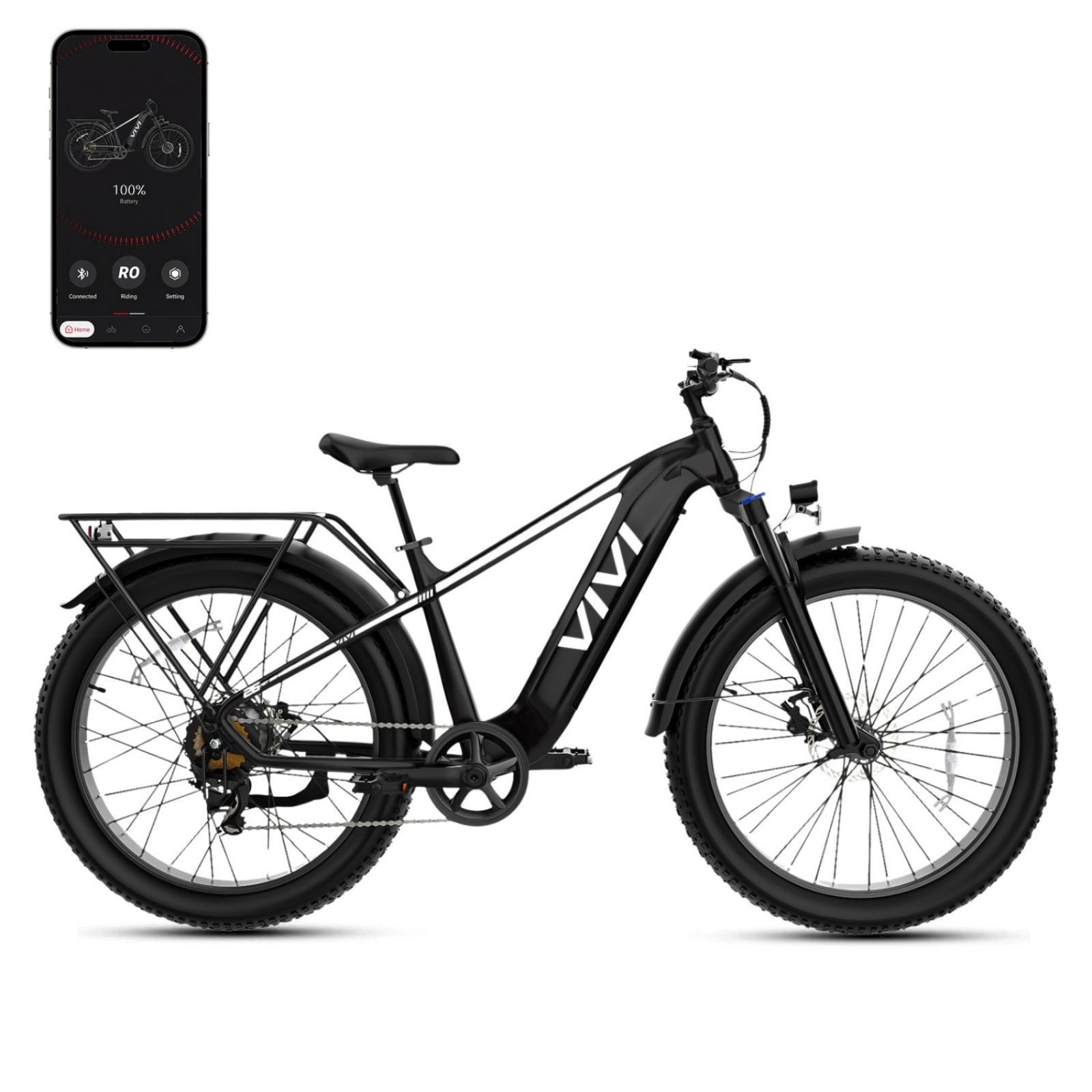
mountain
Vivi ACE01 Pro 750W Smart Fat-Tire E-Bike
Save $510
The ACE01 Pro is the ACE01 — same torque sensor, 750W rated / 1500W peak hub (90 Nm),...
Read the review

