New Hampshire E-Bike Laws 2026: Class 3 Path Ban
Are e-bikes legal in New Hampshire?
New Hampshire adopted the federal three-class e-bike framework when Governor Chris Sununu signed HB 148 on 19 June 2019, effective 18 August 2019. The definition lives at RSA 259:27-a (motor "less than 750 watts," three classes) and the operating rules at RSA 265:144-a. E-bike riders have all the rights and duties of bicycle riders, and an electric bicycle "is a vehicle to the same extent as a bicycle." No driver license, no DMV registration, no insurance — RSA 259:65 (motor-driven cycle) was amended to explicitly exclude electric bicycles, which is the statutory hook keeping e-bikes out of the DMV regime. The catch — and the one rule that surprises riders — is that Class 3 is statutorily banned from bicycle and multi-use paths under RSA 265:144-a unless the path is within or adjacent to a highway/roadway OR a city, town, or state agency expressly permits Class 3 on that specific path.
This is the inverse of permissive-default states like Idaho. Statewide helmet: under-16 on any bicycle (RSA 265:144,X) AND under-18 on a Class 3 (RSA 265:144-a) — the Class 3 overlay catches 16- and 17-year-olds the general rule misses. No adult helmet rule on any class. Class 3 operator minimum age is 16; under-16 may ride as a passenger. The Northern Rail Trail (~58 mi — NH's longest), the Mascoma River Greenway, the Rockingham Recreational Trail, and NH State Parks generally all prohibit Class 3 under the statutory default. HB 1533 (2026) — which would have banned e-bikes on sidewalks statewide, banned Class 3 from all paths with no exception, mandated Class 3 DMV registration, and required speedometers and headlights — was sent to interim study on 19 February 2026 and is NOT current law.
Legal to ride in New Hampshire: our top class-legal pick
As an Amazon Associate I earn from qualifying purchases. Ebike Oracle may also earn a commission on links to other retailers. Full disclosure.

TST
Save $30TST City Commuter
Class 2 — pedal-assist + throttle to 20 mph
Class 2 · 20 mph · Score 8.0
Free 30-day returns via Amazon
Other legal picks for New Hampshire

Street-legal e-bikes you can buy in New Hampshire (2026)
Each fits a class New Hampshire treats as a bicycle, so it needs no registration or licence to ride.
| E-bike | Buy | Class | Speed |
|---|---|---|---|
| TST City Commuter | Check price at Amazon | Class 2 | 20 mph |
| Funhang Fat 26 | Check price at Amazon | Class 2 | 20 mph |
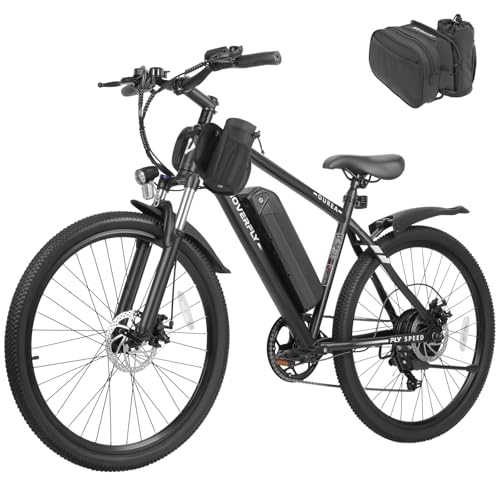
| Hoverfly OUREA | Check price at Amazon | Class 2 | 20 mph |
What are the e-bike rules in New Hampshire?
Sourced from the New Hampshire statute and verified against the PeopleForBikes State Law Tracker.
Check your setup
Is your e-bike legal in New Hampshire?
Your match
TST
TST City Commuter
Permitted on roads, bike lanes, and bike paths in New Hampshire.
Our score 8.0/10
Our top class-legal pick for New Hampshire, street-legal to ride today.
Read our full review firstThe 30-second answer
E-bikes are legal across New Hampshire under the federal Class 1/2/3 framework adopted by HB 148 (2019), signed by Governor Chris Sununu on 19 June 2019 and effective 18 August 2019. The definition is at RSA 259:27-a and the operating rules at RSA 265:144-a. Motor cap is less than 750 watts.
The thing to know about New Hampshire: the path rules are asymmetric by statute. Class 1 and Class 2 are allowed on bicycle and multi-use paths unless the jurisdiction prohibits them — but Class 3 is affirmatively banned from paths unless (a) the path runs within or adjacent to a highway/roadway, or (b) the managing city, town, or state agency expressly permits Class 3. This is the opposite of permissive-default states like Idaho, where all three classes are presumed welcome until an agency posts otherwise. In NH, Class 3 is presumed banned until the agency posts otherwise.
No driver license, no DMV registration, no insurance. RSA 259:65 (the "motor-driven cycle" statute that would otherwise pull e-bikes into the moped regime) was amended to explicitly exclude electric bicycles. That's the statutory hook.
Helmet rules are layered: under-16 on any bicycle (RSA 265:144,X — applies to all bikes including e-bikes), plus under-18 specifically on a Class 3 (RSA 265:144-a — the Class 3 overlay catches 16- and 17-year-olds the general rule misses). No adult helmet rule on any class. Class 3 operator minimum age is 16; under-16 may ride as a passenger on a Class 3 designed for passengers.
The full New Hampshire rules, section by section. Tap any section to read it.
Quick reference
Quick reference
| Spec | New Hampshire rule |
|---|---|
| Framework | Federal Class 1/2/3 (adopted 2019, HB 148) |
| Definition statute | RSA 259:27-a |
| Operating rules | RSA 265:144-a |
| DMV-exemption hook (moped exclusion) | RSA 259:65 — "any bicycle with motor attached except any electric bicycle" |
| Enacting bill | HB 148 (2019) — signed 19 Jun 2019, effective 18 Aug 2019 |
| Motor power cap | <750 W (RSA 259:27-a) |
| Class 1 (pedal-assist, ≤20 mph) | Legal · paths allowed unless jurisdiction prohibits |
| Class 2 (throttle, ≤20 mph) | Legal · paths allowed unless jurisdiction prohibits |
| Class 3 (pedal-assist, ≤28 mph) | Legal on roads · operator 16+ · statutorily BANNED from paths unless within/adjacent to roadway or agency expressly permits |
| Driver license | Not required |
| Registration | Not required |
| Insurance | Not required |
| Helmet — general (any bike) | Required under 16 (RSA 265:144,X) |
| Helmet — Class 3 overlay | Required under 18 for operator OR passenger (RSA 265:144-a) |
| Helmet — adults (any class) | None |
| Minimum age (Class 1 + 2) | None statewide |
| Minimum age (Class 3 operator) | 16 (RSA 265:144-a) |
| Class 3 passenger under 16 | Allowed on a Class 3 designed to carry passengers (with helmet) |
| Reflective apparel | Required ½ hour after sunset to ½ hour before sunrise — all cyclists, all ages (RSA 265:144,XII) |
| NH State Parks (DNCR) | Class 1 + 2 OK where bicycles allowed; Class 3 generally not |
| Northern Rail Trail (~58 mi) | Class 1 + 2 OK; Class 3 prohibited |
| Mascoma River Greenway | Class 1 + 2 OK; Class 3 prohibited |
| Rockingham Recreational Trail | Class 1 + 2 OK; Class 3 prohibited |
| White Mountain National Forest (USFS) | E-bikes treated as motorized — motorized roads/trails only; banned in Wilderness + on Appalachian Trail |
Two practical reads. First, New Hampshire is among the most permissive states in New England for the broad e-bike rider — no adult helmet, no Class 1/2 age, no license/registration/insurance, no statutory Class 1/2 path restriction, and a clean federal-model definition. Second, the statutory Class 3 path ban is real and statewide — if you ride a Class 3, your NH path access is roads, road shoulders, and path segments that happen to run alongside a roadway, unless the managing agency has affirmatively opted in. Most haven't.
The three-class system in New Hampshire
The three-class system in New Hampshire
New Hampshire defines "electric bicycle" at RSA 259:27-a (added by HB 148, 2019):
"Electric bicycle" means a pedalled vehicle equipped with an electric motor of less than 750 watts that falls within one of the following 3 classes:
- Class 1 electric bicycle — "a pedalled vehicle equipped with a motor that provides assistance only when the rider is pedaling, and that ceases to provide assistance when the bicycle reaches the speed of 20 miles per hour."
- Class 2 electric bicycle — "a pedalled vehicle equipped with a motor that may be used exclusively to propel the bicycle and that is not capable of providing assistance when the bicycle reaches the speed of 20 miles per hour."
- Class 3 electric bicycle — "a pedalled vehicle equipped with a motor that provides assistance only when the rider is pedaling and that ceases to provide assistance when the bicycle reaches the speed of 28 miles per hour."
The framework was enacted by HB 148 during the 2019 Regular Session, drafted by the Bike-Walk Alliance of New Hampshire in partnership with PeopleForBikes, signed by Governor Chris Sununu on 19 June 2019, and effective 18 August 2019 (NH's default 60-day post-signing effective date).
What changed in 2019
Before HB 148, New Hampshire law was contradictory: RSA 259:6 defined a bicycle as "solely human powered" (excluding e-bikes), while RSA 259:65 (motor-driven cycle) had a carve-out for any bike "having an electric motor producing less than one horsepower and an electric assisted speed of not more than 20 miles per hour." That gap created confusion for police, rail-trail managers, town governing bodies, bike shops, and riders. HB 148 resolved it by adding the federal three-class definition at RSA 259:27-a and amending RSA 259:65 to explicitly exclude electric bicycles from the motor-driven-cycle definition.
Rights and duties — RSA 265:144-a
Rights and duties — RSA 265:144-a
RSA 265:144-a sets the operating rules. The core grant of rights is verbatim:
Electric bicycles and operators of electric bicycles shall be afforded all the rights and privileges, and shall be subject to all of the duties, of a bicycle or the operator of a bicycle. An electric bicycle is a vehicle to the same extent as a bicycle.
In practice that means everything in RSA 265:143–146 that governs bicycles also governs e-bikes — including the keep-right rule ("as near to the right side of the roadway as practicable"), single-file riding on roadways, hand signals, lights and reflectors at night, and the under-16 helmet requirement at RSA 265:144,X.
Where can you ride an e-bike in New Hampshire?
Where can you ride an e-bike in New Hampshire?
Can you ride on roads and bike lanes?
All three classes may use roads and bike lanes. Standard NH bicycle rules apply via the rights-and-duties grant in RSA 265:144-a.
Multi-use paths — the New Hampshire wrinkle
This is the statute riders most often miss. RSA 265:144-a establishes an asymmetric path-access rule:
- Class 1 and Class 2 e-bicycles "may be ridden on bicycle or multi-use paths" — unless a city, town, or state agency having jurisdiction prohibits them on that specific path.
- Class 3 e-bicycles "shall not be ridden on a bicycle or multi-use path" — unless the path is "within or adjacent to a highway or roadway" OR a city, town, or state agency having jurisdiction expressly permits Class 3 on that path.
In plain terms: Classes 1 and 2 are permissive-default (allowed until banned), Class 3 is restrictive-default (banned until allowed). On most of New Hampshire's big rail trails — the Northern Rail Trail, the Mascoma River Greenway, the Rockingham Recreational Rail Trail — no managing agency has opted Class 3 in, so Class 3 is prohibited.
Can you ride an e-bike on the sidewalk?
No statewide statute prohibits e-bike sidewalk riding. Sidewalks are subject to local ordinance — Manchester has a citywide bicycle sidewalk ban; Nashua bans bicycles on business-district sidewalks; many towns default to the general bicycle rule. Always verify locally before riding on a sidewalk in an NH city.
NH State Parks (DNCR)
The New Hampshire Department of Natural and Cultural Resources allows Class 1 and Class 2 e-bikes where bicycles are otherwise allowed in state parks. Class 3 is generally not allowed on state-park trails — this matches the statutory default at RSA 265:144-a and DNCR has not, as a department-wide policy, posted express Class 3 permissions on its multi-use trails.
White Mountain National Forest
The White Mountain National Forest is the dominant federal recreational asset in NH (~800,000 acres). Per USFS national policy, e-bikes are treated as motorized vehicles on national-forest land — they may be ridden only on routes designated for motorized use. They are not permitted on non-motorized singletrack, in congressionally-designated Wilderness areas (e.g. Pemigewasset, Sandwich Range, Presidential Range–Dry River, Great Gulf, Caribou-Speckled Mountain), or on the Appalachian Trail. This is more restrictive than NH state law — the USFS classification overrides at the trailhead.
Note: this is the USFS national rule. DOI Secretary's Order 3376 authorizes e-bikes on land managed by DOI bureaus (NPS, BLM, FWS, BOR) where bicycles are otherwise allowed — but the Forest Service is part of USDA, not DOI, and the Order does not apply. WMNF e-bike riders are stuck with the motorized-route-only rule.
Do you need a helmet, license, or registration in New Hampshire?
Do you need a helmet, license, or registration in New Hampshire?
| Topic | New Hampshire rule |
|---|---|
| Driver license | Not required |
| Registration | Not required |
| Insurance | Not required (liability still exists at common law) |
| General bicycle helmet | Required under 16 for any bicycle including e-bike (RSA 265:144,X) — CPSC-compliant; max fine $35 |
| Class 3 helmet overlay | Required under 18 for operator or passenger (RSA 265:144-a) — CPSC or ASTM standard |
| Adult helmet | None — no statewide adult helmet rule on any class |
| Minimum age (Class 1 + 2) | None statewide |
| Minimum age (Class 3 operator) | 16 (RSA 265:144-a) |
| Class 3 passenger | A person under 16 may ride as a passenger on a Class 3 designed to accommodate passengers (with helmet under-18 rule) |
| Reflective apparel | Required from ½ hour after sunset to ½ hour before sunrise — all cyclists, all ages, all classes (RSA 265:144,XII) |
| Lighting at night | Front white light + rear red reflector or red light required between ½ hour after sunset and ½ hour before sunrise (general bike rule) |
How the two helmet rules stack: A 14-year-old on a Class 1 needs a helmet (general under-16 rule). A 17-year-old on a Class 1 does not need a helmet (above 16, no Class 3 overlay). A 17-year-old on a Class 3 does need a helmet (under-18 Class 3 overlay). A 20-year-old on any class needs no helmet. The Class 3 overlay's purpose is to catch 16- and 17-year-olds who fall through the general rule.
Do local rules differ within New Hampshire?
Do local rules differ within New Hampshire?
- Lebanon publishes the most-cited city e-bike summary. The city enforces state law and has not enacted a local override; Class 3 is prohibited on the Mascoma River Greenway and the Northern Rail Trail under the statutory default.
- Manchester has a long-standing citywide ban on bicycles on sidewalks (general rule, applies to e-bikes via the rights-and-duties grant).
- Nashua prohibits bicycles on sidewalks in business districts and applies age-based sidewalk rules in other zones.
- Concord, Portsmouth, Hanover, Keene — generally default to state law; check the city code before assuming sidewalk access.
Is New Hampshire changing its e-bike laws?
Is New Hampshire changing its e-bike laws?
HB 1533 (2026) — sent to interim study, NOT law
The most-discussed pending bill is HB 1533, introduced 19 February 2026. It would have:
- Banned all e-bikes and "alternative electric micromobility devices" from sidewalks statewide.
- Banned Class 3 from all bicycle and multi-use paths with no agency-permission carve-out (current law allows agencies to opt Class 3 in).
- Required annual DMV registration for Class 3 e-bikes and Class 3 alternative micromobility devices.
- Required speedometers and headlights on all Class 3 devices.
- Established a 16-to-18 learner-permit process for Class 3.
- Authorised 15-to-30-day device impoundment for violations.
- Classified non-conforming devices as off-highway recreational vehicles.
On 19 February 2026 the House sent HB 1533 to interim study by voice vote — the New Hampshire equivalent of a soft kill. The bill is not current law and will not take effect on its original 1 May 2026 effective date. Track it on LegiScan before relying on the current path-access rules for any active dispute.
Pre-2019 history
Before HB 148, RSA 259:6 (bicycle = "solely human powered") and RSA 259:65 (motor-driven cycle, with a sub-20-mph electric carve-out) created a definitional gap. HB 148 resolved it by adding RSA 259:27-a (the three-class definition) and amending RSA 259:65 to expressly exclude electric bicycles. Current law remains: RSA 259:27-a + RSA 265:144-a + RSA 259:65 (moped exclusion) + the under-16 helmet rule at RSA 265:144,X + the reflective-apparel rule at RSA 265:144,XII.
What are the penalties for breaking e-bike laws in New Hampshire?
What are the penalties for breaking e-bike laws in New Hampshire?
Violations of the bicycle/e-bicycle rules are generally classified as violations (not misdemeanors) under New Hampshire's motor-vehicle code. The under-16 helmet violation at RSA 265:144,X carries a maximum fine of $35 per occurrence. Class 3 path violations under RSA 265:144-a are charged as general bicycle-rule violations — fines are typically in the $25–$100 range depending on the local court. Underage Class 3 operation (under-16) and operating a non-conforming device that exceeds the 750 W cap or class speed limits can push the operator into the moped/motor-vehicle regime, with associated license, registration, and insurance penalties.
What special e-bike rules apply in New Hampshire?
What special e-bike rules apply in New Hampshire?
Over-750 W or "out-of-class" bikes
A bike whose motor exceeds 750 watts, or whose throttle alone propels it past the class speed cap, falls outside the RSA 259:27-a definition. It loses the e-bike rights-and-duties grant and is treated as a moped or motor vehicle under NH law — with license, registration, and insurance obligations, and the loss of bike-lane and path access entirely. The federal Consumer Product Safety Act (15 U.S.C. §2085) defines a "low-speed electric bicycle" for product-regulation purposes at ≤750 W and ≤20 mph throttle, but that's a manufacturing standard, not a NH operating rule.
What if you are riding in from out of state?
A Class 3 e-bike titled and registered in another state (e.g. a Massachusetts rider crossing into NH) is treated under NH law while operating in NH — the under-18 Class 3 helmet overlay and the statutory path ban apply. NH does not require out-of-state e-bike registration.
Rented e-bikes
Rental operators in NH must brand each rental bike with the federally-required class label, motor wattage, and top assisted speed (RSA 259:27-a incorporates the federal labeling requirement at 16 CFR §1512.16). Rental contracts cannot waive the under-16 / under-18 helmet rules — those run with the rider, not the bike.
Bottom line
Bottom line
New Hampshire is a two-speed e-bike state. If you ride a Class 1 or Class 2, NH gives you one of the cleanest, most permissive rule-sets in New England: ride on roads, ride on bike lanes, ride on essentially every multi-use path and rail trail in the state, no helmet (if you're 16 or older), no license, no registration, no insurance. If you ride a Class 3, you get the road network plus path segments that happen to run alongside a roadway — but state parks, the Northern Rail Trail, the Mascoma River Greenway, and most rail trails are statutorily off-limits unless the managing agency has affirmatively opted you in. The statute is unusual: most three-class states use a permissive-default with Class 3 carve-outs that get added locally; NH inverts that with a restrictive-default that requires agency opt-in.
Two future variables to watch: (1) HB 1533 (2026) — currently in interim study, but signals where the legislature could move if revived; and (2) DNCR / state-park policy — there is room within the current statute for the department to opt Class 3 into specific trails, and that hasn't happened yet.
Check your setup against New Hampshire law
Check your setup against New Hampshire law
The rules above are the statewide baseline. Two things decide whether a specific bike is legal for a specific rider: which class it actually is, and how old the rider is.
- E-bike legality checker — enter motor wattage, top assisted speed, throttle and rider age, and get the New Hampshire verdict with the statute reference.
- Class 1, 2, 3 e-bikes explained — what the three classes mean and why the label on the frame is the thing states regulate. Most compliance problems are a bike that was never in-class to begin with.
- All 50 states + DC compared — one sortable table: classification tier, Class 3 legality, path access, helmet rule, minimum age, licence and registration.
Sources
Sources
- RSA 259:27-a — Electric Bicycle definition
- RSA 265:144-a — Electric Bicycles operating rules
- RSA 259:65 — Motor-Driven Cycle (excludes electric bicycle)
- RSA 265:144 — Riding on Bicycles (under-16 helmet + reflective apparel)
- HB 148 (2019) — enrolled text, the enacting bill
- HB 1533 (2026) — sidewalk ban + Class 3 registration, interim study
- NH DOT — Bicycles + Pedestrians: Rules + Traffic Safety
- Bike-Walk Alliance of NH — Why E-Bike Legislation?
- NH State Parks — Biking
- Friends of the Northern Rail Trail — Trail Info
- Lebanon NH — Permitted Electric Bicycle Use
- White Mountain National Forest — Bicycling
- USFS national e-bike policy
- DOI Secretary's Order 3376 — federal lands e-bike policy
E-bikes that fit New Hampshire's rules
Filtered from our review catalog by class eligibility under New Hampshire statute. Spec-matched, not popularity-ranked.
- Class 2
 AmazonSave $30
TST
TST City Commuter
Class 2 — pedal-assist + throttle to 20 mph
Permitted on roads, bike lanes, and bike paths in New Hampshire.750 W · 20 mph · Score 8.0
Read the review - Class 2Amazon
Funhang
Funhang Fat 26
Class 2 — pedal-assist + throttle to 20 mph
Permitted on roads, bike lanes, and bike paths in New Hampshire.500 W · 20 mph · Score 7.4
Read the review - Class 2AmazonSave $50
Hoverfly
Hoverfly OUREA
Class 2 — pedal-assist + throttle to 20 mph
Permitted on roads, bike lanes, and bike paths in New Hampshire.750 W · 20 mph · Score 7.4
Read the review
Eligibility is class-based: picks shown here are legal to own and operate on roads in New Hampshire. Local jurisdictions (state parks, beach paths, individual cities) may add further restrictions; see the body above for the specifics.
Recent New Hampshire e-bike law coverage
News-form posts that reference New Hampshire's statutes or covered a change affecting New Hampshire riders.
Frequently asked questions
Are e-bikes legal in New Hampshire?
Yes. NH adopted the federal Class 1/2/3 framework via HB 148, signed by Governor Chris Sununu on 19 June 2019 and effective 18 August 2019. The definition is at RSA 259:27-a ("less than 750 watts") and the operating rules at RSA 265:144-a. All three classes are street-legal and have "all the rights and privileges, and shall be subject to all of the duties, of a bicycle." No driver license, no DMV registration, no insurance — RSA 259:65 (motor-driven cycle) was amended to explicitly exclude electric bicycles.
Do you need a license, registration, or insurance for an e-bike in New Hampshire?
No. None of the three. RSA 265:144-a treats an electric bicycle as a bicycle for all rights-and-duties purposes, and RSA 259:65 (the moped/motor-driven-cycle statute) explicitly excludes electric bicycles — that's the statutory hook keeping e-bikes out of the DMV regime. A bike that exceeds 750 W or the class speed caps falls outside RSA 259:27-a and would lose this treatment.
Does New Hampshire require a helmet on an e-bike?
Two layered rules: (1) Under 16 on any bicycle, including any class of e-bike — required by RSA 265:144,X, CPSC-compliant, max fine $35. (2) Under 18 on a Class 3, operator or passenger — required by RSA 265:144-a, CPSC or ASTM standard. The Class 3 overlay catches 16- and 17-year-olds the general rule misses. No statewide adult helmet rule on any class — adults 18+ are not required to wear a helmet on any e-bike in NH.
Can a Class 3 e-bike ride on bicycle paths and rail trails in New Hampshire?
Generally no. RSA 265:144-a statutorily bans Class 3 from bicycle and multi-use paths unless (a) the path is within or adjacent to a highway/roadway, or (b) the city, town, or state agency having jurisdiction expressly permits Class 3 on that specific path. This is the inverse of permissive-default states like Idaho — in NH, Class 3 is presumed banned until the agency opts in. Most of NH's marquee trails — the Northern Rail Trail, the Mascoma River Greenway, the Rockingham Recreational Rail Trail, and NH State Parks generally — have not opted Class 3 in, so Class 3 is prohibited there.
Is there a minimum age to ride an e-bike in New Hampshire?
Only for Class 3 operators. RSA 265:144-a sets the Class 3 operator minimum age at 16. There is no minimum age for Class 1 or Class 2 operators. A person under 16 may ride as a passenger on a Class 3 designed to accommodate passengers — the operator-age rule applies to whoever is in control of the bike, not the passenger.
Are e-bikes allowed in White Mountain National Forest?
Only on motorized routes. Per White Mountain National Forest bicycling policy, USFS treats e-bikes as motorized vehicles — they may be ridden on roads and trails designated for motorized use, but not on non-motorized singletrack, not in congressionally-designated Wilderness areas (Pemigewasset, Sandwich Range, Presidential Range–Dry River, Great Gulf, Caribou-Speckled Mountain), and not on the Appalachian Trail. This is more restrictive than NH state law — the USFS national rule applies on federal land. The Forest Service is part of USDA, so DOI Secretary's Order 3376 (which authorises e-bikes on DOI lands where bicycles are allowed) does not apply here.
Are e-bikes allowed on the Northern Rail Trail?
Class 1 and Class 2 are permitted; Class 3 is prohibited. The Friends of the Northern Rail Trail manage NH's longest rail trail (~58 miles from Lebanon to Boscawen) under the RSA 265:144-a statutory default — and the managing organisation has not posted express Class 3 permission. Same goes for the Mascoma River Greenway and the Rockingham Recreational Rail Trail. If you ride a Class 3 on a NH rail trail, you're out of compliance unless the specific trail has affirmatively opted in.
What is the motor power limit for e-bikes in New Hampshire?
Less than 750 watts under RSA 259:27-a (strict inequality). NH is not a 1,000-watt state — only Oregon allows up to 1,000 watts. A bike whose motor exceeds 750 W (or whose throttle alone propels it past the 20-mph Class 2 cap or the 28-mph Class 3 cap) falls outside RSA 259:27-a and is treated as a moped or motor vehicle, with full driver license, registration, insurance, and bike-lane/path-access loss.
Did New Hampshire pass new e-bike legislation in 2026?
No new e-bike law has been enacted in 2026. The most-discussed bill, HB 1533, would have banned e-bikes on all sidewalks, banned Class 3 from all paths with no agency-permission carve-out, required annual DMV registration for Class 3, mandated speedometers and headlights, established a 16-to-18 Class 3 learner permit, and authorised 15-to-30-day device impoundment. The House sent HB 1533 to interim study by voice vote on 19 February 2026 — effectively a soft kill. It is not current law. The governing statutes remain RSA 259:27-a + RSA 265:144-a as enacted by HB 148 in 2019.
Does New Hampshire have a reflective apparel rule for cyclists at night?
Yes. RSA 265:144,XII requires every cyclist — including every e-bike rider, every age, every class — to wear at least one item of reflective outerwear apparel (vest, jacket, helmet strip, etc.) during the period from ½ hour after sunset to ½ hour before sunrise. This is on top of the standard bicycle lighting rules (front white light + rear red reflector or red light) for the same hours. The reflective-apparel rule is unusual — most states leave it to the general "be conspicuous" prudence — and is worth knowing if you commute by e-bike in NH after dark.
Can e-bikes ride on sidewalks in New Hampshire?
No statewide statute bans or permits it — sidewalks are controlled by local ordinance. Manchester has a long-standing citywide bicycle sidewalk ban. Nashua bans bicycles on business-district sidewalks and has age-based rules elsewhere. Many smaller towns default to the general bicycle rule with no specific e-bike provision. Always verify the local code before riding on a sidewalk in any NH city — and if HB 1533 is ever revived from interim study, expect a statewide ban.
How does New Hampshire compare to Massachusetts and Vermont on e-bikes?
NH is the most permissive of the three for the general rider — no adult helmet rule, no Class 1/2 age, no license/registration/insurance — but it has the strictest statutory Class 3 path ban in northern New England. Vermont is similarly permissive but its Class 3 path rules are agency-driven rather than statutorily walled-off. Massachusetts has been the slowest to formally adopt the three-class framework and treats some e-bikes as "motorized bicycles" requiring license and registration — a much heavier regime than NH. If you ride Class 1 or 2, NH is the easiest of the three to ride in; if you ride Class 3, NH's statutory path ban is the trade-off.
How do other states compare?
Compare New Hampshire's rules with states that share a similar framework.
Common e-bike law questions
The national answer to the questions New Hampshire riders ask most, covering every US state, side by side.
Cite or link this page
Found this useful? Link to it.
This guide is free to reference. If it helped you, a link helps more riders find accurate, up-to-date law info, and we keep it current (last reviewed May 31, 2026). Licensed CC BY 4.0. Reuse the data with attribution.
<a href="https://ebikeoracle.com/laws/new-hampshire">New Hampshire E-Bike Laws 2026: Class 3 Path Ban — Ebike Oracle</a>
Ebike Oracle. "New Hampshire E-Bike Laws 2026: Class 3 Path Ban." Ebike Oracle, 2026, https://ebikeoracle.com/laws/new-hampshire.