Wyoming E-Bike Laws 2026: No Helmet, No DMV
Are e-bikes legal in Wyoming?
Wyoming adopted the federal three-class e-bike framework in 2019 through Senate File 81 (SF0081) (NOT HB0028, which is sometimes guessed in secondary sources — that is an unrelated bill number), signed by Governor Mark Gordon on 26 February 2019 and effective 1 July 2019. The definition lives at W.S. §31-1-101(a)(xxxiv) and the operating rules at W.S. §31-5-707 — motor less than 750 watts, standard 20/20/28 mph class caps, and the headline labeling rule requiring a permanent manufacturer label printed in at least 9-point font identifying class number, top assisted speed, and motor wattage. Wyoming is one of the most permissive statewide regimes in the United States: no driver license, no registration, no certificate of title, no license plate, no insurance; NO statewide helmet rule for any class at any age (Wyoming's only helmet statute is the motorcycle under-18 rule, which does NOT extend to bicycles or e-bikes); and — verified against the actual SF0081 text — NO statutory minimum operator age for ANY class, including Class 3.
Many retailer blogs incorrectly state "Class 3 = 16 in Wyoming"; that is a copy-paste from the PeopleForBikes model bill that Wyoming did not adopt verbatim. The only statutory restriction in §31-5-707 is a Class 3 path rule: a Class 3 e-bike shall not be operated on a bicycle or multi-use path unless the path is adjacent to a highway/roadway or a local authority or state agency with jurisdiction authorizes Class 3 operation. Wyoming State Parks (policy effective 1 July 2019) permits Class 1 on non-motorized trails where bicycles are allowed (Curt Gowdy ~35 mi IMBA Epic, Glendo ~45+ mi); Class 2 and Class 3 are restricted to motorized routes or park roads (a 2019 Class 2 pilot has not produced a general approval). The headline distinguishing hook is the NPS multiplier: Wyoming has the smallest US state population (~580k) but hosts Yellowstone National Park (~96% in Wyoming, the world's first national park) and Grand Teton National Park, giving Wyoming the highest per-capita national-park visitation multiplier in the lower 48.
Yellowstone permits all three classes on established public roads and parking areas during summer (Class 3 paved roads only); Grand Teton allows e-bikes wherever traditional bicycles are allowed including the ~20-mile Grand Teton Pathway from Jackson to Antelope Flats and Jenny Lake, subject to the NPS September 2019 rule that the motor may not propel the e-bike without pedaling except on roads open to motor vehicles. The Jackson Hole Community Pathway System (~60 mi across Teton County) permits all three classes with a 15 mph in-town speed cap.
Legal to ride in Wyoming: our top class-legal pick
As an Amazon Associate I earn from qualifying purchases. Ebike Oracle may also earn a commission on links to other retailers. Full disclosure.

Class 2 — pedal-assist + throttle to 20 mph
Class 2 · 20 mph · Score 8.0
Free 30-day returns via Amazon
Other legal picks for Wyoming

Street-legal e-bikes you can buy in Wyoming (2026)
Each fits a class Wyoming treats as a bicycle, so it needs no registration or licence to ride.
| E-bike | Buy | Class | Speed |
|---|---|---|---|
| TST City Commuter | Check price at Amazon | Class 2 | 20 mph |
| Funhang Fat 26 | Check price at Amazon | Class 2 | 20 mph |
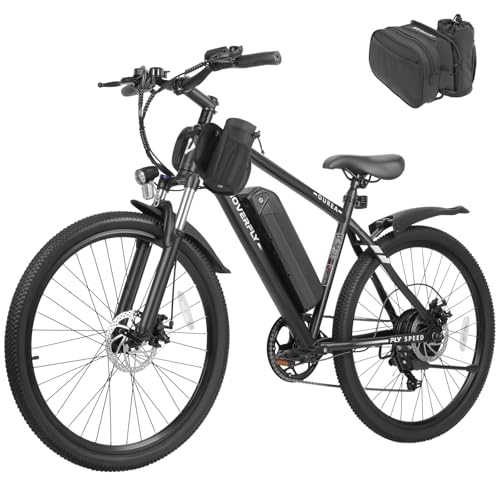
| Hoverfly OUREA | Check price at Amazon | Class 2 | 20 mph |
What are the e-bike rules in Wyoming?
Sourced from the Wyoming statute and verified against the PeopleForBikes State Law Tracker.
Check your setup
Is your e-bike legal in Wyoming?
Your match
TST
TST City Commuter
Permitted on roads, bike lanes, and bike paths in Wyoming.
Our score 8.0/10
Our top class-legal pick for Wyoming, street-legal to ride today.
Read our full review firstThe 30-second answer
E-bikes are legal across Wyoming under the federal Class 1/2/3 framework adopted by SF0081 (2019), signed by Governor Mark Gordon on 26 February 2019 and effective 1 July 2019. The definition is at W.S. §31-1-101(a)(xxxiv) and the operating rules at W.S. §31-5-707. Motor cap: less than 750 watts.
Three things to know about Wyoming:
- One of the most permissive statewide regimes in the United States. No driver license, no registration, no certificate of title, no license plate, no insurance, NO statewide helmet rule for any class at any age, and — verified against the actual SF0081 text — NO statutory minimum operator age for ANY class, including Class 3 (Wyoming and Rhode Island are the cleanest "no age floor" three-tier states; most retailer blogs incorrectly say "16" for Wyoming Class 3, which is a copy-paste from the PeopleForBikes model bill the Wyoming legislature did not adopt verbatim).
- The headline statutory restriction is the Class 3 path rule. §31-5-707 says a Class 3 e-bike shall not be operated on a bicycle or multi-use path unless the path is adjacent to a highway/roadway or a local authority or state agency with jurisdiction authorizes Class 3 operation.
- The biggest practical overlay is the NPS multiplier. Wyoming has the smallest US state population (~580k) but hosts Yellowstone NP (~96% in Wyoming, the world's first national park, 1872) AND Grand Teton NP. Both have their own NPS overlays — different from the §31-5-707 default. The Jackson Hole Community Pathway System (~60 mi across Teton County) permits all three classes with a 15 mph in-town speed cap.
The full Wyoming rules, section by section. Tap any section to read it.
Quick reference
Quick reference
| Spec | Wyoming rule |
|---|---|
| Framework | Federal Class 1/2/3 (adopted 2019, SF0081) |
| Definition statute | W.S. §31-1-101(a)(xxxiv) |
| Operating rules | W.S. §31-5-707 |
| Enacting bill | 2019 SF0081 — signed 26 Feb 2019, effective 1 Jul 2019 |
| Governor | Mark Gordon (NOT Matt Mead — Mead's term ended Jan 2019) |
| Motor power cap | <750 W (§31-1-101(a)(xxxiv), strict inequality) |
| Class 1 (pedal-assist, ≤20 mph) | ✅ Legal · paths ✅ default · state parks ✅ non-motorized trails |
| Class 2 (throttle, ≤20 mph) | ✅ Legal · paths ✅ default · state parks ❌ non-motorized (motorized routes only) |
| Class 3 (pedal-assist, ≤28 mph) | ✅ Legal · paths ❌ unless adjacent to a road or locally authorized · state parks ❌ non-motorized |
| Driver license | Not required (§31-5-707) |
| Registration | Not required |
| Certificate of title | Not required |
| License plate | Not required |
| Vehicle liability insurance | Not required |
| Statewide helmet rule | None — for any class, any age (Wyoming has no statewide bicycle helmet law) |
| Minimum age (any class) | None — no statutory age floor for Class 1, 2, or 3 (verified against SF0081 text) |
| Manufacturing / labeling | Permanent label, ≥9-point font, identifying class number + top assisted speed + motor wattage (§31-5-707) |
| CPSC equipment standard | 16 C.F.R. §1512 (§31-5-707) |
| Wyoming State Parks | Class 1 ✅ on non-motorized trails; Class 2 + 3 ❌ (motorized routes or park roads only) |
| Curt Gowdy State Park (~35 mi, IMBA Epic) | Class 1 ✅ on MTB trails; Class 2 + 3 ❌ |
| Glendo State Park (~45+ mi) | Class 1 ✅; Class 2 + 3 ❌ |
| Yellowstone National Park (~96% in WY) | All 3 classes ✅ on established public roads / parking / designated routes (summer, when open to motor vehicles); Class 3 paved roads only; all bikes ❌ on backcountry trails, boardwalks, oversnow routes |
| Grand Teton National Park | E-bikes ✅ where bicycles are allowed including ~20-mi Grand Teton Pathway (Jackson to Antelope Flats / Jenny Lake); NPS Sept 2019 rule: motor may NOT propel without pedaling except on motor vehicle routes |
| Jackson Hole Community Pathway System (~60 mi, Teton County) | All 3 classes ✅; 15 mph in-town speed cap |
| Yellowstone Shortline Trail (9 mi, opened 11 Jun 2025, USFS Custer Gallatin NF) | ❌ All e-bikes banned (USFS motorized-vehicle policy) — note this trail is in Montana, not Wyoming but is the common West Yellowstone gateway |
Two practical reads. First, Wyoming's statewide statute is among the cleanest three-class regimes in the country — no license, no registration, no title, no plate, no insurance, no statewide helmet rule, no minimum age for ANY class. Second, the bite is administrative: §31-5-707's Class 3 path restriction shuts Class 3 out of stand-alone bike paths unless local authorities opt in, and Wyoming State Parks limits Classes 2 + 3 to motorized routes. The marquee national parks (Yellowstone, Grand Teton) carry their own NPS overlays. Smallest population, biggest NPS multiplier — that is the Wyoming e-bike story.
The three-class system in Wyoming
The three-class system in Wyoming
Wyoming defines an "electric bicycle" at W.S. §31-1-101(a)(xxxiv): a bicycle or tricycle equipped with fully operable pedals, a seat or saddle for the rider's use, and an electric motor of less than 750 watts, meeting the requirements of one of the following three classes:
- Class 1 — a motor that provides assistance only when the rider is pedaling and ceases to provide assistance when the bicycle reaches the speed of 20 mph.
- Class 2 — a motor that may be used exclusively to propel the bicycle and that is not capable of providing assistance when the bicycle reaches the speed of 20 mph.
- Class 3 — a motor that provides assistance only when the rider is pedaling and ceases to provide assistance when the bicycle reaches the speed of 28 mph.
The framework was enacted by Senate File 81 (SF0081) during the 2019 General Session, signed by Governor Mark Gordon on 26 February 2019, effective 1 July 2019. The bill made Wyoming the 12th state to adopt the three-class framework promoted by PeopleForBikes and the Bicycle Product Suppliers Association.
Why some sources cite the wrong bill or wrong details
Three common citation traps in Wyoming e-bike SEO content:
- HB0028 is NOT the Wyoming e-bike bill. Some rollout plans and secondary sources guess "HB0028" — that is an unrelated 2020 bill. The actual enacting bill is SF0081 (2019).
- Governor Mead did NOT sign the e-bike bill. Matt Mead's term ended 7 January 2019. SF0081 was signed by Mead's successor, Mark Gordon.
- There is NO statutory minimum age for Class 3 in Wyoming. Many retailer blogs say "Class 3 riders must be 16" — that is a copy-paste from the PeopleForBikes model-bill language that California, Connecticut, Maine, and most other three-class states adopted. The Wyoming legislature did not include any minimum-age provision in SF0081. Verify by reading §31-5-707 directly.
Where can you ride an e-bike in Wyoming?
Where can you ride an e-bike in Wyoming?
Can you ride on roads and bike lanes?
Same rights and duties as a regular bicycle. §31-5-707 expressly classifies an electric bicycle as not a motor vehicle and applies the bicycle operating rules of W.S. §31-5-702 to e-bikes. All three classes.
Multi-use paths — Class 1 + 2 permissive, Class 3 restricted by statute
The statewide default under §31-5-707 is permissive for Class 1 and Class 2 on bike and multi-use paths. Class 3 is restricted by statute: a Class 3 e-bike shall not be operated on a bicycle or multi-use path unless the path is adjacent to a highway/roadway or a local authority or state agency with jurisdiction authorizes Class 3 operation. This is one of the few state statutes that bakes a Class 3 path restriction directly into the operating-rules section (Arizona, Connecticut, and Maine do the same in different forms; most states leave path access to local agencies).
Can you ride an e-bike on the sidewalk?
No statewide sidewalk rule for bicycles or e-bikes. Municipalities control. Cheyenne, Casper, Laramie, and Jackson each have their own bicycle ordinances — check the local code for the city you are riding in.
Wyoming State Parks — Class 1 only on non-motorized trails
Wyoming State Parks — Class 1 only on non-motorized trails
Per Wyoming State Parks policy effective 1 July 2019 (coinciding with the SF0081 effective date):
- Class 1: ✅ permitted on non-motorized trails where bicycles are allowed.
- Class 2: ❌ on non-motorized trails — restricted to motorized routes or park roads (a Class 2 pilot launched in 2019 has not produced a general approval).
- Class 3: ❌ on non-motorized trails — restricted to motorized routes or park roads.
The two marquee Class 1 e-MTB destinations:
Curt Gowdy State Park (~35 mi, IMBA Epic)
Curt Gowdy State Park, between Cheyenne and Laramie, has ~35 miles of purpose-built mountain bike singletrack and was awarded IMBA Epic status in 2009. Class 1 e-MTBs are permitted on the bike trails under Wyoming State Parks policy. Classes 2 and 3 are not.
Glendo State Park (~45+ mi)
Glendo State Park, east of Casper, hosts 45+ miles of trails. Class 1 ✅; Class 2 + 3 ❌ on non-motorized trails.
Yellowstone National Park — Class 1 + 2 + 3 on roads, Class 3 paved only
Yellowstone National Park — Class 1 + 2 + 3 on roads, Class 3 paved only
Yellowstone National Park (~96% in Wyoming, also extending into Montana and Idaho — the world's first national park, 1872) is the single biggest NPS overlay in Wyoming. Per the NPS Yellowstone bicycling page and the NPS September 2019 e-bike rule:
- All three classes ✅ on established public roads, parking areas, and designated routes — during the summer, when those roads are open to motor vehicles.
- Class 3 ❌ on unpaved / gravel routes — Class 3 is restricted to paved roads only inside Yellowstone.
- All bicycles (including all e-bike classes) ❌ on backcountry trails, boardwalks, and oversnow routes — Yellowstone has no dedicated bike paths along roadways.
- Spring and fall: bikes permitted on certain established roads when they are closed to public motor vehicles, weather permitting.
- Throttle restriction (NPS Sept 2019): the motor may not propel the e-bike without the rider also pedaling, except on routes open to public motor vehicle traffic. This effectively limits Class 2 throttle-only operation off-road.
Grand Teton National Park — e-bikes where bikes are allowed
Grand Teton National Park — e-bikes where bikes are allowed
Grand Teton National Park has the same NPS framework. Per NPS Grand Teton:
- All three classes ✅ wherever traditional bicycles are allowed — paved roads, the Grand Teton Pathway, Two Ocean Lake Road, Grassy Lake Road (gravel), and Teton Park Road seasonally.
- Grand Teton Pathway (~20 mi from the town of Jackson north to Antelope Flats Road and following Teton Park Road to Jenny Lake): all three classes; six hub stations (Gros Ventre Roundabout, Blacktail Butte, Dornans, Moose, Taggart Lake, Jenny Lake). Closed seasonally until snow melts; closed dusk-to-dawn; closed 1 Nov–30 Apr along the National Elk Refuge segment from Jackson to Gros Ventre Road.
- No bikes on hiking trails, in backcountry areas, or on roads closed to vehicles.
- NPS Sept 2019 throttle rule applies: the motor may not propel the e-bike without pedaling except on motor vehicle routes.
Jackson Hole Community Pathway System (~60 mi)
Jackson Hole Community Pathway System (~60 mi)
The Teton County / Town of Jackson pathway system runs ~60 miles total, connecting Jackson to Hoback Junction, Wilson, Teton Village, and Grand Teton National Park. Per Teton County policy:
- Class 1, Class 2, and Class 3 ✅ all permitted on the pathway system.
- 15 mph in-town speed cap — riders must not exceed 15 mph on pathways within the Town of Jackson.
- Pathways are open dawn-to-dusk; no pets except service dogs on the NPS-managed Grand Teton Pathway sections.
This is the most permissive municipal pathway overlay in Wyoming — most other Wyoming cities (Cheyenne Greenway, Casper Rail Trail, Green River Greenbelt, Cody Shoshone River Pathway) follow the §31-5-707 default with no published speed-cap overlay.
Yellowstone Shortline Trail — Montana, not Wyoming, but worth knowing
Yellowstone Shortline Trail — Montana, not Wyoming, but worth knowing
The Yellowstone Shortline Trail — a 9-mile rail-trail opened 11 June 2025 following the historic Oregon Short Line Railroad from Reas Pass (Montana–Idaho border) to West Yellowstone, MT — is in Montana, not Wyoming. Managed by the Hebgen Lake Ranger District of Custer Gallatin National Forest, it bans all e-bikes (Class 1, 2, and 3) under USFS motorized-vehicle policy: "motorized vehicles, including E-bikes, ATVs, UTVs, and dirt bikes, are not permitted." Worth flagging because West Yellowstone is the most common Wyoming-rider gateway into Yellowstone NP, and the trail looks like the natural connector but is closed to e-bikes.
Federal lands in Wyoming
Federal lands in Wyoming
Beyond Yellowstone and Grand Teton, Wyoming has substantial USFS and BLM acreage:
- Bighorn National Forest, Shoshone National Forest (the first US national forest, 1891), Medicine Bow-Routt National Forest, Bridger-Teton National Forest, Caribou-Targhee National Forest, Black Hills National Forest (small WY portion): per the USFS national e-bike policy, all three classes generally permitted on motorized roads/trails; on non-motorized singletrack only where specifically designated. Varies by Ranger District.
- BLM lands in Wyoming (extensive — Wyoming is ~48% federal land): per DOI Secretary's Order 3376, e-bikes treated as bicycles for trail-access purposes — wherever a regular bicycle is permitted, an e-bike is permitted; wherever a bicycle is banned (designated wilderness), an e-bike is banned.
- Devils Tower National Monument (the first US national monument, 1906, in northeastern Wyoming): per NPS, bicycling permitted on park roads only; not on trails.
- Fossil Butte National Monument + Fort Laramie National Historic Site: bicycles on roads only; no trail access.
Do you need a helmet, license, or registration in Wyoming?
Do you need a helmet, license, or registration in Wyoming?
| Topic | Wyoming rule |
|---|---|
| Driver license | Not required (§31-5-707) |
| Registration | Not required |
| Certificate of title | Not required |
| License plate | Not required |
| Vehicle liability insurance | Not required (common-law liability still applies) |
| Statewide helmet | None — Wyoming has no statewide bicycle or e-bike helmet law for any class at any age. (Wyoming's only helmet statute is the motorcycle under-18 rule, which does NOT apply to bicycles or e-bikes.) |
| Minimum age (any class) | None — no statutory age floor for Class 1, 2, or 3 (Rhode Island and Wyoming are the cleanest "no age" three-tier states) |
| Class 3 labeling | Required — permanent manufacturer label, at least 9-point font, identifying class number + top assisted speed + motor wattage (§31-5-707) |
| CPSC equipment standard | 16 C.F.R. §1512 (§31-5-707) |
Wyoming's permissive baseline — no helmet, no age floor for any class, no license/registration/title/plate/insurance — makes it one of the simplest statewide e-bike regimes in the United States. The administrative trade-offs are (1) the §31-5-707 Class 3 path restriction, (2) the WyoParks Class 1-only policy on non-motorized state-park trails, and (3) the Yellowstone + Grand Teton NPS overlays.
Is Wyoming changing its e-bike laws?
Is Wyoming changing its e-bike laws?
- 2026 budget session — no e-bike-specific bills enacted that change the §31-1-101 / §31-5-707 regime. Verify against the Wyoming Legislature bill tracker before relying on this for any active dispute.
- 2024 + 2025 sessions — no e-bike-specific bills enacted.
- 2023 session — no e-bike-specific bills enacted; the 2019 framework (SF0081) remains the operative law.
Current law remains: W.S. §31-1-101(a)(xxxiv) (definition + classes) + W.S. §31-5-707 (operating rules, license/registration/insurance exemption, labeling requirements, CPSC standard, Class 3 path restriction).
What are the penalties for breaking e-bike laws in Wyoming?
What are the penalties for breaking e-bike laws in Wyoming?
Wyoming does not impose a specific statutory penalty for operating an out-of-class e-bike (e.g., a 1,500 W direct-drive at 35 mph). Two enforcement pathways apply:
- Reclassification as a motor vehicle. A two-wheeler that exceeds the §31-1-101(a)(xxxiv) motor cap (≥750 W) or whose throttle alone propels it past the class speed cap falls outside the electric bicycle definition. It then defaults into the motorcycle / moped regime under Title 31 — full driver license, registration, title, plate, and liability insurance required, with the usual misdemeanor penalties for driving without each.
- Local ordinance penalties. Riding a Class 3 on a Wyoming State Parks non-motorized trail or on a stand-alone bike path that hasn't opted in to Class 3 violates the agency's posted rule, typically a written warning escalating to a citation under the agency's general code-of-conduct authority.
What special e-bike rules apply in Wyoming?
What special e-bike rules apply in Wyoming?
What if you are riding in from out of state?
A bicycle that meets the §31-1-101(a)(xxxiv) definition is street-legal in Wyoming regardless of where it was bought. The bike does not need a Wyoming-issued label as long as it carries the manufacturer's permanent class label in at least 9-point font.
DIY / converted e-bikes
A homebuilt or conversion-kit e-bike still qualifies under §31-1-101(a)(xxxiv) if it has fully operable pedals, a seat/saddle, a motor under 750 W, and behaves within one of the three class speed caps. The §31-5-707 labeling requirement is on the manufacturer — for a DIY build the practical workaround is a sticker or plate noting "Class 1/2/3", top assisted speed, and motor wattage so that an enforcement officer can read the configuration without disassembly.
Cargo e-bikes and family hauling
Wyoming has no specific cargo-e-bike or passenger-carrying rule. Because there is no statutory minimum age for any class, a Class 3 longtail or front-loader carrying children is street-legal — but Class 3 remains restricted from stand-alone bike paths under §31-5-707 unless the path is adjacent to a highway or locally authorized.
National-park visitors
The biggest practical takeaway for visitors: Yellowstone allows all three classes on paved roads (Class 3 paved-only); Grand Teton allows all three classes wherever bikes go, including the 20-mile Grand Teton Pathway; the Jackson Hole Pathway System allows all three classes with a 15 mph in-town cap. The throttle restriction (NPS Sept 2019) effectively limits Class 2 throttle-only operation off-road in both parks.
Bottom line
Bottom line
Wyoming runs one of the cleanest three-class statewide regimes in the United States: no license, no registration, no title, no plate, no insurance, no statewide helmet rule, no minimum age for any class. The two practical wrinkles to remember are (1) the §31-5-707 Class 3 path restriction (Class 3 needs an adjacent road or local authorization to use a stand-alone bike or multi-use path) and (2) the Wyoming State Parks Class 1-only policy on non-motorized trails. The headline practical context: Wyoming is the smallest state by population but hosts Yellowstone and Grand Teton — the highest per-capita NPS visitation multiplier in the lower 48. Read the trailhead sign, ride within your class, and the Wyoming statute leaves you alone.
Check your setup against Wyoming law
Check your setup against Wyoming law
The rules above are the statewide baseline. Two things decide whether a specific bike is legal for a specific rider: which class it actually is, and how old the rider is.
- E-bike legality checker — enter motor wattage, top assisted speed, throttle and rider age, and get the Wyoming verdict with the statute reference.
- Class 1, 2, 3 e-bikes explained — what the three classes mean and why the label on the frame is the thing states regulate. Most compliance problems are a bike that was never in-class to begin with.
- All 50 states + DC compared — one sortable table: classification tier, Class 3 legality, path access, helmet rule, minimum age, licence and registration.
Sources
Sources
- W.S. §31-5-707 — Electric Bicycles (operating rules + labeling + CPSC standard)
- Wyoming Statutes Title 31 Chapter 5 Article 7 — Bicycles and Electric Bicycles
- SF0081 (2019) — enacting bill, full record on wyoleg.gov
- SF0081 enrolled bill PDF
- Wyoming State Parks — E-Bike Trail Allowance announcement
- Wyoming State Parks — Biking at Curt Gowdy
- NPS Yellowstone — Bicycling
- NPS Grand Teton — Biking in the Park
- NPS — Electric bicycles in Glacier, Grand Teton, Yellowstone, and the National Elk Refuge (Sept 2019)
- Teton County WY — Pathways
- Yellowstone Shortline Trail (USFS Custer Gallatin NF, opened 11 Jun 2025, Montana)
- USFS national e-bike policy
- DOI Secretary's Order 3376 — federal lands e-bike policy
- PeopleForBikes — Wyoming Lawmakers Pass E-bike Bill (Feb 2019)
- PeopleForBikes — Wyoming E-Bike Law Handout (2020)
- PeopleForBikes State E-Bike Law Tracker
E-bikes that fit Wyoming's rules
Filtered from our review catalog by class eligibility under Wyoming statute. Spec-matched, not popularity-ranked.
- Class 2
 AmazonSave $30
TST
TST City Commuter
Class 2 — pedal-assist + throttle to 20 mph
Permitted on roads, bike lanes, and bike paths in Wyoming.750 W · 20 mph · Score 8.0
Read the review - Class 2Amazon
Funhang
Funhang Fat 26
Class 2 — pedal-assist + throttle to 20 mph
Permitted on roads, bike lanes, and bike paths in Wyoming.500 W · 20 mph · Score 7.4
Read the review - Class 2AmazonSave $50
Hoverfly
Hoverfly OUREA
Class 2 — pedal-assist + throttle to 20 mph
Permitted on roads, bike lanes, and bike paths in Wyoming.750 W · 20 mph · Score 7.4
Read the review
Eligibility is class-based: picks shown here are legal to own and operate on roads in Wyoming. Local jurisdictions (state parks, beach paths, individual cities) may add further restrictions; see the body above for the specifics.
Recent Wyoming e-bike law coverage
News-form posts that reference Wyoming's statutes or covered a change affecting Wyoming riders.
Frequently asked questions
Are e-bikes legal in Wyoming?
Yes. Wyoming adopted the federal Class 1/2/3 framework via Senate File 81 (SF0081), signed by Governor Mark Gordon on 26 February 2019 and effective 1 July 2019. The definition is at W.S. §31-1-101(a)(xxxiv) (motor less than 750 watts, two or three wheels, fully operable pedals, seat/saddle, meeting one of the three classes) and the operating rules at W.S. §31-5-707. All three classes are street-legal and treated as bicycles, not motor vehicles. (Some rollout drafts guess "HB0028" — that is an unrelated bill number; the actual enacting bill is SF0081. Governor Matt Mead did NOT sign the e-bike bill — Mead's term ended 7 January 2019; Mark Gordon was his successor.)
Do you need a license, registration, or insurance for an e-bike in Wyoming?
No to all of them. W.S. §31-5-707 expressly says the operator of an electric bicycle "is not subject to the provisions of this title relating to financial responsibility, driver's licenses, registration, certificates of title or off-road recreational vehicles." Common-law liability for negligent operation still applies, but you carry no DMV paperwork.
Does Wyoming require a helmet on an e-bike?
No statewide helmet rule — for any class, any age, any rider. Wyoming has no statewide bicycle or e-bike helmet law. Wyoming's only helmet statute is the motorcycle under-18 rule, which does not apply to bicycles or e-bikes. Some municipalities may impose a helmet ordinance — verify the local code for the city you are riding in.
What is the minimum age to ride an e-bike in Wyoming?
There is none — for ANY class. Wyoming and Rhode Island are the two cleanest "no minimum age" three-tier states in the country. Verified against the SF0081 enrolled bill text and the codified W.S. §31-5-707: no statutory minimum operator age for Class 1, Class 2, or Class 3. Many retailer blogs incorrectly say "Class 3 riders must be 16 in Wyoming" — that is a copy-paste from the PeopleForBikes model-bill language that California, Connecticut, Maine, and most other three-class states adopted. The Wyoming legislature did not include any minimum-age provision in SF0081.
Are Class 3 e-bikes allowed on multi-use paths in Wyoming?
Only if the path is adjacent to a highway/roadway or a local authority or state agency authorizes Class 3. This is a statutory restriction baked directly into W.S. §31-5-707: a Class 3 e-bike shall not be operated on a bicycle or multi-use path unless the path is adjacent to a highway/roadway or the local authority/state agency with jurisdiction has authorized Class 3 operation. Class 1 and Class 2 are permitted on bike and multi-use paths by default under the same statute, subject to local agency restrictions.
Can I ride an e-bike in Wyoming State Parks?
Class 1: yes, on non-motorized trails where bicycles are allowed. Class 2 and Class 3: no on non-motorized trails — restricted to motorized routes or park roads. Per Wyoming State Parks policy effective 1 July 2019, Class 1 e-MTBs are welcome on the bike trails at Curt Gowdy State Park (~35 mi, IMBA Epic) and Glendo State Park (~45+ mi). A Class 2 pilot launched in 2019 has not produced a general approval. Class 3 is excluded by default.
Are e-bikes allowed in Yellowstone National Park?
Yes — all three classes — on established public roads, parking areas, and designated routes when those roads are open to motor vehicles during the summer season. Per the NPS Yellowstone bicycling page, Class 3 is restricted to paved roads only (no gravel routes). All bicycles — including all e-bike classes — are prohibited on backcountry trails, boardwalks, and oversnow routes. Yellowstone has no dedicated bike paths along roadways. The NPS September 2019 policy also says the motor may not propel the e-bike without the rider also pedaling, except on routes open to public motor vehicle traffic — effectively limiting Class 2 throttle-only operation off-road. Spring and fall: bikes permitted on certain roads when closed to public motor vehicles, weather permitting.
Are e-bikes allowed in Grand Teton National Park?
Yes — all three classes — wherever traditional bicycles are allowed. Per the NPS Grand Teton biking page, e-bikes are permitted on all paved roads, Two Ocean Lake Road and Grassy Lake Road (gravel), the Grand Teton Pathway, and Teton Park Road seasonally. The Grand Teton Pathway runs ~20 miles from the town of Jackson north to Antelope Flats Road and along Teton Park Road to Jenny Lake. Bicycles are prohibited on hiking trails, in backcountry areas, and on roads closed to vehicles. The NPS September 2019 throttle rule applies: motor may not propel the e-bike without pedaling except on motor vehicle routes.
What are the rules on the Jackson Hole Community Pathway System?
All three classes permitted with a 15 mph in-town speed cap. The Teton County / Town of Jackson pathway system runs ~60 miles total, connecting Jackson to Hoback Junction, Wilson, Teton Village, and Grand Teton National Park. Class 1, Class 2, and Class 3 are all permitted, but riders must not exceed 15 mph on pathways within the Town of Jackson. This is the most permissive municipal pathway overlay in Wyoming — most other Wyoming cities follow the §31-5-707 default with no published speed-cap overlay.
What is the motor power limit for e-bikes in Wyoming?
Less than 750 watts under W.S. §31-1-101(a)(xxxiv) (strict inequality — less than, not up to). Wyoming is not a 1,000-watt state (Oregon remains the only US 1,000 W state). A bike whose motor is rated at 750 W or more, or whose throttle alone propels it past the class speed cap, falls outside the electric bicycle definition and defaults into the motorcycle / moped regime under Title 31 — full driver license, registration, title, plate, and liability insurance required.
How do other states compare?
Compare Wyoming's rules with states that share a similar framework.
Common e-bike law questions
The national answer to the questions Wyoming riders ask most, covering every US state, side by side.
Cite or link this page
Found this useful? Link to it.
This guide is free to reference. If it helped you, a link helps more riders find accurate, up-to-date law info, and we keep it current (last reviewed June 1, 2026). Licensed CC BY 4.0. Reuse the data with attribution.
<a href="https://ebikeoracle.com/laws/wyoming">Wyoming E-Bike Laws 2026: No Helmet, No DMV — Ebike Oracle</a>
Ebike Oracle. "Wyoming E-Bike Laws 2026: No Helmet, No DMV." Ebike Oracle, 2026, https://ebikeoracle.com/laws/wyoming.