West Virginia E-Bike Laws 2026: HB 2062 + NRG
Are e-bikes legal in West Virginia?
West Virginia's three-class e-bike framework was created in 2020 by SB 660 (signed by Governor Jim Justice in March 2020, effective June 2020), which established Class 1 and Class 3 plus the helmet, age, speedometer, and license/registration/insurance exemption rules. HB 2062 (2023) — sponsored by Delegate Heather Tully and signed by Gov. Justice on 8 March 2023, effective 28 May 2023 — amended both core sections to add Class 2 throttle recognition and ease Class 3 access. So 2020-2023 retailer posts will be missing Class 2; pre-2020 posts will be missing the framework entirely. The definition lives at W. Va. Code §17C-1-70 with the operating rules at §17C-11-8. Motor cap: less than 750 W. No license, no registration, no insurance (§17C-11-8). The Child Bicycle Safety Act at §17C-11A-4 requires a helmet for any operator or passenger under 15 on a public road, bike path, or right-of-way — adults 15+ have no statewide helmet mandate.
Class 3 is permitted but with three constraints: operator must be 16+, the bike must have a working speedometer, and Class 3 is banned from bike paths, multi-use trails, and single-use trails by default unless the path is within a highway/roadway or a local authority has expressly permitted it. Class 1 and Class 2 are permitted anywhere bicycles are. The state's fresh tourism hook is New River Gorge National Park & Preserve (designated as the 63rd US NP in December 2020) — under the current Superintendent's Compendium, Class 1 and Class 2 are permitted on the Stone Cliff Trail only (the only NRG trail with explicit e-bike permission), Class 3 is prohibited on all park trails, and all classes may use park roads open to motor vehicles.
Legal to ride in West Virginia: our top class-legal pick
As an Amazon Associate I earn from qualifying purchases. Ebike Oracle may also earn a commission on links to other retailers. Full disclosure.
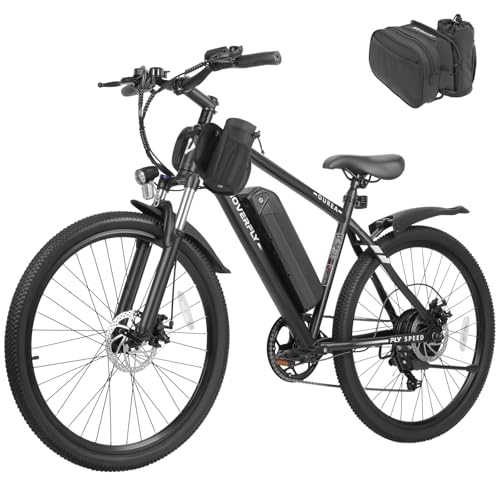
Hoverfly
Save $50Hoverfly OUREA
Class 2 — pedal-assist + throttle to 20 mph
Class 2 · 20 mph · Score 7.4
Free 30-day returns via Amazon
Other legal picks for West Virginia

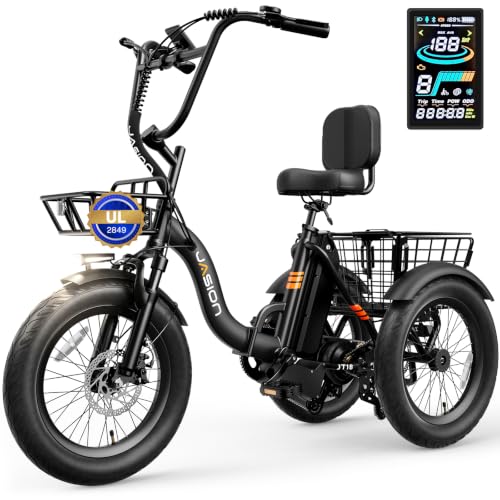
Street-legal e-bikes you can buy in West Virginia (2026)
Each fits a class West Virginia treats as a bicycle, so it needs no registration or licence to ride.
| E-bike | Buy | Class | Speed |
|---|---|---|---|
| Hoverfly OUREA | Check price at Amazon | Class 2 | 20 mph |
| Funhang City Cruiser 26 | Check price at Amazon | Class 2 | 20 mph |
| Jasion Electric Trike | Check price at Amazon | Class 2 | 16 mph |
What are the e-bike rules in West Virginia?
Sourced from the West Virginia statute and verified against the PeopleForBikes State Law Tracker.
Check your setup
Is your e-bike legal in West Virginia?
Your match
Hoverfly
Hoverfly OUREA
Permitted on roads, bike lanes, and bike paths in West Virginia.
Our score 7.4/10
Our top class-legal pick for West Virginia, street-legal to ride today.
Read our full review firstThe 30-second answer
E-bikes are legal across West Virginia under the federal Class 1/2/3 framework. The Class 1 + Class 3 framework was created by SB 660 (2020), then expanded by HB 2062 (2023) (signed by Governor Jim Justice on 8 March 2023, effective 28 May 2023) to add Class 2 throttle recognition. The definition is at W. Va. Code §17C-1-70, with operating rules at §17C-11-8. Motor cap is less than 750 watts.
Three things to know up front:
- No license, no registration, no insurance under §17C-11-8. The e-bike is treated as a bicycle for licensing/registration/insurance purposes as long as the motor is under 750 W and the bike meets one of the three classes.
- Helmet rule is under-15, not under-16. The Child Bicycle Safety Act at §17C-11A-4 requires a helmet for any operator or passenger under age 15 on a public road, bike path, or right-of-way. SB 660 (2020) added the helmet rule for e-bikes directly inside §17C-11-8, and an e-bike is also a "bicycle" under §17C-11A-4 — so the under-15 mandate applies twice over to all three e-bike classes.
- Class 3 cannot use bike paths by default. Class 3 e-bikes are banned from bicycle paths, multi-use trails, and single-use trails under §17C-11-8 unless the path is within a highway/roadway or a local authority has expressly permitted it. Class 3 operators must be 16+ and the bike must have a working speedometer.
HB 2062 passed the House on 16 February 2023 (House Roll No. 164) and the Senate on 27 February 2023 (Senate Roll No. 303) and was signed by Gov. Justice on 8 March 2023. Before HB 2062, Class 2 throttle e-bikes occupied a statutory grey zone — neither expressly legal nor expressly banned — that some prosecutors read as making them motor vehicles requiring registration.
The full West Virginia rules, section by section. Tap any section to read it.
Quick reference
Quick reference
| Spec | West Virginia rule |
|---|---|
| Framework | Federal Class 1/2/3 (Class 1 + 3 from SB 660 in 2020; Class 2 added by HB 2062 in 2023) |
| Definition statute | W. Va. Code §17C-1-70 |
| Operating rules | W. Va. Code §17C-11-8 |
| Helmet (under 15) | W. Va. Code §17C-11A-4 (Child Bicycle Safety Act) |
| Motor power cap | <750 W (§17C-1-70) |
| Class 1 (pedal-assist, ≤20 mph) | ✅ Legal · paths ✅ default |
| Class 2 (throttle, ≤20 mph) | ✅ Legal · paths ✅ default |
| Class 3 (pedal-assist, ≤28 mph) | ✅ Legal · operator 16+ · speedometer required · paths ❌ default (banned unless local opt-in or path within highway) |
| Driver license | Not required (§17C-11-8) |
| Registration | Not required |
| Insurance | Not required |
| Statewide helmet rule | Under 15 — operator or passenger, any class, public road / bike path / right-of-way (§17C-11A) |
| Minimum age (Class 1 + 2 operator) | None |
| Minimum age (Class 3 operator) | 16 (§17C-11-8) |
| Class 3 speedometer | Required (§17C-11-8) |
| Class 3 label | Required — class, top assisted speed, motor wattage |
| Path access (statewide default) | Class 1 + 2: permitted where bicycles are. Class 3: banned unless within a highway or local-authority opt-in. |
| Helmet-non-use as negligence | Not admissible in a personal-injury action (§17C-11A) — notable plaintiff shield |
| New River Gorge NP — Stone Cliff Trail (2.7 mi) | Class 1 + 2 ✅; Class 3 ❌ |
| New River Gorge NP — park roads open to motor vehicles | All 3 classes ✅ |
| New River Gorge NP — other trails (Arrowhead, Long Point, Kaymoor, Rend, Brooklyn Mine) | All classes ❌ — traditional bike only |
| Snowshoe Bike Park (Pocahontas County) | E-bike posture not publicly posted as of 2026 — call resort (1-877-441-4386) for current class/access info |
| Greenbrier River Trail (78 mi, WV's longest rail-trail) | All 3 classes per WV State Parks activity page (some district guidance says Class 1 only — verify at trailhead) |
| Mon River / Caperton / Deckers Creek (~48 mi, Morgantown) | No published class-by-class policy; Class 1 + 2 default under state law |
Two practical reads. First, WV is a vanilla federal-three-class state — the law itself is unremarkable in 2026 terms, but it's fresh (May 2023), so any retailer guide that still says "WV e-bike law is unclear" is out of date. Second, the bite is on Class 3: bike-path access is statutorily restricted, the speedometer + 16+ + label requirements stack on Class 3, and the marquee national park allows only Class 1 + 2 on a single named trail.
The three-class system in West Virginia
The three-class system in West Virginia
West Virginia defines an "electric bicycle" at W. Va. Code §17C-1-70, created by SB 660 (2020) and amended by HB 2062 (2023):
A bicycle equipped with fully operable pedals and an electric motor of less than 750 watts, and that meets the requirements of one of the following three classes:
- Class 1 — motor "provides assistance only when the rider is pedaling, and that ceases to provide assistance when the bicycle reaches the speed of 20 miles per hour."
- Class 2 — motor "may be used exclusively to propel the bicycle, and that is not capable of providing assistance when the bicycle reaches the speed of 20 miles per hour." (i.e., throttle-only OK, capped at 20 mph)
- Class 3 — motor "provides assistance only when the rider is pedaling, and that ceases to provide assistance when the bicycle reaches the speed of 28 miles per hour, and is equipped with a speedometer."
The Class 1 + Class 3 framework was enacted by SB 660 (2020) and amended by HB 2062 (2023) during the 2023 Regular Session, signed by Governor Jim Justice on 8 March 2023, effective 28 May 2023 (the bill's standard 90-day effective-date clock from passage on 27 February).
What SB 660 (2020) created vs. what HB 2062 (2023) amended
Before SB 660 (June 2020), West Virginia's statute had no e-bike framework. SB 660 created §17C-1-70 and §17C-11-8, established the Class 1 and Class 3 definitions, set the under-15 helmet rule, fixed the Class 3 operator-age-16 + speedometer + label requirements, and codified the license/registration/insurance exemption. HB 2062 (2023) then amended both sections to add Class 2 (throttle) recognition statewide and eased Class 3 access on certain paths. So the practical reading: Class 1 + Class 3 have been legal since June 2020; Class 2 throttle e-bikes have been expressly legal since 28 May 2023.
Do you need a helmet, license, or registration in West Virginia?
Do you need a helmet, license, or registration in West Virginia?
| Topic | West Virginia rule |
|---|---|
| Driver license | Not required (§17C-11-8) |
| Registration / title / plate | Not required (§17C-11-8) |
| Insurance | Not required (liability still exists at common law) |
| Statewide helmet | Operator or passenger under 15 — public road, bike path, or right-of-way (§17C-11A-4, Child Bicycle Safety Act). Applies to all three e-bike classes (helmet language added to §17C-11-8 by SB 660 in 2020; e-bikes also fall under §17C-11A-4 as a "bicycle"). |
| Helmet-non-use as negligence | Not admissible in a personal-injury action under §17C-11A — a notable plaintiff-side shield that few states have. |
| Minimum age (Class 1 + 2 operator) | None |
| Minimum age (Class 3 operator) | 16 (§17C-11-8) |
| Class 3 speedometer | Required (§17C-11-8) |
| Class 3 label | Required — class, top assisted speed, motor wattage (per SB 660 / HB 2062 conformance with the model state law) |
The under-15 helmet age is one year lower than the more common under-16 rule used in Connecticut, Massachusetts, and several other helmet-states. The non-admissibility-as-negligence clause in §17C-11A is unusual — most state helmet statutes are silent on the evidentiary use of non-compliance.
Where can you ride an e-bike in West Virginia?
Where can you ride an e-bike in West Virginia?
Can you ride on roads and bike lanes?
All three classes have the same rights and duties as a regular bicycle. Roads, road shoulders, and on-street bike lanes are open to all three classes statewide.
Multi-use paths — Class 1 + 2 are default-permitted, Class 3 is default-banned
§17C-11-8 sets the statewide path rule:
- Class 1 and Class 2 may be operated wherever traditional bicycles are permitted, including bicycle paths, multi-use paths, and trails.
- Class 3 is prohibited on bicycle paths, multi-use trails, and single-use trails by default. Two exceptions: (a) the path is within a highway or roadway, or (b) a local authority or governing body with jurisdiction has expressly permitted Class 3 use.
This is the opposite of states like Virginia (where the statute makes no Class 3 path carve-out) and the same as Connecticut, Arizona, Florida, and Maine (which all default-ban Class 3 from paths). Class 3 riders in WV should plan routes on roads + bike lanes unless they've confirmed local authorization.
Can you ride an e-bike on the sidewalk?
No statewide rule. Most major WV cities prohibit bicycle/e-bike sidewalk riding in the business district by local ordinance — including Charleston, Morgantown, Wheeling, and South Charleston. Outside the business district, sidewalk riding is generally allowed but riders must yield to pedestrians. Verify against the local municipal code before riding.
New River Gorge National Park & Preserve
New River Gorge National Park & Preserve
New River Gorge was redesignated as the 63rd US National Park in December 2020 (Consolidated Appropriations Act, 2021), making it the country's newest National Park and a fresh tourism draw. Per the NPS NERI bicycling page and the most recent Superintendent's Compendium:
- Park roads open to motor vehicles (Fayette Station Road, Cunard Road, Glade Creek Road, etc.) — all three classes ✅
- Stone Cliff Trail (2.7 mi) — Class 1 and Class 2 only ✅; Class 3 prohibited ❌
- All other park trails (Arrowhead Trails 12.8 mi, Long Point 1.6 mi, Kaymoor 8.6 mi, Rend 3.2 mi, Brooklyn Mine 2.7 mi) — e-bikes of any class NOT permitted ❌. These remain traditional-bike-only.
- Riders must carry manufacturer documentation OR have a class label affixed to the bike (the standard NPS e-bike rule per DOI Secretary's Order 3376).
Stone Cliff is the only NRG trail with explicit e-bike permission. Plan accordingly — most photo-famous gorge-rim singletrack is closed to all e-bikes, by class.
Snowshoe Bike Park
Snowshoe Bike Park
Snowshoe Mountain Resort in Pocahontas County is WV's premier lift-served bike park. The published bike-park page lists Trek downhill and enduro rentals; e-bike trail access, class compatibility, and rental availability are not currently posted on the public-facing site. Call the resort at 1-877-441-4386 to confirm whether e-bikes are permitted on the lift-served trails and which classes are allowed before bringing one. Lift access requires a valid bike-park lift ticket (same as a regular mountain bike).
Other notable WV trails
Other notable WV trails
Greenbrier River Trail (78 mi)
WV's longest rail-trail runs 78 miles from Cass to Caldwell along the Greenbrier River, with a packed-limestone surface. The official WV State Parks activity page lists Class 1, 2, and 3 e-bikes as permitted. Separately, a WV State Parks district administrator quoted in Wonderful West Virginia magazine has said state parks are Class 1 only — that statement is about state-park land inside the park boundary; the rail-trail itself is administered as a state rail-trail and the official activity page is the authoritative source. Bottom line: assume all three classes welcome on the trail surface; check trailhead signage when entering any state-park unit adjacent to the trail.
North Bend Rail Trail (72 mi)
72 miles across Wood, Ritchie, Doddridge, and Harrison counties (Parkersburg to Clarksburg) on a former B&O rail bed. Administered under the same WV State Parks rail-trail framework as Greenbrier River. The class-by-class e-bike policy is not explicitly published on the trail page; default under state law is Class 1 + 2 permitted, Class 3 not without local opt-in.
Mon River / Caperton / Deckers Creek Rail-Trail System (Morgantown, ~48 mi)
Administered by the Mon River Trails Conservancy — the trail system is "open for non-motorized use" per the conservancy website. No published class-by-class policy. Under WV state default, Class 1 + 2 are permitted absent a posted local rule. Call 304-692-6782 to confirm Class 3 posture before bringing a 28 mph unit.
West Fork River Trail (~15 mi, Marion County) + Elk River Trail State Park (~73 mi when complete)
Both administered under the WV State Parks rail-trail framework. Default state rules apply (Class 1 + 2 yes, Class 3 banned without local opt-in).
Cross-state comparison
Cross-state comparison
| State | Framework | Motor cap | Class 3 age | Helmet (under) | Notable |
|---|---|---|---|---|---|
| West Virginia | 3-class | <750 W | 16 | 15 | HB 2062 (2023) · NRG NP · Stone Cliff Trail only |
| Virginia | 3-class | <750 W | 14 | All Class 3 riders | Class 3 age 14 (lowest in region); Class 3 path access default; helmet required on all Class 3 regardless of age |
| Kentucky | No class system — e-bikes treated as bicycles if <750 W | <750 W | n/a | n/a | Most permissive neighbour |
| Ohio | 3-class | <750 W | 16 | All Class 3 riders | Helmet required on all Class 3 regardless of age (ORC §4511.522); no general youth bicycle helmet rule statewide |
| Maryland | 3-class | <750 W | 16 | 16 | Updated from 500 W to 750 W in 2019 (Md. Transp. Code §11-117.1); Class 3 path restrictions |
| Pennsylvania | Custom tier — "pedalcycle with electric assistance" | <750 W | n/a | n/a | No Class 3 recognition; 20 mph hard cap; Act 154 of 2014 unchanged |
WV sits in the federal-model middle — comparable to Ohio and Virginia on the basic framework, looser than Pennsylvania (which lacks Class 3 entirely), and Kentucky is the only neighbour with no class system at all. Oregon remains the only US state currently allowing motors above 750 W; all WV neighbours use the federal <750 W cap.
Is West Virginia changing its e-bike laws?
Is West Virginia changing its e-bike laws?
- HB 2062 (2023) remains the most recent e-bike enactment changing classification, helmet, age, or path-access rules.
- HB 5066 (2024) — introduced 24 January 2024 to prohibit using an e-bike for hunting wildlife; verify current status against the WV Legislature bill tracker before relying on this for any active dispute.
- We are aware of no other 2024-2026 bills changing the e-bike framework. Always confirm against the WV Legislature bill tracker for the current session.
- Current law remains: §17C-1-70 + §17C-11-8 + §17C-11A-4.
Check your setup against West Virginia law
Check your setup against West Virginia law
The rules above are the statewide baseline. Two things decide whether a specific bike is legal for a specific rider: which class it actually is, and how old the rider is.
- E-bike legality checker — enter motor wattage, top assisted speed, throttle and rider age, and get the West Virginia verdict with the statute reference.
- Class 1, 2, 3 e-bikes explained — what the three classes mean and why the label on the frame is the thing states regulate. Most compliance problems are a bike that was never in-class to begin with.
- All 50 states + DC compared — one sortable table: classification tier, Class 3 legality, path access, helmet rule, minimum age, licence and registration.
Sources
Sources
- W. Va. Code §17C-1-70 — Definition of electric bicycle (three-class)
- W. Va. Code §17C-11-8 — Operating rules for e-bikes (license/reg exemption, Class 3 age/speedometer/label, path access)
- W. Va. Code §17C-11A-4 — Child Bicycle Safety Act (helmet under 15)
- WV Legislature SB 660 (2020) — bill history (original framework)
- WV Legislature HB 2062 (2023) — bill history (Class 2 expansion)
- PeopleForBikes — West Virginia's New Law Legalizes Class 2 E-Bike Access (March 2023)
- NPS NERI — Bicycling at New River Gorge
- NPS NERI — Superintendent's Compendium
- Snowshoe Mountain Bike Park
- WV State Parks — Greenbrier River Trail activities
- Mon River Trails Conservancy
- DOI Secretary's Order 3376 — federal-lands e-bike policy
E-bikes that fit West Virginia's rules
Filtered from our review catalog by class eligibility under West Virginia statute. Spec-matched, not popularity-ranked.
- Class 2
 AmazonSave $50
Hoverfly
Hoverfly OUREA
Class 2 — pedal-assist + throttle to 20 mph
Permitted on roads, bike lanes, and bike paths in West Virginia.750 W · 20 mph · Score 7.4
Read the review - Class 2Amazon
Funhang
Funhang City Cruiser 26
Class 2 — pedal-assist + throttle to 20 mph
Permitted on roads, bike lanes, and bike paths in West Virginia.500 W · 20 mph · Score 8.6
Read the review - Class 2AmazonSave $25
Jasion
Jasion Electric Trike
Class 2 — pedal-assist + throttle to 20 mph
Permitted on roads, bike lanes, and bike paths in West Virginia.500 W · 16 mph · Score 7.6
Read the review
Eligibility is class-based: picks shown here are legal to own and operate on roads in West Virginia. Local jurisdictions (state parks, beach paths, individual cities) may add further restrictions; see the body above for the specifics.
Recent West Virginia e-bike law coverage
News-form posts that reference West Virginia's statutes or covered a change affecting West Virginia riders.
Frequently asked questions
Are e-bikes legal in West Virginia?
Yes. The framework was created by SB 660 (2020) (Class 1 + Class 3 established, effective June 2020) and expanded by HB 2062 (2023) — signed by Governor Jim Justice on 8 March 2023, effective 28 May 2023 — which added Class 2 throttle recognition. The definition is at W. Va. Code §17C-1-70 ("less than 750 watts") and the operating rules at §17C-11-8. All three classes are street-legal and treated as bicycles for licensing/registration/insurance purposes.
Do you need a license, registration, or insurance for an e-bike in West Virginia?
No. W. Va. Code §17C-11-8 exempts e-bikes meeting the §17C-1-70 definition from driver-license, title, registration, and motor-vehicle-insurance requirements — provided the motor is under 750 W and the bike falls within one of the three classes. The exemption fails if the unit exceeds 750 W or its class speed cap, at which point the vehicle becomes a moped or motor vehicle under Chapter 17B/17C.
Does West Virginia require a helmet on an e-bike?
Under 15, yes. The Child Bicycle Safety Act at §17C-11A-4 requires a properly fitted, securely fastened helmet for any operator or passenger under age 15 on a public road, bike path, or right-of-way. SB 660 (2020) added the helmet rule directly inside §17C-11-8 for e-bikes, and an e-bike is also a "bicycle" under §17C-11A-4 — so the under-15 mandate applies twice over to all three e-bike classes. Adults 15+ have no statewide helmet mandate. Notably, §17C-11A states that helmet non-use is not admissible as evidence of negligence in a personal-injury action — a plaintiff-side shield few states have.
What is the minimum age for a Class 3 e-bike in West Virginia?
16. §17C-11-8 sets the Class 3 operator minimum age at 16, and requires the bike to be equipped with a working speedometer. There is no statewide minimum age for operating a Class 1 or Class 2 e-bike (helmet-under-15 still applies regardless of class).
Can I ride a Class 3 e-bike on a bike path in West Virginia?
Generally no, unless the path is within a highway or your local jurisdiction has expressly opted in. §17C-11-8 prohibits Class 3 from bike paths, multi-use trails, and single-use trails by default. Class 1 and Class 2 are permitted anywhere bicycles are. The local-opt-in option means a city, county, or trail-managing agency can affirmatively permit Class 3 on a specific path — verify against trailhead signage and the managing authority's posted policy.
Can I take my e-bike into New River Gorge National Park?
Yes, with limits. Per the NPS NERI Superintendent's Compendium: all three classes are permitted on park roads open to motor vehicles (Fayette Station Road, Cunard Road, Glade Creek Road, etc.). Class 1 and Class 2 only are permitted on the Stone Cliff Trail (2.7 mi) — the only NRG trail with explicit e-bike permission. Class 3 is prohibited on all park trails. All other NRG trails (Arrowhead, Long Point, Kaymoor, Rend, Brooklyn Mine) remain traditional-bike-only — no e-bikes of any class.
Are e-bikes allowed at Snowshoe Bike Park?
The resort's public bike-park page does not currently publish an e-bike policy. Snowshoe's bike-park page lists Trek downhill and enduro rentals; e-bike trail access, class compatibility, and rental availability are not posted as of 2026. Call the resort at 1-877-441-4386 to confirm whether e-bikes are permitted on lift-served trails and which classes are allowed before bringing one. Lift access requires a valid bike-park lift ticket.
What is the motor power limit for e-bikes in West Virginia?
Less than 750 watts under W. Va. Code §17C-1-70 (strict inequality). WV uses the federal <750 W cap, same as all neighbouring states (Virginia, Kentucky, Ohio, Maryland, and Pennsylvania). Oregon is currently the only US state allowing motors above 750 W. A bike whose motor exceeds 750 W (or whose throttle alone propels it past the class speed cap) falls outside §17C-1-70 and becomes a moped or motor vehicle under Chapter 17B, with full driver-licensing, registration, and insurance obligations.
How do other states compare?
Compare West Virginia's rules with states that share a similar framework.
Common e-bike law questions
The national answer to the questions West Virginia riders ask most, covering every US state, side by side.
Cite or link this page
Found this useful? Link to it.
This guide is free to reference. If it helped you, a link helps more riders find accurate, up-to-date law info, and we keep it current (last reviewed May 31, 2026). Licensed CC BY 4.0. Reuse the data with attribution.
<a href="https://ebikeoracle.com/laws/west-virginia">West Virginia E-Bike Laws 2026: HB 2062 + NRG — Ebike Oracle</a>
Ebike Oracle. "West Virginia E-Bike Laws 2026: HB 2062 + NRG." Ebike Oracle, 2026, https://ebikeoracle.com/laws/west-virginia.