Review · Qlife
cargo6.6/10Qlife Folding Electric Trike
Spec-verified against the manufacturer listing
Our verdict
A folding step-through trike at $499.99 (as of Oct 11, 8:10 PM EDT, subject to change), with the two features that matter on three wheels — a rear differential and a genuinely wide 5'1" to 6'2" fit range — plus dual disc brakes and an 18 mph cap. But the Amazon listing is the least specified on our trike shelf — no battery capacity, no rated wattage, no weight, no load rating — so its 50-mile claim cannot be checked against anything it publishes. Qlife's own storefront fills two of those gaps (499Wh and UL 2849 certification), and once you use the real number the honest range is about 23 miles, not 50. If you want a folding trike at this price with numbers you can verify, the NARRAK at $579 (as of Oct 11, 8:10 PM EDT, subject to change) publishes its pack and its motor.
- Best for
- Buyers who want a folding trike with a real differential at under $600
Save $100down from $600 at Amazon
As an Amazon Associate I earn from qualifying purchases. Ebike Oracle may also earn a commission on links to other retailers. Full disclosure.
Free 30-day returns via Amazon
Not sold on this one? See every ranked pick in our guide to the best e-bikes under $500 on Amazon.

At a glance
Run this in our range calculator →The numbers
Qlife Folding Electric Trike is a folding, step-through cargo e-bike that scores 6.6/10 on our editorial rubric, last verified on August 27, 2026. Amazon listed it at $500 as of October 12, 2026. Prices change often, so treat that as a snapshot. On Amazon it currently ranks #17 Best Seller in Electric Tricycles. It pairs a 499 Wh battery, good for a claimed range of up to 23 miles and assisted speeds up to 18 mph. It best suits buyers who want a folding trike with a real differential at under $600.
Pros
- + Rear differential, so both rear wheels turn properly through corners
- + Fit range stated explicitly at 5'1" to 6'2" — wider than most listings admit
- + 18 mph cap is a sensible, conservative choice on three wheels
- + Folding step-through frame plus a cargo rack included as standard
- + Front and rear mechanical disc brakes rather than a single rear brake
Cons
- - The Amazon listing publishes no battery capacity at all — you have to find 499Wh on Qlife's own site
- - Peak wattage only, so the e-bike class cannot be determined
- - The listing names no safety standard, though the maker's own page certifies to UL 2849
- - No published weight or load rating anywhere on the listing
- - Mechanical rather than hydraulic discs on a trike that may be parked on slopes
- - The "15° hills" claim is a 27% gradient — a best case, not a specification
Who is this for?
- Buyers who want a folding trike with a real differential at under $600
- Riders needing a wide, explicitly stated fit range
- RV and small-garage owners who need the trike to fold
The 30-second verdict
Qlife builds a sensible folding trike and describes it badly. The hardware is right for the category: a rear differential so both back wheels turn properly through a corner, front and rear mechanical disc brakes, 18" x 3.0 fat tyres, a step-through folding frame, a built-in cargo rack, three riding modes and a fit range of 5'1" to 6'2". Top speed is stated as 18 mph, which is a sensible cap on three wheels. The problem is everything the listing does not say. There is no battery capacity — not in amp-hours, not in watt-hours, just "48V lithium". There is no rated motor wattage, only a 1,200W peak. There is no published weight and no load rating. Four of the specifications a buyer would use to compare this against the trike beside it are simply absent, and one of them makes the headline range claim unfalsifiable.
The full review, section by section. Tap any section to read it.
The missing battery capacity is the whole problem
The missing battery capacity is the whole problem
Qlife's own storefront answers what the Amazon listing hides. The Triker 2.0 — same 18" x 3.0 tyres, same folding differential frame, same 1200W peak motor, same 18 mph cap — is specified at 48V 10.4Ah, which is 499Wh, and its battery system is certified to ANSI/CAN/UL 2849:2022A by TUV Rheinland. Neither fact appears in the Amazon bullets. On 499Wh the honest range is 499 ÷ 22 ≈ 23 assisted miles, not the 50 advertised — 50 miles would need 10 Wh per mile, and a fat-tyred trike draws 18-25. Ask Qlife to confirm the amp-hours on the exact unit you are sent, because the Amazon listing still does not say.
Wattage, class, and what 18 mph does not settle
Wattage, class, and what 18 mph does not settle
The listing quotes 1,200W peak and no rated figure. That matters because rated continuous wattage is what the law works in — the federal definition at 15 U.S.C. § 2085 caps it at 750W, a ceiling 49 states adopted, with Oregon allowing 1,000W. A 1,200W peak motor is very likely a 500W or 750W rated one, which would be perfectly legal, but "very likely" is not a specification. The 18 mph top speed is genuinely helpful and unusually honest for this shelf: it is below the 20 mph Class 2 ceiling, so if the rated wattage turns out to be 750W or less, this is a Class 2 machine legal in all 52 jurisdictions we track, and the seven that restrict Class 3 are irrelevant to it. Get the rated figure confirmed and the legal picture is almost certainly fine. Check your state for the rules that apply either way.
No certification is named, and on a trike that counts
No certification is named, and on a trike that counts
Qlife names no battery safety standard anywhere on the listing — not UL 2849, not UL 2271, not a generic "certified". That is a meaningful gap in this specific category, because trike buyers charge indoors more than most riders do: the whole appeal of three wheels is often that the rider is not confident carrying a bike or a battery up steps. New York City's Local Law 39 bans the sale, lease or rental of uncertified e-bikes and batteries in the city, and California SB 1271 ties certification to what may legally be sold in the state from 2026. The Jasion trike states UL 2849 at $499.99 (as of Oct 11, 8:10 PM EDT, subject to change) against $499.99 (as of Oct 11, 8:10 PM EDT, subject to change) for this machine, and the KAKIGO states it too. If your building, your insurer or your own judgement wants the paperwork, this is not the trike.
What Qlife gets right
What Qlife gets right
Three things, and they are not trivial. The rear differential is the single most important mechanical feature on a trike and plenty of cheaper machines skip it, driving one wheel and scrubbing the other through every turn. The fit range of 5'1" to 6'2" is stated explicitly, which is more than most listings manage, and it covers the large majority of adults. And the 18 mph cap is a deliberate, conservative choice on a vehicle that does not lean into corners — trikes get unstable at speed in a way two-wheelers do not, and a manufacturer that resists the temptation to advertise 20 mph has thought about the machine. Add a folding frame that genuinely helps in an RV or a garage corner, and a cargo rack included rather than sold separately, and the bones are good.
The 15-degree hill claim
The 15-degree hill claim
The listing says the motor will "conquer 15° hills". Fifteen degrees is a 27% gradient — steeper than San Francisco's Filbert Street at about 17.5%, and steeper than almost any road surface a trike will meet. It is not physically impossible the way some claims in this category are, but it is a best-case figure for a light rider on a short ramp with a full battery, not something to plan a route around. Read it as "handles ordinary hills", which is a fair thing to say about a 1,200W peak motor, and do not read it as a specification.
Who should buy it
Who should buy it
Riders who want a folding trike with a differential and a wide fit range, and who will ring Qlife for the battery capacity before ordering. Skip it if you charge indoors and need a named certification — the Jasion has one, at $499.99 (as of Oct 11, 8:10 PM EDT, subject to change) — or if you would rather buy a trike whose published specification you can check.
Ready to buy?
Save $100 at Amazon right now
We update prices as the listing changes, and the final price is set by the retailer at checkout.
Frequently asked questions
How big is the battery on the Qlife folding trike?
Qlife does not say, and that is the main criticism of the listing. It gives "48V lithium" with no amp-hour or watt-hour figure. Voltage alone is not capacity: a 48V 10Ah pack is 480Wh and a 48V 20Ah pack is 960Wh, and both are accurately called 48V. Ask Qlife for the amp-hour rating before ordering — it is the difference between roughly 21 and roughly 42 real miles.
Will it really do 50 miles?
No. Qlife's own storefront specifies the matching Triker 2.0 at 48V 10.4Ah = 499Wh, and at the 18-25 Wh per mile a fat-tyred trike actually draws that is 499 ÷ 22 ≈ 23 assisted miles. Fifty miles would need 10 Wh per mile, which no trike achieves. The Amazon listing still publishes no capacity, so confirm the amp-hours on the unit you receive.
Is it street legal?
Almost certainly, but the listing does not let you confirm it. The 18 mph top speed sits below the 20 mph Class 2 ceiling, which is good. The gap is rated wattage: Qlife publishes 1,200W peak and no rated figure, and it is rated wattage the federal definition at 15 U.S.C. § 2085 and 49 state statutes cap at 750W. Get the rated number confirmed, then check your state.
Qlife trike or the Jasion trike?
The Jasion, $499.99 (as of Oct 11, 8:10 PM EDT, subject to change), publishes what this one hides: UL 2849 certification, a 624Wh battery, a 500W rated motor and a 400 lb load capacity. The Qlife answers with a folding frame, which the Jasion does not have, and a slightly higher 18 mph cap against the Jasion's 16. If you need the fold, take the Qlife and ring them about the battery. Otherwise the Jasion is the better-documented machine.
Does it have a certified battery?
Not on the Amazon listing — it mentions no UL 2849, no UL 2271, not even a generic claim. Qlife's own product page does: the battery system is certified to ANSI/CAN/UL 2849:2022A by TUV Rheinland. That is the standard fire ordinances name, and since trike buyers charge indoors more than most riders — and California SB 1271 ties certification to legal sale in the state from 2026 — it is worth knowing the certificate exists even though the listing never mentions it.
Bottom line
Is the Qlife Folding Electric Trike for you?
Check the live price + availability before deciding.
If this isn't the one

cargo
NARRAK Trike 750
The trike to buy if the route has hills, and the one to buy if you carry a...
Read the review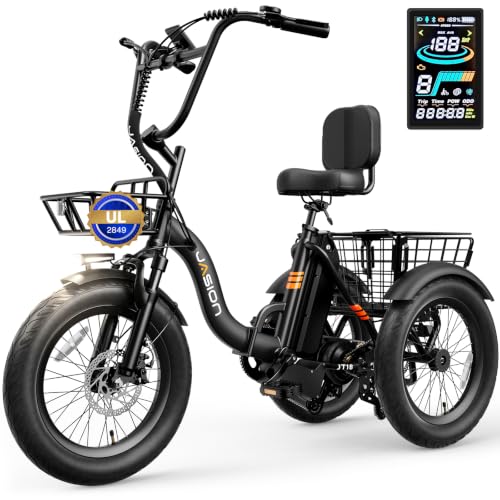
cargo
Jasion Electric Trike
this is the cheapest UL 2849-certified electric trike we have found, and certification is the spec that should...
Read the review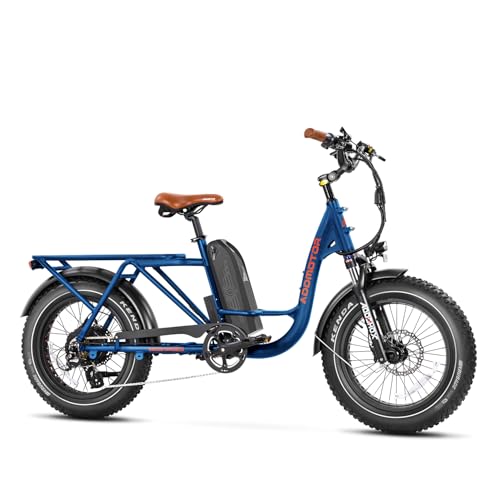
cargo
AddMotor GAROOTAN M-81
Save $100
The AddMotor GAROOTAN M-81 is a long-tail cargo e-bike from a US-based brand (Glendora, California, founded 2003). AddMotor...
Read the review