Review · Funhang
mountain7.4/10Funhang Fat 26
Spec-verified against the manufacturer listing
Our verdict
The Funhang is the cheapest bike on this site with both UL certifications documented and the certifying bodies named — UL 2271 for the battery via SGS, UL 2849 for the complete bike via TÜV — at $410, about $90 under the RPINT Fat 20 that previously held that spot. It is also one of the few budget listings whose range claim survives division: 624Wh across a stated 30-35 throttle miles is ~19 Wh/mile, which is exactly what a 26×4 fat tire drinks. The catch is in its own headline — "1000W Peak" is the peak; the rated motor is 500W, stated in the body of the very same bullet.
- Best for
- Apartment and workplace riders who need UL 2849 documentation on a budget
As an Amazon Associate I earn from qualifying purchases. Ebike Oracle may also earn a commission on links to other retailers. Full disclosure.
Free 30-day returns via Amazon

At a glance
Run this in our range calculator →The numbers
Funhang Fat 26 is a Class 2 electric mountain bike that scores 7.4/10 on our editorial rubric, last verified on July 29, 2026. Amazon listed it at $410 as of July 31, 2026 — prices change often, so treat that as a snapshot. On Amazon it currently ranks #16 Best Seller in Electric Bicycles. It pairs a 500 W hub motor with 67 Nm of torque and a 624 Wh battery, good for a claimed range of up to 32 miles and assisted speeds up to 20 mph. As a Class 2 e-bike it adds a throttle while keeping assistance capped at 20 mph, which keeps it street-legal in nearly every US state without a licence or registration. The bike is rated to carry 330 lb of rider and cargo. It best suits apartment and workplace riders who need UL 2849 documentation on a budget.
Pros
- + UL 2271 (SGS) and UL 2849 (TÜV) both documented with the certifying body named — rare at $410
- + States a rated wattage (500W), not just peak — legally reasonable in all 50 states
- + Quotes throttle-only AND pedal-assist range with conditions; both survive the arithmetic
- + Integrated headlight, taillight and turn signals — almost unheard of under $500
- + 330 lb payload and a 60 lb rear rack from a sub-$450 bike
Cons
- - Headline "1000W Peak" is not the rated figure — the real number, 500W, is buried in a bullet
- - Weight unpublished (assume mid-60s lb, as with every bike in this bracket)
- - ~6.5 h charging is the slow 2A norm; the F6 refills meaningfully faster
- - 500W rated is genuinely modest — this is not a hill-climbing bike for a heavy rider
- - Ships 85% assembled; bars, pedals and front wheel are your job
Who is this for?
- Apartment and workplace riders who need UL 2849 documentation on a budget
- Night commuters who want built-in turn signals without an accessory bill
- Cautious buyers who want maximum legal headroom under the 750W cap
The 30-second verdict
At $410 this is the least expensive bike we list that documents both UL 2271 (battery) and UL 2849 (complete e-bike), and — unusually — names who recognised each one: SGS for the cell, TÜV for the system. Brands at this price normally either skip certification or assert it without a certifying body, which is unverifiable and therefore worthless. That single disclosure is most of the argument for buying this over the shelf of near-identical $400 fat bikes around it. The rest of the sheet is honest in the same way: a 500W rated motor with 66.6 N·m, 20 mph, a 48V 13Ah (624Wh) removable IPX5 pack, dual 180 mm discs, a 7-speed cluster, a 60 lb rear rack, and integrated lighting with turn signals — which is a genuinely rare inclusion below $500. What it does not tell you is the bike's weight, and its headline wattage is the peak figure rather than the rated one. Neither omission is unusual; both are the reason to read the bullet text rather than the title.
The wattage on the box is not the wattage in the motor
The title says "1000W Peak Ebike". The first bullet, one line down, says "a powerful 500W motor with 66.6 N·m of torque and a top speed of 20mph". Both are true and they describe different things: 500W is what the motor is rated to sustain, 1000W is what it can briefly draw climbing. The rated figure is the one written into law. Federal law defines a low-speed electric bicycle at 15 U.S.C. §2085 as a two- or three-wheeled vehicle with working pedals and a motor of less than 750 watts, and the state three-class statutes almost all use the same rated-power ceiling. At 500W rated and 20 mph on the throttle, the Funhang is a Class 2 e-bike in every state that has adopted the three-class framework, with 250W of headroom under the strictest cap in the country. That is a more comfortable legal position than most of this bracket, where 750W rated sits exactly on the line and a 1500W peak invites a second look. Check your state for the local wording, but this is not a bike that needs an argument.
Range: the rare listing whose arithmetic closes
Funhang quotes two numbers with their conditions attached — 30-35 miles in pure electric, 55-60 miles in pedal-assist — which already puts it ahead of every listing that prints one flattering figure and stops. Then the numbers hold up. The stated pack is 48V × 13Ah = 624Wh. A 26×4 fat tire on throttle alone runs about 19-22 Wh per mile, so 624 ÷ 20 ≈ 31 miles — squarely inside their claimed 30-35. The pedal-assist figure needs 624 ÷ 57.5 ≈ 10.9 Wh/mile, which is genuinely achievable but only with real pedalling at low assist on flat ground. Treat 30-ish miles as the number you can plan a day around and the 60 as the reward for working for it. Charging is quoted at about 6.5 hours from a standard charger, which is the 2A norm for this bracket — the DTTZH F6 still holds the fast-charging advantage here at 3A.
What the certification actually buys you
UL 2849 covers the complete electrical system — battery, charger, controller and wiring as one assembly — while UL 2271 covers only the cell pack. Getting both matters where it is enforced: New York City's Local Law 39 of 2023 makes it illegal to sell or rent a powered mobility device in the city without UL 2849 or equivalent, and a growing list of US apartment buildings and employers now ask for the paperwork before allowing indoor storage or charging. A non-certified e-bike is, in practice, a garage-only bike in those places. Funhang naming SGS and TÜV is the part that makes this checkable rather than a marketing line.
Where it sits on the sub-$500 shelf
Against the bikes immediately around it: the Qlife Racer is $140 cheaper but carries a much smaller 375Wh pack. The DTTZH F6 is $84 dearer and answers with a bigger 749Wh battery, 3A charging and NFC unlock — but no certification at all. The RPINT Fat 20 at $499 has the UL paperwork the F6 lacks, which is precisely the ground the Funhang takes for $89 less. If certification is your gate, this is now the cheapest way through it; if raw capacity is, the F6 has 20% more battery for $84.
Who should buy it
The rider who needs UL 2849 on paper — because a landlord, a building manager or an employer asks for it — and does not want to spend $500 to get it. Also anyone who wants integrated turn signals at this price, which almost nothing else offers. Skip it if you are over 6'2" or under 5'3" (the stated fit range), if you need to know the shipping weight before committing, or if you want a bike that arrives fully built — it ships 85% assembled, with the bars, pedals and front wheel left to you.
Ready to buy?
See current pricing at Amazon
We update prices as the listing changes — final price is set by the retailer at checkout.
Frequently asked questions
What is the best e-bike for under $500?
It depends which corner you want to win. For safety certification, the Funhang at $410 is the cheapest bike we list with both UL 2271 and UL 2849 documented and the certifying bodies named. For battery capacity, the DTTZH F6 gives you 749Wh for $494. For outright cheapness, the Qlife Racer is $270. We would take the Funhang unless you specifically need the bigger pack — certification is the harder thing to add later.
Is the Funhang a 500W or a 1000W e-bike?
500W rated, 1000W peak. The listing title quotes the peak; the first bullet quotes the rated figure. Rated is the number that matters legally — 15 U.S.C. §2085 and nearly every state statute set their ceiling on rated power, not peak. At 500W the Funhang sits 250W under the strictest cap in the US, which is a comfortable place to be.
Are fat tire e-bikes worth it?
For grip and comfort on gravel, sand, snow and broken pavement, yes — the extra air volume does the work a suspension fork cannot. The cost is efficiency: a 26×4 tire draws roughly 19-22 Wh per mile on throttle where a slim commuter tire draws 12-15. That is why this bike gets ~31 miles from 624Wh while a narrower bike with the same pack would get closer to 45. Buy fat tires for the surface you actually ride, not for looks.
How far will it really go on one charge?
Plan around 30 miles, not 60. The 624Wh pack divided by the ~20 Wh/mile a fat tire draws on throttle gives about 31 miles, which matches Funhang's own 30-35 mile claim. The 55-60 mile figure is real but requires low assist and genuine pedalling on flat ground. Cold weather, hills, headwind and a heavier rider all pull the number down.
Is it street legal where I live?
Almost certainly. At 500W rated and a 20 mph top speed it qualifies as a Class 2 e-bike under the three-class framework used by most states, and it is well under the 750W federal threshold. The states worth double-checking are those that measure peak rather than rated power — use our state-by-state map to confirm the wording where you ride.
Bottom line
Is the Funhang Fat 26 for you?
Check the live price + availability before deciding.
If this isn't the one

mountain
GAMVIRE 7000W Dual Motor Fat Tire Electric Mountain Bike
The GAMVIRE 7000W Dual Motor is the most powerful e-bike in our catalog — and one of the...
Read the review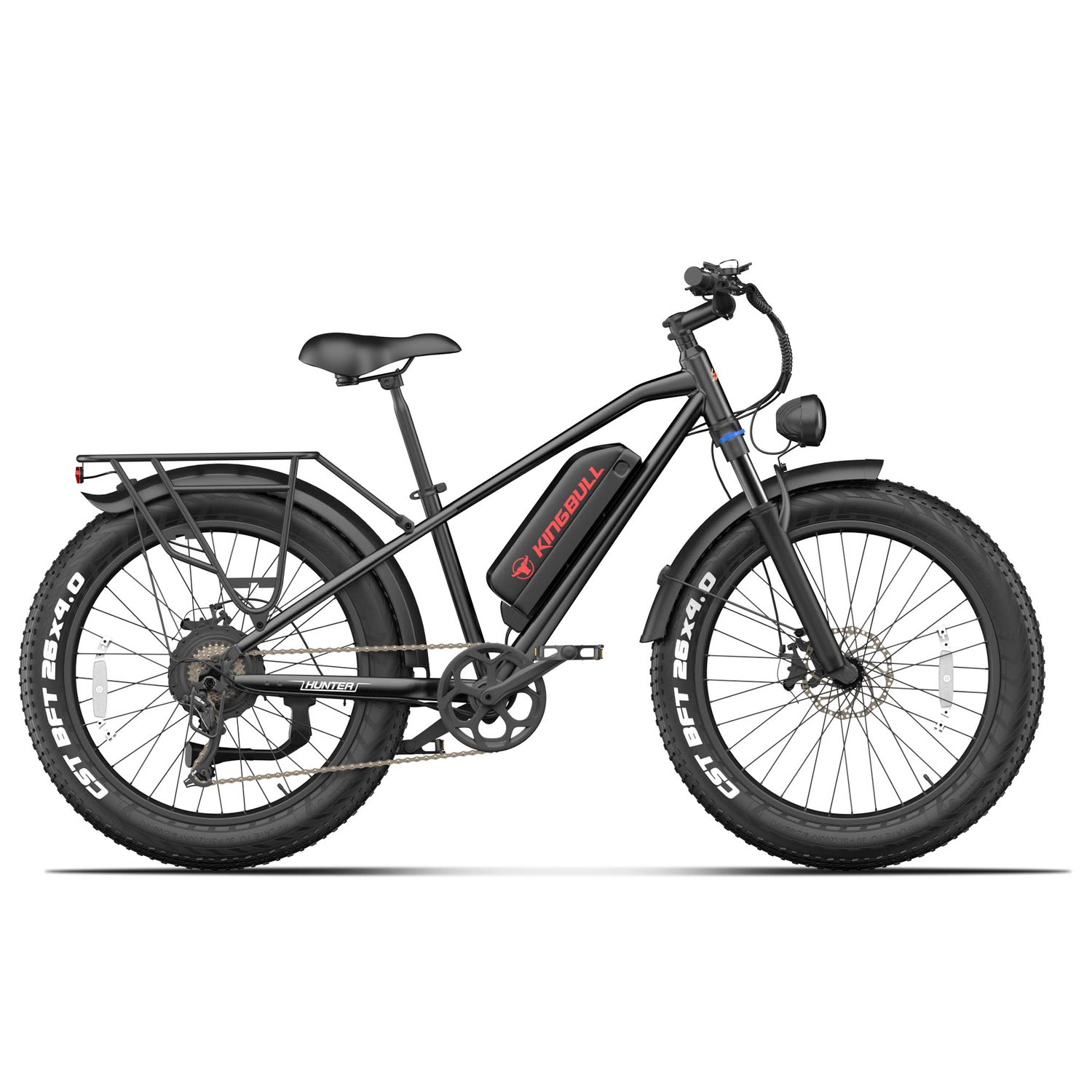
mountain
Kingbull Hunter 2.0 1200W Fat-Tire Mountain E-Bike
Save $900
Kingbull's Hunter 2.0 is the most-featured spec sheet under $1,000 in the catalog — 750W rated / 1200W...
Read the review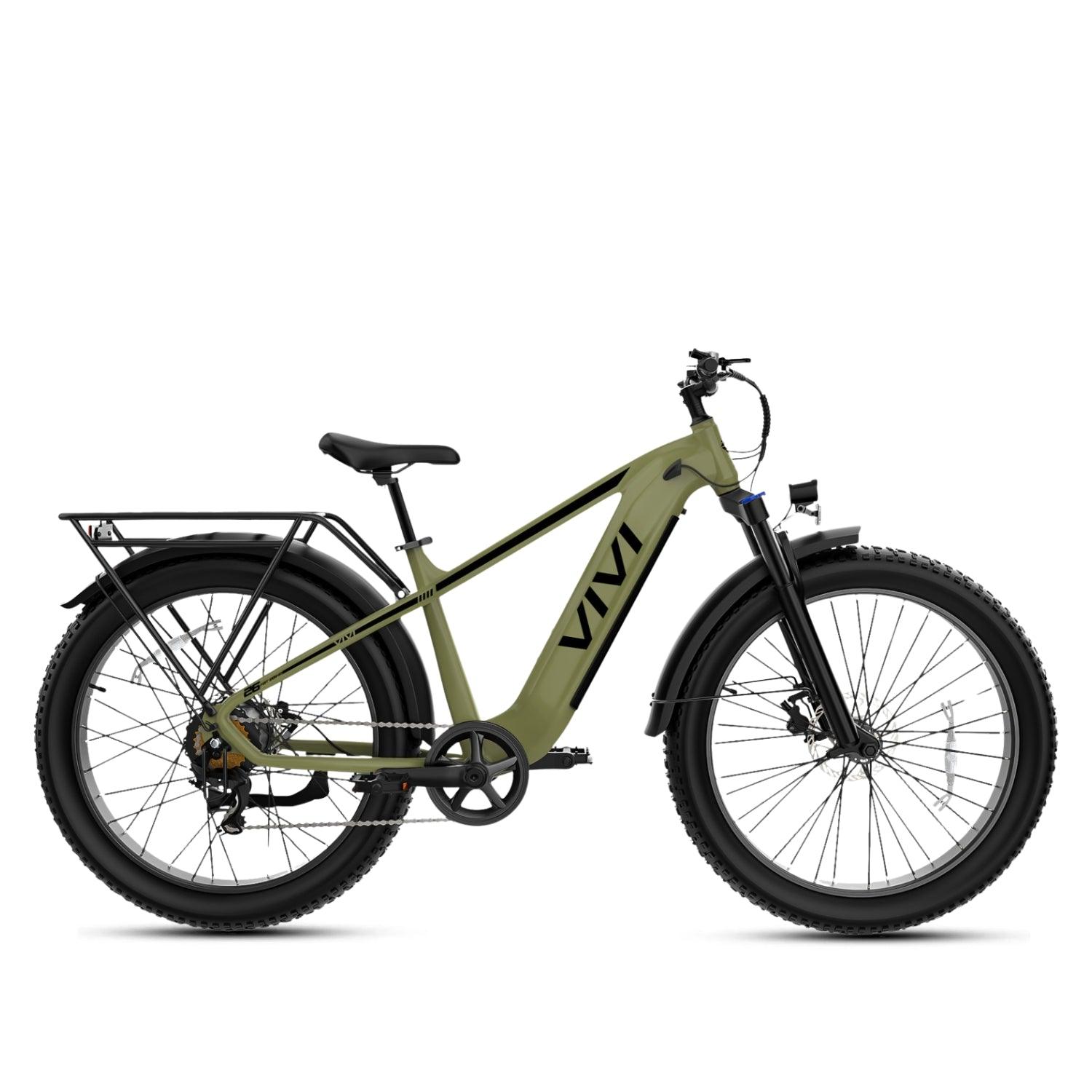
mountain
Vivi ACE01 750W Torque-Sensor Fat-Tire E-Bike
Save $570
The ACE01 is the bike where Vivi stops cutting the corners the budget line is known for: a...
Read the review

